The secret non-prosecution deal that let Epstein avoid federal charges for years
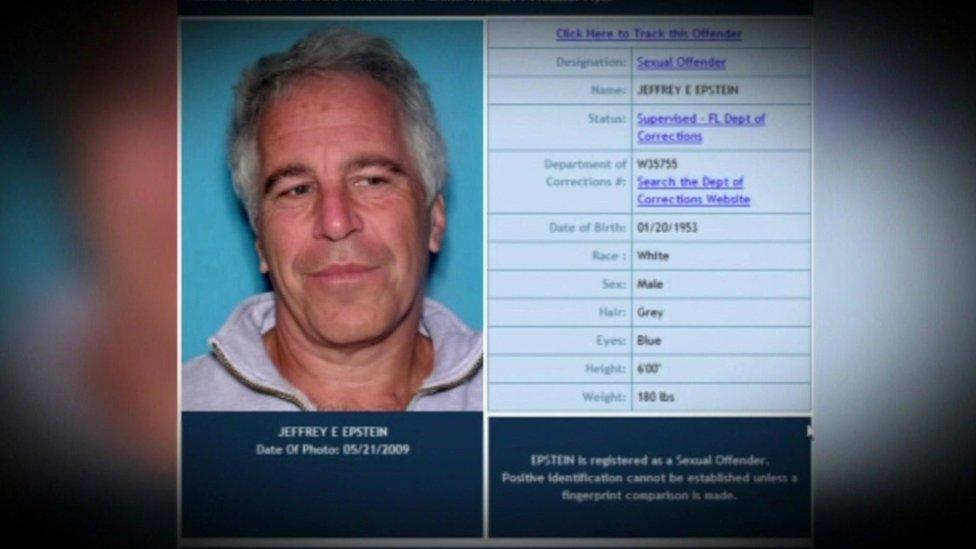
In 2005, a mother in Palm Beach, Florida, walked into a police station and reported that her 14-year-old stepdaughter had been sexually abused by an older man.
The man she named was Jeffrey Epstein, a wealthy financier.
The lead detective began interviewing the girl and her family.
What he found was a pattern.
Epstein, the detective learned, had been recruiting underage girls for massages at his Palm Beach mansion.
The massages escalated into sexual abuse.
Detectives obtained a search warrant for the mansion.
Inside, investigators found photographs and a massage table.
They also gathered testimony from multiple underage girls.
The exact contents of those photographs are not specified in the record.
What the record does show is a trail of evidence, victim by victim.
The FBI became involved.
Federal prosecutors prepared a 53-page indictment.
Fifty-three pages.
That is the weight of what the investigation had gathered, the promise of a federal case.
Not because the evidence was thin.
But because the evidence was thick enough to fill an indictment that long.
The case was moving.
The detective had done his work.
The girls had told their stories.
Then something changed, and the promise would not hold.
But that comes later.
Here, on the table, is the massage table.
Here are the photographs, their contents unstated.
Here is the testimony of girls who said what happened in that mansion.
The federal indictment was ready.
It was never filed.
THE 53-PAGE INDICTMENT
The federal indictment was 53 pages long.
It was prepared. It was reviewed. It was ready to be filed.
Epstein had been arrested in 2006, and the case against him had grown from the testimony of one girl into a pattern.
Federal prosecutors had the pages to prove it.
Then the state attorney for Palm Beach County declined to prosecute Epstein federally.
The specific reasons for that decision are not detailed in the source.
What followed was a negotiation.
Then-U.S. Attorney Alexander Acosta negotiated a non-prosecution agreement in 2007.
That agreement shielded Epstein from federal charges.
It also granted immunity to potential co-conspirators.
The case was strong. The agreement was secret.
Victims were not told.
They were not consulted. They were not informed that the federal case had vanished.
Not because the evidence failed. But because a deal was made.
The 53-page indictment sat unused.
Acosta chose to defer to state charges instead.
That choice produced a lenient result: an 18-month sentence with extensive work release.
Was the agreement legal?
Was it just?
That would require evidence.

What the record shows is this: a federal case was prepared, and a federal case was buried.
The state attorney's decision remains unexplained in the source material.
The deal was kept from the very people the case was built on.
They learned about it years later, when the Miami Herald published its investigation.
By then, the federal charges were gone.
THE 2008 PLEA
In 2008, Epstein pleaded guilty to two state charges: soliciting a minor for prostitution and procuring a person under 18 for prostitution.
He was sentenced to 18 months in county jail.
Eighteen months, with extensive work release.
He was required to register as a sex offender.
He served 13 months in county jail.
Thirteen months, with extensive work release.
The federal indictment had been 53 pages.
The state plea was two charges.
The federal case was built on testimony from multiple underage girls.
The state plea was a deal.
The specific terms of the work release are not detailed in the source.
What did the work release allow?
What did it look like?
What did it permit?
That would require evidence.
The lenient sentence was widely seen as a critical mistake.
It was a mistake by the prosecutors who agreed to it.
It was a mistake by the judge who accepted it.
It was a mistake that let Epstein walk out of a county jail after 13 months.
The victims were not told about the deal.
They were not told the federal charges were gone.
They learned about it years later, when the Miami Herald published its investigation.
By then, the federal charges were gone.
The plea stood.
The sentence stood.
The work release stood, its terms unrecorded in the source.
THE MIAMI HERALD EXPOSÉ
The Miami Herald published its series in 2018.
Reporter Julie K. Brown had obtained the 2007 non-prosecution agreement.
She printed what the agreement said: Epstein would not face federal charges.
The victims had never been told.
The agreement had been kept secret from them for eleven years.
Brown's reporting named the deal, the negotiations, and the officials who approved it.
The public pressure returned.
It was not a theory that the agreement existed.
It was a document.
In July 2019, federal prosecutors in New York charged Epstein with sex trafficking of minors and conspiracy.
He pleaded not guilty.
The charges spanned New York and Florida.
They described payments to recruit girls.
The case was set for trial.
Epstein was held at the Metropolitan Correctional Center in New York.

On August 10, 2019, he died in his cell.
The medical examiner ruled his death a suicide.
That is what the record establishes.
The circumstances of how he died in custody are not detailed beyond that ruling.
The federal charges were dismissed after his death.
The truth had surfaced.
The trial never happened.
The victims had waited thirteen years for a federal case.
They waited again for a verdict.
They received a dismissal.
The plea from 2008 had ended the first federal threat.
The death ended the second.
Julie K. Brown's series did what the agreement tried to prevent: it made the deal visible.
That visibility mattered.
It was also not enough.
AND THE STORY STILL ISN'T OVER
Maxwell was tried and convicted in 2021.
She was found guilty on five counts, including sex trafficking of a minor.
She was sentenced to 20 years in prison.
Epstein's estate faced civil lawsuits from victims.
Those lawsuits were settled.
The non-prosecution agreement reached further than Epstein.
It cost Alexander Acosta his job.
He resigned as U.S. Secretary of Labor in 2019.
The deal that shielded Epstein became the reason a cabinet secretary left office.
That is one measure of the damage.
The case also moved Congress.
Federal legislation followed, including reforms to the Victims of Trafficking and Violence Protection Act.
Laws changed.
The FBI still investigates Epstein's associates and alleged co-conspirators.
That investigation is ongoing.
No other high-profile figures have been charged as of this writing.
The identities of any other alleged co-conspirators under investigation are not specified.
That is not established.
The record does not name them.
So the story remains open in the way the agreement was meant to close it.
Maxwell is in prison.
Epstein is dead.
The federal charges against him were dismissed after his death.
The victims are still here.
They testified.
They settled.
They watched a deal made in secret become a public scandal.
It is a case with a conviction.
It is also a case without a full accounting.
What remains is the FBI's work.
What remains is the question of who else was protected.
That question does not answer itself.
That would require evidence.
Advertisement
You may also like
The pharmacy clerk's last stop before vanishing — what police found next
She was at the counter at the pharmacy, and he was going to meet a contractor about a job. Robert Piest was 15 years…
The courtroom theatrics that turned a murder trial into a national spectacle
In June 1970, as the trial opened, the three female defendants walked into the courtroom with shaved heads. Swastikas were carved on their foreheads.…
The cellphone video that placed Alex Murdaugh at the kennels — and the timeline he swore was wrong
Paul Murdaugh’s phone was recording on June 7, 2021, at the dog kennels on the family estate, Moselle. The video was casual, unplanned, the…
The surgical glove blood evidence that reopened the MacDonald case
The surgical glove turned up late. It was not in the initial police report, that first chaotic inventory of the house on Fort Bragg.…
The church floppy disk that finally unmasked the BTK killer
The package arrived at the Wichita TV station in 2004, and the station staff knew the name on it before they opened it. BTK…
One anonymous call, one cell tower record, and the trial that split a public
She was on her way to school, or she never arrived. Hae Min Lee, 18, a senior at Woodlawn High School in Baltimore County,…