The church floppy disk that finally unmasked the BTK killer
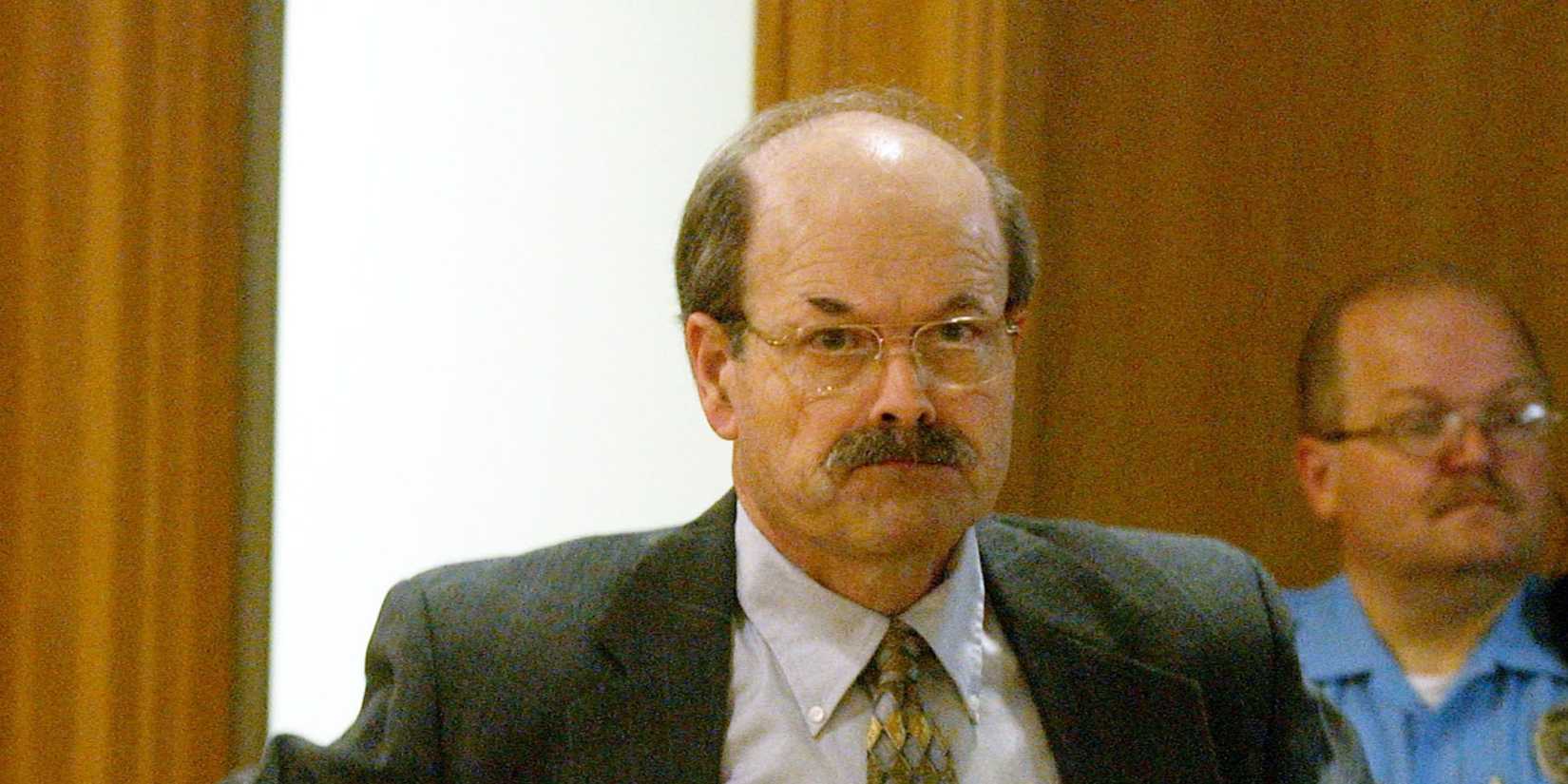
The package arrived at the Wichita TV station in 2004, and the station staff knew the name on it before they opened it.
BTK was writing again.
For decades, the killer had taunted police and media with letters that detailed his work. Inside this package was a floppy disk, a relic even then, a square of plastic most people had already thrown away.
It was a deliberate taunt, a message from a man who believed he was untouchable.
Investigators would later find that the disk carried hidden metadata, digital fingerprints left behind by the machine that made it. That metadata named a church.
It named a first name: Dennis.
One word on a floppy disk, and the man who had outrun the law for thirty years had handed police the key to his own door.
He had sent it himself.
The exact contents of the disk beyond that metadata are not specified in the record. What is documented is the arrogance of the sender, a killer who could not resist the urge to speak again, and who did not know that every file he touched left a trace.
The disk was a relic. The metadata was the future.
And Dennis was the name that would end the hunt.
A DECADE OF TERROR
January 15, 1974, was the date the first family was found dead in their Wichita home.
Four members of one family were bound and strangled, and the city began to understand what it was facing.
By the time the killing stopped in 1991, ten people were dead in and around Wichita.
The signature was always the same: binding, strangulation, a methodical cruelty that left no doubt it was one hand at work.
The killer taunted police and media from the start, sending letters and packages in 1974 that detailed the crimes he had committed.
Those letters were meant to frighten. They did.
The Wichita Eagle covered every twist, and the public read every line, waiting for a name that never came.
The case went cold for years.
Not because the killer stopped writing. But because the letters offered clues without answers, details without a face.
More victims followed in 1974, then two in 1977, two in 1985, and one more in 1991.
The exact dates of each murder beyond the years given are not in the record.
What is in the record is the weight of a decade and a half of fear.
Families locked their doors. Reporters kept files. Detectives rotated in and out, and the killings stopped, but the dread did not.
The killer had gone quiet, and that silence was its own kind of terror.
The community lived with the question for years: who was this, and would he ever be caught?
That would require evidence. For a long time, there was none.
THE COMEBACK LETTERS
The silence ended in 2004.
The killer who had called himself BTK resumed sending letters and packages to media outlets in Wichita.
The communications revived a stalled investigation that had haunted the city for decades.
Lieutenant Ken Landwehr of the Wichita Police Department led the later phase of the case.
The lead detective had a new problem now: the monster was back.
But the monster was also making mistakes.

His own arrogance in resuming contact would become the eventual breakthrough.
Each letter, each package, was a risk he chose to take.
The specific content of those 2004 letters beyond their existence is not detailed in the record.
What is documented is that the communications were central to the case.
They provided new evidence.
They renewed a sense of urgency that had cooled over the long quiet years.
The public felt it too: hope and dread in the same breath.
Hope that this time, something would break.
Dread that the killing could start again.
The media covered every development, every envelope, every postmark.
KAKE television received the killer's letters.
The station became a mailbox for a monster.
Investigators also had DNA evidence from the crime scenes linking the killer to the murders.
That evidence had been waiting for years.
What they needed was a name to match it to.
The letters, the packages, the floppy disk that would come later — all of it pointed somewhere.
Not because the killer was clever.
But because he could not stop talking.
THE FLOPPY DISK'S SECRET
The floppy disk arrived as a relic, a square of plastic that already felt obsolete in 2004.
Investigators pulled the metadata from the disk, the hidden fingerprints of a file.
The metadata named a church.
The metadata named the name "Dennis."
According to the record, investigators traced the disk to a computer at that church, where the killer served as council president.
The church leader was Dennis Rader, a married father of two.
He worked as a compliance officer for Park City, Kansas, enforcing codes and rules for a living.
He was arrested in February 2005.
He confessed to all ten murders.
The shock was not that the trail went cold for so long.
The shock was where it ended: a pew, a family table, a municipal office.
The exact steps from the disk to Rader's door are not fully detailed in the source.
What is documented is the leap — from a bit of metadata to a man who had been there all along.
The investigation had early missteps, including a failure to connect some murders sooner.
Critics said the case should have cracked earlier.
It did not crack from forensic genius.
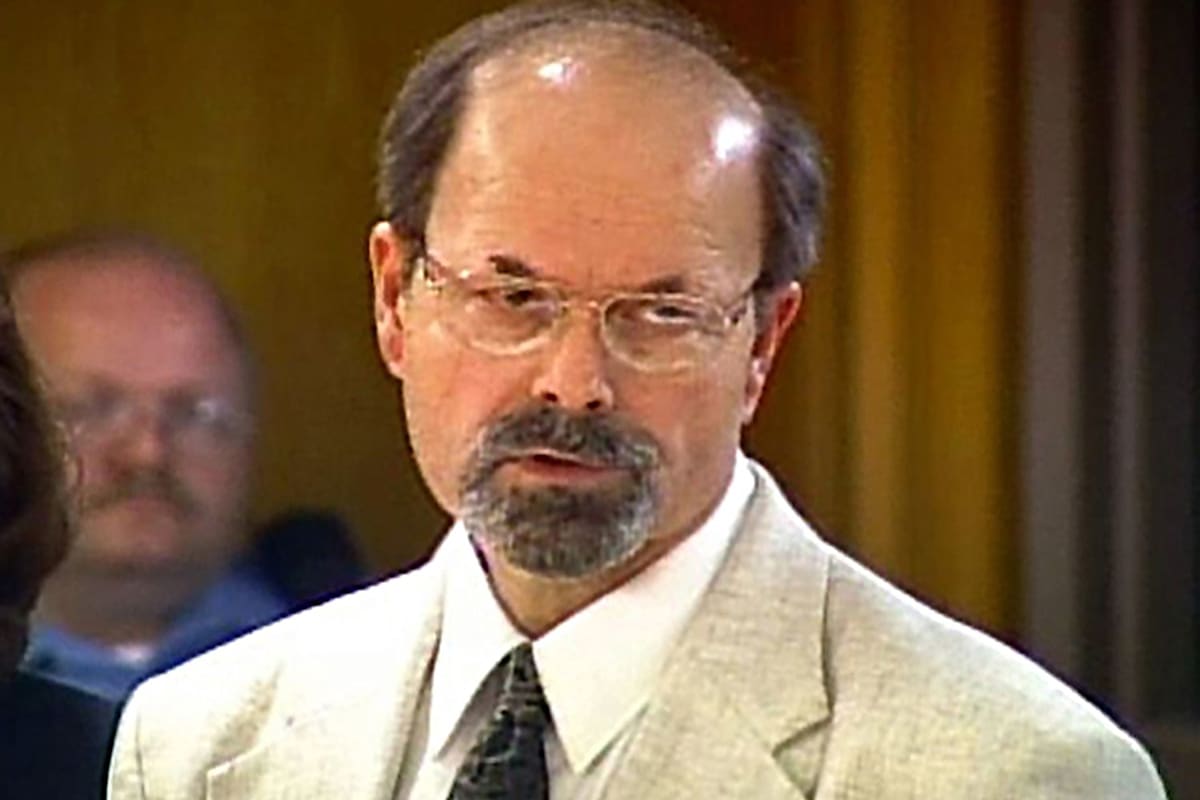
It cracked because the killer sent a disk.
It cracked because the disk carried a name.
That would require evidence, and the evidence was in the plastic.
Dennis, the record shows, could not stop talking.
AND THE STORY STILL ISN'T OVER
Dennis Rader pleaded guilty to ten counts of first-degree murder in June 2005.
He gave a matter-of-fact confession in the courtroom, describing each killing in detail.
There would be no trial, no jury, no chance to hear the victims' families cross-examine him.
The judge sentenced him to ten consecutive life sentences.
The minimum was 175 years.
That number meant one thing: no parole, ever.
Rader remains incarcerated at El Dorado Correctional Facility in Kansas.
The case is studied now the way other long cases are studied.
Criminologists analyze Rader's writings and statements.
They look for patterns, for signs, for the ordinary details that hid in plain sight.
He was a compliance officer.
He was a church council president.
He was a married father of two.
The record shows all of that, and the record shows the ten murders.
In recent years, Rader has made headlines again.
He has attempted to communicate from prison.
He remains behind bars.
The media that once received his taunting letters now receives his occasional statements.
The public reads them with the same unease as the letters themselves.
Not because he is free.
But because he is still talking.
The victims' families have spoken publicly about the impact of the crimes.
Some have expressed frustration with the legal system's handling of the case.
The story continues to haunt.
It continues to fascinate.
It is a closed case, and it is not a closed story.
Any future legal proceedings or parole hearings are not mentioned in the record.
That would require evidence, and the evidence is already spent.
The disk was the end of the hunt.
The name was the end of the mystery.
The sentence is the end of the freedom.
The rest is the part that keeps going.
Advertisement
You may also like
The bloodstain pattern that didn't match Sam Sheppard's story
On July 4, 1954, Dr. Sam Sheppard told police an intruder beat him unconscious and killed his wife, Marilyn, in their Bay Village, Ohio,…
The cellphone video that placed Alex Murdaugh at the kennels — what it revealed
June 7, 2021. Someone calls 911 from Moselle, the family’s hunting estate in Colleton County, South Carolina. The voice belongs to Alex Murdaugh, and…
The traffic stop that freed Winston Moseley days before Kitty Genovese's murder
Days before the murder, Winston Moseley was questioned in a routine traffic stop and released. The investigation record documents the stop. It documents the…
The 2018 interview in which Duane Davis described the Cadillac, the gun, and the handoff — and what detectives did next
In 2018, Duane “Keffe D” Davis sat for an interview. He described being in the white Cadillac that night on the Las Vegas Strip.…
The river stakeout that heard a splash and stopped Wayne Williams — but the bodies kept coming
The Jackson Parkway bridge spans the Chattahoochee River, and on May 22, 1981, police were staked out beneath it. They were waiting for a…
The Green River Task Force's own mistakes let a killer slip through for 20 years
He passed the polygraph in 1984, and the Green River Task Force cleared him. Gary Ridgway walked out of the interview and went back…