The bloody glove on O.J. Simpson's estate that changed everything — but the jury never saw it that way
The glove was found on the morning of June 13, 1994.
Detective Fuhrman of the LAPD went to Simpson's estate on Rockingham Avenue.
He discovered a blood-stained glove on the property.
Hours earlier, Nicole Brown Simpson and Ronald Goldman had been found stabbed to death at the Bundy Drive crime scene.
A matching glove was found there.
One glove at the scene of the killings.
One glove on the estate of the man who would be charged with them.
It is a documented piece of evidence.
It is also the center of a claim that the glove was planted.
That claim was a defense argument.
The defense argued that Detective Fuhrman had planted the glove.
Fuhrman pleaded the Fifth Amendment when asked whether he had planted evidence.
The theory circulated widely.
It was never established as fact in the criminal trial.
The record does not resolve the question.
Why did a glove end up on the estate?
What does it really prove?
A glove is an object.
An object can be placed.
An object can be moved.
That would require evidence.
The glove was introduced in court.
The jury saw it.
The jury deliberated for less than four hours.
The verdict came back not guilty on both counts.
The glove remains what it is: a piece of the scene, found where the prosecution said it would be.

Whether it got there by accident or by design was never settled.
Not in the criminal trial.
Not in the record.
12:10 A.M. — THE BODIES ARE FOUND
The neighbor was walking her dog.
At approximately 12:10 a.m. on June 13, 1994, she discovered the bodies outside Nicole Brown Simpson’s condominium at 875 South Bundy Drive in Brentwood.
Nicole, 35, was found at the base of the walkway leading to her front door.
Ronald Goldman, 25, was found slumped against a fence in the rear of the property.
He was a waiter at the nearby Mezzaluna restaurant.
He had been off-duty that night.
He had returned to the restaurant to pick up eyeglasses left by Nicole’s mother, Juditha Brown.
Then he had driven to the condominium to deliver them.
That errand put him there.
Police arrived shortly after the bodies were found.
Detectives Vannatter and Lange were assigned to the case.
The exact time of the murders is not in the record.
The night is known by what came after it.
Not by the hour the wounds were inflicted.
That would require evidence the record does not provide.
What is known is the placement of the bodies.
What is known is the errand.
What is known is that two people were stabbed to death outside a Brentwood condominium on a Sunday night in June.
The neighbor’s dog walk fixed the discovery at 12:10 a.m.
The discovery fixed the timeline the prosecution would later build.
Goldman was 25.
Nicole was 35.
:max_bytes(150000):strip_icc():focal(649x0:651x2)/Kim-Goldman-and-Fred-Goldman-sister-and-father-of-murder-victim-Ronald-Goldman-041124-db6578097eb34513927218d9fa960656.jpg)
Both had suffered multiple stab wounds, according to the record.
The knife itself was never recovered.
The murder weapon was not found.
That remains in the record as a fact — and as a question.
The scene was on Bundy Drive.
The walkway led to her front door.
The fence stood in the rear of the property.
She was at the base of the walkway.
He was against the fence.
They were found that way.
The randomness of Goldman’s errand is part of the case.
The eyeglasses belonged to Nicole’s mother.
He picked them up after his shift.
He drove them over.
He never left.
THE CHASE AND THE ARREST
Simpson had flown to Chicago that night.
He returned the next day.
He was questioned by detectives and gave a statement.
He was not arrested at that time.
On June 17, 1994, he was informed he was about to be charged.
He fled.
His friend Al Cowlings was driving the white Ford Bronco.
The slow-speed chase was broadcast live on television.
The exact route of the chase is not in the record.
It ended at Simpson’s home.
:max_bytes(150000):strip_icc():focal(749x0:751x2)/PEOPLE_MAG_BROWN_SISTERS_nicole-tout-1067c705ba0c4ab7a7e648e3ffd95be0.jpg)
He surrendered there.
Simpson was charged with two counts of first-degree murder that same day.
He pleaded not guilty.
Blood drops were found on the Bronco.
Blood drops were found in his driveway.
Blood drops were found inside his home.
A pair of bloody socks was found in his bedroom.
The chase was surreal to watch.
A former football star, a friend at the wheel, helicopters overhead, millions watching.
It was a spectacle.
It was also the moment the charges became real.
He had given a statement the day before.
He had not been arrested.
Then he ran.
Then he came back.
The surrender did not end the questions.
It only gave the case its most watched image.
The evidence was already on the Bronco.
The evidence was already in the bedroom.
The charges were filed.
The plea was not guilty.
The trial would come later.
THE TRIAL AND THE GLOVE DEMONSTRATION
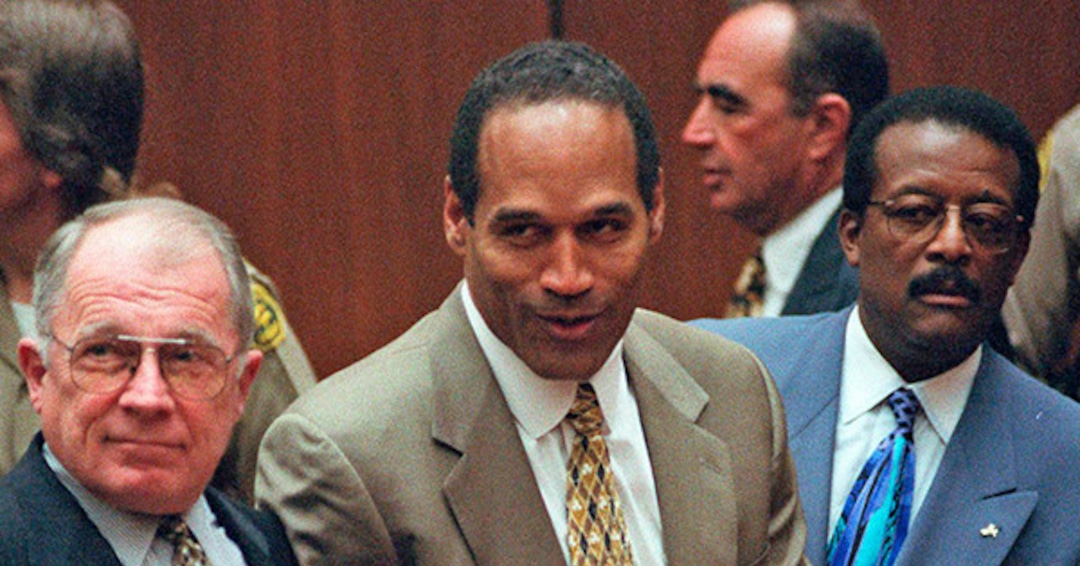
The trial began on January 24, 1995, in Los Angeles County Superior Court before Judge Lance Ito.
The prosecution, led by Marcia Clark and Christopher Darden, presented DNA evidence, domestic violence history, and the timeline of Simpson's movements.
DNA testing linked blood at the crime scene to Simpson, and blood from the Bronco and the socks to the victims.

The defense argued that the blood evidence was contaminated or planted.
It focused on Detective Fuhrman's use of racial slurs and his credibility.
Fuhrman pleaded the Fifth Amendment when asked whether he had planted evidence.
Then came the gloves.
The prosecution asked Simpson to try on a pair of leather gloves in court, the same style as the bloody glove found on his estate and the matching one found at Bundy.
He struggled to pull them on.
He tugged, he grimaced, he held his hands up for the jury to see.
The gloves appeared too small.
Did they not fit?
Did they shrink from the blood?
Did he force them on wrong?
The record does not establish whether the gloves actually fit or not.
The demonstration was visual, not measured.
There was no sizing, no calibration, no expert ruling on the fit.
There was only the image of a man fighting a pair of gloves in front of a jury.
The defense turned that image into a slogan: if it doesn't fit, you must acquit.
The prosecution called it theatrics.
The jury deliberated for less than four hours.
On October 3, 1995, they returned a verdict of not guilty on both counts.
The verdict was broadcast live and watched by an estimated 100 million people.
The courtroom was silent.
The acquittal was read.
Simpson was free.
…AND THE STORY STILL ISN'T OVER
The civil jury in Santa Monica found Simpson liable for the wrongful deaths of Nicole Brown Simpson and Ronald Goldman.
The award was $33.5 million in damages to the families.
The criminal verdict and the civil verdict were different things.
The criminal case ended with an acquittal.
The civil case ended with liability.
Simpson later served prison time for an unrelated 2007 armed robbery and kidnapping conviction in Las Vegas.
He was sentenced to 33 years with parole eligibility after nine.
He was released on parole in October 2017.
Simpson died on April 10, 2024, at age 76, after a battle with cancer.
The Goldman family continued to pursue the civil judgment against Simpson's estate.
The exact amount recovered from the estate is not in the record.
The murder weapon — a knife — was never recovered.
It was not found at the crime scene.
It was not found at Simpson's estate.
It was not found anywhere else.
That would require evidence.
The case remains one of the most scrutinized in American legal history.
The debate about the evidence continues.
The debate about the verdict continues.
The glove was documented.
The DNA was documented.
The acquittal was documented.
What the jury saw in 1995 was not what the civil jury saw in 1997.
The story is not over because the questions were never fully answered.
Simpson was free.
Simpson was liable.
Simpson was imprisoned.
Simpson was released.
Simpson died.
The record stays where it was left.
Advertisement
You may also like
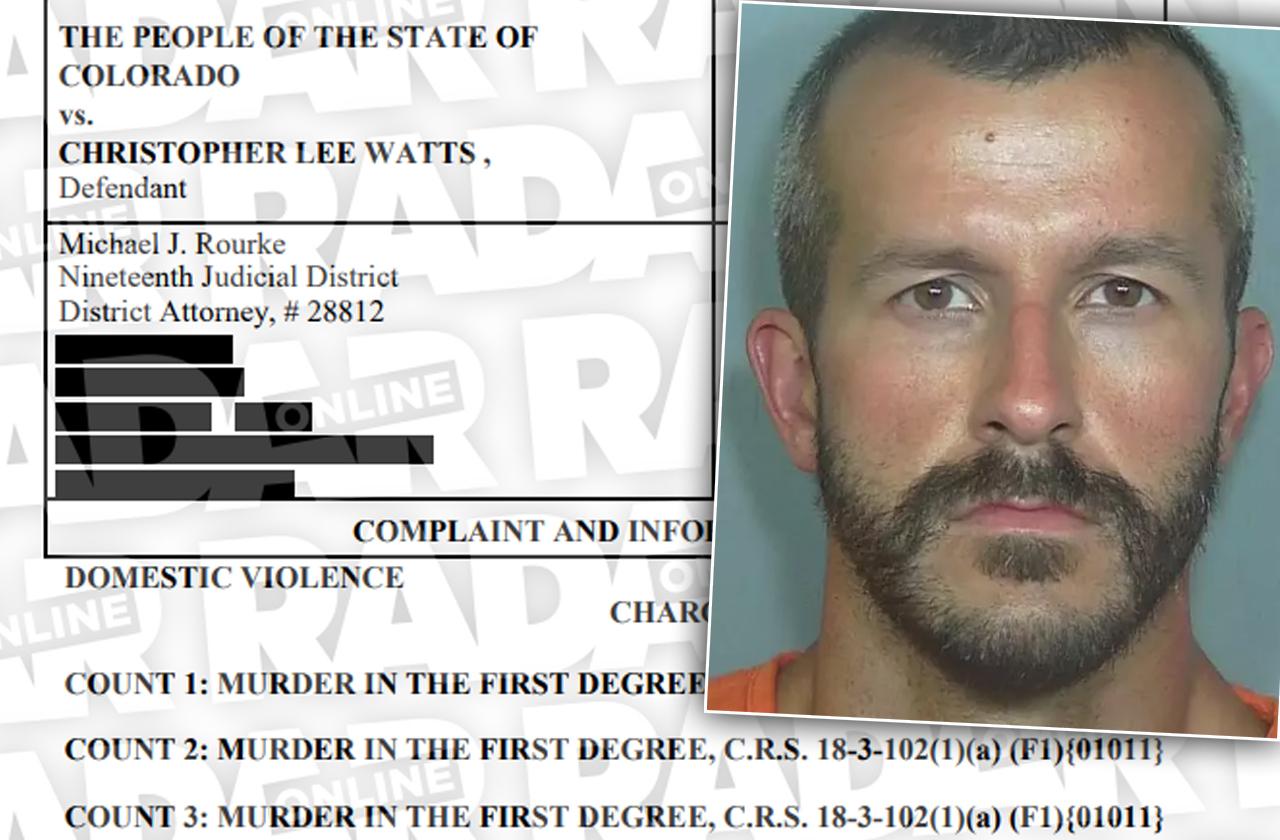
The friend's call that sent police to the Watts home — and the phone left behind
On the morning of August 13, 2018, in Frederick, Colorado, Shanann Watts, 15 weeks pregnant, was supposed to be at a doctor's appointment. She…
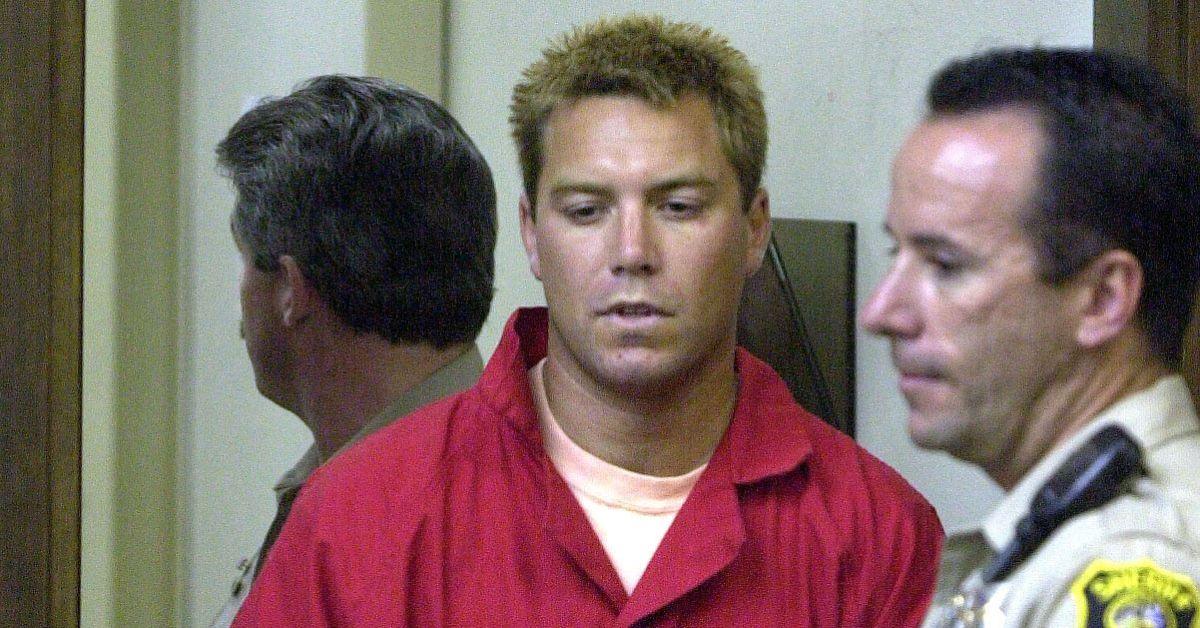
A concrete anchor found near Laci Peterson's body — and the one detail that still haunts her family
A concrete anchor was pulled from San Francisco Bay in April 2003, near the place where Laci Peterson's body washed ashore. It matched a…
The day care center inside the Murrah Building held 19 children when the bomb hit
The morning of April 19, 1995, began with the ordinary mechanics of a workday. Parents pulled into the drop-off lane outside the Alfred P.…
The Florida mother's 2005 report that started it all — how one stepdaughter's massage led to a 14-year saga
A mother called Palm Beach police in 2005. Her stepdaughter was 14. An older girl had recruited the teenager, the mother said, to give…
The duct tape on Laci Peterson's body that split a jury's theory
The duct tape was on Laci Peterson's body when she was found. That single object carried the weight of two opposing stories. The prosecution…
The open letter from the Richards that urged the government to seek the death penalty
Bill Richard and Denise Richard lost their 8-year-old son, Martin, to the bombs near the finish line. Their daughter, Jane, lost a leg in…