The Brooklyn rapper whose mother spent 27 years demanding answers after a drive-by shooting
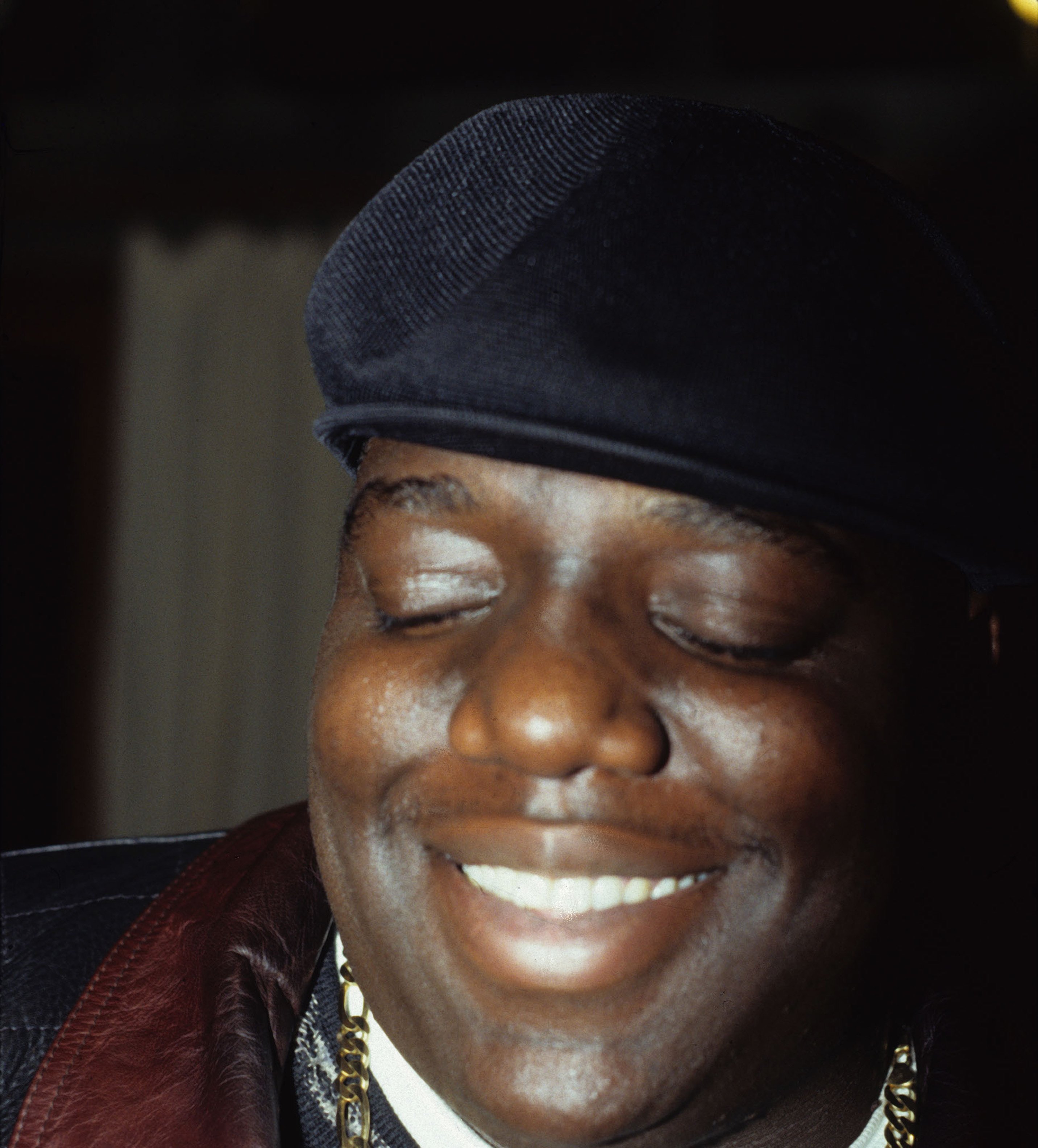
The red light was on Wilshire Boulevard near Fairfax Avenue.
Christopher Wallace, known as the Notorious B.I.G., was in Los Angeles to promote his upcoming album, *Life After Death*.
He had attended a Vibe magazine party at the Petersen Automotive Museum.
His SUV stopped at the light.
A black Chevrolet Impala pulled alongside and fired.
Wallace was struck four times.
He was pronounced dead at Cedars-Sinai Medical Center shortly after arrival.
He was 24 years old.
The identity of the shooter is not established in the record.
The motive is not established in the record.
What is established is the stop, the car, the shots, the hospital.
She was not there.
His mother, Voletta Wallace, was in another city when the phone rang.
She would spend the next 27 years asking a question.
The light turned green, and the car did not move.
The album he came to promote arrived in stores weeks later.
It was called *Life After Death*.
THE MOTHER AND THE SON
He was born in Brooklyn, and his debut album *Ready to Die* made him one of the most prominent figures in hip-hop.
His name was Christopher Wallace, known to the world as the Notorious B.I.G.
He was 24 years old when he was killed.
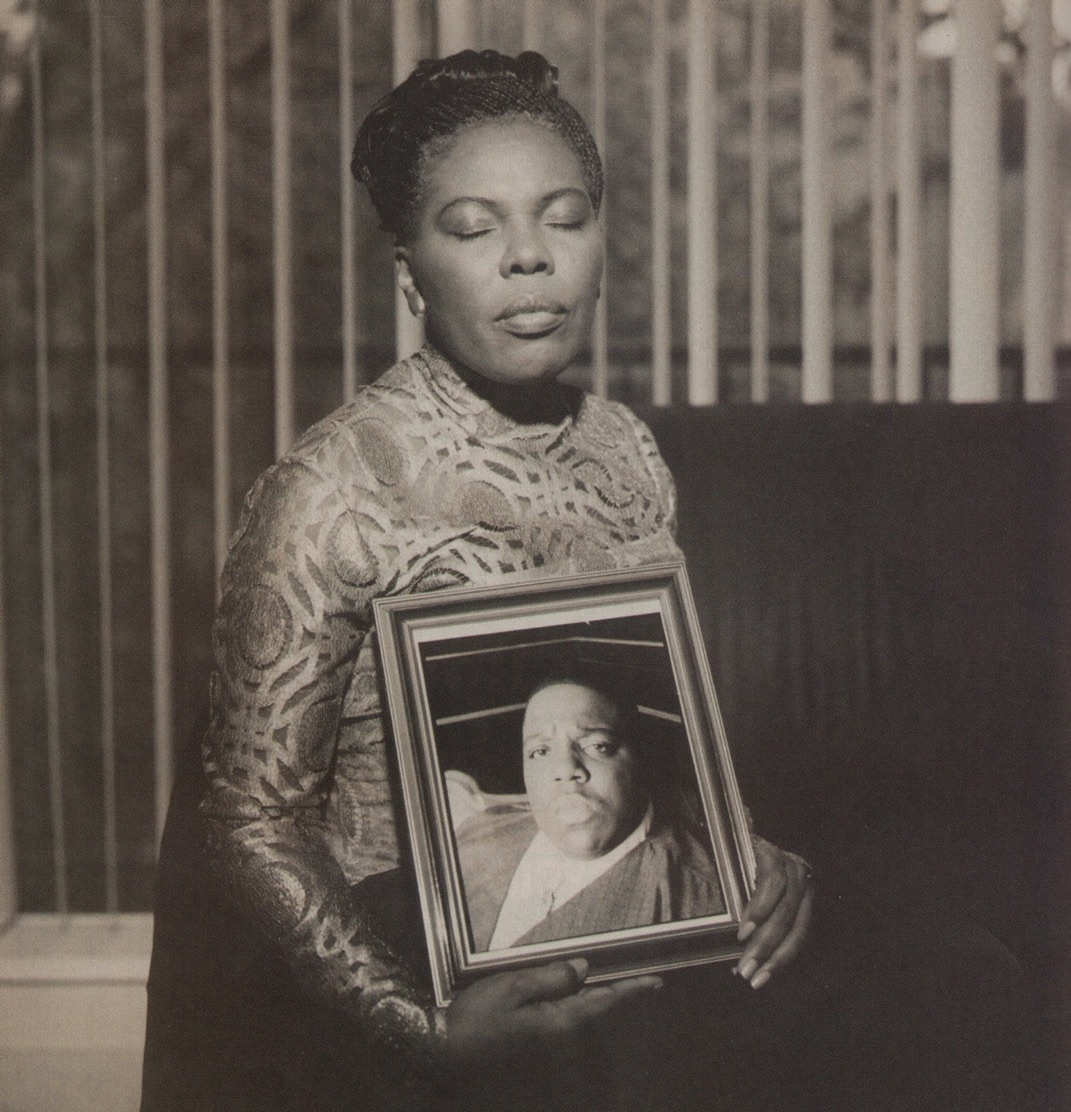
His mother, Voletta Wallace, spoke at his funeral.
She spoke in numerous interviews afterward, and she spoke in legal proceedings.
The exact nature of her private grief is not in the record beyond those public statements.
She became a vocal public figure, a mother demanding answers.
His widow, Faith Evans, also spoke publicly about his death.
He left behind a son, Christopher “C.J.” Wallace Jr., who was a young child at the time.
The boy grew up without his father.
Voletta Wallace published a memoir, *Biggie: Voletta Wallace Remembers Her Son, Christopher Wallace*.
It was a mother’s account of the son she raised.
She kept speaking about the lack of justice.
She died in 2024.
The son she mourned was gone; the questions she asked outlived her.
She was the one who kept his name in the public ear, long after the headlines faded.
Her voice was the constant.
Not because the case was solved. But because it was not.
She wanted answers, and she said so, plainly, for 27 years.
THE INVESTIGATION AND THE THEORY
The LAPD’s initial investigation was led by detectives who interviewed witnesses at the scene.
The case stalled.
Detective Russell Poole joined the investigation in 1997.
Poole developed a theory that the killing was connected to a feud between East Coast and West Coast hip-hop scenes.

He came to believe that rogue LAPD officers, possibly working with Death Row Records founder Marion “Suge” Knight, were involved.
It is a theory.
The record does not establish it.
The LAPD disputed Poole’s conclusions.
Poole left the LAPD in 1999, frustrated by what he saw as a lack of cooperation.
He said so.
The department officially closed the case in 2006 without making an arrest.
How does a high-profile murder case stall for years?
How does a detective’s frustration become part of the story, but not the answer?
How many witnesses were interviewed, and what did they say?
That would require evidence the record does not provide.
No one was charged.
No one was convicted.
The case remains closed, and the file stays where the department left it.
Poole’s theory persists in public memory, in documentaries, in books.
It persists as a theory.
The LAPD’s dispute of it is also on the record.
Two versions, one closed file.
Voletta Wallace kept asking anyway.
THE CIVIL SUIT AND THE SETTLEMENT
In 2002, the Wallace family filed a wrongful-death lawsuit against the city of Los Angeles.

The suit alleged that an LAPD officer was involved in the shooting.
The family was represented by an attorney in the civil suit.
The case relied heavily on Poole's findings.
Poole's theory had named a specific officer, but the allegations were never established in court.
The case was settled in 2010.
The city paid an undisclosed amount.
The family agreed to drop claims against the city.
The city settled without admitting liability.
Not because the allegations were proven.
Because the settlement closed the civil file.
That was the only legal proceeding there ever was.
There was no criminal trial.
No individual was ever charged, convicted, or acquitted in connection with the murder.
The officer named in the suit was never tried for it.
The specific allegations against him are not established in court.
The settlement included no admission of liability.
Voletta Wallace had pursued civil justice because criminal justice never came.
She got a settlement.
She did not get an answer.
The murder remains officially unsolved.
The LAPD had closed the case in 2006 without an arrest.

The civil case ended in 2010 without a finding.
Two closed files, one open wound.
She kept asking anyway.
AND THE STORY STILL ISN'T OVER
The murder remains officially unsolved.
No one has ever been charged.
Voletta Wallace kept asking anyway.
She spoke at events. She gave interviews. She published a memoir, *Biggie: Voletta Wallace Remembers Her Son, Christopher Wallace*.
She wanted the record corrected, the story told, the question answered.
Faith Evans has also spoken about the case, in interviews and in documentaries.
The widow and the mother, both still carrying the same question.
Detective Russell Poole died in 2015.
His work was dramatized in the 2018 film *City of Lies*, which was based on his investigation.
A film about a theory, not a conviction.
The case has been the subject of multiple documentaries and books.
It is a story told many times. It is a story with no ending.
Voletta Wallace died in 2024.
The mother is gone. The detective is gone. The case remains closed without an arrest.
Whether any new investigation is underway is not in the record.
Not because the record is silent on the grief. But because the record is silent on the next step.
She was on the ground below, in 1997, in Los Angeles, at a red light.
Her son was 24.
The SUV stopped. The shots came. The case stalled.
She kept asking anyway.
Now the asking has stopped too.
Advertisement
You may also like
The ransom note demanding $118,000 that matched John Ramsey's bonus
The 911 call came at 5:52 a.m. on December 26, 1996. Patsy Ramsey told the dispatcher her 6-year-old daughter was missing. A ransom note…
The trunk stain that sent Casey Anthony to trial for Caylee's death
The car was a Pontiac, and the trunk smelled before anyone opened it. In July 2008, after Caylee Marie Anthony was reported missing, a…
The two-phase attack that began at a streetlight and ended in a hallway
The light at 82-70 Austin Street in Kew Gardens, Queens, marks the spot. Not a hallway. Not a doorway. The open street, under the…
The 911 call at 12:10 a.m. — and the glove that would not fit the timeline
The dog came back first. It was past midnight on June 13, 1994, in the Brentwood neighborhood of Los Angeles. A neighbor named Sukru…
Cell phone data put Chase Merritt near the grave site — then QuickBooks opened after the family vanished
The motorcyclist stopped because something in the sand caught his eye. It was February 2013, and he was riding near Victorville, California, in the…
The parking ticket that led police to David Berkowitz's door
It was a piece of paper, folded under a windshield wiper. A parking ticket issued near one of the Son of Sam shootings. The…