The brother's tip that turned a 17-year manhunt into a cabin raid
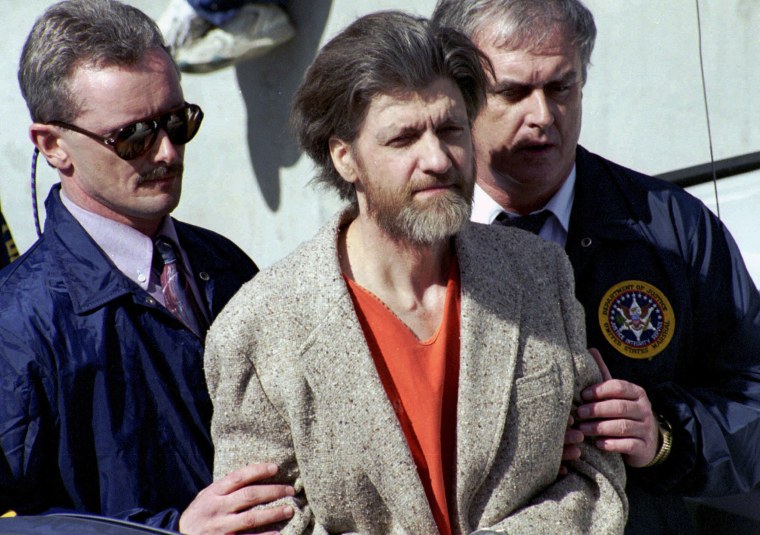
In September 1995, The Washington Post and The New York Times published the Unabomber's manifesto, a 35,000-word essay.
The FBI had offered to publish it in exchange for a halt to the bombings — a widely publicized tactic.
Seventeen years of mail bombs had killed three people and injured nearly two dozen others.
A brother read the manifesto.
David Kaczynski read the published essay and recognized the writing style and phrasing as similar to letters his brother had written.
He read the words, and the words sounded like home.
Not because they were warm. Because they were precise, rigid, familiar.
He contacted a private investigator, Susan Swanson, to help bring his suspicions to the FBI.
What exactly David Kaczynski read first, or when he first contacted Swanson, is not specified in the record.
That detail is not established.
What is established is the document itself: a manifesto, printed in two national newspapers, carrying the weight of a case that had run for nearly two decades.
A single essay. A brother's recognition. A tip that would eventually point agents toward a cabin in Montana.
The FBI had offered the publication as a tactic, a deal for peace.
It became the hinge.
THE 17-YEAR TRAIL
Between 1978 and 1995, mail bombs killed three people and injured nearly two dozen others across the United States.
The bombs targeted academics, airline employees, and others associated with modern technology.
The first bombing, in 1978, injured a Northwestern University police officer.
The final attack, in April 1995, killed the president of a timber industry lobbying group in Sacramento, California.
The case became known as the Unabomber case, from the FBI's code name "UNABOM," short for university and airline bomber.
The FBI's UNABOM task force coordinated the effort across nearly two decades.
It was a trail of packages, false return addresses, and wooden boxes packed with nails.
It was also a trail with no clear suspect.
Early on, the FBI focused on a different suspect, a man named John Smith.
John Smith was later cleared.
The exact number of bombs and the precise timeline of each attack are not fully detailed in the source.
That is not established.
What is established is the length: seventeen years of investigation, three dead, and a cleared man.
The frustration of the case was not the absence of evidence.
It was the absence of a name to attach it to.
The bombs themselves were examined, taken apart, traced.
The task force compared them, catalogued them, followed the false leads they left behind.
They had a pattern.
They had a method.
They did not have a man.
Then came the manifesto, and a brother's recognition.
But that came later.
In those seventeen years, the trail ran from a university campus to an airline office to a computer store to a timber lobby.
It ended, for now, in Sacramento, in April 1995, with a death.
The case had a name before it had a suspect.
It would take a publication to give it one.
THE LINGUISTIC MATCH
The manifesto was out in the world, and David Kaczynski was reading it as a confession.
Not because the name was on it. Because the voice was.
He recognized the phrasing, the arguments, the particular way his brother turned a sentence.
He worked with a private investigator, Susan Swanson, to bring his suspicions to the FBI.
The FBI compared the manifesto’s language with Theodore Kaczynski’s writings and found strong similarities.
Forensic linguist Roger Shuy analyzed the vocabulary.
Forensic document examiner James Fitzgerald analyzed the syntax.
They examined idiosyncratic phrases, the small habits of word choice that are nearly impossible to fake.
They concluded the author was likely the same person who had written letters to family members.
The specific linguistic features that matched are not enumerated in the source.
The match was a probability, not a fingerprint.
But the FBI had something else. They matched the typewriter used to produce the manifesto to one found in Kaczynski’s cabin.
That was physical. That was documented.
The language said it was him. The machine said it was him. The cabin would say the rest.
The evidence was not a theory. It was a stack of comparisons, each one narrowing the field.
It is precise. It is also slow.
This is how a case that had no suspect for seventeen years gets one in a matter of months.
THE CABIN RAID
In April 1996, agents searched Theodore Kaczynski’s remote cabin in Lincoln, Montana.
The exact date of that search in April 1996 is not specified in the source.
They found bomb-making materials.
They found a live bomb.
They found journals.
They found a handwritten draft of the manifesto.
The FBI also matched the typewriter used to produce the manifesto to one found inside the cabin.
The evidence was overwhelming.
It was not a theory.
It was a room full of objects that ended a seventeen-year manhunt with a single search.
The linguistic match had narrowed the field to one man.
The cabin raid closed it.
Agents did not need to persuade a jury with a stack of comparisons; they needed to open a door.
The cabin itself was later moved to a museum in Washington, D.C., where it has been displayed.
A shack that once held a live bomb now sits behind glass.
Visitors can walk past the walls that contained the journals, the materials, the draft.
They can see the place where the man accused of three murders lived alone.
What they cannot see is the moment of the search itself.
That moment is documented only in its aftermath: the arrest, the charges, the guilty plea.
The raid was the end of the trail.
It was also the beginning of the trial.
And the trial would test not what the cabin contained, but what the man inside it had done.
AND THE STORY STILL ISN'T OVER
The raid was the end of the trail.
It was also the beginning of the trial.
The trial would test not what the cabin contained, but what the man inside it had done.
Theodore Kaczynski was charged in 1996 with multiple federal counts, including three counts of first-degree murder.
The trial began in January 1998 in Sacramento.
Prosecutors sought the death penalty.
The defense argued that Kaczynski suffered from paranoid schizophrenia and was not competent to stand trial.
Kaczynski resisted the insanity defense.
He attempted to dismiss his attorneys.
In January 1998, he pleaded guilty to all charges.
The plea avoided the death penalty.
He was sentenced to life in prison without the possibility of parole.
He is serving that sentence at the federal supermax prison in Florence, Colorado.
His brother, David Kaczynski, had alerted the FBI after recognizing the manifesto's writing style.
David Kaczynski has spoken publicly about the case since the conviction.
He has advocated against the death penalty.
His mother, Wanda Kaczynski, cooperated with investigators before the arrest.
Wanda Kaczynski died in 2010.
What remains is not a doubt about the verdict.
What remains is a legacy of the evidence itself.
The typewriter matched.
The journals matched.
The handwritten draft of the manifesto matched.
The linguistic analysis by Roger Shuy and James Fitzgerald matched.
The cabin where he lived was moved to a museum in Washington, D.C., where it has been displayed.
Did the plea end the story?
Did the sentence close the case?
Did the museum display settle what the cabin meant?
The record shows a conviction, a life sentence, and a brother who speaks against the death penalty.
What the record does not show is any pending legal motion or future decision.
That would require evidence the source does not provide.
Advertisement
You may also like

NBA's Colorado Privacy Statement Hides a Shocking Data Sale Clause
The NBA's own privacy page just admitted it — they're selling your data, and Colorado residents are the first to see the fine print.…
The 18-year-old athlete whose family says the legal system forgot
January 13, 1999, was a school day. Hae Min Lee, an 18-year-old senior at Woodlawn High School, did not come home that evening. Her…
The detective's rogue-LAPD theory that never got a courtroom test
The SUV stopped at a red light at Wilshire Boulevard and South Fairfax Avenue. It was shortly after midnight on March 9, 1997. A…
Her wedding rings on the nightstand — and the truck leaving
The wedding rings sat on the nightstand. The purse and phone were still inside the home. Shanann Watts, 34, was gone. It was the…
81 minutes, 13 masterpieces, and the one detail the FBI still can't explain
Two men in Boston police uniforms rang the buzzer at the Isabella Stewart Gardner Museum just after midnight on March 18, 1990. They said…
Sharon Tate's mother turned grief into a fight — the parole battles
She testified, they say. She stood in those rooms and told the men what her daughter was to her. Doris Tate became a prominent…