The bullet that matched Richard Allen's pistol — and the confession he made to prison staff
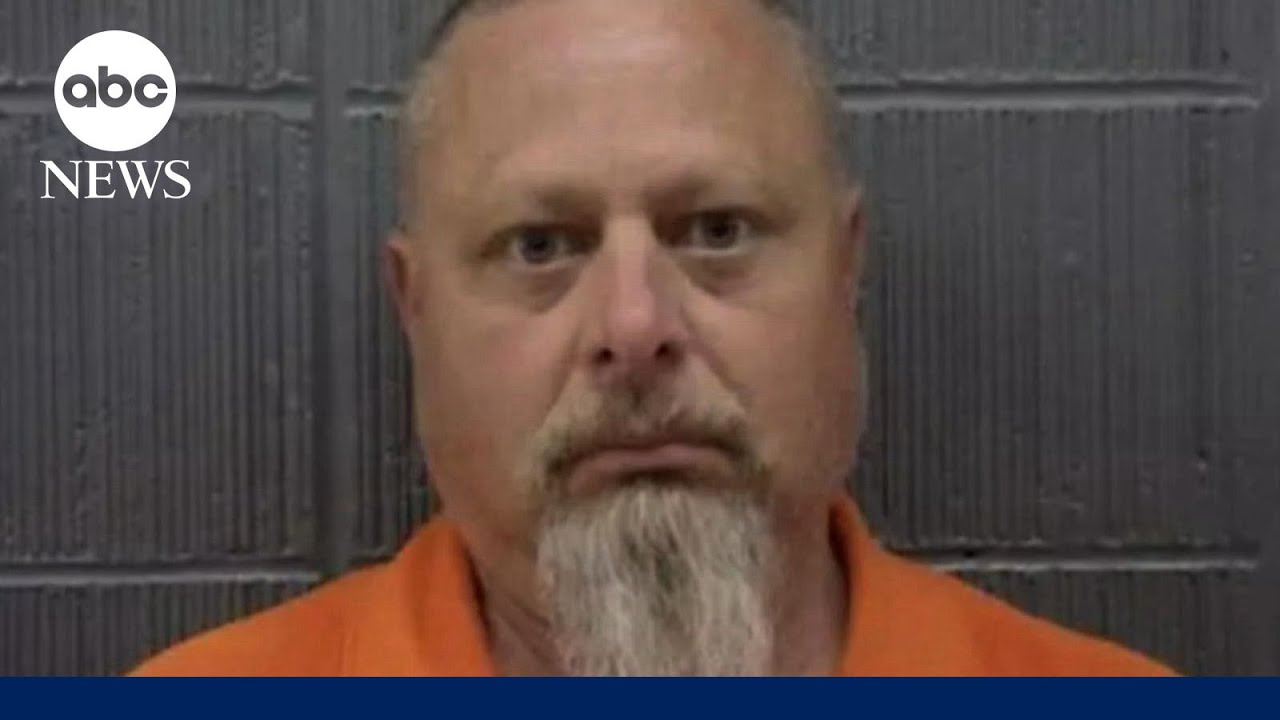
The bullet sat in an evidence room for years before anyone matched it.
An unspent round, found at the scene where two girls died.
It was matched to a pistol owned by Richard Allen.
That match is what connected him to the case, per the source.
Allen had been interviewed early in the investigation.
He was not initially considered a suspect, per the source.
The case went cold for over five years.
One piece of metal, unexplained.
Then, in October 2022, it changed everything.
Police had already released what they had.
A short audio clip of a man's voice saying "down the hill."
A grainy photo of a man walking on the bridge.
The public dubbed him "Bridge Guy."
The photo is not proof of who he is.
It is not established by the record that the man in the photo is Richard Allen.
That identification is disputed.
The bullet is different.
The bullet is in the record.
The bullet is what the state says ties Allen to the crime.
How does one unspent round carry so much weight?
How does it sit unexplained for years and then decide a case?
How does a single object change everything?
That would require evidence.
The record has the bullet.
The record has the match.
The record does not have certainty about the man on the bridge.
FEBRUARY 13, 2017 — THE MISSING REPORT
February 13, 2017, began as a routine day on a hiking trail near the Monon High Bridge in Delphi, Indiana.
Two teenage girls, Abigail Williams, 13, and Liberty German, 14, went to the trail that afternoon.
They were supposed to be picked up when they were done.
They never were.
That evening, the girls were reported missing after they failed to be picked up from the trail, per the source.
A pickup that never happened.
That is the ordinary rhythm the record holds: a plan, a wait, a call that goes unanswered.
The search began that night.
The next day, February 14, their bodies were found in a wooded area near the trail, per the source.
The discovery ended the search and began something else.
The cause of death was later determined to be homicide by sharp-force injury to the neck, per the source.
A key witness was a juvenile who reported seeing a man on the trail that day.
The juvenile was not named publicly.
The exact time of the girls' arrival at the trail is not in the record.
The precise path they took is not in the record.
What is in the record is the report, the search, and the finding.
What is in the record is a man seen on the trail by a witness whose name was never released.
What is in the record is a case that would sit unsolved for more than five years.
The trail was quiet after that.
The town was not.
THE AUDIO AND THE PHOTO
Police released a short audio clip of a man's voice saying “down the hill.”
It had been recorded on Liberty German’s cellphone.
Police also released a grainy photo of a man walking on the bridge.
The public gave him a name that the police never did: Bridge Guy.
The voice and the image were all the public had.
Was the voice the man in the photo?
Was the man in the photo the killer?
Was the killer still in Delphi?
For years, the answer was silence.
The case went cold despite extensive searches and tips.
Volunteers searched the woods.
Investigators followed leads.
The trail faded.
Allen had been interviewed early in the investigation.
He was not initially considered a suspect.
He was a local man, a familiar face in a small town.
The public kept the photo.
They kept the audio.
They had a voice and a face but no name to attach to either.
It is not established by the record that the voice on the audio is Richard Allen’s.
That is a matter of dispute.
The defense would argue it later.
The prosecution would offer its own evidence.
But in those years, the only thing the record held was a clip and a still.
The town waited.
The families waited.
The photo stayed grainy.
The voice stayed short.
That was all there was.
OCTOBER 2022 — THE ARREST AND THE CONFESSIONS
October 2022 came, and the case turned.
Richard Allen was arrested.
Investigators had connected him to an unspent bullet found at the crime scene.
The bullet was matched to a pistol Allen owned, per the source.
He was charged with two counts of murder.
The prosecution presented the bullet match as key evidence.
They also presented Allen's own confessions to prison staff and family members.
The confessions were central to the case.
The defense argued the evidence was circumstantial.
They said Allen had been wrongly accused.
The investigation had been criticized for missteps.
There was a period when Allen was not under surveillance.
He was a person of interest, and he was not watched.
The content of the confessions is not detailed in the record.
Their circumstances are not detailed either.
Their reliability is disputed.
Was the bullet enough?
Were the confessions reliable?
That would require evidence.
The record does not establish what Allen said, or to whom, or how many times.
It only establishes that the prosecution said he said it.
The defense said he did not mean it.
The case went from cold to courtroom in a single month.
Five years of silence, then an arrest.
The photo stayed grainy.
The voice stayed short.
Now there was a name.
AND THE STORY STILL ISN'T OVER
The trial opened in October 2024 in Carroll County, Indiana.
The prosecution laid out the unspent bullet and the confessions.
The defense argued the confessions were unreliable and that Allen was not the man in the photo.
On November 11, 2024, the jury found Allen guilty on both counts of murder.
The judge sentenced him to 130 years in prison, with 65 years for each count, to be served consecutively.
It is a verdict.
It is not the last word.
Allen’s defense attorneys filed an appeal, arguing that the trial was unfair due to pretrial publicity and the judge’s rulings.
Allen is serving his 130-year sentence at a state prison in Indiana.
His appeal is pending.
That is where the record stops.
Did the publicity poison the jury?
Did the judge’s rulings tilt the scale?
Did the confessions hold up under scrutiny?
Those questions belong to the appeal, and the outcome of the appeal is not in the record.
The families of Abigail Williams and Liberty German have spoken publicly about the verdict.
They have continued to advocate for justice.
The photo stayed grainy.
The voice stayed short.
The bullet matched.
The confessions came.
The jury decided.
And the story still isn’t over.
Advertisement
You may also like
The Christmas Eve disappearance that turned a quiet street into a 24/7 news circus
The Christmas Eve lights were up on Covena Avenue, and the lawn was wet with winter rain. Laci Peterson, 27 and eight months pregnant,…
The severed head found in a Florida canal that changed how America searched for missing children
The video games were the new model, the kind that beeped and flashed and drew a crowd of children. Six-year-old Adam Walsh stood among…

The duct tape and the disguised cops: inside the Gardner heist's fatal first hour
The knock came in the early hours of March 18, 1990. Two men in Boston police uniforms stood at the side door of the…

How the Green River Killer's victims were overlooked for decades — and the DNA that finally caught him
The first body was found in the Green River in July 1982. She was one of several women discovered strangled along the waterway that…
The cellphone video that placed Alex Murdaugh at the kennels — and broke his alibi
SLED forensic analysts pulled a cellphone video from Paul Murdaugh's phone. The footage placed Alex Murdaugh at the dog kennels near the time of…
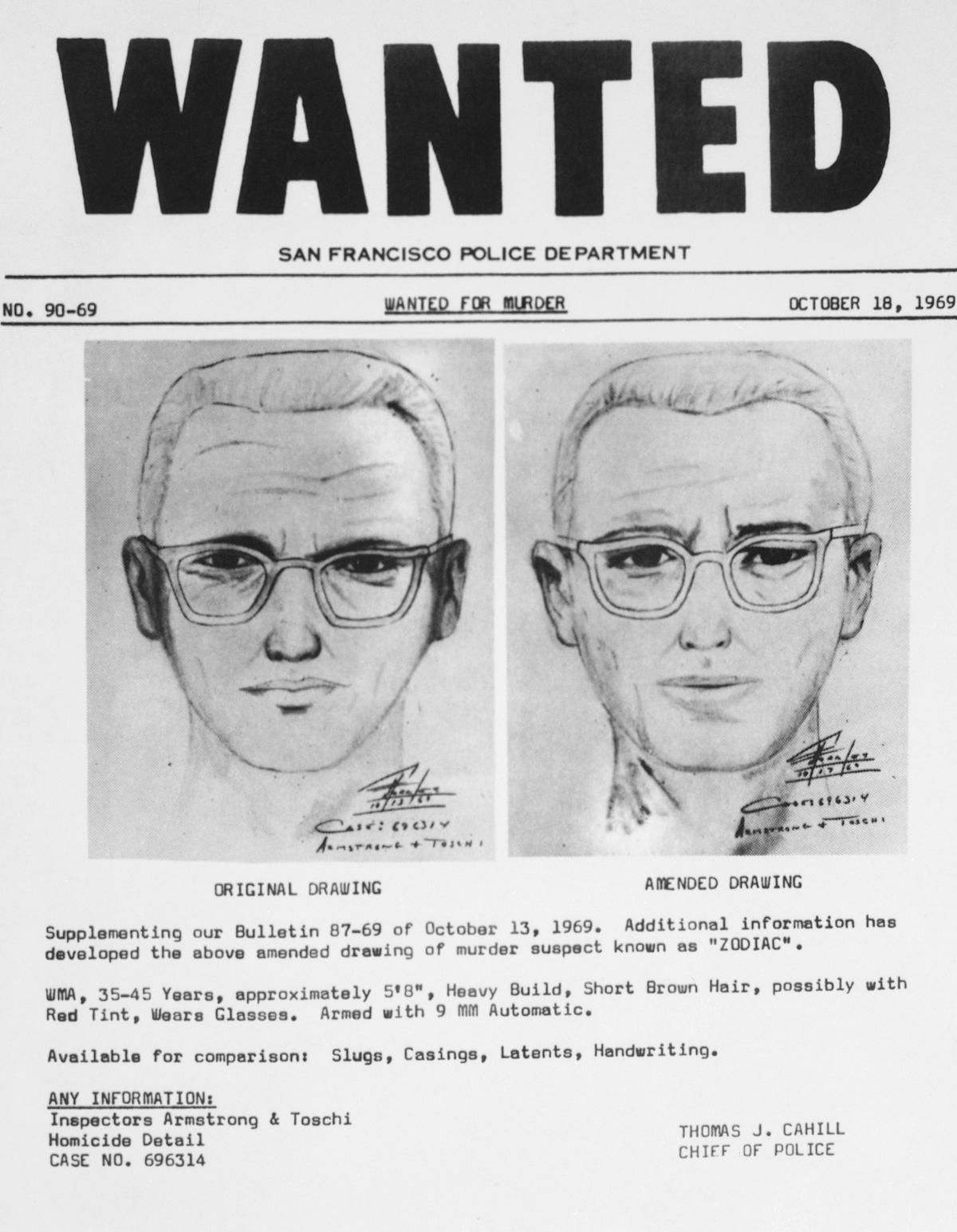
The 1969 cipher that taunted Bay Area papers and left a killer unnamed
August 1969, and three Bay Area newspapers each received the same taunt. The San Francisco Chronicle. The San Francisco Examiner. The Vallejo Times-Herald. The…