The duct tape near Caylee Anthony's skull—and the drowning theory that never fit
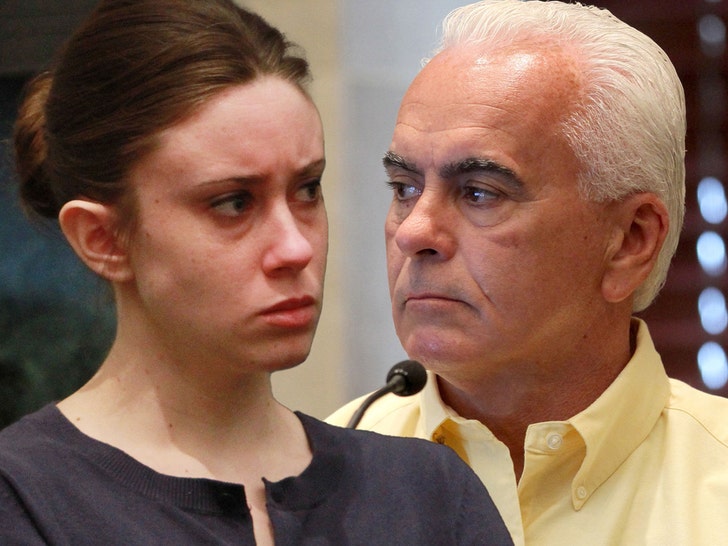
The duct tape was found near the skull.
It was found in a wooded area near the Anthony family home, where the remains of two-year-old Caylee Marie Anthony were discovered on December 11, 2008.
The prosecution argued the tape was used to suffocate her.
That is one story.
The defense told another: that Caylee accidentally drowned in the family pool, and that her grandfather, George Anthony, disposed of the body.
Two stories, one object, one body.
The medical examiner testified that the cause of death was homicide by undetermined means.
Not drowning.
Not suffocation.
Not established by the record.
What the record does establish is narrower: a child went missing, and her grandmother, Cindy Anthony, reported her missing on July 15, 2008.
Cindy made that call after Casey had allegedly not seen her daughter for 31 days.
Thirty-one days.
The duct tape's exact role was never established.
The drowning was argued in court, but it was an argument, not a finding.
Which story does the evidence actually support?
The tape is physical.
The drowning is a theory.
The cause of death is undetermined.
That is what the medical examiner said, and that is what the record holds.
The rest is what people claimed, what people argued, what people wanted to believe.
31 DAYS AND A GRANDFATHER'S SEARCH
On July 15, 2008, in Orlando, Florida, Casey Anthony reported her two-year-old daughter missing.
She said she had last seen the child weeks earlier.
It was the child's grandmother, Cindy Anthony, who made the missing-person report.
Casey had allegedly not seen her daughter for 31 days.
Thirty-one days.
Detective Yuri Melich interviewed Casey, who gave shifting accounts.
She claimed the child was with a babysitter named Zenaida Fernandez-Gonzalez.
Investigators could not verify that person existed.
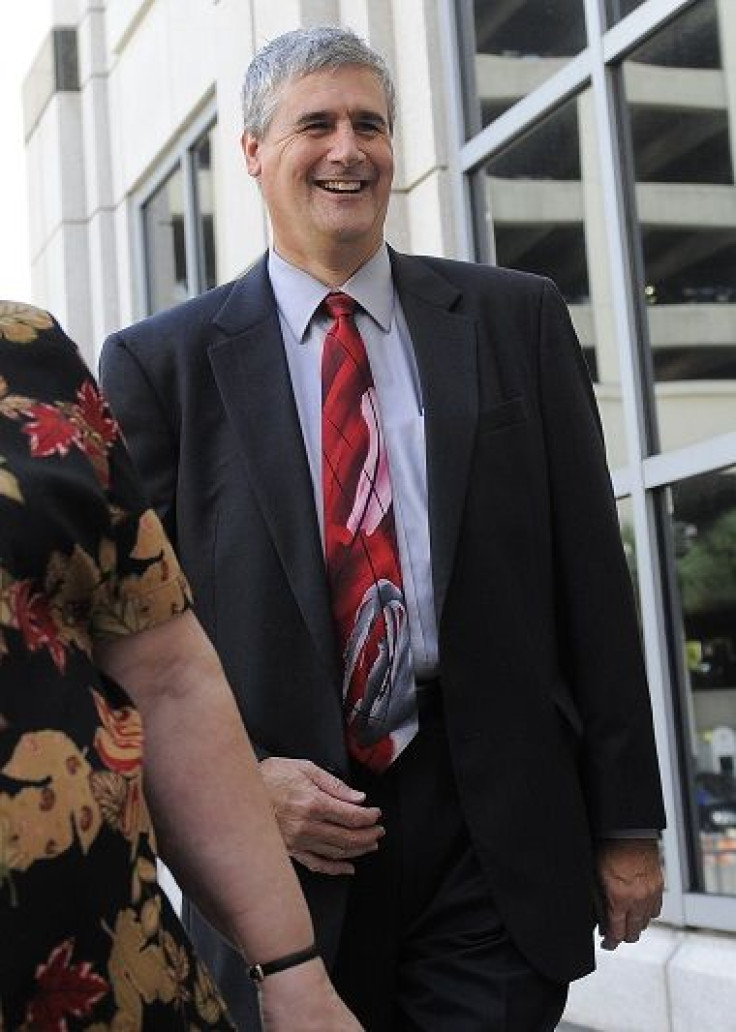
The child's grandfather, George Anthony, initially led searchers to the wooded area where remains were later found.
He led them to the very spot.
On December 11, 2008, a utility worker discovered skeletal remains in that wooded area near the Anthony family home.
The remains were identified as Caylee.
What happened during those 31 days is not in the record.
Why George led searchers there is not established.
The grandfather's role remains a question the record does not answer.
The gap between the last sighting and the report was slow, and it was agonizing.
It was a month of missing time.
It was a month of unanswered calls.
It was a month that ended with a grandfather pointing the way to a wooded area.
The remains were found in December.
The report was made in July.
The months between them belong to the record as a silence.
THE TRIAL AND THE TWO STORIES
The trial began on May 24, 2011, before a judge in Florida.
Two stories entered the courtroom that summer.
Prosecutors argued that Casey killed Caylee to free herself from parental responsibility.
Defense attorney Jose Baez argued that Caylee had accidentally drowned in the family pool and that George Anthony had covered up the death.
George Anthony took the stand.
His testimony was often combative.
He was the grandfather who had led searchers to the wooded area where the remains were found.
Now he sat across from his daughter's lawyers, accused of hiding the truth.
A jailhouse informant, Robyn Adams, testified about statements Casey allegedly made.
What Adams said is only alleged.
The record does not establish that Casey said those words.
The jury heard the two stories.
One story was of intent: a mother who wanted her freedom and killed for it.
The other story was of accident and cover-up: a drowning, a grandfather, a secret buried in the woods.
She was a two-year-old girl who went missing in June and whose remains were found in December.
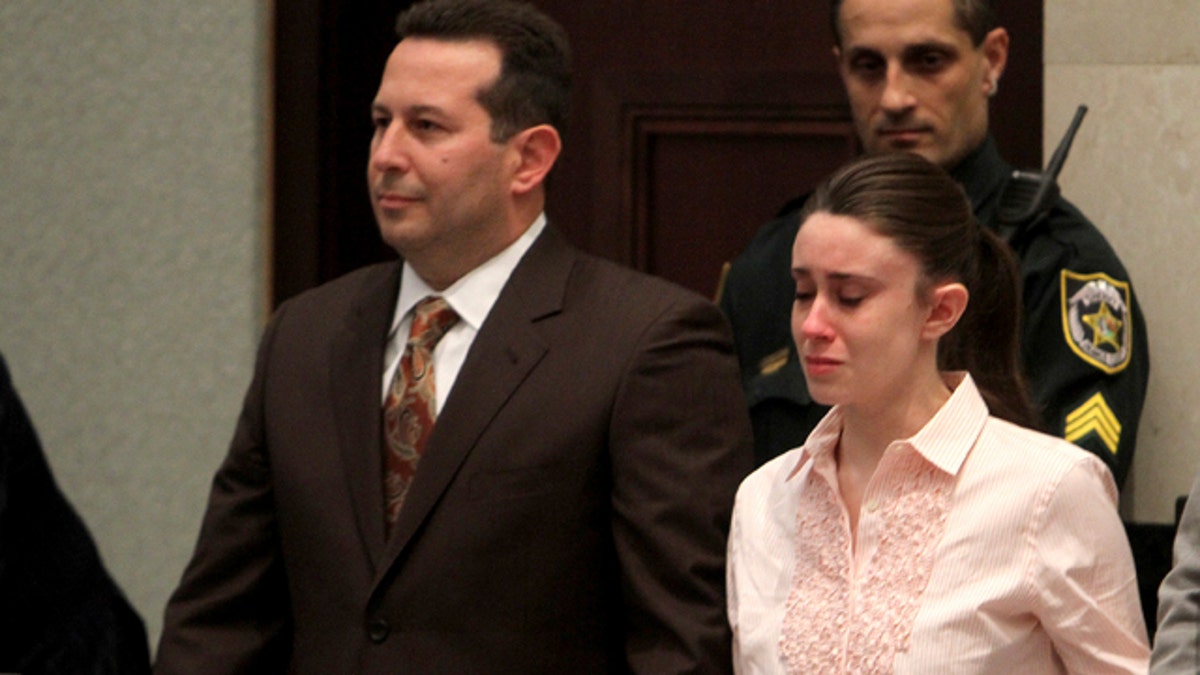
Her name was Caylee Marie Anthony.
That was never in dispute.
On July 5, 2011, the jury acquitted Casey of first-degree murder, aggravated child abuse, and aggravated manslaughter of a child.
She was convicted of four counts of providing false information to law enforcement.
The jury's reasoning is not in the record.
They did not explain which story they believed, or whether they believed either.
They heard the prosecution's argument and the defense's argument.
They heard a medical examiner testify that the cause of death was homicide by undetermined means.
They heard a grandfather testify with anger in his voice.
They heard an informant's alleged words.
What they weighed, and how, belongs to them alone.
THE DROWNING THEORY VS. THE RECORD
The drowning theory was argued by the defense in court.
It is a legal argument, not a fact established by the record.
The medical examiner testified that the cause of death was homicide by undetermined means.
Not by drowning. Not by suffocation.
Undetermined.
The defense highlighted inconsistencies in the timeline.
They pointed to the prosecution's inability to establish a precise cause of death.
They pointed to the duct tape found near the skull, and asked how it proved anything.
They pointed to the absence of a clear moment, a clear method, a clear wound.
What the record does not establish is the drowning.
It is not established that Caylee drowned.
It is not established that she was suffocated.
It is not established how she died.
The medical examiner's testimony left the cause open, and the prosecution's case rested on what could be inferred, not what could be proven.
The case was marked by a lack of direct physical evidence linking Casey to the death.
No eyewitness placed her at the scene.
No confession was entered into evidence.
The verdict was widely criticized by the public and media, with many believing the prosecution had failed to prove its case beyond a reasonable doubt.

They were acquitted of murder and manslaughter.
Convicted of four counts of providing false information to law enforcement.
The drowning theory was argued.
It was heard.
It was weighed.
The record does not resolve it.
That would require evidence.
AND THE STORY STILL ISN'T OVER
She was released on July 17, 2011.
Casey Anthony walked out of custody and largely out of the public eye, though she has occasionally returned for media interviews.
She has not been retried for Caylee’s death.
What happened to Caylee is not established by the record.
George and Cindy Anthony have remained in Florida.
George published a memoir in 2011, another telling of a story the public had already consumed.
In 2022, a documentary titled "Casey Anthony: Where the Truth Lies" aired.
In it, Casey maintained her innocence.
She said it again, on camera, years later.
The jury had acquitted her of murder and manslaughter, convicting her only of four counts of providing false information to law enforcement.
The verdict was widely criticized.
Many believed the prosecution had failed to prove its case beyond a reasonable doubt.
The case remains one of the most controversial in American legal history.
The public debate has not ended.
Was it a drowning covered up?
Was it something else?
The record does not say.
The family still lives with it.
George published his version.
Cindy reported Caylee missing in the first place.
Casey has spoken her piece.
The questions remain open.
That would require evidence.
Advertisement
You may also like
The .35 caliber Marlin rifle that silenced six beds in Amityville
The call came on November 13, 1974. Police were sent to 112 Ocean Avenue in Amityville, New York, after the DeFeo family failed to…
The notebook found with Brian Laundrie's remains that changed the Petito case
Gabby Petito, 22, and her fiancé Brian Laundrie set off on a cross-country van trip through national parks in the western United States. The…
The deleted file on a floppy disk that led police to the BTK killer
A floppy disk arrived at a local television station in 2004. It came from the killer known as BTK, who had taunted police and…
The notebook found beside a gun in a Florida swamp that ended a manhunt
On October 20, 2021, Brian Laundrie’s remains were found in the Carlton Reserve in Florida. Beside him: a backpack, a notebook, and a gun.…
The 2013 DNA match that tied DeSalvo to Mary Sullivan — but never reached a courtroom
In 2013, DNA from the scene of Mary Sullivan's murder was tested. It was compared to Albert DeSalvo's remains, which had been exhumed. The…
The 14-year-old's stepmother whose 2005 report started the Epstein case
In 2005, a Florida mother walked into Palm Beach police headquarters. She was not the girl's biological mother. She was the stepmother, and the…