The 2013 DNA match that tied DeSalvo to Mary Sullivan — but never reached a courtroom
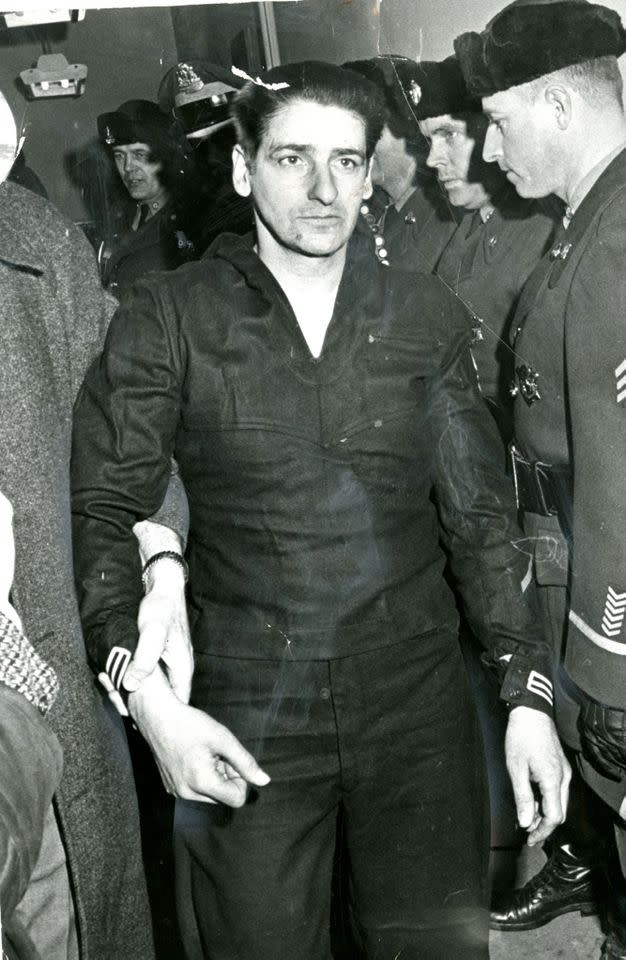
In 2013, DNA from the scene of Mary Sullivan's murder was tested.
It was compared to Albert DeSalvo's remains, which had been exhumed.
The results were reported as a match.
That word carries weight.
That word carries no legal force.
The testing was conducted by a private firm.
It was not part of a court proceeding.
No judge weighed it.
No jury heard it.
The case record is plain on this: the match is a reported result, not a fact established in any courtroom.
Some experts have questioned the reliability of that match.
Some family members of victims have questioned it too.
They ask how a private lab's finding could settle what a trial never did.
They ask what the testing actually proved.
They ask why, if the result was so clear, the case never reached a courtroom.
The answer is not in the record.
The case has not been reopened for prosecution.
It remains closed.
The scarf stays in its evidence bag.
The question stays in the air.
A reported match is not a conviction.
A reported match is not even a charge.
It is a finding from one firm, in one test, on one piece of evidence.
And that is all the record shows.
THE CONFESSION
Between June 1962 and January 1964, thirteen single women, aged 19 to 85, were strangled in the Boston area, many in their own apartments, often with their own stockings.
The final victim, Mary Sullivan, was found in her Beacon Hill apartment on January 4, 1964.
The case was closed in 1964.
It was closed because a suspect confessed.
Albert DeSalvo, already in custody on other charges, confessed to the murders.
His confession was obtained by attorney F. Lee Bailey, who was representing him on unrelated charges.
Bailey arranged for DeSalvo to meet with John S. Bottomly, special assistant attorney general and lead investigator.
Bottomly took a detailed confession.
He recorded the details DeSalvo gave — the rooms, the stockings, the sequence of the attacks.
The confession was detailed.
It was also never tested.
DeSalvo was never charged with the murders, and his confession was never entered into a criminal trial.
No physical evidence — fingerprints, DNA, eyewitness testimony — was ever presented to a jury.
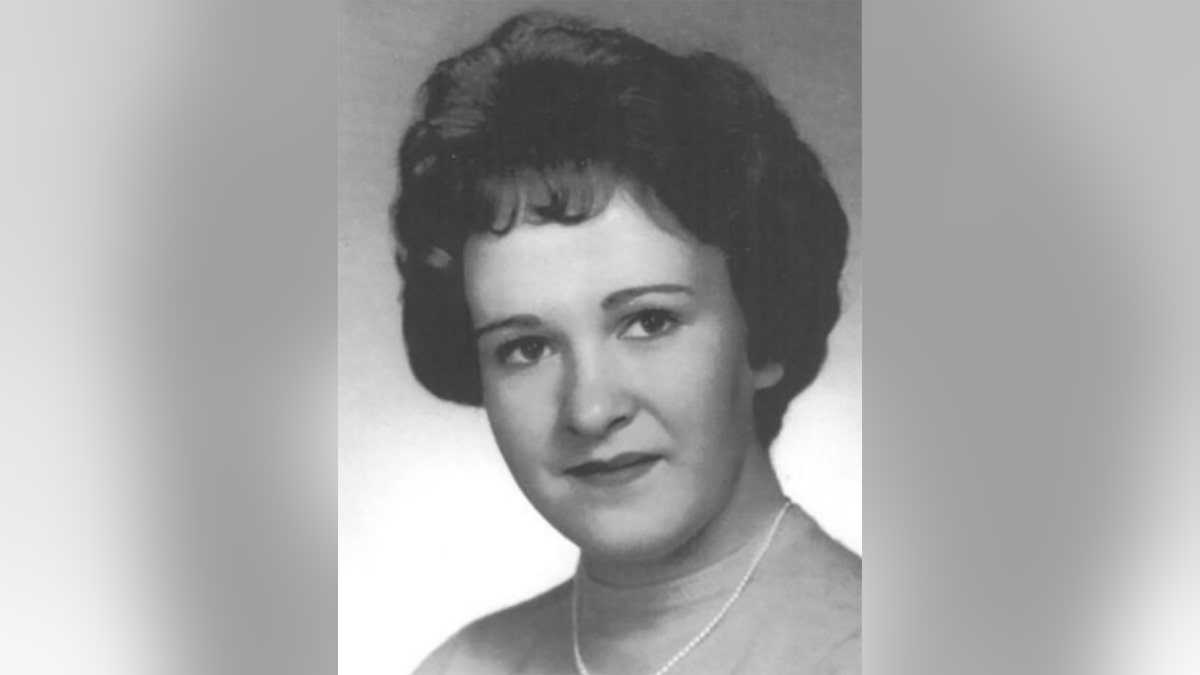
Investigators noted that DeSalvo knew details of the crime scenes that were not public.
Critics later argued that some details could have been learned from press coverage.
The record does not resolve which is true.
What the record shows is this: the case closed on a confession, and the confession never met a courtroom.
Whether DeSalvo actually committed the murders was never established in court.
The confession stands in the file, detailed and untested.
That is the evidence that decided the case.
It is also the evidence that never had to prove itself.
THE EVIDENCE THAT WASN'T THERE
The case record shows what was never there.
No fingerprint tied one man to all the murders.
No DNA existed in 1964.
No eyewitness placed a suspect at the scene.
The crimes were run as separate cases by different police departments across the Boston area.
That slowed coordination and scattered the files.
No physical evidence was ever presented to a jury.
The medical examiner, Dr. Michael Luongo, testified about the cause of death in several cases.
His testimony was limited to the autopsies.
It did not link DeSalvo to the murders.
The confession was the evidence.
Investigators noted that DeSalvo knew details of the crime scenes that were not public.
That seemed to confirm the confession.
Critics later argued that some details could have been learned from press coverage.
Whether DeSalvo’s knowledge came from the scenes themselves or from the newspapers is not established.
The record does not resolve it.
The confession was never tested in court.
It was never challenged by a cross-examination.
It was never weighed against the absence of physical proof.
The case was closed on the word of a man who was never charged with the murders.
That is the emptiness at the heart of the case.
A confession without corroborating evidence.
A file closed without a trial.
How was the case ever closed?
That would require evidence the record does not contain.
THE OTHER SUSPECT
The confession pointed at one man.
The record points at another.
George Nassar was a convicted killer, and some investigators suspected him in the Strangler murders.
The investigation was criticized for locking onto Albert DeSalvo after his confession, while other leads — including the possible involvement of Nassar — were not fully pursued, according to the case record.
Nassar was never charged.
He was cleared of involvement.
Whether Nassar had any involvement in the Strangler murders is not established.
What the record does establish is narrower.
DeSalvo was never tried for the Boston Strangler murders.
Instead, he was tried and convicted on unrelated charges of armed robbery and sexual assault in 1967, and sentenced to life in prison.
F. Lee Bailey represented him in those proceedings.
Bailey was the same lawyer who had obtained the confession.
The confession that closed the case never reached a courtroom.
In 1973, DeSalvo was stabbed to death in prison by an unknown assailant.
No one was ever convicted of the Strangler murders.
A file closed without a trial.
How was the case ever closed?
That would require evidence the record does not contain.
It is a case with a confession.
It is also a case without a conviction.
AND THE STORY STILL ISN'T OVER
The case record holds no conviction.
In 2013, DNA evidence from the scene of Mary Sullivan’s murder was tested and compared to Albert DeSalvo’s exhumed remains.
The results were reported as a match.
The testing was conducted by a private firm.
It was not part of a court proceeding.
No judge weighed it.
No jury heard it.
The case has not been reopened for prosecution.
It is a match without a courtroom.
It is a confession without a conviction.
The families of the victims have continued to seek closure.
No further legal action has been taken.
Whether any further legal action will be taken is not established.
That would require evidence the record does not contain.
The case remains officially unsolved.
It remains a subject of books.
It remains a subject of documentaries.
It remains a subject of ongoing public fascination.
The record closes with a match that never reached a trial.
The families are left with that.
Advertisement
You may also like
The circuit board fragment from a toy car that cracked the Boston bombing case
The fragment was small enough to fit in a palm. It was a piece of a circuit board, recovered from the blast sites along…
The 'foolproof suffocation' search that hung over Casey Anthony's trial
The search term sat on Casey Anthony's home computer, logged and time-stamped by forensic examiners. "Foolproof suffocation." Investigators presented it at trial as a…
The love letters found by a crabapple tree — and the witness who said the bodies were moved
The crabapple tree stood in a place people called Lovers' Lane. On September 16, 1922, the bodies were found beneath it, in a secluded…
The night Sharon Tate’s housekeeper found five bodies at Cielo Drive
The housekeeper arrived at 10050 Cielo Drive in Benedict Canyon on the morning of August 9, 1969, expecting an ordinary day of work. She…
The 1980 Columbia River cash that tied a stranger to Cooper's jump
The boy was walking the bank of the Columbia River near Vancouver, Washington, in 1980. He was not looking for anything. He found a…
The cellmate confession that cracked the Tate-LaBianca case
She was in custody on an unrelated charge. Months after the murders at Cielo Drive, Susan Atkins told her cellmate about the killings. The…