The fake police car that drove away from a garage at 10:30 a.m.
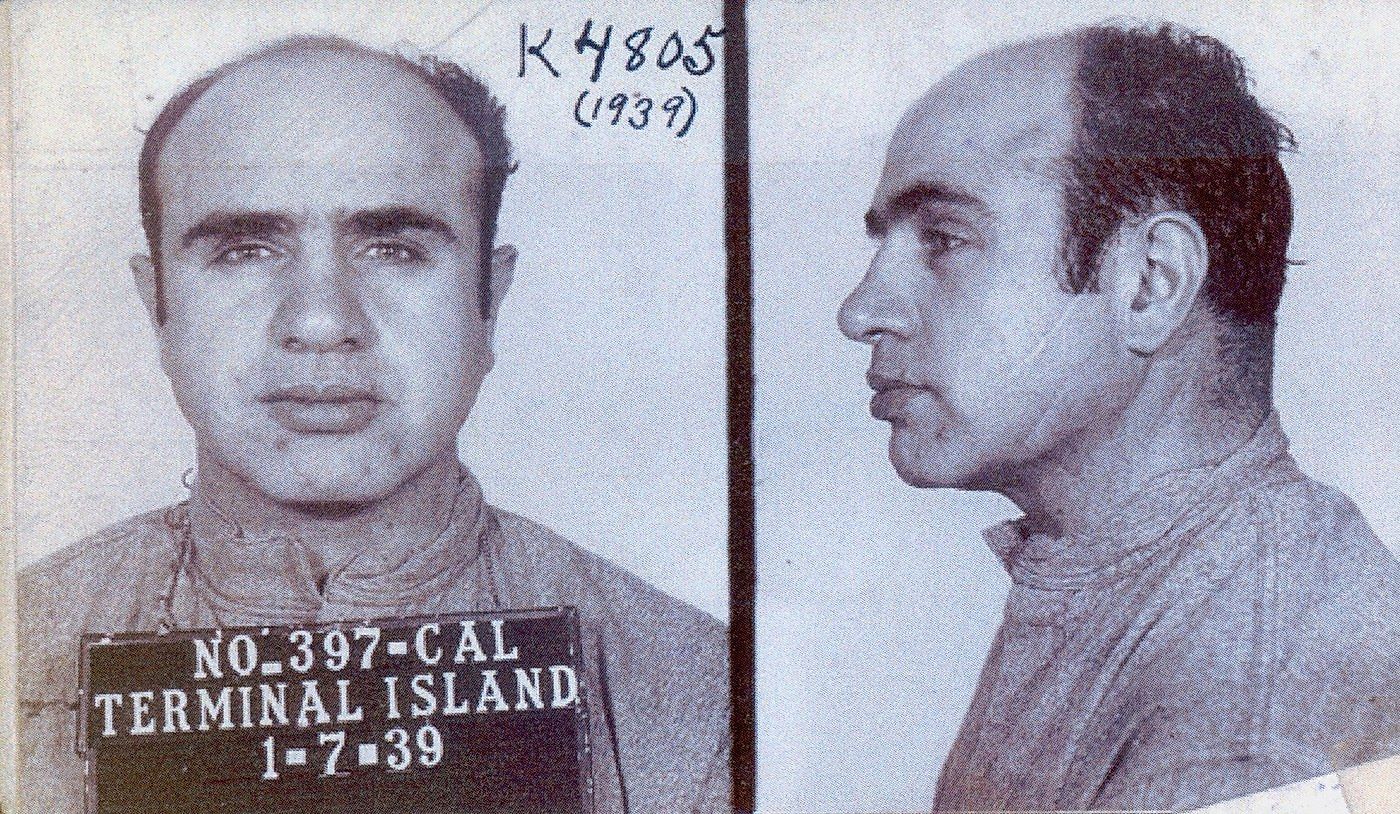
The garage door at 2122 North Clark Street stood open.
A resident found it that way and looked inside.
Seven men were dead on the floor.
The time was approximately 10:30 a.m. on February 14, 1929.
Two men dressed as police officers had entered the SMC Cartage Company garage and lined the victims against a wall.
Two more men, in civilian clothes, came in after them.
They fired submachine guns and shotguns.
Then the killers left in a vehicle made to resemble a police car.
That is what the case record shows.
It was broad daylight on a Thursday morning in Chicago.
The massacre was widely attributed to Al Capone's organization.
No one was ever convicted.
The identities of the two men dressed as police officers are not established in the record.
The identities of the two men in civilian clothes are not established in the record either.
What is established is the precision: the uniforms, the lineup, the car that looked official.
A fake police car drove away from a garage at 10:30 a.m.
Who got away?
Who opened that garage door and saw what was inside?
Who believed the police had done this, and who believed the police would never solve it?
That would require evidence the record does not provide.
The bodies were found shortly afterward by that resident.
The garage was open.
The killers were gone.
THE TARGET WHO WAS LATE
The men on the wall were North Siders.
They were members and associates of the North Side gang, rivals of the South Side Italian gang led by Al Capone.
Their leader was not among them.
George "Bugs" Moran, the North Side boss, was the intended target.
He arrived late and escaped.
Whether his lateness was intentional or coincidental is not established in the record.
Seven men died in that garage.
The dead included Moran's brother, a doctor, and several gang members and associates.
One man survived the initial volley.
He was found alive and taken to a hospital.
He died hours later.
He refused to identify his attackers.
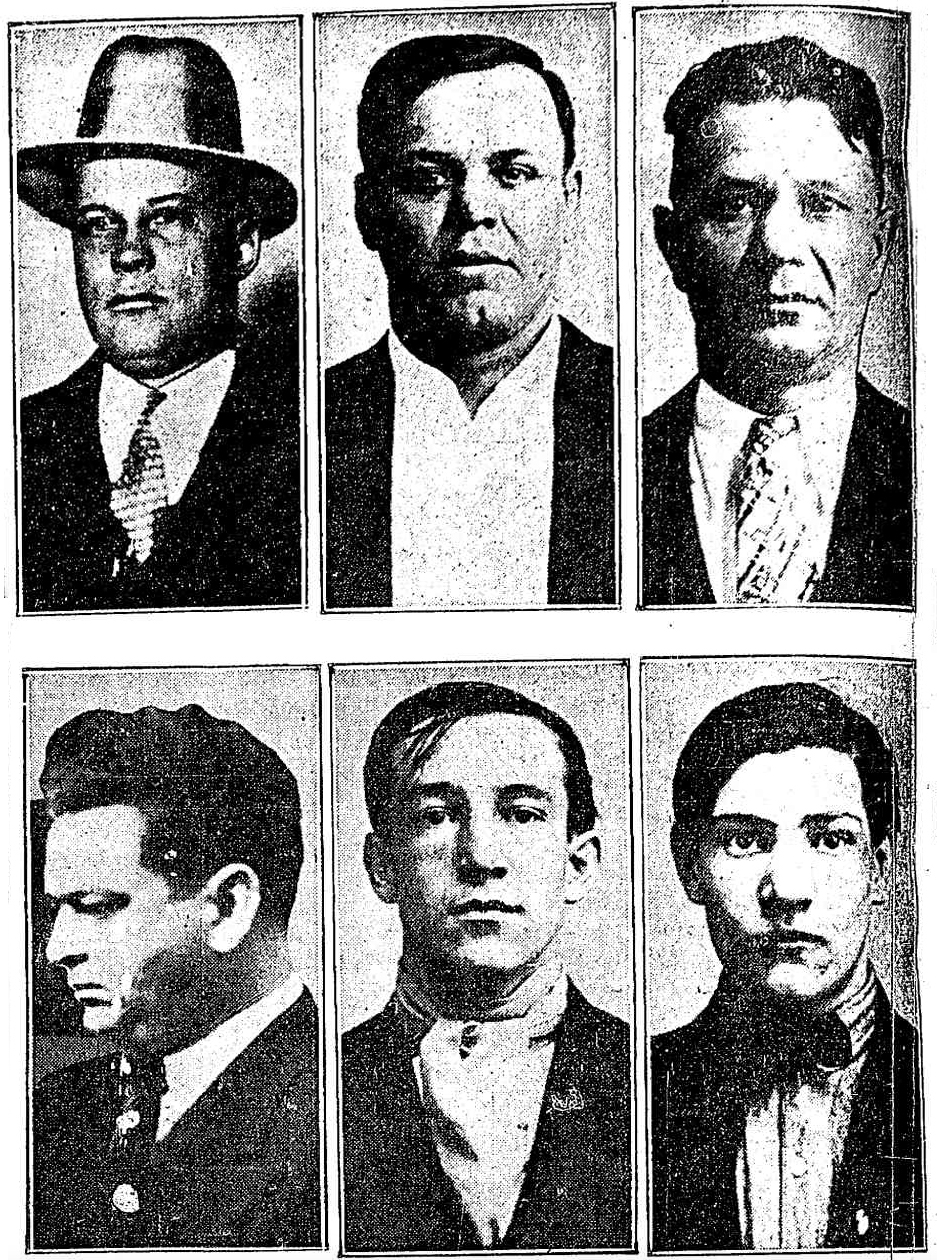
According to the case record, he told police "nobody shot me."
That refusal became a wall.
It is a wall the investigation never broke through.
The massacre is generally believed to have been ordered by Capone, the case record states.
He was never charged.
No one was ever charged.
The target who was late lived.
His men did not.
THE EVIDENCE ON THE FLOOR
The floor of the garage held the evidence.
Spent .45-caliber cartridge casings from Thompson submachine guns were scattered across it.
Shotgun shells were there too.
The Chicago Police Department led the investigation, with Detective Sergeant Thomas J. Loftus among the primary investigators.
The casings were counted.
The shells were collected.
The pattern of the shots was mapped.
Witnesses reported a police-style vehicle leaving the scene.
It was a vehicle made to resemble a police car.
The investigation had a direction.
Ballistics evidence later linked a Thompson submachine gun found at the home of a suspect in Michigan to the massacre.
The link was documented.
The suspect was never extradited for the crime.
He was never tried for it.
The specific identity of that suspect is not named in the record for this article.
What is documented is the gun and the link.
What is not documented is a trial.
The case was hampered.
The victims refused to cooperate.
One dying victim told police "nobody shot me."
The corruption of Chicago law enforcement was widespread.
Many believed it was compromised by Capone's influence.
The evidence was heavy.
The silence was heavier.
The casings were real.
The gun was real.
The wall of silence was real.

The case was never solved.
No one was ever charged.
The floor held the truth, and the floor kept it.
THE ALIBI AND THE NO-TRIAL
There was no trial.
No one was ever charged with the St. Valentine's Day Massacre.
Al Capone was questioned, the case record shows.
He had a documented alibi, claiming he was in Florida at the time.
The prosecution's theory held that Capone's South Side Italian gang ordered and carried out the massacre to eliminate North Side rivals.
The defence's position, implicitly, was that Capone was in Florida and never charged.
No one was ever convicted.
Whether Capone personally ordered the massacre is not established by the record.
It is widely believed.
It was never proven in court.
That would require evidence.
One suspect was linked by ballistics evidence to the massacre.
He was arrested in 1931 for the murder of a police officer in Michigan.
He was convicted and imprisoned for that crime.
He was never tried for the massacre.
The alibi held.
The theory remained a theory.
The case record is clear on what it does not establish.
It does not establish an order from Capone.
It does not establish a trial.
It does not establish a conviction.
It establishes a documented alibi and a suspect who faced a different court for a different crime.
The frustration is in the gap between what was believed and what was charged.
The gap was never closed.
AND THE STORY STILL ISN'T OVER
The massacre has never been solved.
Al Capone was never charged with it. He was later convicted in 1931 on federal income tax evasion charges and imprisoned at Alcatraz. He died in 1947.
The suspect linked by ballistics died in prison in 1940. He was serving time for a different murder, a police officer’s killing. He was never tried for the massacre.
George "Bugs" Moran, the man who arrived late and escaped, was killed in 1957. A fellow inmate did it while Moran served a prison sentence for bank robbery.
The garage at 2122 North Clark Street was demolished in 1967. Where seven men stood against a wall, there is now nothing to mark the spot.
The case remains one of the most famous unsolved crimes in American history. It is the subject of numerous books, films, and documentaries. It is also a file with no conviction, no trial, no charged name.
There is no pending hearing, motion, or decision in the record. The case is officially unsolved, with no active legal step documented. That is what the record shows.
Every principal is dead. The suspect, the victim, the target, the alibi. The building is gone. The story is still open.
It is a closed room with an open door. It is a case that ends without an ending. The verdict was never written, because the case never reached one.
Advertisement
You may also like
The $50,000 ransom note left on a nursery windowsill — and the 11-hour jury deliberation that followed
On the evening of March 1, 1932, a ransom note demanding $50,000 was found on a nursery windowsill in the Lindbergh home near Hopewell,…

A mother's shopping trip, a Sears toy aisle, and the six-year-old who never came home
The Sears store at the Hollywood Mall had an air-conditioned hum and a toy aisle that ran long and bright. On July 27, 1981,…
The traffic stop that caught a bombing suspect before the FBI did
The trooper saw the plate first, or rather, he didn't see it. The 1977 Mercury Marquis had no license plate, and that was enough.…
The 14-year-old boy Milwaukee police returned to Dahmer hours before his death
A boy was wandering the street in Milwaukee, drugged and naked. Neighbors reported him in May 1991. Police officers responded to the call. They…

The 1934 torso washing ashore that set off a four-year hunt
The water gave her back on September 5, 1934. A woman's torso, washed up on the shore of Lake Erie near Euclid Beach. She…
Two gas-station murders, one .22 pistol: the timeline the jury followed
The evening of July 19, 1976, in Orem, Utah, was warm and ordinary. A young man walked up to two college students at a…