The gas station victim's wife asked for privacy — then the sniper struck again
October 14, 2002, a 47-year-old FBI analyst was killed outside a Home Depot in Falls Church, Virginia.
Her husband spoke publicly after her death.
He described her as a devoted mother.
He called the shooter a coward.
The same day, in Manassas, Virginia, the wife of a 53-year-old civil engineer killed at a gas station asked the public for privacy.
She asked for privacy.
That is the documented plea.
Within hours of that plea, the sniper struck again.
Not because the record says the killer heard her.
Because the shootings continued through October 22.
The exact time between her words and the next shooting is not specified in the source.
It is a gap the record leaves open.
A family begging for privacy.
A killer's next move already in motion.
She was one of several widows that October.
The attacks appeared random.
Victims were struck while pumping gas, mowing a lawn, sitting on a bench, or walking into a store.
The gas station was one stop.
The Home Depot was another.
The plea was a private grief colliding with a public terror.
It is a moment of intimacy in a month of randomness.
The husband called the shooter a coward.
The wife asked for silence.
Both requests hung in the air of an investigation that had no answers yet.
The sniper did not stop.
Not because he responded to the plea.
Because the sequence of events unfolded in real time, and the record does not connect them.
That would require evidence.
THE ERRAND
Between October 2 and October 24, 2002, a series of shootings occurred in Maryland, Virginia, and Washington, D.C., killing ten people and wounding three others.
The first killing was on October 2 outside a grocery store in Wheaton, Maryland.
The civil engineer was killed at a gas station in Manassas, Virginia.
The record does not give the specific date of that shooting.
Victims were struck while pumping gas, mowing a lawn, sitting on a bench, or walking into a store.
The attacks appeared random, with no clear pattern.
A man filling his tank.
A man cutting grass.
A man resting on a bench.
A person stepping through a door.
Each was an errand, not a target.
The randomness was the point the record leaves open.
Nothing connected the victims to each other, to a place, or to a cause.
They were struck in the ordinary minutes of a day.
The civil engineer's wife asked the public for privacy.
That request is documented.
The next strike came anyway.
Not because she was ignored.
Because the sequence of events unfolded in real time, and the record does not connect them.
That would require evidence.
The shootings continued through Maryland, Virginia, and the District.
Ten dead.
Three wounded.
The final shooting took place on October 22 on a bus in Aspen Hill, Maryland, killing the bus driver.
Two suspects were arrested on October 24 while sleeping in a Chevrolet Caprice at a rest stop off Interstate 70 near Myersville, Maryland.
A truck driver had spotted the car.
The errands had stopped.
THE INVESTIGATION
Montgomery County Police Chief Charles Moose led the investigation and gave daily press briefings.
He stood before cameras, a region behind him, holding a map of the shootings on a board.
The map grew pins as the days passed.
Victims were struck while pumping gas, mowing a lawn, sitting on a bench, or walking into a store.
The errands had stopped.
The tip came on October 24.
A truck driver spotted a white Chevrolet Caprice at a rest stop off Interstate 70 near Myersville, Maryland.
He called authorities.
Police surrounded the car and found the two suspects asleep inside.
A Bushmaster .223-caliber rifle was recovered from the car.
Ballistics linked it to several of the shootings.
The truck driver's role in the arrest is documented.
His identity is not given in the record.
That remains.
The investigation had been criticized for early missteps, including a focus on a white van that proved unrelated.
Was the van a lead?
Was it a distraction?
Was it a mistake?
That would require evidence.
The pressure had been on Moose, the public face of a region under siege.
He gave the briefings, day after day, the same map, the same question: who is doing this?
Then the car was found.
The suspects were asleep.
The errands had stopped.
THE TWO STORIES
Then the car was found.
The suspects were asleep.
The errands had stopped.
Two men were in that car.
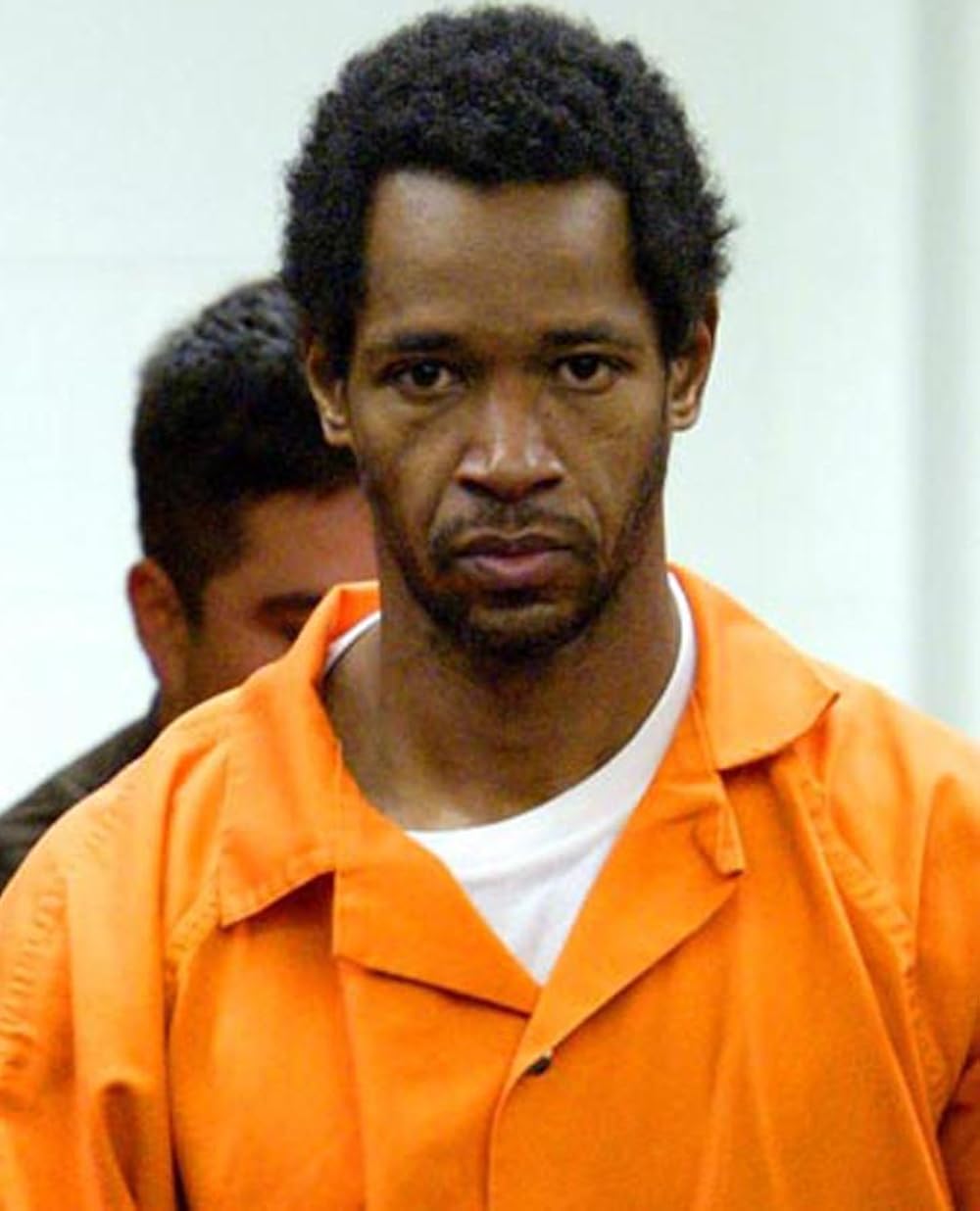
John Allen Muhammad, a U.S. Army veteran, was the older figure, according to the record.
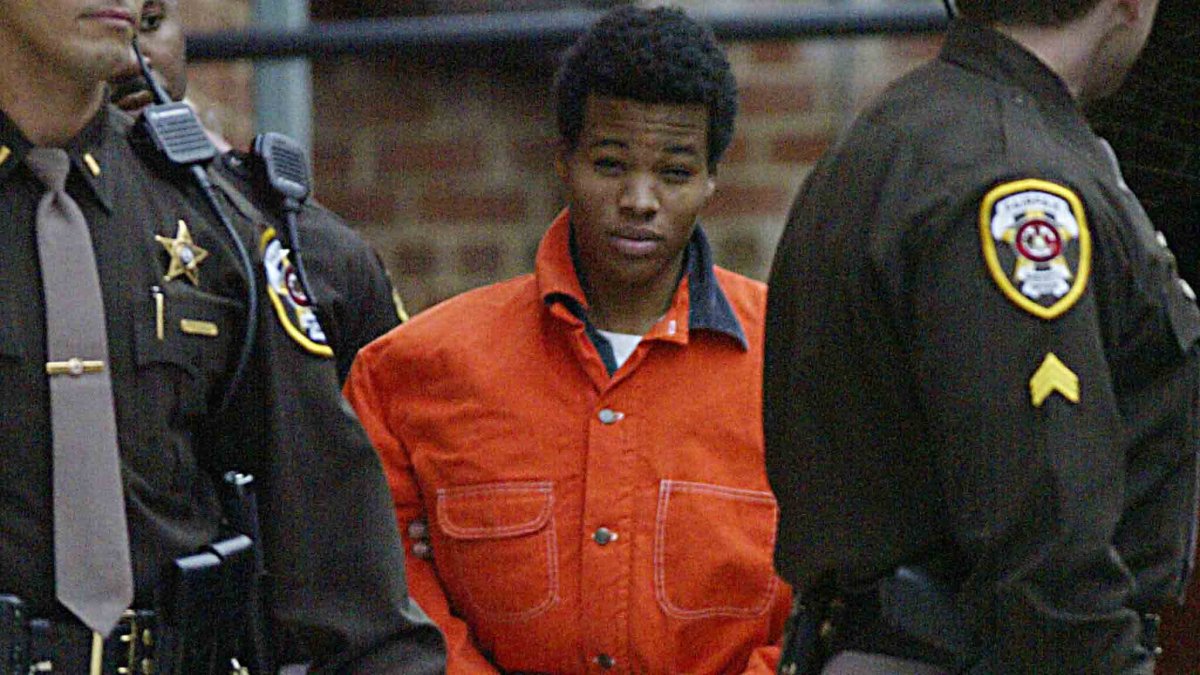
Lee Boyd Malvo was a teenager from Jamaica who traveled with him.
Prosecutors told one story.
Muhammad was tried first in Virginia Beach for capital murder in the killing of the civil engineer.
He was convicted and sentenced to death.
Malvo was tried separately in Chesapeake for the killing of the FBI analyst.
He was convicted and sentenced to life without parole.
The rifle was the same rifle.

The car was the same car.
The arrests were the same arrests.
The legal outcomes diverged sharply.
The prosecution's story held in two courtrooms.
The defense told another story.
Malvo's lawyers argued in 2017 that his sentence should be reconsidered in light of a Supreme Court ruling on juvenile sentencing.
He remains incarcerated.
What did Muhammad's defense argue?
The source does not detail it.
That argument is not established in the record.
It is a question the record leaves open.
What did the prosecution say about the older man and the teenager?
That Muhammad was the planner.
That Malvo was the follower.
That the rifle linked them both to the shootings.
That would require the evidence.
The families were left with the outcomes.
The wife of the civil engineer had asked for privacy.
She got it.
The FBI analyst's husband had called the shooter a coward.
He got a conviction.
Two stories, one set of facts.
One man executed in 2009.
One man serving life without parole.
The errands had stopped, but the interpretations had not.
AND THE STORY STILL ISN'T OVER
Muhammad was executed by lethal injection on November 10, 2009, in Virginia.
Malvo remains in prison, serving life without parole.
The errands had stopped, but the legal echoes had not.
The families of the victims have largely remained out of the public eye.
The husband of the FBI analyst has spoken occasionally about his wife's death and the impact on his family.
The 13-year-old boy who was wounded has never been publicly identified by name.
His family has not sought public attention.
The case remains one of the most studied examples of random sniper attacks in American history.
It is studied in criminology courses. It is studied in threat-assessment training. It is studied by psychologists trying to understand what makes a shooter random.
The record does not resolve what makes a shooter random.
In 2017, Malvo's lawyers argued that his sentence should be reconsidered in light of a Supreme Court ruling on juvenile sentencing.
The current status of that challenge is not stated as resolved in the source.
He remains incarcerated.
That is what the record says.
The gas station victim's wife asked for privacy, and she got it.
The boy's parents pleaded for the shooter's capture, and the shooters were captured.
The boy grew up, presumably, unnamed.
The families grew older, presumably, in private.
The one thing the record establishes is the weight.
Ten people dead. Three wounded. Two perpetrators.
One man executed. One man serving life without parole.
The story still isn't over.
It just stopped being told in public.
Advertisement
You may also like
The parking ticket on a 1970 Ford Galaxie that led police to a suspected shooter
The parking ticket sat on the windshield of a 1970 Ford Galaxie. It sat there near the final shooting scene in Brooklyn, on a…
The car that drove away from Cielo Drive — and the witness who could not forget it
The car was yellow, or cream, or something in between. Linda Kasabian could not forget it. She drove it away from 10050 Cielo Drive…
The babysitter who didn't exist: the name Casey Anthony gave before Caylee vanished
The name she gave was Zenaida Fernandez-Gonzalez. A full name. A specific name. A name that sounded like a real person with a real…

The QuickBooks edits a business partner made after the McStay family vanished
The dogs were in the backyard. The vehicles were still in the driveway at the Fallbrook home, and the front door was unlocked, but…

The .44-caliber letter that turned a shooting spree into a hunt for 'Son of Sam'
The letter was found near the scene of the April 1977 attack. It was addressed to columnist Jimmy Breslin. It was signed "Son of…
The 2007 deal that let Epstein dodge federal charges until a 2018 exposé
In 2005, a mother in Palm Beach, Florida, told police that her 14-year-old daughter had been sexually abused by an older man. The older…