The genealogy website match that led police to a former officer accused of 13 murders
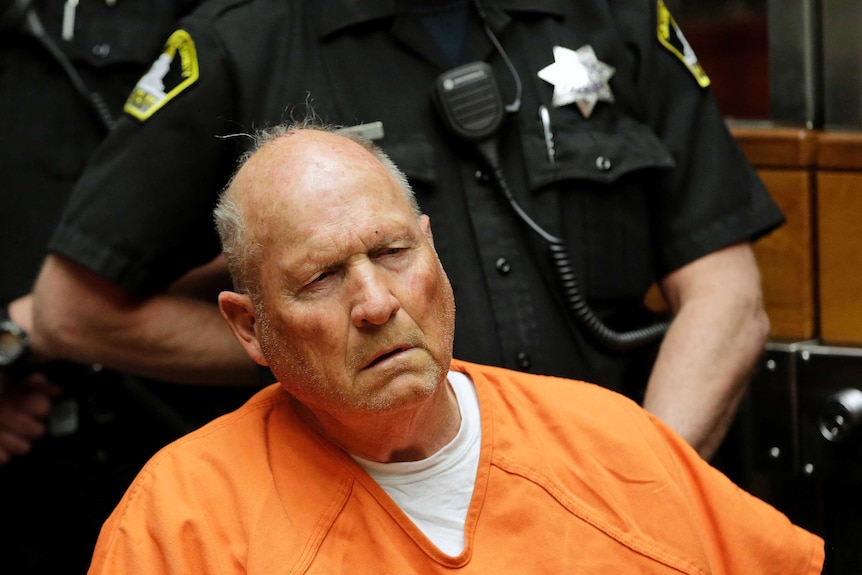
In 2018, investigators uploaded crime-scene DNA to a public genealogy website called GEDmatch.
The site compared that DNA with distant relatives of the suspect.
The match led them to Joseph James DeAngelo Jr., a former police officer.
They also linked him to the crimes through a discarded item from his home.
What the item was is not in the record.
It could have been a tissue. It could have been a cup. It could have been anything a man throws away.
The case had gone cold for decades.
The crimes spanned California from the mid-1970s to the mid-1980s.
There were at least 13 murders, more than 50 rapes, and over 100 burglaries attributed to one perpetrator.
For years, the trail went nowhere.
Then a public website and a piece of trash did what decades of detective work could not.
That is the unease at the centre of this case.
A man’s distant cousin uploaded a genetic profile for one reason.
Investigators used it for another.
And a discarded item from his home sealed the connection.
The DNA matched the crime scenes.
The item placed him there.
The identification was made.
The arrest came in April 2018.
He was charged.
He would later plead guilty.
But in that moment, it was simply a match.
A cold case, a warm lead, and a former officer’s name.
What did they throw away that day?
What did the website reveal that the files never did?
That would require evidence.
Some of it is in the record.
Some of it is not.
THE CRIME SPREE
He had many names before he had one.
The East Area Rapist. The Visalia Ransacker. The Original Night Stalker.
The crimes spanned California from the mid-1970s to the mid-1980s.
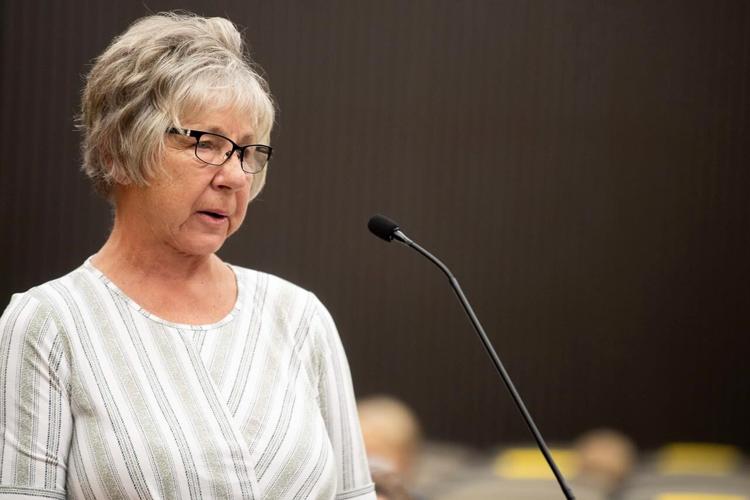
They began with a string of sexual assaults in the Sacramento area.
They moved to the South Bay area of the Bay Area.
They ended with murders in Southern California.
At least 13 murders were attributed to the perpetrator.
More than 50 rapes were attributed to him.
Over 100 burglaries were attributed to him.
The scale is staggering. The span is worse.
How does one person move across a state, across a decade, and stay ahead of every net?
Early investigations in Sacramento and the Bay Area produced suspects.
Those suspects were cleared.
The exact sequence of all crimes is not fully detailed in the record.
Not because the record is short. Because the record is spread across jurisdictions, agencies, and decades.
No single lead detective carried the whole case.
Multiple agencies worked it, then passed it on, then watched it go cold.
The same man was a rapist in one county, a burglar in another, a murderer in a third — and no one connected the dots.
He was a former police officer. He knew the patterns.
That would require evidence to prove. The record does not establish it.
What the record establishes is the toll: the victims, the families, the years.
The crimes were committed. The charges were brought. The scale was documented.
One person, allegedly, behind all of it.
The question of how he evaded justice for so long is not answered by the case file.
It is only asked by it.
THE BREAKTHROUGH
In 2018, investigators uploaded crime-scene DNA to GEDmatch, a public genealogy website.
The site compared that DNA against distant relatives of the suspect.
It returned a family tree, and the tree pointed to Joseph James DeAngelo Jr.
He was arrested in April 2018.
His DNA matched the crime-scene samples.
The match was not the only link; investigators also used a discarded item from his home.
The breakthrough did not come from the lab alone.
Crime writer Michelle McNamara’s book “I’ll Be Gone in the Dark” had brought renewed public attention to the case.
She died before the arrest.
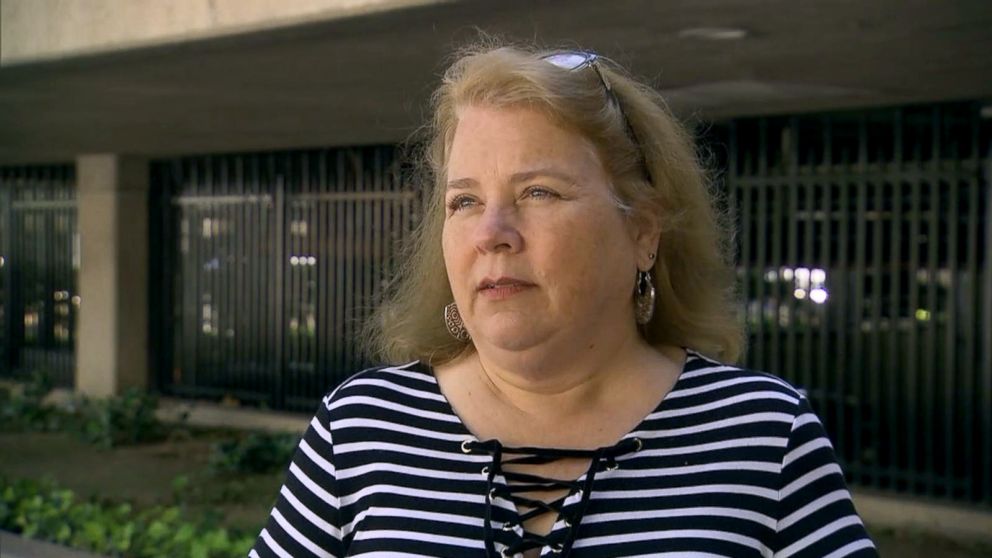
The specific role of her book in the investigation is not detailed in the record.
That is not established by the case file.
What is established is the sequence: a public database, a distant relative, a former officer.
The case had gone cold for decades.
Multiple agencies had investigated, clearing suspect after suspect.
Then the genealogy match closed the distance.
It is a scientific method.
It is also a cultural moment — a book, a podcast, a public push.
The record shows the method worked.
It does not show which force mattered most.
That would require evidence the file does not contain.
THE PLEA AND THE SENTENCE
The charges came from multiple counties.
They were consolidated in Sacramento County, where the prosecution built the case around the DNA and the genealogy match.
In June 2020, DeAngelo pleaded guilty.
He pleaded guilty to 13 counts of first-degree murder.
He pleaded guilty to 13 counts of kidnapping-for-robbery.
He also admitted to numerous rape charges that were time-barred, meaning they could not be prosecuted but could be acknowledged.
The defense argued that his age and health should be considered.
The plea agreement precluded any possibility of parole.
That was the deal.
In August 2020, the judge sentenced him to life in prison without the possibility of parole.
The prosecution presented victim impact statements from relatives.
The defense offered its argument about his condition.
Then DeAngelo made a brief statement in court.
He apologized for his crimes.
What exactly he said is not in the record.
That would require evidence the file does not contain.
It is a legal end.
It is also a heavy one.
Decades of rapes, murders, and burglaries across the state came down to a single courtroom.
Not because the case was simple.

But because the plea was the end of the line.
Life without parole.
No appeal promised.
No release possible.
The judge imposed the sentence.
The families heard it.
The record shows the apology was brief.
It does not show what it meant.
That would require evidence the file does not contain.
AND THE STORY STILL ISN'T OVER
DeAngelo is serving his life sentence at a California state prison.
He has not sought parole, which is unavailable under his sentence.
That would require a motion, and the file shows none.
The method that found him—genetic genealogy—has since been adopted in many other cold cases across the United States.
It compares crime-scene DNA against public databases.
It identifies a suspect through distant relatives.
It is a tool now, where it was once a theory.
DeAngelo’s adult daughter has spoken publicly about the shock of her father’s arrest.
She described the moment the news arrived.
She did not describe what came before it.
The record does not show her testimony in court.
It does not show her name in the trial transcript.
It shows only that she cooperated with investigators.
The families of the victims have continued to speak publicly.
They have asked what the case leaves behind.
They have asked what the sentence means.
They have asked what the apology was worth.
That would require evidence the file does not contain.
The case is closed.
The sentence is being served.
The method is being used elsewhere.
The shock is still being carried.
Advertisement
You may also like
The ransom note demanding $118,000 that matched John Ramsey's bonus
The 911 call came at 5:52 a.m. on December 26, 1996. Patsy Ramsey told the dispatcher her 6-year-old daughter was missing. A ransom note…
The trunk stain that sent Casey Anthony to trial for Caylee's death
The car was a Pontiac, and the trunk smelled before anyone opened it. In July 2008, after Caylee Marie Anthony was reported missing, a…
The two-phase attack that began at a streetlight and ended in a hallway
The light at 82-70 Austin Street in Kew Gardens, Queens, marks the spot. Not a hallway. Not a doorway. The open street, under the…
The 911 call at 12:10 a.m. — and the glove that would not fit the timeline
The dog came back first. It was past midnight on June 13, 1994, in the Brentwood neighborhood of Los Angeles. A neighbor named Sukru…
Cell phone data put Chase Merritt near the grave site — then QuickBooks opened after the family vanished
The motorcyclist stopped because something in the sand caught his eye. It was February 2013, and he was riding near Victorville, California, in the…
The parking ticket that led police to David Berkowitz's door
It was a piece of paper, folded under a windshield wiper. A parking ticket issued near one of the Son of Sam shootings. The…