The grandmother's 911 call that started it all — and the family story that never fit
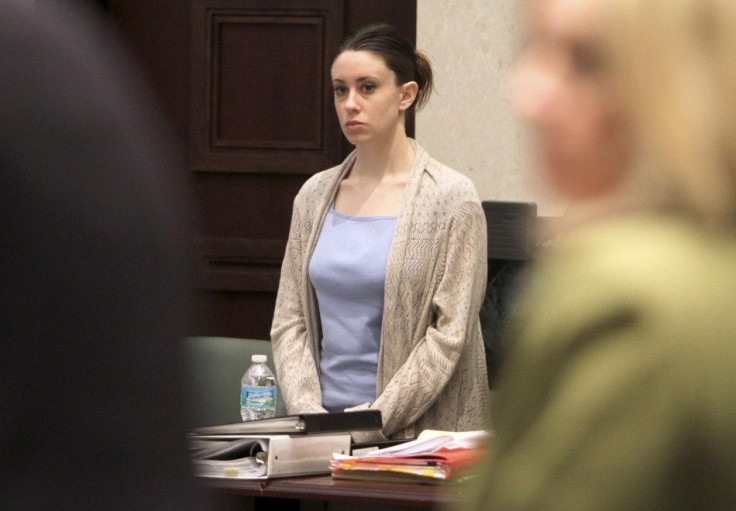
🚨 THE 911 CALL THAT DIDN'T MATCH THE FAMILY'S STORY
The 911 call came on July 15, 2008, from a grandmother named Cindy Anthony.
She told the dispatcher her two-year-old granddaughter, Caylee, was missing.
Cindy said her daughter, Casey, had been behaving strangely.
She said the family car smelled of decomposition.
The child had last been seen approximately a month earlier, in mid-June.
That gap — a month of silence, a month of nothing reported — would become the center of everything.
What exactly happened between mid-June and July 15 is not established by the record.
The family had a story, though.
They said a nanny named Zenaida Fernandez-Gonzalez had taken the child.
That story never fit the timeline.
It never fit the evidence.
Investigators later determined Zenaida Fernandez-Gonzalez did not exist.
The grandmother’s voice on the call was frantic.
The family’s narrative was calm.
It is a dissonance the record does not resolve.
Cindy told police her daughter had been lying.
She told them the car smelled like a dead body had been in it.
She was the one who made the call.
Not Casey.
Not George.
Cindy Anthony, the grandmother, on a Tuesday afternoon, reporting a child missing a month after anyone saw her.
The child’s mother said nothing for days.
The family story — kidnapping by a phantom nanny — required a kidnapper who never existed.
It required a timeline that did not match.
It required a grandmother who called 911 while her daughter sat silent.
That would require evidence.
The record does not provide it.
THE FAMILY — WHO THEY WERE
The child was Caylee Marie Anthony, two years old, living in Orlando, Florida.
She lived with her mother, Casey, in the home of her grandparents, George and Cindy Anthony.
It was a family of five under one roof: the child, the mother, the grandparents, and an uncle, Lee Anthony.
The record shows what they did, not what they felt.
What is documented is a sequence of ordinary days that broke in July 2008.
On July 15, Cindy Anthony called police to report her granddaughter missing.
She told the dispatcher that her daughter had been behaving strangely and that the family car smelled of decomposition.
George Anthony was the one who found the car.
He reported the strong odor coming from the trunk.

The odor was there before the police were called, before the child was reported missing.
The family home became the center of the investigation.
It was the place where the child lived, where the car was parked, where the grandmother made that call.
It was also the place that would later be sold.
The specific dynamics between family members beyond the documented events are not in the record.
What the record shows is a grandmother who called, a grandfather who found the car, and a mother who sat silent.
Caylee Anthony was a two-year-old girl.
That is the fact the family never left behind.
THE MISSING-PERSON INVESTIGATION — AND THE FALSE LEADS
Police treated the case as a missing-person investigation.
That was the official frame, at least on July 15, 2008, when Cindy Anthony made the call.
Casey Anthony gave investigators multiple false leads.
She claimed the child had been kidnapped by a nanny named Zenaida Fernandez-Gonzalez.
She said she had dropped Caylee off with the nanny weeks earlier, on June 9.
She said she had been searching for the child ever since, too afraid to tell anyone.
Investigators determined that Zenaida Fernandez-Gonzalez did not exist.
The name matched no real person in any record they could find, according to the investigation.
The family initially supported the story.
Cindy and George Anthony repeated the nanny tale in early interviews, the record shows.
It unraveled quickly.
The nanny had no address, no phone number, no employer.
No neighbor remembered her, no school listed her, no lease bore her name.
The false nanny story became a key point of contention.
Why Casey gave those false leads is not established.
The source does not provide her motive.
Not because the answer is hidden. Because the record simply does not say.
Days stretched into weeks with no Caylee.
The missing-person case hardened into something else, though the charge sheet had not yet caught up.
Each lie Casey told investigators became a separate count of providing false information to law enforcement.
Four counts, eventually, in the formal charges.
The child was still missing, and the mother had given the police a story that was not a story at all.
It was a name that did not exist.
That was the state of the investigation in the late summer of 2008.
A missing two-year-old, a deceptive mother, and a family that had repeated a fabrication before it collapsed.
THE CAR'S TRUNK — THE ODOR AND THE STAIN
George Anthony reported finding the family car with a strong odor of decomposition.
It was July 15, 2008, the same day his wife called 911.
The car had been parked at a tow lot, and the smell was enough to turn the stomach.
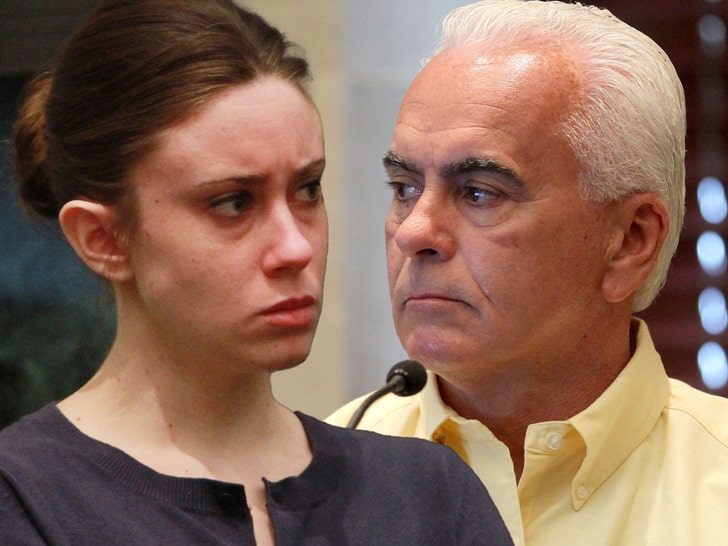
Inside the trunk, investigators found a stain.
Laboratory analysis later matched that stain to decomposition fluid.
Hair consistent with Caylee’s was found in the trunk as well.
The physical evidence pointed one way, toward a child’s death inside that car.
But the evidence did not say who put her there, or when, or how.
Forensic analysis of air samples from the trunk indicated the presence of chloroform.
The significance of that finding was disputed at trial.
A computer search for "chloroform" was traced to the family computer.
The defense argued that Casey’s father had made the search.
George Anthony denied that under oath.
The exact source of the chloroform is not established.
Who made the computer search is not established.
That would require evidence the record does not provide.
What remains is the smell, the stain, the hair.
What remains is a family car that held a child’s traces and a grandmother’s report of a strange odor.
It is physical proof of a death.
It is not proof of a killer.
The trunk told a story, but it was a story without a clear ending.
DECEMBER 11 — THE REMAINS ARE FOUND
The utility worker was looking for a missing person. That is what the record shows.
He was searching the wooded area near the Anthony home on December 11, 2008. He found skeletal remains about a quarter-mile from the house where Caylee Anthony had lived.
The remains were later identified as Caylee Anthony.
The medical examiner ruled the death a homicide. The cause of death could not be determined because the body was too badly decomposed.
That is what the record states: homicide, cause undetermined.
Duct tape was found near the skull. The medical examiner testified that the tape was consistent with homicide.
Not proof of how she died. Consistent with how she died.
The distance was short. A quarter-mile from the family home, in a wooded area that had been searched before.
It was close. It was also overlooked.
The remains were found in December. The child had been missing since July. The gap between those dates is a fact the record does not close.
What caused her death? That would require evidence the body could not provide.
What the tape meant? The medical examiner gave an opinion, not a certainty.
The prosecution would later argue the tape was a weapon. The defense would argue it was contamination. The record shows the tape was there, near the skull, and the cause of death remained officially undetermined.
She was two years old. She was found in the woods.
The cause of death is not established. It is a fact the case never resolved.
THE DEFENSE'S THEORY — THE POOL AND THE COVER-UP
The defense told the jury a different story.
Caylee had drowned, they said. Accidentally, in the family's backyard pool.
The defense claimed George Anthony had helped cover it up. That he had found the child, panicked, and disposed of the body to protect his daughter.

George Anthony denied this under oath.
He testified that he had never seen the child that day. He testified that the drowning theory was false. He testified that he had not helped anyone hide anything.
The defense also argued that the child had been dead before the car odor was noticed. The trunk evidence, they said, was contaminated. The tape, the stain, the hair — none of it proved what the state claimed.
Not because the defense proved it. But because the defense raised the question.
Did the family cover up an accident? Or did the family cover up something worse?
That would require evidence.
The record shows a grandfather who reported the car's smell. The record shows a grandmother who made the 911 call. The record shows a mother who gave false names and false leads for weeks.
The defense's theory was one version of what happened. George Anthony's denial was another.
It is not established that the drowning occurred. It is not established that George Anthony helped cover it up. He said, under oath, that he did not.
The jury heard both. The jury decided what it decided.
The family was torn apart either way.
THE PROSECUTION'S CASE — A MOTHER'S ALLEGED MOTIVE
The state's case was built on a simple claim: Casey Anthony killed her daughter so she could live a carefree life.
That is the argument the prosecution made.
Prosecutor Linda Drane Burdick headed the team for the Orange-Osceola State Attorney's office.
The state charged Casey with first-degree murder, aggravated child abuse, aggravated manslaughter of a child, and four counts of providing false information to law enforcement.
The trial began in May 2011 and lasted six weeks.
The jury heard about the trunk, the odor, the hair, the computer search.
It heard about the lies Casey told investigators — the nanny who did not exist, the kidnapping that did not happen.
It heard the defense's counter-story: an accidental drowning, a cover-up, a grieving father blamed under oath.
The prosecution's motive theory is an argument, not a documented fact.
No witness testified that Casey said she wanted to be free of her child.
No note, no message, no confession established that intent.
The state asked the jury to infer it from the timeline: a child last seen in mid-June, a mother who waited a month to report her missing, a car that smelled of death.
The burden was on the prosecution to prove murder beyond a reasonable doubt.
That is a heavy thing.
The jury weighed the accusation against the evidence.
The accusation was weighty.
The evidence, the jury decided, was not enough.
THE VERDICT — AND THE PUBLIC'S OUTRAGE
On July 5, 2011, the jury found Casey Anthony not guilty of first-degree murder, aggravated child abuse, and aggravated manslaughter.
She was found guilty only of four misdemeanor counts of lying to law enforcement.
She was sentenced to time served—about three years—plus fines and probation.
The verdict landed at 2:15 in the afternoon.
The courtroom was silent.
Then the public spoke.
Outrage flooded the courthouse steps, the news channels, the comment sections.
Many believed the evidence pointed to guilt on the more serious charges.
/jose-baez-1-c5cc5e9bf1ef40618009a54f4c07593e.jpg)
Many believed the child deserved more.
The jury's reasoning is not in the record.
The verdict speaks for itself.
There was no appeal of the acquittals, as the state cannot appeal a not-guilty verdict.
The state could not ask again.
The defense did not need to.
Casey Anthony walked out of the courthouse a free woman on the murder charges.
She remained convicted of lying to law enforcement—four counts of it.
The lies were about the child's whereabouts.
The lies were about a nanny who did not exist.
The lies were about a month of silence.
The jury weighed the accusation against the evidence.
The accusation was weighty.
The evidence, the jury decided, was not enough.
The public heard the verdict and heard a different story.
The child's grandparents, George and Cindy Anthony, sat through the trial.
They testified about the car, the odor, the last time they saw their granddaughter.
They did not get the verdict they wanted.
The family was torn apart long before the jury spoke.
The verdict did not put it back together.
THE FAMILY AFTER — GRIEF, LAWSUITS, AND A SOLD HOME
Cindy Anthony told a reporter that her granddaughter was "the light of our lives" and that she believed her daughter was responsible.
George Anthony filed a defamation lawsuit against Casey in 2012.
The lawsuit claimed she had made false statements about him, including the accusation that he had helped cover up Caylee's death.
The case was settled out of court in 2013.
The terms of that settlement are not in the record.
Neither side has ever disclosed what was agreed.
The Anthony family home on Hopespring Drive was sold in 2017.
It was the house where Caylee had lived.
It was the house where the car sat in the garage.
It was the house where the story began and where it never really ended.
Casey Anthony was released from jail on July 17, 2011, twelve days after the verdict.
She walked out with time served and a probation term.
Her parents were not waiting for her.
George and Cindy Anthony have spoken publicly about their grief.
They have said they believe their daughter was responsible for their granddaughter's death.
They have said they visit Caylee's grave.
They have said there is no closure.
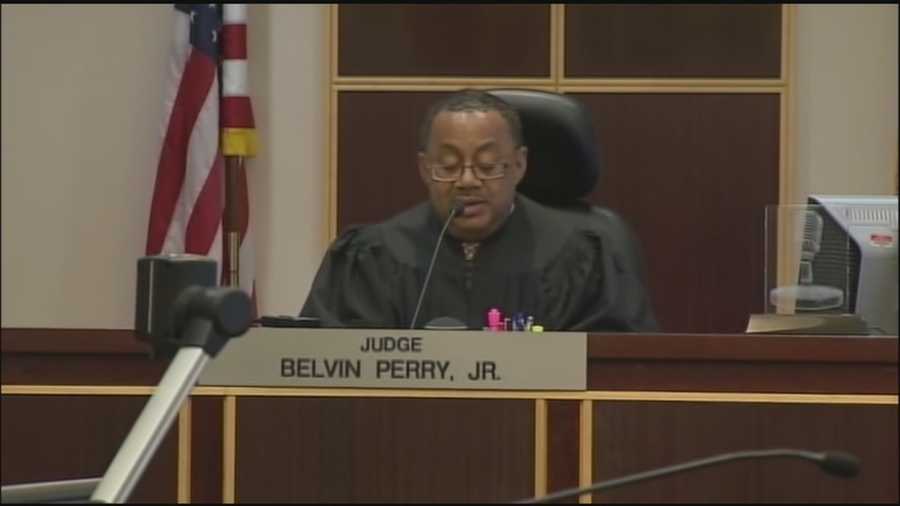
The family home is gone.
The lawsuit is settled.
The verdict stands.
What remains is a two-year-old girl who never came home.
What remains is a family that testified against itself in open court.
What remains is grief, and grief does not close.
AND THE STORY STILL ISN'T OVER
No other person has ever been charged in Caylee's death.
The case file remains open in the public mind, if not in the courthouse.
Casey Anthony has since lived in relative obscurity.
She appeared in a few media interviews.
She appeared in a 2017 documentary in which she maintained her innocence.
She said the same things she said on the stand.
What happened to Caylee in the weeks before her death remains officially undetermined.
Not because no one tried to determine it.
Because the body was too badly decomposed for the medical examiner to name a cause.
The remains were found with duct tape near the skull.
The medical examiner testified the tape was consistent with homicide.
The cause of death was listed as undetermined.
That is the record.
The case remains a subject of public fascination and debate.
Commentators argue it still.
Bloggers argue it still.
The family home was sold.
A physical end to the place where the story began.
Caylee's grandparents have spoken publicly about their grief.
They have said they believe Casey was responsible.
George Anthony filed a defamation lawsuit against Casey.
It was settled out of court.
The family testified against itself in open court.
The family remains torn apart.
The child never came home.
The story never closed.
It is a two-year-old girl who never came home.
It is a mother acquitted of murder and guilty of lying.
It is a jury's verdict that satisfied no one.
It is a case that asks a question the record cannot answer.
What happened to Caylee Anthony?
That would require evidence.
The evidence ran out.
Advertisement
You may also like
The psychologist's mistress who heard a confession — and the brothers who went to a movie
On the evening of August 20, 1989, Lyle and Erik Menendez left their Beverly Hills mansion and drove to a movie theater. They had…
The desert graves that ended a three-year wait for a missing California family
A motorcyclist stopped in the Mojave Desert near Victorville in November 2013 and found what he first took to be scattered bones. The bones…

The bridge splash that led police to Wayne Williams — and the mothers who kept pushing
The sound came first. On May 22, 1981, police staked out a bridge over the Chattahoochee River after a surveillance team heard a splash…
The gas station victim's wife asked for privacy — then the sniper struck again
October 14, 2002, a 47-year-old FBI analyst was killed outside a Home Depot in Falls Church, Virginia. Her husband spoke publicly after her death.…

The neighbor who found Kitty Genovese and what she saw in the hallway
The hallway at 82-70 Austin Street was quiet. Sophia Farrar lived in the Kew Gardens building, a neighbor among neighbors. She found Kitty Genovese…

The 31-day gap in Caylee Anthony's disappearance that Cindy Anthony reported to 911
July 15, 2008. Cindy Anthony picked up the phone in her Orlando home and called 911 to report her three-year-old granddaughter, Caylee Anthony, missing.…