The neighbor who found Kitty Genovese and what she saw in the hallway

The hallway at 82-70 Austin Street was quiet.
Sophia Farrar lived in the Kew Gardens building, a neighbor among neighbors.
She found Kitty Genovese there, in the hallway, after the attack.
That is what the record states: Farrar discovered Kitty in the building's hallway.
She was the one who found her.
What exactly Farrar saw in that hallway is not detailed in the source.
The record only states that she found Kitty there.
The attack had come in two separate phases.
The assailant initially fled, then returned to continue the assault.
Kitty was stabbed, and she was found.
She died in an ambulance en route to Queens General Hospital.
One neighbor, not a crowd.
The story later became infamous after a New York Times article reported that 38 witnesses had watched without calling police.
Later reporting has questioned that account.
But the documented moment before the story grew was a single hallway.
A woman named Sophia Farrar, a neighbor, finding Kitty.
What did she see in that hallway?
What did she do after she found her?
What did she say?
That would require evidence the record does not provide.
The hallway was the place where the case turned from an attack into a discovery.
It is a fact.
It is also a question.
THE RETURN FROM WORK
The early hours of March 13, 1964, were cold in Queens.

Catherine "Kitty" Genovese, a 28-year-old bar manager, was walking home.
She was coming from her job at Ev's 11th Hour Bar.
Her building stood at 82-70 Austin Street in Kew Gardens.
She had recently moved there with her partner, Mary Ann Zielonko.
The relationship was not named in most coverage at the time.
Zielonko has since spoken publicly about what they had.
Kitty was attacked outside the building.
The assailant fled.
Then he returned.
The attack happened in two phases, the case record states.
The exact time is not specified in the source.
Only "early hours" is given.
It was a walk she had likely made before, from work to home.
It was a short distance, the ordinary end of a shift.
She never made it inside.
A neighbor found her in the hallway.
That discovery came later.
What remains is the walk itself, the ordinary tragedy of it.
A young woman, a bar manager, a partner waiting.
She was 28.
She had a life just moved in.
The record does not say what time she left the bar.
It does not say what time she reached the street.
It says only that the attack came in those early hours.
Not because the time matters to the law.
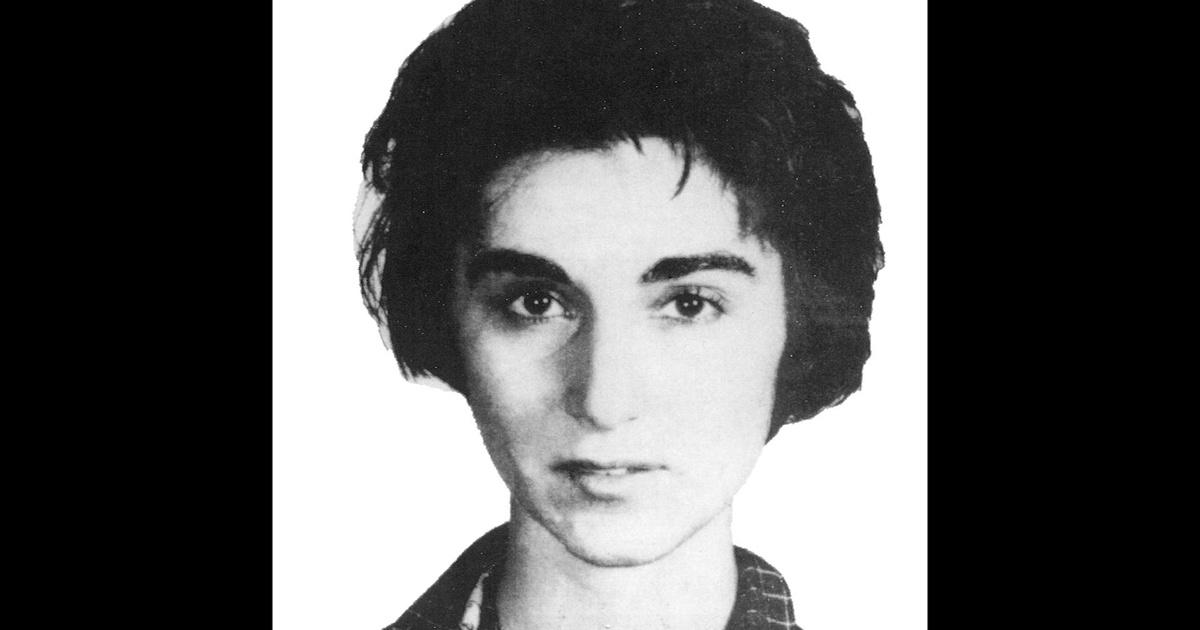
But because the hours matter to the story.
THE CONFESSION
Six days after the attack, Winston Moseley was arrested.
He was driving a car that matched a description from a separate burglary investigation.
The arrest happened on March 19, 1964.
During questioning, Moseley confessed to the murder of Kitty Genovese.
He also confessed to other crimes, including the killing of another woman, Annie Mae Johnson.
The lead detective led the questioning.
Moseley's confession included details of the attack that only the killer would have known.
The record does not list those details.
It states only that they were known to the killer.
That is what makes a confession more than a statement.
It is a map only one person could draw.
It is a sequence only one person could have lived.
The medical examiner's testimony established the cause of death as stab wounds.
Not a fall.
Not a struggle that went wrong.
Stab wounds.
The confession closed the gap between the hallway and the street.
Someone was caught.
Someone said what he did.
The relief was not the end of the story.
It was the beginning of the trial.
THE TRIAL AND THE 38
The trial opened in Queens County Court in June 1964.
Winston Moseley was charged with first-degree murder.
The trial was brief, lasting only a few days.
The jury deliberated for less than an hour.
They returned a guilty verdict.
The judge sentenced Moseley to death.
Then the law changed.
In 1967, New York State abolished the death penalty.
Moseley's sentence was commuted to life in prison.
He would spend more than fifty years inside.
The justice was swift.
The story was not.
The New York Times article had already been published, on March 27, 1964.
It reported that 38 witnesses had heard or seen the attack and done nothing.
That number became the name of the case.
It became the lesson about public apathy.
It was repeated in classrooms and editorials for decades.
But the accuracy of the "38 witnesses" claim is not established.
Later reporting challenged the account.
Some witnesses said they did not fully understand what was happening.
Some said they believed it was a domestic dispute.
The record does not resolve the number.
The record shows a conviction.
The record shows a sentence.
The record shows one neighbor who went into the hallway.
That is what the trial established.

The rest remains a reported claim, questioned, repeated, and still unresolved.
AND THE STORY STILL ISN'T OVER
The man convicted of her murder died in prison in 2016.
Winston Moseley was 81 years old.
He had been incarcerated for more than 50 years.
Denied parole multiple times, he faced her brother each time.
William Genovese regularly testified against his release.
That is what the record shows.
The family did not stop with parole hearings.
William Genovese continued to advocate for victims' rights.
A brother's work, long after the trial ended.
The case itself was revisited.
Books and documentaries returned to Kew Gardens.
Later reporting by authors such as Kevin Cook questioned the "38 witnesses" narrative.
Not because the record proves it false.
But because the record does not establish it as true.
The building where the attack happened was later demolished.
Bricks gone, hallway gone.
The place where Sophia Farrar found her is no longer there.
Mary Ann Zielonko has spoken publicly about her relationship with Genovese.
What she has said is part of the record.
What the family still does today is not specified in the source.
Only that they continued to advocate.
That would require evidence.
The case closed in 2016 with Moseley's death.
It is closed.
It is also not over.
Advertisement
You may also like
The empty frames left on display after thieves took Vermeer and Rembrandt
The empty frames still hang in the Isabella Stewart Gardner Museum in Boston. Where Vermeer's *The Concert* once hung, there is an empty rectangle…
The missing ladder rail that led detectives to a Bronx lumberyard — and then to Hauptmann's attic
The ladder was left behind on the night of March 1, 1932, a homemade thing of wood and nails, abandoned at the scene. It…
The phone call that could have caught the Zodiac — and the officer who let him walk
It was a phone call that could have ended it. After the July 4, 1969 attack at Blue Rock Springs Park, the killer called…
Why a handleless hatchet in the cellar never settled the Lizzie Borden case
The handleless hatchet sits in the cellar of 92 Second Street, Fall River, in every retelling of the case. It was found there after…
The boat confession that still echoes from Boston to death row
The boat sat in a Watertown backyard, covered and still, while the manhunt for Dzhokhar Tsarnaev moved through the streets around it. After the…
The bullet that linked a bank-robbing cop to Biggie's murder
A 9mm pistol sits at the center of the story, widely reported in connection with the murder of Christopher Wallace. The gun is the…