He told his girlfriend he'd 'lost his wife' weeks before Laci vanished — the boat was already bought
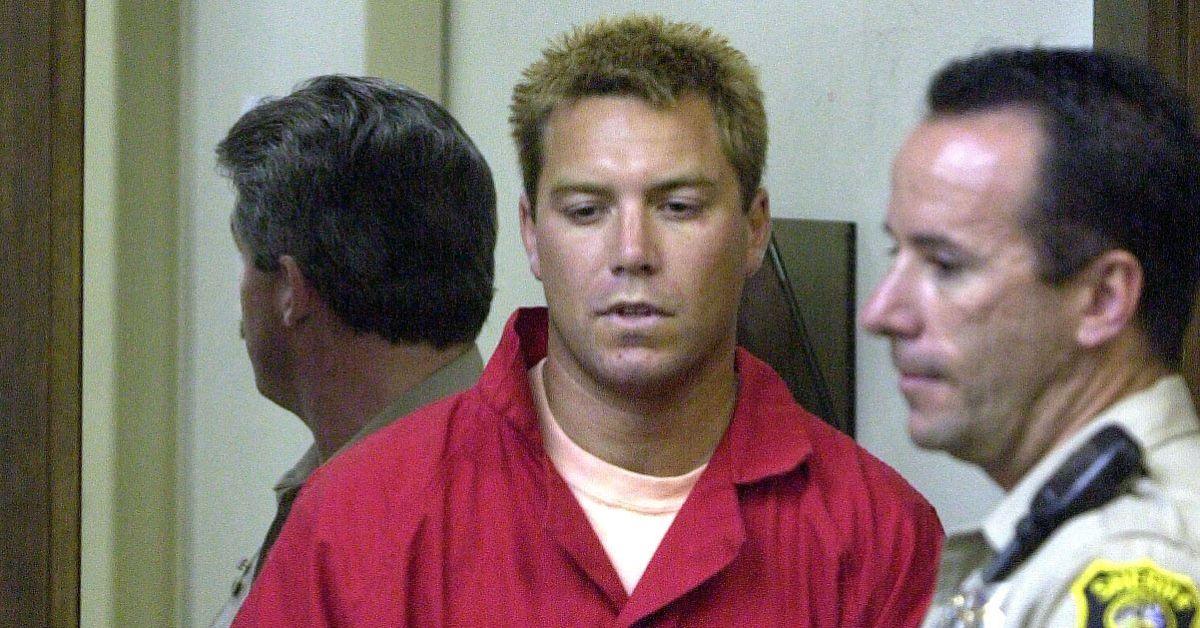
Weeks before Laci Peterson vanished on December 24, 2002, her husband Scott told his girlfriend that he had "lost his wife."
The girlfriend was Amber Frey, a massage therapist from Fresno.
Scott was having a romantic relationship with Amber during Laci's pregnancy.
Amber would later cooperate with police and testify at trial.
The words he spoke to her are documented in the investigation.
What he meant by them is not.
The exact date of that statement is not specified in the record.
Around the same time, Scott had purchased a 14-foot aluminum fishing boat.
He would later sell it.
The exact date of that purchase is also not specified in the record.
The boat was small. It was aluminum. It was the vehicle the prosecution would argue was used to dispose of the bodies in San Francisco Bay.
That argument came later.
At the time, there were just two facts: the words and the boat.
The words were recorded in police files.
The boat was a receipt, a transaction, an object that could be lifted onto a trailer.
Both are documented.
What they prove is a matter of interpretation, not something the record establishes.
Did he buy the boat before he told Amber he had lost his wife?
Did he tell her before the boat?
The record does not say.
The record says he told her, and he bought it, and Laci was still pregnant, and the holiday was coming.
A chill of foreshadowing lives in that gap.
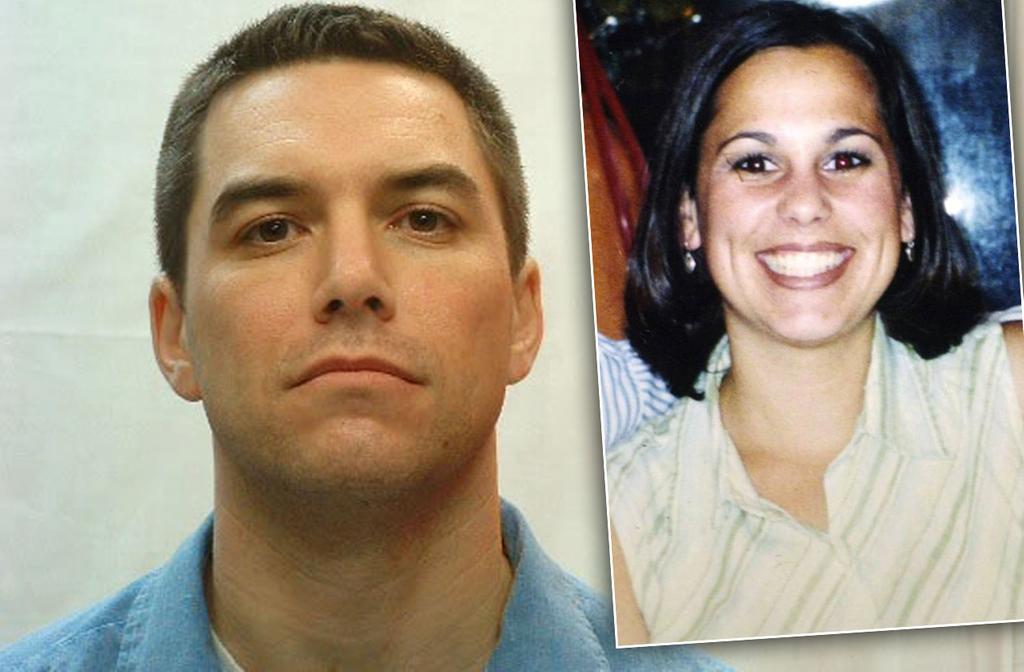
What exactly did he mean?
When exactly did he buy that boat?
That would require evidence the file does not provide.
THE MORNING OF DECEMBER 24
December 24, 2002, was a Tuesday.
A 27-year-old pregnant woman was at her home in Modesto, California.
By evening, she was gone.
Her husband reported her missing that night.
He told police he had spent the morning fishing at the Berkeley Marina.
The weather was poor for fishing that day.
He did not have a fishing license.
The lead detective, Al Brocchini of the Modesto Police Department, opened the case as a missing-person investigation.
That is how it began: a wife who did not come home, a husband with an alibi, a city that did not yet know it was watching a murder case form.
Neighbors saw nothing.
The record does not establish what Laci Peterson did in the hours before she vanished.
That gap remains open.
What is documented is the call her husband made that evening.
What is documented is the story he told about the marina.
What is documented is the absence of a body, for now.
Her mother, Sharon Rocha, stood before cameras and pleaded for help.
Her stepfather, Ron Grantski, stood with her.
Her brother, Brent Rocha, spoke her name into microphones.

They asked anyone with information to come forward.
They asked for their daughter, their sister, to come home.
The city searched.
The family searched.
The police searched.
Hundreds of volunteers walked the streets and fields around Modesto.
They found nothing that day.
They found nothing for months.
The husband answered questions.
He repeated the fishing trip.
He repeated the marina.
He did not mention the girlfriend.
He did not mention the boat he had bought weeks earlier.
That would come later.
For now, the case was a missing person.
For now, the family still believed she might be found alive.
That would not hold.
THE BODIES AND THE BOAT
For months, the search effort failed.
A massive search effort failed to find Laci.
On April 13, 2003, the body of a full-term male infant washed ashore in San Francisco Bay.
The next day, the body of a woman later identified as Laci was found.
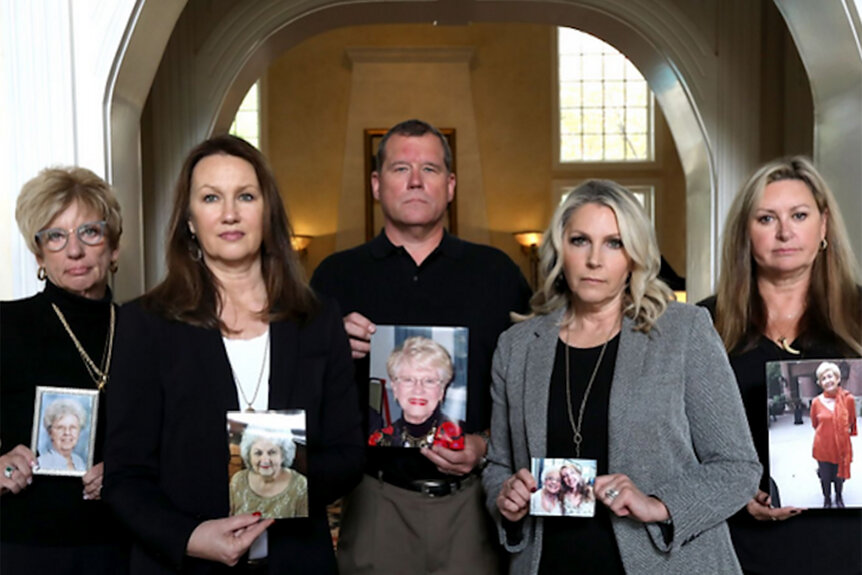
The remains were found about 90 miles from Modesto, near the Point Isabel Regional Shoreline in Richmond, California.
The infant's DNA matched Scott Peterson.
The mother's body was identified as Laci.
The case shifted.
It was no longer a missing person.
It was a murder investigation.
The prosecution argued that Scott killed Laci in their home.
He placed her body in his boat, they said.
He dumped it in San Francisco Bay.
The boat was the 14-foot aluminum fishing boat he had purchased.
The boat he had later sold.
The defense suggested Laci had been abducted by strangers while walking her dog.
No evidence supported this theory.
The exact cause of Laci's death is not specified in the record.
The exact location of her death is not specified in the record.
The bodies were found.
The DNA matched.
The boat was bought.
What happened in the home on December 24 remains a matter of argument.
That would require evidence.
TWO STORIES, ONE SET OF FACTS
Two stories, one set of facts.

The prosecution, led by District Attorney James Brazelton, argued that Scott killed his wife to be free of family obligations and pursue his relationship with Amber Frey.
The defense, led by attorney Mark Geragos, argued that Laci had been abducted by a satanic cult or other strangers.
That theory was widely dismissed.
The case relied heavily on circumstantial evidence.
Circumstantial: Scott's behavior after Laci vanished.
Circumstantial: his affair with Amber Frey, hidden while Laci was pregnant.
Circumstantial: the physical evidence of the bodies, found about 90 miles from Modesto.
The "lost his wife" statement was central to the prosecution's narrative of premeditation.
The boat purchase was central to that same narrative.
The defense offered no documented alternative explanation for the boat or the statement.
Not because they had a better story.
But because the record offers no other story for those facts.
No direct evidence of the murder—no weapon, no eyewitness—is in the record.
That is not established.
The trial began in June 2004 in Redwood City.
It moved from Modesto because of extensive pretrial publicity.
The jury heard the words Scott spoke to his girlfriend.
The jury heard about the boat.
The jury heard the two stories.
Which interpretation does the evidence truly support?
The prosecution said it pointed to a husband who planned.
The defense said it pointed to strangers who took.
:max_bytes(150000):strip_icc():focal(749x0:751x2)/Jackie-Peterson-and-Lee-Peterson-leave-the-San-Mateo-Superior-Courthouse-121625-55846a7459e640d79a1b33bfbc8af4b1.jpg)
The record does not settle that question with a single fact.
It settles it with a stack of them.
AND THE STORY STILL ISN'T OVER
On November 12, 2004, the jury found Scott Peterson guilty of first-degree murder for Laci's death and second-degree murder for Conner's death.
On December 13, 2004, the jury recommended the death penalty.
On March 16, 2005, the trial judge sentenced Scott Peterson to death by lethal injection.
Then the case turned.
In 2020, the California Supreme Court overturned the death sentence, ruling that the trial judge had improperly dismissed a juror who opposed the death penalty.
The court upheld the murder convictions.
A new penalty phase has not yet been scheduled.
No date is in the record.
Scott Peterson remains on death row at San Quentin State Prison in California.
The conviction stands.
The sentence does not.
Laci's family, including her mother Sharon Rocha, have continued to advocate for victims' rights.
They have spoken publicly about the case.
The legal saga is unresolved.
It is a case of two verdicts, one overturned.
It is a case of one conviction that remains.
What happens next is a question the record leaves open.
The jury spoke twice.
The court spoke once more.
The final chapter is still pending.
That is not a theory.
That is the state of the record.
Advertisement
You may also like
The ransom note demanding $118,000 that matched John Ramsey's bonus
The 911 call came at 5:52 a.m. on December 26, 1996. Patsy Ramsey told the dispatcher her 6-year-old daughter was missing. A ransom note…
The trunk stain that sent Casey Anthony to trial for Caylee's death
The car was a Pontiac, and the trunk smelled before anyone opened it. In July 2008, after Caylee Marie Anthony was reported missing, a…
The two-phase attack that began at a streetlight and ended in a hallway
The light at 82-70 Austin Street in Kew Gardens, Queens, marks the spot. Not a hallway. Not a doorway. The open street, under the…
The 911 call at 12:10 a.m. — and the glove that would not fit the timeline
The dog came back first. It was past midnight on June 13, 1994, in the Brentwood neighborhood of Los Angeles. A neighbor named Sukru…
Cell phone data put Chase Merritt near the grave site — then QuickBooks opened after the family vanished
The motorcyclist stopped because something in the sand caught his eye. It was February 2013, and he was riding near Victorville, California, in the…
The parking ticket that led police to David Berkowitz's door
It was a piece of paper, folded under a windshield wiper. A parking ticket issued near one of the Son of Sam shootings. The…