The jailhouse confession that broke the Manson case — and the raid that missed
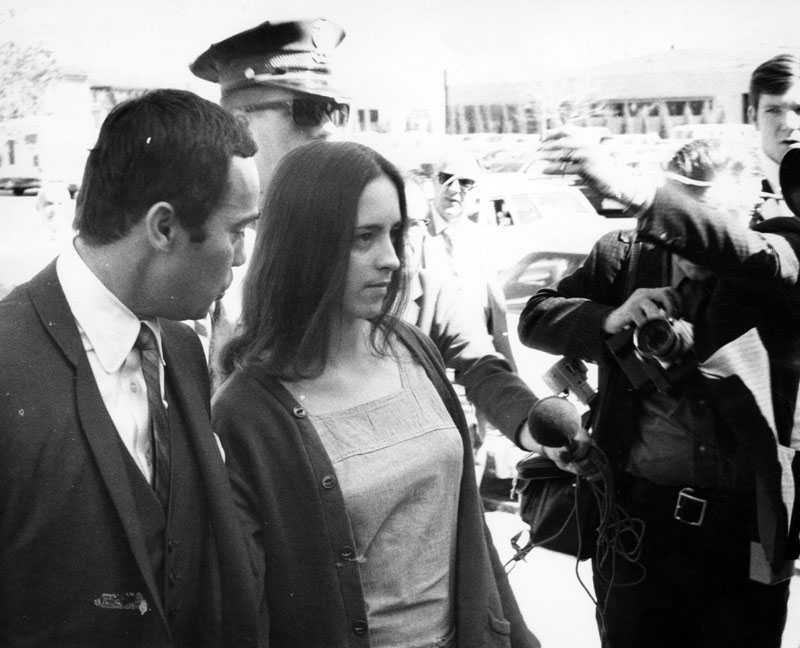
She was in jail for something else.
Susan Atkins, charged in an unrelated case, sat in a cell and talked.
She told her cellmate, Virginia Graham, about the murders.
Graham listened. Then Graham went to the authorities.
Atkins later gave a statement to prosecutors.
That is how the case broke. Not from forensic breakthroughs. Not from a witness stepping forward.
A jailhouse conversation.
Before that, the investigation had stalled.
Police had few leads. The media speculated wildly.
Five people were dead at 10050 Cielo Drive. Leno and Rosemary LaBianca were dead in their Los Feliz home.
The murders seemed motiveless.
Investigators pursued unrelated theories.
They had not connected the two scenes quickly. The Sheriff's Department handled the LaBianca case. LAPD handled the Tate case. Coordination was poor.
A raid on the Spahn Ranch in August 1969 missed key evidence.
The exact content of Atkins's initial confession to Graham is not detailed in the source.
Only that she told Graham about the murders.
That is what the record shows.
A random chat in a cell, repeated to the right person.
The case had stumped police for months.
Then a cellmate talked.
THE TWO NIGHTS
The first night was August 9, 1969.
Five people were murdered at 10050 Cielo Drive in Benedict Canyon, Los Angeles.
Sharon Tate was there, eight months pregnant.
So were coffee heiress Abigail Folger, hairstylist Jay Sebring, and two others — a writer and a visitor.
The second night was August 10.
Leno and Rosemary LaBianca were murdered in their Los Feliz home.
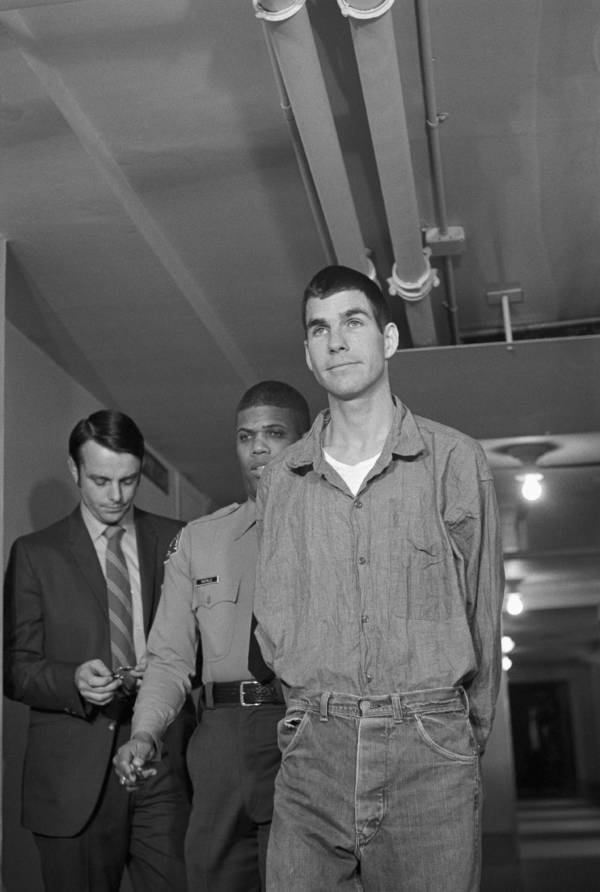
Seven lives, two nights, less than twenty-four hours apart.
The crimes were discovered the following mornings by housekeepers and family members.
The killings were carried out by members of a group led by Charles Manson.
Manson directed others to commit the murders, according to the record.
Those who carried them out included Tex Watson, Susan Atkins, Patricia Krenwinkel, and Linda Kasabian.
Kasabian was present during the Tate murders.
Leslie Van Houten participated in the LaBianca murders.
The specific roles of each perpetrator in the killings are not detailed in the source.
What is known is the weight of the scene.
Two houses, two mornings, two sets of survivors walking in.
The investigation would not connect the nights quickly.
The LaBianca murders were initially handled by the Sheriff's Department.
LAPD handled the Tate case.
Coordination was poor, the record shows.
The murders appeared motiveless.
Investigators pursued unrelated theories.
The media speculated wildly.
And the case stalled.
For months, the only thread was a cellmate's story.
Then the cellmate talked.
THE BOTCHED RAID
The raid on Spahn Ranch came in August 1969.
The group lived there.
The search was not complete.
What the raid missed is not stated in the source.
But it missed something.
The case had stalled by then.
:max_bytes(150000):strip_icc()/Susan-Atkins-030525-eaa8484463b84c80803b4a1e3bcc9cfe.jpg)
Two nights of murder, five people at Cielo Drive, two more in Los Feliz.
LAPD handled the Tate case.
The Sheriff's Department handled the LaBianca case.
Coordination was poor.
The scenes were not connected quickly.
The murder weapons were never conclusively identified.
A gun linked to the group was recovered.
That is what the record shows.
Fingerprint evidence linked Krenwinkel and Watson to the scenes.
That came later.
The media speculated wildly in the meantime.
Theories multiplied.
Motiveless, the murders invited them.
Investigators pursued unrelated theories.
Not because the evidence pointed elsewhere.
Because the evidence pointed nowhere.
A full search of Spahn Ranch might have changed that.
It did not happen.
The raid came, and it missed.
The group stayed free for months.
The cellmate's story was still ahead.
Frustration is the honest response.
Police were close.
A missed search let evidence slip away.
What evidence, precisely?
That would require evidence.
TWO STORIES OF THE SAME FACTS
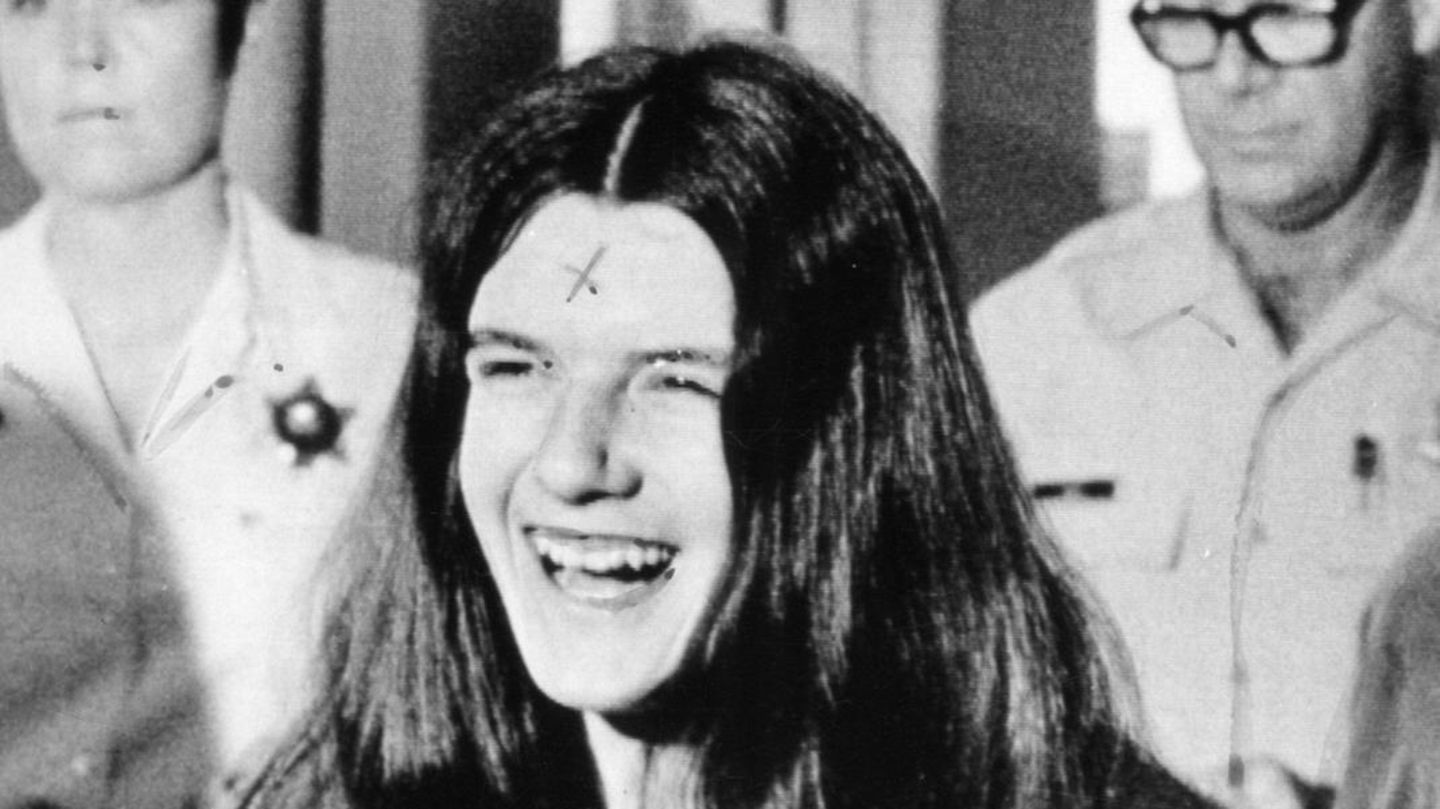
The prosecution’s case rested on two voices.
One was Linda Kasabian, granted immunity, never charged.
The other was Susan Atkins, whose jailhouse words had first cracked the case open.
Kasabian testified for the prosecution at trial.
Her account placed the defendants at the scenes.
Atkins had already given prosecutors a statement from her cell.
The defense faced a strange problem.
The murders appeared motiveless.
That is what the source says the defense argued.
Investigators had initially pursued unrelated theories because of that apparent lack of motive.
What specific arguments the defense made at trial, the source does not detail.
That is not established in the record.
The trial began in June 1970.
Manson, Atkins, Krenwinkel, and Van Houten were tried together.
Watson was tried separately, after extradition from Texas.
All five were convicted of first-degree murder.
The jury imposed the death penalty for all five.
Not because the case was simple.
But because the verdicts were unanimous.
In 1972, the California Supreme Court abolished the death penalty.
The five sentences were commuted to life in prison.
The convictions stood.
The conspiracy convictions stood.
The prosecution had built its case on testimony from a woman who was never charged.
The defense had argued the killings made no sense.
Both stories described the same facts.
Only one persuaded the jury.

AND THE STORY STILL ISN'T OVER
Charles Manson died in prison on November 19, 2017, at age 83.
Susan Atkins died in prison on September 24, 2009.
Tex Watson remains in prison, having been denied parole multiple times.
Patricia Krenwinkel remains in prison.
Leslie Van Houten was granted parole in 2023 after decades of denials, and was released.
The Cielo Drive house was demolished in 1994.
The murder weapons were never conclusively identified.
The source states that a .22-caliber gun and knives were reported, but the specific weapons were never recovered.
That is not established by the record.
What is established is the weight of the case itself.
The trial ended in convictions.
The sentences were commuted when California abolished the death penalty in 1972.
The killers lived out their lives inside.
The victims' house is gone.
The questions the case raised remain.
Why did the raid miss the evidence?
Why did the investigation stall?
Why did the killings appear motiveless?
Those would require evidence.
The record does not supply it.
What the record does supply is a long, slow aftermath.
Men and women grew old in prison.
One by one, they died there.
One by one, the rest stayed.
The story still resonates.
The story still is not over.
Advertisement
You may also like
The friend's call that sent police to the Watts home — and the phone left behind
On the morning of August 13, 2018, in Frederick, Colorado, Shanann Watts, 15 weeks pregnant, was supposed to be at a doctor's appointment. She…
A concrete anchor found near Laci Peterson's body — and the one detail that still haunts her family
A concrete anchor was pulled from San Francisco Bay in April 2003, near the place where Laci Peterson's body washed ashore. It matched a…
The day care center inside the Murrah Building held 19 children when the bomb hit
The morning of April 19, 1995, began with the ordinary mechanics of a workday. Parents pulled into the drop-off lane outside the Alfred P.…
The Florida mother's 2005 report that started it all — how one stepdaughter's massage led to a 14-year saga
A mother called Palm Beach police in 2005. Her stepdaughter was 14. An older girl had recruited the teenager, the mother said, to give…
The bloody glove on O.J. Simpson's estate that changed everything — but the jury never saw it that way
The glove was found on the morning of June 13, 1994. Detective Fuhrman of the LAPD went to Simpson's estate on Rockingham Avenue. He…
The duct tape on Laci Peterson's body that split a jury's theory
The duct tape was on Laci Peterson's body when she was found. That single object carried the weight of two opposing stories. The prosecution…