The knife sheath that put a criminology student in jail for four Idaho stabbings
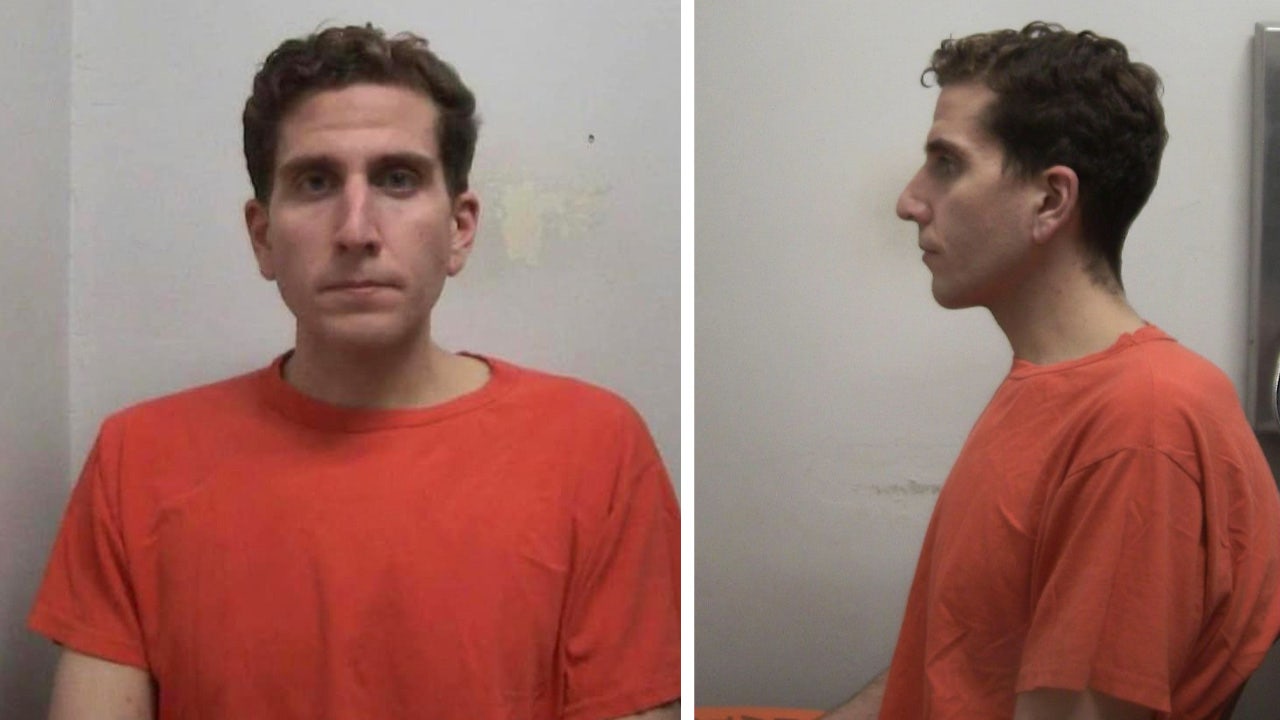
🚨 THE KNIFE SHEATH ON THE BED…
The sheath was found on a bed beside one of the four victims, according to court documents.
A DNA profile from it was later matched to Bryan Kohberger.
The sheath is a physical object, not a theory.
It anchors the investigation.
What else anchors it?
No weapon has been found.
No suspect was named in the first days after the murders.
The sheath's exact location on the bed is not specified in the source.
Whose bed it was is not specified either.
That would require evidence.
The sheath sits in the record as a fixed thing, a leather outline of what happened.
Everything else in those first days was absence: no weapon, no name, no confession.
A single object carried the weight of four killings.
It was found beside one victim, and it pointed to a criminology student.
The question is how.
The sheath does not answer that.
It only begins the thread.
NOVEMBER 13, 2022 — THE 911 CALL
The call came after noon.
A surviving roommate woke and found one housemate unresponsive, according to the record.
She called 911.
Police arrived at the rental house on King Road in Moscow, Idaho.
They found four bodies on the second and third floors.
The date was November 13, 2022.
The victims were University of Idaho students.
They had been stabbed multiple times in the early morning hours.
The house was quiet by then.
The morning had passed in what should have been a normal Sunday.
The roommates had slept through it.
The record does not state the exact time of the 911 call.
The record does not name the roommate who made it.
What is documented is the call itself, and what it set in motion.
Four students were dead in a small college town.
Moscow, Idaho, population roughly 26,000, was suddenly the center of a national story.
Police had bodies, a house, and no public answer.
The knife sheath was on a bed beside one victim, per court documents.
But on November 13, that detail was not yet public.
No suspect was named that day.
No weapon was found that day.
The question hung in the late-autumn air: who, and why.
The call had been made.
The investigation had begun.
The rest would take weeks.
THE VICTIMS — FOUR STUDENTS
The four were Madison Mogen, Kaylee Goncalves, Xana Kernodle, and Ethan Chapin.

All four were students at the University of Idaho.
They were found on the second and third floors of the rental house on King Road.
The call had been made about one housemate who was unresponsive.
Police arrived and found four bodies instead.
Mogen was a senior from Coeur d'Alene.
Goncalves was a senior from Rathdrum.
Kernodle was a junior from Post Falls.
Chapin was a freshman from Conway, Washington.
They were young people with names, with majors, with families waiting for news.
The university held memorials for the four students.
The families have publicly called for the case to proceed.
Not because the record tells us what they were to each other that night.
The relationships among the victims are not in the source.
Their exact schedules that night are not in the source.
What is documented: four students, one house, a morning that stopped at noon.
What is documented: the second and third floors held the bodies.
What is documented: the small college town was shocked.
Grief is not a fact in a file.
It is what the memorials stood for.
NO SUSPECT, FEW LEADS
For days, there was no name.
Police had bodies, a house, a small town on edge.
They had no suspect and few leads.
The knife sheath sat in an evidence room, holding a profile that matched no one in any criminal database.
Then the case broke open — not on a confession, not on an eyewitness, but on technology.
Investigators turned to DNA evidence and cellphone data.
A white Hyundai Elantra had been seen near the house around the time of the murders, according to the investigation.
Kohberger owned a similar vehicle, the source material states.
His cellphone data allegedly placed him near the residence on multiple occasions before the killings.
Allegedly — that word matters.
His attorneys later challenged the reliability of that data, and the record does not establish it as proven.
The DNA from the sheath was the anchor; the car and the phone were the path.
It is a path that could have gone cold.
It is a path that did not.
Not because a witness came forward.
Not because someone confessed.
But because a profile in a database lined up with a name.
That would be the turning point — but it was still weeks away.
THE DNA MATCH — A GENEALOGICAL DATABASE
The knife sheath lay on the bed beside one victim — a small leather object holding a DNA profile.
That profile, according to court documents, was matched to Bryan Kohberger through a genealogical database.
Genealogical databases are built from ordinary people uploading their own DNA for family history.
The match worked backwards: a partial profile from the sheath, then a search across public genetic data, then a family tree leading to a name.
The name belonged to a 28-year-old criminology doctoral student at Washington State University.
He lived across the state line in Pullman, Washington, about ten miles from the Moscow rental house.
That match was the turning point.
Before it, police had no suspect and few leads.
After it, they had a name, an address, and a white Hyundai Elantra.
The specific database used is not detailed in the source.
The method of matching is not detailed either.
What is documented is the outcome: a DNA profile from the sheath tied to Kohberger, per court documents.
Defense attorneys later argued the DNA evidence was circumstantial.
It places a person at a scene, they said — it does not prove what that person did there.
A sheath can be moved. A profile can be transferred. A match can be explained.
Not because it was. But because the defense had to try.
The record does not say how many people were in that genealogical database.
It does not say how close the relative match was.
It does not say when the search was run, or by whom.
It says the profile lined up with a name — and that name became the suspect.
That was the turning point.
It was still decades away from a verdict.
DECEMBER 30, 2022 — THE ARREST IN PENNSYLVANIA
The arrest came on December 30, 2022, in Pennsylvania.
Bryan Kohberger was 28 years old.
He was a doctoral student in criminology at Washington State University.
Police had been watching him at his parents' home.
They collected trash from the family residence.
That trash yielded a DNA match, according to court documents.
The exact circumstances of the trash collection are not specified in the record.
The precise details of that DNA match are also not specified.
What is documented: the trash was collected, and the match was made.
He was arrested there, in Pennsylvania.
Then he was extradited to Idaho.
A suspect in custody, after weeks of no named suspect.
It felt like relief.
It felt like disbelief.
The why remained unknown.
No weapon had been found.
No confession had been reported.
The DNA was the thread — but a thread, not a full story.
Kohberger was charged with four counts of first-degree murder.
He was also charged with one count of felony burglary.
He did not enter a plea at his initial appearance.
A not-guilty plea was entered on his behalf.
He remains in custody in Latah County, Idaho, without bail.
The arrest was a turning point in the timeline.
It was not the end of the timeline.
THE CHARGES AND THE PLEA
January 2023 brought the formal charges.
He was charged with four counts of first-degree murder and one count of felony burglary.
The charges were read in an Idaho courtroom.
He did not enter a plea at his initial appearance.
A not-guilty plea was entered on his behalf.
The record does not state the exact date of that appearance, nor the judge's name.
He remains in custody in Latah County, Idaho, without bail.
The legal machine had a name for him now: defendant.
The machine had a number for the case, a docket, a file.
It had a calendar, though the calendar was not yet full.
A trial date would come later, then be vacated, then be reset.
Pretrial motions would be filed, argued, and refiled.
The judge would address the grand jury process; the defense would question it.
The venue would be challenged, the publicity cited.
All of that was ahead.
What stood in January was the charge itself, four counts of first-degree murder.
One count of felony burglary stood with them.
The plea stood as entered, not spoken.
He had not said the words.
The court said them for him.
Not guilty.
Formality and gravity, side by side.
The case was moving, but justice was far off.
It is a process.
It is also a wait.
PROSECUTION VS. DEFENSE — THE SAME FACTS, TWO STORIES
The prosecution tells one story with the sheath, the phone, and the car.
Prosecutors say the DNA on the knife sheath matches Kohberger, according to court documents.
They say his cellphone data placed him near the residence on multiple occasions before the killings.
They say a white Hyundai Elantra like his was seen near the house around the time of the murders.
The defense tells another story with the same objects.
The defense argues the DNA is circumstantial, not proof of presence at the moment of the crime.
The defense challenges the reliability of the cellphone data, claiming it cannot place him precisely.
The defense says the investigation missed other potential suspects.
No alternative perpetrator was named in court filings.
That is not established.
The defense also filed motions to dismiss the indictment, arguing the grand jury process was flawed.
They sought a change of venue, claiming pretrial publicity would prevent a fair trial.
The same sheath is a link in one story.
The same sheath is a guess in the other.
The same phone is a map in one story.
The same phone is a glitch in the other.
How can one set of facts hold two opposing narratives?
Because the facts are alleged, not proven.
Because the strength of the DNA match is disputed, not resolved.
The record holds the evidence.
The record does not hold a verdict.
THE VIRAL THEORY VS. THE RECORD
Something was found on the bed beside one victim: a knife sheath, and on it, a DNA profile.
The profile was matched to Kohberger through a genealogical database, according to court documents.
A white Hyundai Elantra was seen near the house around the time of the murders.
His cellphone data allegedly placed him near the residence on multiple occasions before the killings.
These are the documented threads.
They are also alleged threads, not proven in court.
Online theories have circulated about the case for years.
The source does not mention any specific viral claim.
No theory from the internet is named here, and none is established by the record.
What the record holds is the sheath, the car, the phone data.
What the record holds is a charge, not a conviction.
Kohberger is charged with four counts of first-degree murder and one count of felony burglary.
He is not convicted.
A not-guilty plea was entered on his behalf.
The case is in the pretrial phase.
Nothing has been proven, and nothing has been resolved.
The defense argued the DNA was circumstantial.
The defense argued the investigation missed other potential suspects.
No alternative perpetrator was named in court filings.
That would require evidence.
The record does not establish Kohberger's guilt.
The record does not establish his innocence.
It establishes only what was alleged, and what remains untested before a jury.
That is the line between the viral theory and the record.
The theory floats.
The record waits.
AND THE STORY STILL ISN'T OVER
The trial date was set for October 2025.
In early 2025, the judge vacated that date.
The judge cited the need for more time to address pretrial motions.
The judge’s name is not detailed in the record.
The specific pretrial motions are not detailed in the record.
The case is in the pretrial phase.
No verdict has been reached.
No sentence has been imposed.
No appeals have been filed.
That would require a conviction.
The victims’ families have publicly called for the case to proceed.
The surviving roommates have largely stayed out of the public eye.
The defense filed motions to dismiss the indictment, arguing the grand jury process was flawed.
The defense sought to change the venue, claiming pretrial publicity would prevent a fair trial.
Kohberger remains in custody in Latah County, Idaho, without bail.
Legal experts have noted the trial could take months once it begins.
The case has been delayed multiple times.
The next trial date is not set.
That is not established.
The wait continues.
The outcome is unknown.
Advertisement
You may also like
The $50,000 ransom note left on a nursery windowsill — and the 11-hour jury deliberation that followed
On the evening of March 1, 1932, a ransom note demanding $50,000 was found on a nursery windowsill in the Lindbergh home near Hopewell,…

A mother's shopping trip, a Sears toy aisle, and the six-year-old who never came home
The Sears store at the Hollywood Mall had an air-conditioned hum and a toy aisle that ran long and bright. On July 27, 1981,…
The traffic stop that caught a bombing suspect before the FBI did
The trooper saw the plate first, or rather, he didn't see it. The 1977 Mercury Marquis had no license plate, and that was enough.…
The 14-year-old boy Milwaukee police returned to Dahmer hours before his death
A boy was wandering the street in Milwaukee, drugged and naked. Neighbors reported him in May 1991. Police officers responded to the call. They…

The 1934 torso washing ashore that set off a four-year hunt
The water gave her back on September 5, 1934. A woman's torso, washed up on the shore of Lake Erie near Euclid Beach. She…
Two gas-station murders, one .22 pistol: the timeline the jury followed
The evening of July 19, 1976, in Orem, Utah, was warm and ordinary. A young man walked up to two college students at a…