The last man to see Elizabeth Short alive was cleared—but his alibi never added up
She was walking with her child through the vacant lot on Norton Avenue, and she saw the figure lying in the grass.
She thought it was a mannequin.
A discarded store prop, maybe, something left to rot in the weeds of Leimert Park.
It was not a mannequin.
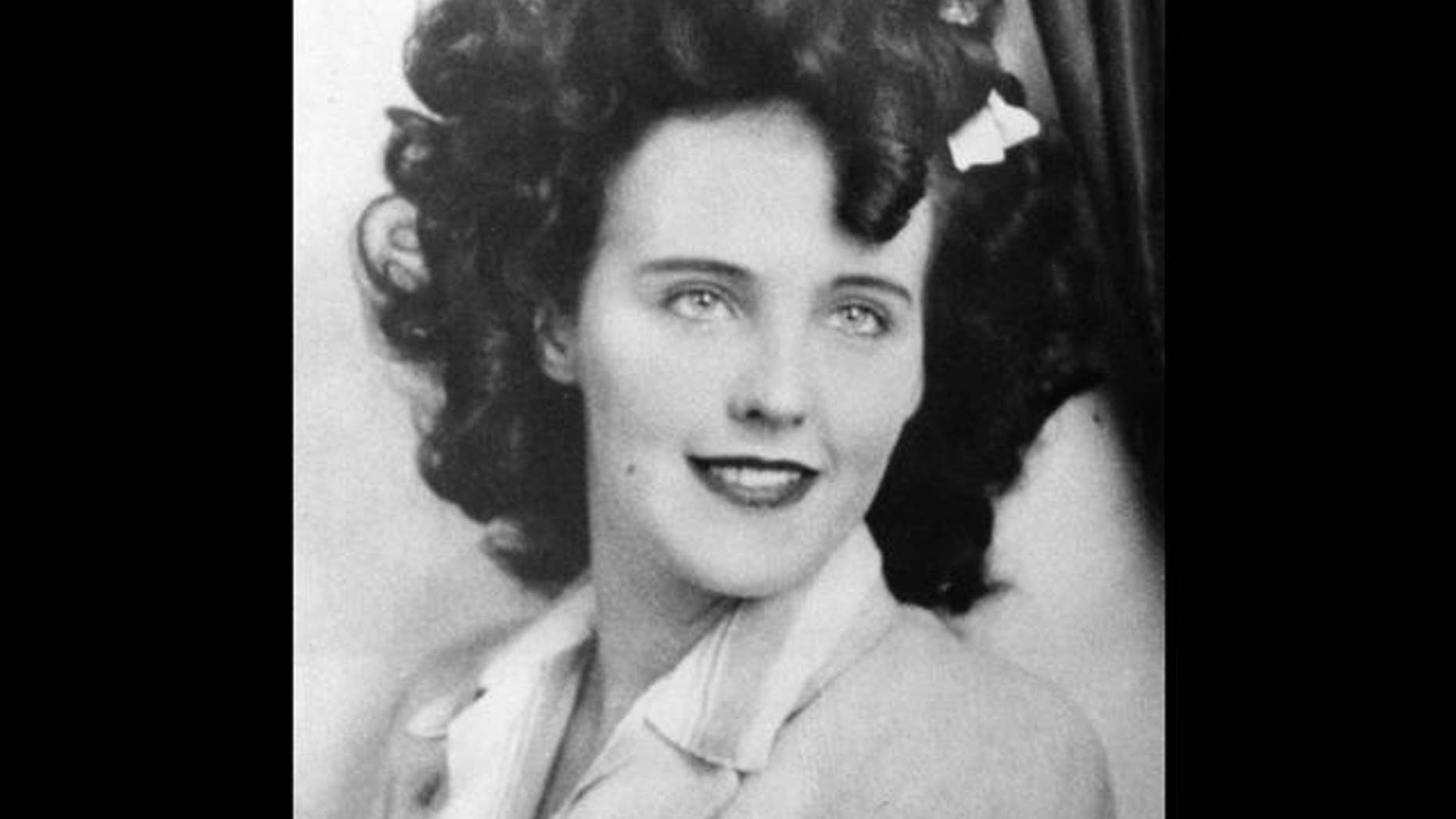
It was the body of Elizabeth Short, 22 years old, an aspiring actress who had come to Los Angeles from Massachusetts looking for something—a part, a break, a life that had not yet arrived.
The body had been cut in half at the waist.
It had been drained of blood.
It had been posed, arranged, placed there for someone to find.
The woman who found her did not scream at first.
She thought it was a mannequin, and that is the part that stays with you.
Who does that to a person?
Who leaves a woman in a vacant lot, severed and empty, so that a mother mistakes her for a prop?
The case became the "Black Dahlia," a name borrowed from a film noir title and pressed onto the victim by the press.
The name feels like a movie.
The murder was not a movie.
No one was ever charged.
The killer's identity is not established.
The murder weapon was never identified.
She was on the ground below, and the morning light made her look like something manufactured.
That is where the story begins: with a body mistaken for a thing, and a name that turned a horror into a headline.
THE LAST KNOWN MEETING
Robert "Red" Manley was the last known person to see Elizabeth Short alive.
That is what the case record says. That is also where the record stops.
Manley was a salesman who met Short in San Diego. He drove her to Los Angeles and checked her into the Biltmore Hotel. He left her in the lobby. He never saw her again, according to his account.
What he said about that final meeting is not specified in the record. The details of his alibi are not in the record either.
He was publicly suspected. The press named him. The police questioned him. He took lie-detector tests, and he was later cleared.
Not because his story held together under scrutiny. Because nothing tied him to the body.
Short's life had been a series of transient relationships and jobs. She moved from Massachusetts to California. She moved between cities, between men, between hotels. She was 22 years old, and she left a trail of addresses but no fixed point.
Manley was one of those points. He was the last one.
The LAPD launched one of the largest investigations in the city's history. Hundreds of people were interviewed. Thousands of leads were followed. Reporters received letters purportedly from the killer. One such letter contained the victim's birth certificate and address book.
No one was ever charged with the murder.
So the question sits there, unanswered. What did Manley say about that last encounter? Why wasn't it enough?
The record does not say what he said. The record does not say what he did that night. The record says only that he was the last known person to see her alive, and that he was cleared.
That is a heavy thing to carry. It is also a heavy thing to leave unexamined.
THE LETTER AND THE LEADS
The LAPD interviewed hundreds of people.
They followed thousands of leads.
The victim’s belongings were found discarded in a different part of the city.
A purse and shoes, separated from the body.
The media played a significant role.
Some reporters received letters purportedly from the killer.
One letter, sent to the *Los Angeles Examiner*, contained the victim’s birth certificate and address book.
That letter was a document trail.
It was also a performance.
The authenticity of the letters is not established.
No physical evidence was ever conclusively linked to a suspect.
The investigation drowned in noise.
Tips arrived by the volume.
False confessions arrived by the volume.
Every confession was examined.

Every confession was discredited or recanted.
How do you sort a signal from that?
How do you trust a single page?
How do you follow a lead when everyone is confessing?
That would require evidence.
The chaos had structure, though.
Jurisdictional disputes split the work between the LAPD and the Los Angeles County Sheriff’s Department.
Two departments.
One case.
No agreement on who owned it.
The sheer volume of tips and false confessions hampered the investigation.
It is a case built on paper.
It is also a case built on gaps.
The purse and shoes were found.
The birth certificate and address book were mailed.
The body was found in a vacant lot.
The record does not connect those places.
The record does not connect those objects.
The record says only that they existed, and that the investigation followed them.
THE CLEARED SUSPECT
Robert "Red" Manley was publicly suspected and later cleared.
The case record says he was cleared.
The case record does not say what cleared him.
That specific evidence is not in the record.
He was the last known person to see Elizabeth Short alive.
He was suspected because of that.
He was cleared despite that.
The record holds the suspicion and the clearance.
It does not hold the bridge between them.
The body showed signs of torture.
The killer had surgically severed the corpse with precision.
That precision led to speculation about medical or military training.
It was speculation.
The record does not establish the killer's training.
It does not establish the killer's identity.
Several individuals confessed over the years.
Each confession was discredited or recanted.
Each confession was a story told about the crime.
None of them were the crime.
No trial ever took place.
No one was ever formally charged.
The statute of limitations for murder does not apply.
The case remains open.
It is open because no one was charged.
It is open because no one was cleared by evidence.
Manley was cleared by the investigation.
The investigation never named anyone else.
So what cleared him?
Was it an alibi?
Was it a lack of physical evidence?
Was it the sheer volume of tips and false confessions?
The record does not say.
The record says he was cleared.
The record says the case remains open.
Both statements sit in the same file.
They do not resolve each other.
The killer's identity remains unknown.
That is what the record establishes.
That is all the record establishes.
AND THE STORY STILL ISN'T OVER
The LAPD officially closed the active investigation in the 1990s.
It remains open in the sense that new leads are occasionally reviewed.
That is a narrow door.
The LAPD has periodically reviewed the case with modern forensic techniques.
No definitive suspect has emerged.
The identity of the killer is still unknown.
No new leads are specified in the record.
Elizabeth Short was buried in Mountain View Cemetery in Oakland, California.
Her mother, Phoebe Short, and her sisters continued to seek answers for years.
They asked the same question the record still asks.
What would it take to finally solve it?
A DNA match on a preserved item.
A confession that survives scrutiny.
A name attached to physical evidence.
That would require evidence.
The case has been the subject of numerous books, films, and documentaries.
Each retelling adds a theory.
Each theory rests on what is documented.
No conclusive evidence has ever been presented.
The killer's identity remains unknown.
That is what the record establishes.
That is all the record establishes.
The body was found posed.
The belongings were found discarded.
The letters were never tied to a hand.
The mannequin was a woman.
The woman was Elizabeth Short.
The case is still open.
It is also still unsolved.
Not because no one looked.
But because no one could prove it.
The statute of limitations does not apply to murder.
So the door stays open.
Phoebe Short died without the answer.
Her daughters carried the question.
The question outlived them.
It outlasts the investigation.
It waits in the vacant lot of the record.
What would it take?
Evidence.
That is all.
Advertisement
You may also like
The ransom note demanding $118,000 that matched John Ramsey's bonus
The 911 call came at 5:52 a.m. on December 26, 1996. Patsy Ramsey told the dispatcher her 6-year-old daughter was missing. A ransom note…
The trunk stain that sent Casey Anthony to trial for Caylee's death
The car was a Pontiac, and the trunk smelled before anyone opened it. In July 2008, after Caylee Marie Anthony was reported missing, a…
The two-phase attack that began at a streetlight and ended in a hallway
The light at 82-70 Austin Street in Kew Gardens, Queens, marks the spot. Not a hallway. Not a doorway. The open street, under the…
The 911 call at 12:10 a.m. — and the glove that would not fit the timeline
The dog came back first. It was past midnight on June 13, 1994, in the Brentwood neighborhood of Los Angeles. A neighbor named Sukru…
Cell phone data put Chase Merritt near the grave site — then QuickBooks opened after the family vanished
The motorcyclist stopped because something in the sand caught his eye. It was February 2013, and he was riding near Victorville, California, in the…
The parking ticket that led police to David Berkowitz's door
It was a piece of paper, folded under a windshield wiper. A parking ticket issued near one of the Son of Sam shootings. The…