The mother who reported Gabby Petito missing — and the phone call that began it all
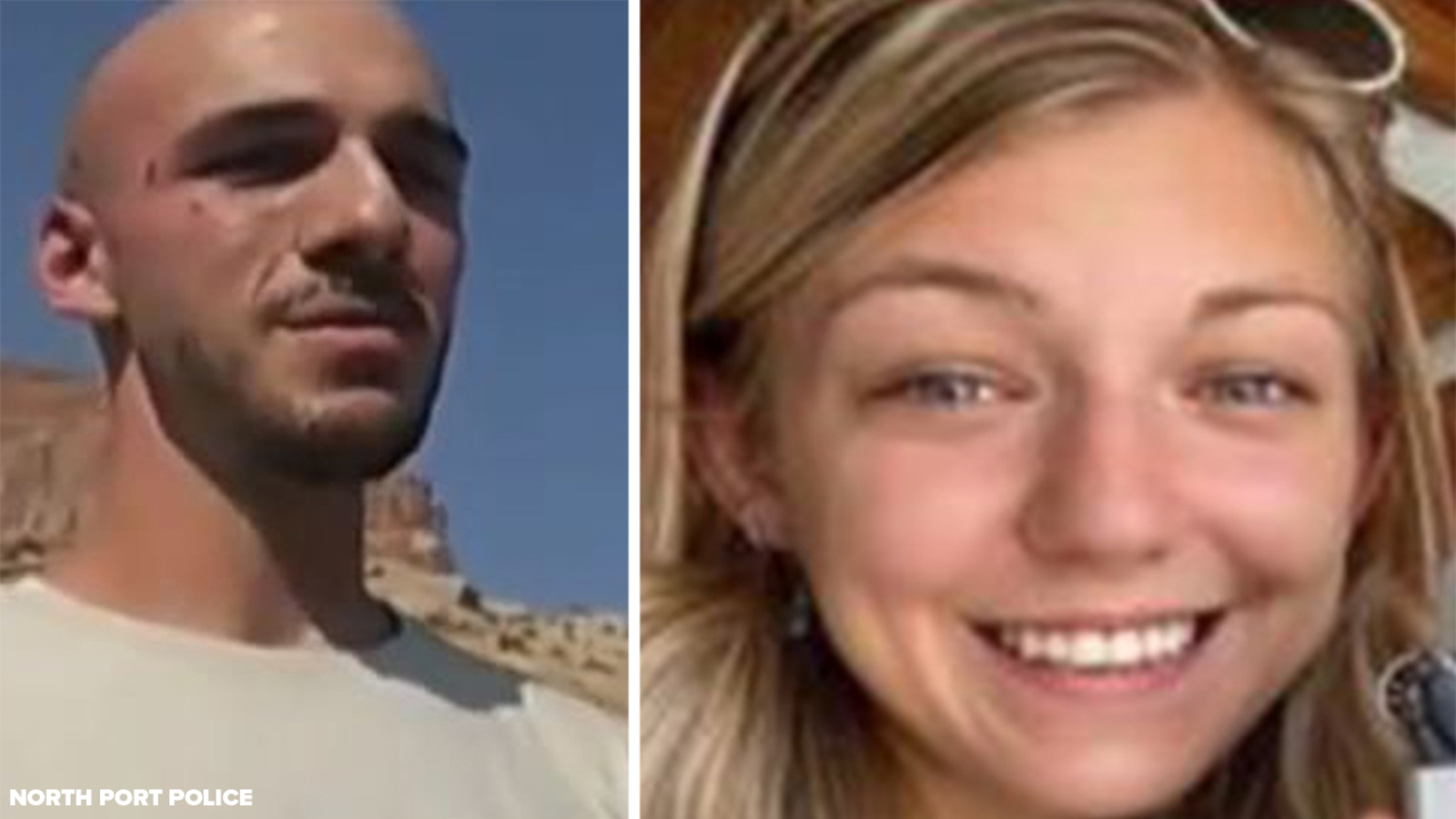
🚨 THE PHONE CALL THAT STARTED EVERYTHING…
The phone rang into the North Port Police Department on September 11, 2021.
Gabby Petito's mother was on the line.
She reported her 22-year-old daughter missing after Gabby failed to return from a cross-country van trip with her fiancé, Brian Laundrie.
The call set a search in motion.
It would end nine days later in Wyoming, where investigators found Petito's remains in the Bridger-Teton National Forest.
The exact contents of that 911 call are not in the record.
No transcript has been released. No audio has surfaced.
What is documented is the act itself: a mother calling authorities because her daughter did not come home.
She was not reporting a theory.
She was reporting an absence — a daughter who had been posting from national parks, then went silent.
The call is the documented beginning of the investigation.
Everything else — the van, the couple, the social media posts — came after that phone rang.
What did she say in those moments?
How long did she wait before calling?
That would require evidence.
The record holds the call's existence, not its words.
It holds the date: September 11, 2021.
It holds the outcome: a search, a discovery, a homicide ruling.
But the voice on that call, the fear in it, the exact plea — that remains outside the file.
Her daughter was out there somewhere.
The mother made the call that started everything.
THE VAN TRIP
She was 22, from Long Island, New York, and she was in love with the road.
Gabby Petito and her fiancé, Brian Laundrie, were traveling through the national parks of the western United States.
It was a cross-country van trip, the kind couples post about and friends envy.
They lived in a white 2012 Ford Transit van, their home on wheels for the journey.
The van was their bedroom, their kitchen, their proof of a life being built together.
They documented the travels on social media, sharing sunsets and trailheads and the easy grin of a young woman on an adventure.
That documentation would later draw intense media attention, frame by frame, post by post.
But in the beginning, it was just a trip.
The exact route, the precise timeline of every stop, is not fully detailed in the record.
What is known is that they were out there, moving through the parks, posting as they went.
The promise of it was ordinary: two people, a van, the American West.
It was the kind of summer that was supposed to become a story told at weddings.
Not because anything was wrong yet.
Because nothing had been reported wrong yet.
The white van kept moving, and the posts kept coming, and the adventure still looked like an adventure.
AUGUST 12 — THE MOAB STOP
On August 12, 2021, police stopped Petito and Laundrie in Moab, Utah, after a reported altercation.
The specific details of that altercation are not in the record.
A couple recorded a body-cam-style video of the stop, footage that later became central to public criticism.
Officers separated the couple that day.
No charges were filed.
They were allowed to continue their trip.
Why no charges?
Why the separation without follow-up?
Why did the van roll on?
That would require evidence the record does not provide.
The video shows officers speaking with Petito and Laundrie separately, according to the released footage.
It shows Petito seated on a curb, her face streaked with tears, as she tells an officer she hit him first, according to that same video.
The officer later testified in the internal review that he believed Petito was the aggressor.
The Moab police department's internal review later found officers made mistakes in how they handled the incident.
No criminal charges resulted from that review.
The couple left Moab in the white van.
The posts kept coming.
The adventure still looked like an adventure.
SEPTEMBER 1 — HE RETURNS ALONE
He drove the white van back to North Port, Florida, alone.
September 1, 2021.

Brian Laundrie pulled up to his parents' home without Gabby Petito.
She was not with him.
The van was there. She was not.
This was the first documented sign that something was wrong.
Not a theory. A fact of the record: he returned, and she did not.
The circumstances of that return are not detailed in the source.
Not how he explained it. Not what he said to his parents. Not why she stayed behind.
That part of the record is silent.
Ten days passed.
Her mother waited. Her mother called. Her mother reported her missing on September 11, 2021.
One sentence in the record: the mother's call began the investigation.
It is a documented fact, the call that started everything.
The delay is also documented: he came home on the first; she was reported missing on the eleventh.
Ten days between the van in the driveway and the call to authorities.
What happened in those ten days is not established.
Not by the source. Not by the public record.
Her mother made the call. That is where the official story begins.
She was on the ground below.
THE MISSING PERSON REPORT
The call was made on September 11, 2021.
Her mother reported Gabby missing after she failed to return from the van trip.
That call set the official investigation in motion.
Police in North Port, Florida, went to the Laundrie family home.
Brian Laundrie was there.
He declined to speak with investigators.
That is what the record shows: a mother asking for help, and a closed door.
The exact details of that police visit are not in the record.
What happened inside the house, what was said, who answered — none of that is documented.
The family was left outside that silence.
Her mother had reported her missing. That was the first official step.
It was also the first time the public learned that the young woman on the travel posts was not where she was supposed to be.
The investigation began with that phone call.
It began with a mother's voice on the line, saying her daughter had not come home.
Brian Laundrie was present. He was not charged with anything that day.
He simply did not speak.
The silence is part of the record.
The frustration of that moment is not in the file, but the shape of it is: a family seeking answers, and a man who would not give them.
That is where the official story begins.
SEPTEMBER 19 — THE REMAINS FOUND
They found her on September 19, 2021.
Her remains were in the Bridger-Teton National Forest in Wyoming, near the Spread Creek dispersed camping area.
She was 22 years old, and she had been reported missing eight days earlier by her mother.
The Teton County coroner later ruled her death a homicide by manual strangulation.
The weapon was not recovered.
There is no weapon to point to, no object marked as evidence.
The cause of death is the hands.
The exact circumstances of that discovery are not in the record.
Not how she came to be there. Not what the searchers saw first. Not what was left of the van trip that had been documented for so many followers.
The record holds a date, a location, a ruling, and a missing weapon.
It holds the finality of a search that began with a mother's phone call.
She was on the ground below.
The national parks she had been traveling through became the place where her story stopped.
Her social media had shown mountains and rivers and a white 2012 Ford Transit van.
Now the mountains were a search grid, and the river was a detail in a coroner's report.
The weapon was not recovered, which is another way of saying the means were the body itself.
The FBI would continue the investigation. The manhunt would continue. But this day, September 19, was the day the missing became the deceased.
Her mother had reported her missing on September 11.
Eight days later, the report became a recovery.
The question of what happened in those eight days is not answered by the record.
Neither is the question of the weapon, because there was no weapon to recover.

The coroner's ruling is a fact. The strangulation is a fact. The rest is the silence that follows a ruling.
THE SEARCH AND THE NOTEBOOK
He left on September 13, 2021.
Brian Laundrie walked away from his parents' home in North Port, Florida, and the manhunt began.
It became a massive search, one that drew national attention to a network of trails and swamps.
For weeks, the search found nothing.
On October 20, 2021, his remains were found in the Carlton Reserve.
They were near a backpack.
Inside the backpack was a notebook.
The FBI later confirmed that Laundrie had died of a self-inflicted gunshot wound.
The notebook was then examined.
A forensic analysis was released in January 2022.
The FBI said the writings included admissions of responsibility for Petito's death.
The exact wording was not fully disclosed.
The full contents of the notebook have not been released to the public.
That is not established by the record.
It is a fact that the FBI said the admission existed.
It is a fact that the words themselves remain unseen.
The notebook holds answers, but it is not public.
The manhunt ended in death.
The search ended at a backpack.
The notebook is the weight that remains.
THE TWO INTERPRETATIONS
The FBI closed the case in January 2022.
The FBI stated that Laundrie had admitted in his notebook to killing Petito.
That statement is the official conclusion.
Laundrie was never charged with Petito's murder.
He died before any formal charges were filed.
The only criminal charge against him was a federal warrant for unauthorized use of a debit card, issued after his death.
No trial. No verdict. No conviction.
The notebook is the weight that remains.
What exactly did it say?
What were his words?
What did the FBI read that the public could not?
The exact wording of the notebook's admission is not fully disclosed.
The FBI's forensic analysis found writings it called admissions of responsibility.
The full contents have not been released to the public.
That is what the record establishes.
It is a conclusion without a cross-examination.
It is an admission without a courtroom.
The Moab police department conducted its own internal review of the August 2021 stop.
The review found officers had made mistakes.
No criminal charges resulted from those mistakes.
That review is separate from the FBI's finding.
The two interpretations sit side by side.
One says the notebook closes the case.
The other says a closed case is not the same as a proven one.
The difference matters to Petito's family.
They have never seen the full notebook.
They have never heard Laundrie answer a question.
They have the FBI's word, and the word is heavy.
But heavy is not the same as complete.
THE VIRAL VIDEO AND THE RECORD
A couple filmed the Moab police stop on their own phone, body-cam style, and posted it.
The video became central to public criticism of how the encounter was handled.
It is a documented piece of evidence.
What the video shows is recorded. What the video proves is another matter.
The public watched officers separate Gabby Petito and Brian Laundrie, watched the couple sit apart on a curb, watched the van roll away.
The interpretation of that footage is not a fact established by the record.
The video does not establish what happened after the stop.

The video does not establish the full context of the altercation.
The Moab police department conducted an internal review of the August 2021 stop.
The review found officers made mistakes in how they handled the incident.
No criminal charges resulted.
The officers' mistakes are documented. The meaning of those mistakes is argued.
Was the stop a missed intervention? Was it a routine encounter that escalated later?
The video cannot answer those questions.
That would require evidence the record does not contain.
The couple who filmed it became key witnesses, but their footage is a slice, not the whole.
It is a window with the curtains drawn at the edges.
The public saw what the camera caught. The record holds what the camera did not.
The video is real. The story it tells is incomplete.
THE MOTHER'S FIGHT
She became the voice the case had not had.
Gabby Petito's mother and stepfather stepped forward in the weeks after the report, speaking to the press and on social media. They asked questions the investigation had not yet answered. They turned a missing person's case into a public demand for accountability.
They did it in her name. They established a foundation in her name. They spoke about the Moab police stop and what they saw as a missed chance to intervene. They spoke about the Laundrie family's silence, and what that silence cost.
The interviews were frequent. The grief was public. It was a mother's fight, conducted in headlines and on timelines.
In 2022, Petito's parents filed a civil lawsuit against the Laundrie family. The claim was emotional distress. The case moved slowly, as these cases do. In 2024, it was settled.
The terms are confidential. They are not in the record.
What the settlement was, what it required, what it meant — none of that is documented. That would require evidence. The record says only that it was settled.
So the mother kept speaking. The foundation kept working. The case became a reference point, a name attached to missing persons coverage and domestic violence awareness. Not because the story ended. Because it did not.
She was on the ground below. She is still there.
AND THE STORY STILL ISN'T OVER
His remains were cremated, and his family held a private service.
The FBI’s final report confirmed that the notebook contained an admission of responsibility for Petito’s death.
The full contents of that notebook have not been released to the public.
What else the notebook said, what it detailed, what it left out — none of that is documented.
That would require evidence.
The case was closed in January 2022, but the questions did not close with it.
Petito’s family kept speaking.
They established a foundation in her name.
They spoke publicly about the Moab police response.
They spoke about the Laundrie family’s silence.
They filed a civil lawsuit in 2022, alleging emotional distress; the case was settled in 2024 under confidential terms.
The exact terms of that settlement are not documented.
What it required, what it meant, what it resolved — none of that is in the record.
The record says only that it was settled.
Her mother kept speaking after that.
The foundation kept working.
The case became a reference point in discussions about missing persons coverage.
It became a reference point in discussions about domestic violence.
It became a reference point in discussions about the role of social media in criminal investigations.
Not because the story ended cleanly.
Because it did not end at all.
Gabby Petito was 22 years old.
She was from Long Island, New York.
She was traveling through national parks in a white 2012 Ford Transit van.
She documented the trip on social media.
The coroner ruled her death a homicide by manual strangulation.
The weapon was not recovered.
Brian Laundrie was never charged with her murder.
He died before any formal charges were filed.
The only criminal charge against him was a federal warrant for unauthorized use of a debit card.
He was never convicted of anything.
Her family continues to advocate for missing persons and domestic violence awareness.
They keep her name attached to the work.
The case remains a reference point.
The questions remain open.
The full contents of the notebook remain undisclosed.
The exact terms of the settlement remain undisclosed.
What remains is what her family said, what they did, what they built.
She was on the ground below.
She is still there.
Advertisement
You may also like
The $50,000 ransom note left on a nursery windowsill — and the 11-hour jury deliberation that followed
On the evening of March 1, 1932, a ransom note demanding $50,000 was found on a nursery windowsill in the Lindbergh home near Hopewell,…

A mother's shopping trip, a Sears toy aisle, and the six-year-old who never came home
The Sears store at the Hollywood Mall had an air-conditioned hum and a toy aisle that ran long and bright. On July 27, 1981,…
The traffic stop that caught a bombing suspect before the FBI did
The trooper saw the plate first, or rather, he didn't see it. The 1977 Mercury Marquis had no license plate, and that was enough.…
The 14-year-old boy Milwaukee police returned to Dahmer hours before his death
A boy was wandering the street in Milwaukee, drugged and naked. Neighbors reported him in May 1991. Police officers responded to the call. They…

The 1934 torso washing ashore that set off a four-year hunt
The water gave her back on September 5, 1934. A woman's torso, washed up on the shore of Lake Erie near Euclid Beach. She…
Two gas-station murders, one .22 pistol: the timeline the jury followed
The evening of July 19, 1976, in Orem, Utah, was warm and ordinary. A young man walked up to two college students at a…