Neighbor's 911 call leads to arrest of convicted sex offender in Samantha Runnion case — but what tipped them off?
🚨 THE SCREAM THAT STARTED IT ALL…
The 911 call came on the afternoon of July 15, 2002, from a neighbor in Stanton, California.
The neighbor heard a five-year-old girl scream from the front yard of her grandmother's home.
She looked out and saw a man carrying the girl to a car.
She called 911 immediately.
What she said into the phone that day is not in the record.
The exact words of that call are not established.
But the call was made, and it was made fast.
The neighbor then described what she had seen: a man, a girl, a car.
A light-colored compact car.
That description became the foundation of the investigation.
Not a theory.
Not a guess.
A neighbor's account, given in the minutes after a child disappeared.
She was on the ground below.
The police arrived.
The search began.
And the witness kept talking — later providing a description of the suspect himself.
A man carrying a child to a car.
A light-colored compact car.
A scream.
That is what the record shows.
That is what tipped them off.
JULY 15, 2002 — THE ABDUCTION
It was July 15, 2002.
Five-year-old Samantha Runnion was in the front yard of her grandmother’s home in Stanton, California.
A neighbor heard her scream.
The neighbor saw a man carrying the girl to a car.
The neighbor called 911 immediately.
The call was the first record of the abduction.
The suspect’s car was described as a compact, light-colored vehicle.
That description, and the scream, is what the record shows.
The abduction happened in daylight, in a residential yard, in a city in Orange County.
The exact time of the abduction is not specified in the source.
The neighbor’s account was the first thread.
It was a scream, a car, a description.
Not a theory.
Not a name.
Just what one person saw and heard.
THE OVERNIGHT SEARCH
The sun had not risen, but the search had already begun.
An extensive overnight search was launched, involving multiple law enforcement agencies.
The source does not name which agencies those were.
The search covered the area around Stanton and beyond.
It spread through the streets, the parking lots, the open ground where a child might be hidden.
The search continued through the night of July 15 into July 16.
Every hour carried a different weight.
Was she alive?
Was she cold?
Was she calling out?
That would require evidence, and the night gave none.
The urgency was heightened because Samantha was a young child.
Five years old.
Small enough to be carried, small enough to disappear.
The neighbor's 911 call had set this in motion, but the call alone could not bring her home.
Teams moved through the dark with flashlights and radios.
They checked cars, ditches, doorways.
They knocked on doors.
They waited for word that never came.
The night stretched long, and the morning arrived with no answer.
Not because they stopped.
But because the search was still running when the light broke.
JULY 16 — THE BODY FOUND
The morning arrived with a name.
On July 16, 2002, Samantha Runnion's body was found off a highway in the Cleveland National Forest in Riverside County.
The exact location along the highway is not specified in the source.
She had been sexually assaulted and strangled.
The cause of death was strangulation, not a firearm.
The discovery ended the search.
It began a murder investigation.
The search had covered the area around Stanton and beyond.
Multiple law enforcement agencies had been involved.
They had looked through the night of July 15 into July 16.
They had hoped for a different finding.
They had hoped for a child alive.
They had hoped for a reunion.
The highway gave them none of that.
The body was found, and the case shifted from missing child to homicide.
The neighbor's 911 call had set the search in motion.
The description she gave had pointed toward a car.
The search had run on that description, on the scream, on the hope.
Now the hope was gone.
What remained was evidence.
What remained was a composite sketch.
What remained was a question: who carried her to that car?
The record does not say who found the body.
The record does not say what the highway looked like that morning.
The record says only that she was there, off the road, in the forest.
She was on the ground below.
The search teams went home.
The investigators stayed.
The case was no longer about finding her.
It was about finding the man who took her.
That would take two more days.
THE COMPOSITE SKETCH AND THE TIP
Police released a composite sketch of the suspect and a description of his car.
The car was light-colored and compact.
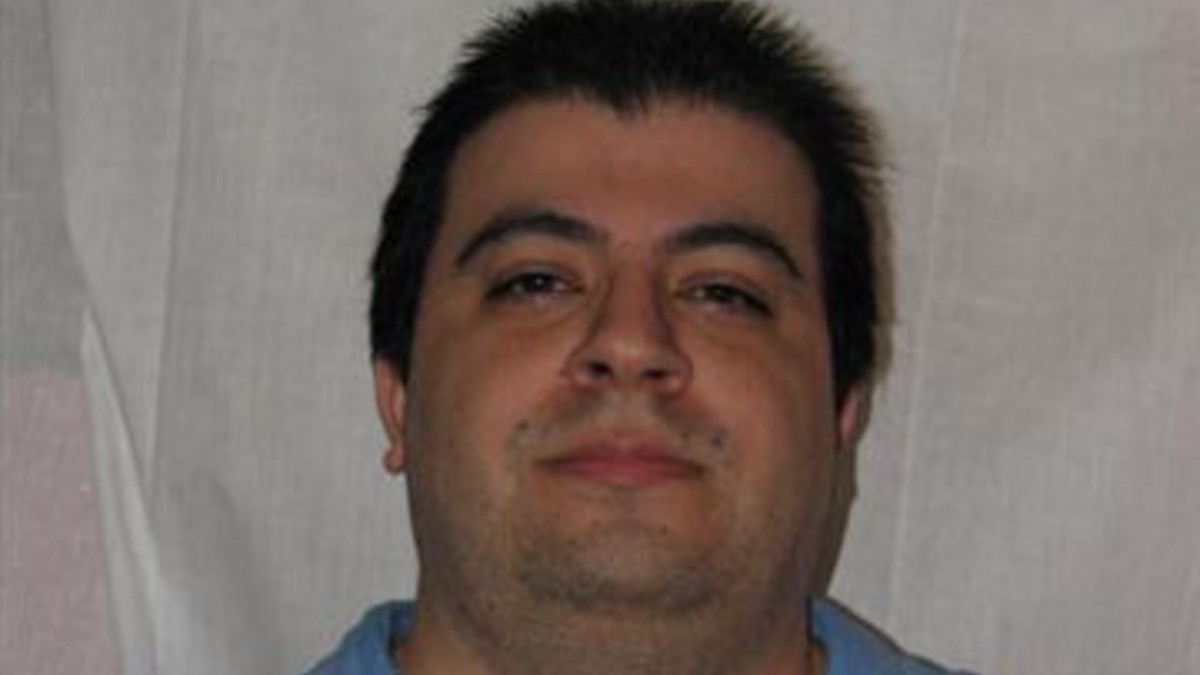
Within hours, a tip led them to Alejandro Avila.
Avila lived in the same apartment complex as Samantha's family.
He was 27 years old.
He was a convicted sex offender who had previously served time for child molestation.
He had been arrested earlier in 2002 for a separate child molestation charge.
He had posted bail.
The record does not specify who made the tip or exactly how it was received.
It does not say whether the tip named Avila directly or pointed to his car.
What the record shows is a sketch, a car description, and a lead that closed within hours.
That lead brought police to a man who already lived next door to the family.
Not a stranger who drifted into Stanton that morning.
A known offender who had been out on bail.
The relief of a breakthrough carries its own unease.
The sketch worked.
The tip worked.
The system that let him walk in the first place had not.
THE EVIDENCE AGAINST AVILA
Detectives searched Avila's car and found fibers.
They found other forensic evidence too.
The source does not detail what those fibers were.
The source does not detail what that evidence was.
It is enough to say the evidence linked him to the abduction.
DNA from the crime scene matched Avila.
The match was reported as a fact of the record.
The witness identified Avila from a photo lineup.
She had seen the man carry the girl to the car.
She had described the compact, light-colored vehicle.
Now she picked his face from a lineup.
Police also recovered a cell phone call record.

That record placed Avila near the abduction site.
Not at the site. Near it.
The record put him in the area on the day the girl was taken.
The evidence arrived in a sequence.
First the sketch.
Then the tip.
Then the car.
Then the fibers.
Then the DNA.
Then the lineup.
Then the phone record.
Each one added weight.
Each one narrowed the field toward one man.
The record does not say when each piece came in.
It does not say which piece broke the case.
It says the search moved quickly.
The witness's description had already pointed to a light-colored compact car.
Avila lived in the same apartment complex as the family.
He had been arrested earlier in 2002 for another child molestation charge.
He had posted bail.
He was a convicted sex offender.
The evidence piled up in the two days before his arrest.
The arrest came on July 18, 2002.
Two days after the body was found.
The case against him was built on the fibers, the DNA, the lineup, the phone record.
It was built on the neighbor who called 911.
What tipped them off was the tip.
What held him was the evidence.
JULY 18 — THE ARREST
The arrest came two days after Samantha Runnion’s body was found in the Cleveland National Forest.
Alejandro Avila was taken into custody on July 18, 2002.
The neighbor’s identification from a photo lineup had pointed at him.
The fibers in his car had held him there.
The DNA from the crime scene had matched him.
Avila was charged with first-degree murder with special circumstances.
The special circumstances were kidnapping and murder during a sexual assault.
Those charges made him eligible for the death penalty.
He was also charged with the separate molestation of another child.
The source does not specify the circumstances of the arrest.
It does not say whether he resisted.
It does not say where he was when they took him.
What the record shows is the sequence: the tip, the identification, the evidence, the arrest.
Two days after a five-year-old was found strangled, the man accused of killing her was in custody.
The neighbor who called 911 had given the description.
The witness who picked him from the lineup had sealed the identification.
The forensic team had tied him to the crime.
It was a case built on what people saw and what science found.
Not on a theory.
Not on a guess.
The charges were heavy, and they were meant to be.
Kidnapping.
Murder during a sexual assault.
A separate charge against another child.
Avila was a convicted sex offender who had served time for child molestation.
He had been arrested earlier in 2002 on another molestation charge and posted bail.
Now he sat accused of far more.
The gravity of it settled over the case from that day forward.
THE TRIAL — PROSECUTION VS. DEFENSE
The trial began in 2005, three years after Samantha Runnion was taken.
Prosecutors laid out their case in pieces: the fibers found in Avila's car, the DNA match, the witness who picked him from a photo lineup, the prior record of a convicted sex offender.
Each piece pointed the same way, they argued.
The defense answered with a different story.
The evidence was circumstantial, they said.
The witness had been mistaken.
Avila had been misidentified.
A man's life hung on a single glance from a neighbor who saw a stranger carry a girl to a car — and the defense pressed on that moment, on its speed, its shock, its unreliability.
What else did they argue?
The record does not say.
Not the specific arguments beyond misidentification, not the full shape of their strategy.
That would require evidence the source does not give.
So the courtroom held two narratives in tension.
One of forensic certainty, built from DNA and fibers and a witness's steady hand.
One of doubt, built on the frailty of memory and the weight of a mistaken face.
The jury would have to choose.
Not because the evidence was simple.
But because the two sides refused to meet.
THE VERDICT AND SENTENCE
The jury returned in June 2005.
They found Alejandro Avila guilty of first-degree murder with special circumstances.
The special circumstances were kidnapping and murder during a sexual assault.
That made him eligible for the death penalty.
The same jury then sat for the penalty phase.
They recommended death.
The judge formally sentenced Avila to death in August 2005.
He was also convicted on the separate molestation charge.
The exact date of the guilty verdict is not specified beyond June 2005.
The record does not establish the precise day the jury walked in.
It establishes the month.
It establishes the outcome.
The verdict landed three years after Samantha Runnion was taken from her grandmother's front yard.
It landed two years after the neighbor's 911 call set the investigation in motion.
The witness who described the light-colored compact car had identified Avila from a photo lineup.
Detectives had found fibers in his car.
DNA from the crime scene had matched him.
The defense had argued the evidence was circumstantial.
The defense had argued Avila was misidentified.
The jury did not agree.
The sentence carried the weight of the state.
It carried the record of a convicted sex offender who had posted bail on a separate molestation charge earlier in 2002.
It carried the name of a five-year-old girl.
Avila was led away to death row.
The courtroom emptied.
The case was closed in law, if not in memory.
AND THE STORY STILL ISN'T OVER
The California Supreme Court upheld the death sentence in 2013.
Avila appealed. The conviction stood.
He remains on death row at San Quentin State Prison.
California has not carried out an execution since 2006, blocked by legal challenges to the death penalty.
The sentence is real. The carrying-out is not.
Erin Runnion, Samantha’s mother, did not stop at the verdict.
She became a child safety advocate. She founded a nonprofit organization dedicated to protecting children from sexual abuse and abduction.
She has testified before state legislatures in support of stricter monitoring of sex offenders.
The case led to changes in how California handles sex offender parole and monitoring.
Not because one law passed. But because gaps were exposed.
The specific legislative outcomes are not uniformly reported. The record does not establish a single, named statute born directly from this case.
It is a shift in practice. It is also a family’s ongoing work.
Samantha’s family has continued to mark the anniversary of her death publicly, urging parents to talk to their children about safety.
The courtroom emptied years ago. The story did not.
Avila waits. The state waits. The family works.
A composite sketch and a neighbor’s tip — that is what the record shows led to Avila.
Not a viral theory. A witness who called 911.
That call became a case. The case became a conviction. The conviction became an appeal. The appeal failed.
She was on the ground below, and the law climbed down after her.
What remains is the waiting.
What remains is the advocacy.
What remains is the question of whether a death sentence carried out is different from one merely imposed.
That would require evidence. California has not provided it since 2006.
Advertisement
You may also like
The psychologist's mistress who heard a confession — and the brothers who went to a movie
On the evening of August 20, 1989, Lyle and Erik Menendez left their Beverly Hills mansion and drove to a movie theater. They had…
The desert graves that ended a three-year wait for a missing California family
A motorcyclist stopped in the Mojave Desert near Victorville in November 2013 and found what he first took to be scattered bones. The bones…

The bridge splash that led police to Wayne Williams — and the mothers who kept pushing
The sound came first. On May 22, 1981, police staked out a bridge over the Chattahoochee River after a surveillance team heard a splash…
The gas station victim's wife asked for privacy — then the sniper struck again
October 14, 2002, a 47-year-old FBI analyst was killed outside a Home Depot in Falls Church, Virginia. Her husband spoke publicly after her death.…

The neighbor who found Kitty Genovese and what she saw in the hallway
The hallway at 82-70 Austin Street was quiet. Sophia Farrar lived in the Kew Gardens building, a neighbor among neighbors. She found Kitty Genovese…

The 31-day gap in Caylee Anthony's disappearance that Cindy Anthony reported to 911
July 15, 2008. Cindy Anthony picked up the phone in her Orlando home and called 911 to report her three-year-old granddaughter, Caylee Anthony, missing.…