Nine Black teens accused of rape in 1931 — one recantation that changed the case
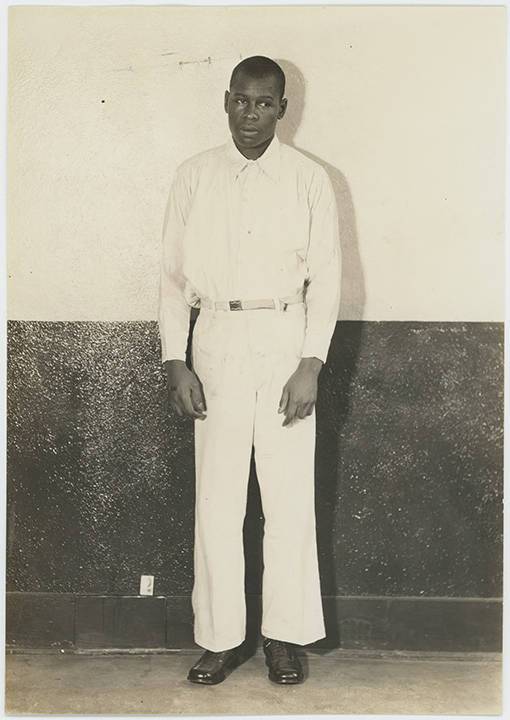
The train was moving through Jackson County, Alabama, on March 25, 1931.
A fight broke out between white teenage boys and Black teenage boys riding as hobos on the freight train.
The white youths were forced off the train.
They reported to authorities that they had been attacked by a gang of Black youths.
The train was stopped in Paint Rock, Alabama.
A posse arrested nine Black youths — the youngest was 13.
The posse also discovered two white women on the train.
The women told authorities they had been raped by the Black youths.
Everything happened in minutes.
The fight, the report, the stop, the arrest.
The case became known as the Scottsboro Boys case, named for the nearby town where the defendants were jailed.
What the record establishes is narrow: a fight, a report, an arrest, an accusation.
What the record does not establish is who was a victim and who was a perpetrator.
The women made accusations.
The youths were charged.
That is where the documented facts end, and the trial begins.
THE ACCUSATION
The two women, Victoria Price and Ruby Bates, told authorities they had been raped by the Black youths.
The case was built almost entirely on the testimony of the two women.
Dr. R.R. Bridges examined the women and testified that his findings were consistent with their account.
He acknowledged he could not confirm rape had occurred.
The medical exam could not confirm rape; that is not established in the record.
There was no physical evidence linking the defendants to the alleged assault.
No bruises, no torn clothing, no witnesses from the train car.
The record shows testimony alone.
The defendants were poor, young, and had no local counsel initially.
They were assigned a lawyer who had not prepared a case.
A lawyer with no file, no investigation, no plan.
The accusation stood on the words of two women.
It was flimsy. It was also enough.
The doctor could not confirm rape. The case proceeded anyway.
What did the jury hear?
They heard the women's account.
They heard the doctor say his findings were consistent.
They did not hear what the record could not establish.
The charge was rape. The evidence was testimony.
That would require more than words; that would require proof.
THE FIRST TRIAL
The first trial began on April 6, 1931, in Scottsboro, Alabama, before Judge A.E. Hawkins.
Prosecutor H.G. Bailey and others presented the case.
Two weeks. That was all the time between the arrests and the trial.
The defendants had no local counsel who had prepared a case; they were assigned a lawyer who had not prepared one.
The atmosphere was hostile.
The exact nature of that hostility is not detailed in the record, only that it was hostile.
All nine defendants were convicted of rape.
Eight were sentenced to death.
The youngest, 13 years old, received a life sentence instead.
The convictions were appealed to the Alabama Supreme Court, which upheld them.
That would have been the end of it, but it was not.
The U.S. Supreme Court reversed in *Powell v. Alabama* in 1932.
The ruling was that the defendants had been denied adequate counsel.
The speed was the problem. The lack of preparation was the problem.
The Court said the right to counsel mattered more than the haste.
Retrials were ordered.
The relief was real. It was also temporary.
The record shows the retrials still ended in convictions.
THE RECANTATION
Ruby Bates wrote a letter.
She wrote that she had not been raped.
Later, she testified to the same thing — she said Victoria Price had invented the story.
Price did it, Bates said, to avoid being arrested for vagrancy.
The recantation was a major turning point.
It was documented. It was public. It was a fact in the record.
It did not lead to acquittals.
Retrials had been ordered after the Supreme Court reversed the first convictions.
The first retrial, for Haywood Patterson, was held before Judge James Edwin Horton.
Judge Horton set aside the guilty verdict.
He found the evidence insufficient, according to his ruling.
Then Judge Horton was replaced.
Judge William Washington Callahan presided over the subsequent retrials.
Those retrials again resulted in convictions.
Not because the recantation was ignored.
But because the record shows the retrials still ended in convictions.
What did the recantation change?
What did it prove?
What did it settle?
That would require evidence the record does not provide.
The recantation is documented.
Its legal impact is not.
The relief was real. It was also temporary.
AND THE STORY STILL ISN'T OVER
The recantation did not end the case.
Retrials were ordered, and the convictions held.
Over the years, charges were dropped against some defendants.
Others were paroled.
One escaped from prison.
None of the defendants were ever executed.
The last of the Scottsboro Boys to be paroled was Clarence Norris in 1946.
He was pardoned posthumously in 2013.
That same year, the state of Alabama posthumously pardoned all nine Scottsboro Boys.
The exact reasons for dropping charges or paroles are not detailed in the source.
That is not established.
What is established is the legal weight of the case.
It helped establish precedents regarding the right to counsel.
It helped establish precedents regarding racial discrimination in jury selection.
Historians and legal scholars have concluded that the rape allegation was false.
The record shows the retrials still ended in convictions.
The recantation was real.
The relief was real.
It was also temporary.
The men were convicted, paroled, or escaped.
They were not acquitted.
The pardons came in 2013, decades after the last conviction.
Clarence Norris was the last to be paroled.
His name was cleared by the pardon.
The case remains a landmark.
It is a landmark of injustice.
It is also a landmark of what the law can learn.
The law learned about counsel.
The law learned about juries.
The law learned about race.
That would require evidence.
The evidence was the case itself.
Advertisement
You may also like
The Green River Killer's DNA match that broke a 20-year cold case
In July 1982, the first victims were discovered near the Green River south of Seattle, Washington. The source does not name them. The remains…
The 12:55 a.m. takeoff that ended with three rock legends in an Iowa cornfield
It is 12:55 a.m. on February 3, 1959, and a Beechcraft Bonanza lifts off from Mason City Municipal Airport. The plane, tail number N3794N,…
A pair of eyeglasses found by a body that would force two teens to confess
The glasses were horn-rimmed, found near the body of 14-year-old Robert "Bobby" Franks in a culvert close to the Indiana border. They were traced…
The 31-day gap between Caylee Anthony's last sighting and the 911 call that started it all
June 16, 2008, was the last day anyone saw Caylee Anthony alive. She was two years old. Her grandmother, Cindy Anthony, called 911 on…
The 90-second cell phone video that shattered Alex Murdaugh's alibi
Paul Murdaugh’s phone recorded for ninety seconds at the dog kennels on June 7, 2021. The video was played at trial in Colleton County.…
The tie left on the plane that never yielded a fingerprint
The tie sat on the seat of a Northwest Orient Airlines Boeing 727 on November 24, 1971. A man calling himself Dan Cooper had…