The QuickBooks entry that prosecutors say puts a business associate at the crime
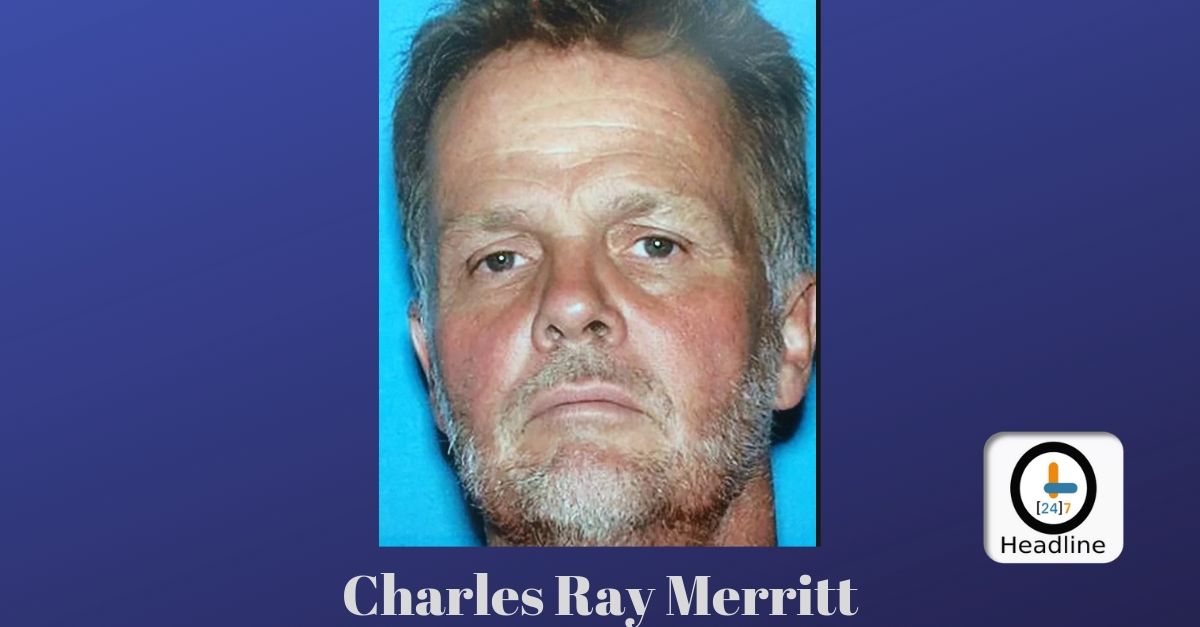
The QuickBooks entry came after the family was already gone.
On February 4, 2010, Joseph McStay, his wife Summer, and their two young sons, 4-year-old Gianni and 3-year-old Joseph Jr., were reported missing from their home in Fallbrook, California.
The dogs were in the backyard.
The vehicles were in the driveway.
No signs of a struggle.
Prosecutors later presented evidence that Charles "Chase" Merritt, a business associate of Joseph, had used Joseph's QuickBooks accounting software after the family disappeared.
Not a withdrawal. Not a sale. An accounting program.
Who logs into a missing man's books?
Who makes calls to a dead man's phone?
Prosecutors presented evidence that Merritt made calls to Joseph's phone after the family was already dead.
The exact content of that QuickBooks entry is not in the record.
Only that he used the software.
The defense argued the evidence was circumstantial.
The defense argued Merritt had no motive.
The trial would hinge on what the software showed, what the phone records showed, and what the jury believed about a business associate who kept working while a family vanished.
The entry was ordinary. The timing was not.
THE DISAPPEARANCE AND THE COLD CASE
The house on February 4, 2010, held the family's dogs in the backyard and their vehicles in the driveway.
No signs of a struggle were found at the home, the San Bernardino County Sheriff's Department reported.
The family was reported missing that day.
Detectives noted the family's electronic devices and financial accounts had not been used since the day they disappeared.
Not because the family had planned a trip.
Because the trail simply stopped.
The case went cold for over three years.
Then, in November 2013, a motorcyclist discovered human remains in two shallow graves in the Mojave Desert near Victorville, California.
The remains were later identified as the McStay family.
Joseph and Summer had been beaten to death, according to the coroner's findings.
The children had also been killed.
The cause of death for the children was difficult to determine due to decomposition.
The specific weapon was never recovered.
A hammer-like object was reported as the likely weapon, but the record does not establish that.
The gap between the empty house and the desert graves is the whole case in miniature.
What happened in between?
That would require evidence.
The investigation turned back to a business associate who had been interviewed early in the case.
He had worked with Joseph on various projects.
He had been one of the last people to see the family.
The prosecution would later say the software and the phone records told the story.
The defense would say the evidence was circumstantial.
The trial would hinge on what the jury believed about a man who kept working while a family vanished.
THE ARREST AND THE TRIAL
Merritt was arrested in November 2014 and charged with four counts of first-degree murder.
The trial began in January 2019 before a judge in the San Bernardino County Superior Court.
The prosecution argued that Merritt killed the family over a financial dispute related to a business deal.
That theory is not detailed in the record; the record says only that the dispute was financial and tied to a business deal.
The defense contended that there was no physical evidence linking Merritt to the crime scene.
The defense said the prosecution's case was built on speculation.
The prosecution presented testimony from forensic experts about the condition of the remains.
Those experts described the state of the bodies as found in the shallow graves.
The cause of death for the children, the experts said, was difficult to determine due to decomposition.
Not because the case was weak. Because the remains had been exposed to the desert for over three years.
The jury heard about the QuickBooks entry.
The jury heard about the phone calls made after the family was already dead.
The jury heard that no specific weapon was ever recovered.
A hammer-like object was reported as the likely weapon. That weapon was never found.
Was the financial dispute the motive?
Was the software entry the link?
Was the absence of a weapon the doubt?
That would require evidence the record does not provide.
The courtroom heard arguments. The jury weighed what was documented and what was inferred.
The judge presided. The defense pushed on the gaps. The prosecution pointed at the timeline.
The case rested on what a man did with a computer and a phone while a family was gone.
THE VERDICT AND THE SENTENCE
The jury deliberated for thirteen days.
In June 2019, they found Charles Merritt guilty on all four counts of first-degree murder.
The judge sentenced him to life in prison without the possibility of parole.
Merritt showed no reaction as the sentence was read.
The prosecution had built the case on what a man did after a family vanished.
They pointed to the QuickBooks entry, made after the family was gone.
They pointed to the calls to Joseph's phone, made after the family was dead.
The defense had argued the evidence was circumstantial.
They said there was no physical evidence linking Merritt to the crime scene.
They said the case was built on speculation, not proof.
The jury saw it differently.
The verdict was upheld on appeal.
The McStay family's deaths were ruled homicides.
The case is considered closed.
But one thing remains absent from the record.
A hammer-like object was reported as the likely weapon.
That is a reported likelihood, not a documented fact.
No specific weapon was ever recovered.
The prosecution never produced it.
The defense never had to answer for it.
The jury never saw it.
The sentence carries the finality of a closed case.
The weapon carries the absence of a closed loop.
The case rests on what a man did with a computer and a phone.
What he did with his hands, the record does not say.
That would require evidence.
AND THE STORY STILL ISN'T OVER
Charles Merritt is serving his life sentence at a California state prison.
The case is considered closed. The families are not done.
Joseph's father, Patrick McStay, has spoken publicly about the loss of his son and grandchildren.
Summer's mother has spoken publicly too.
They have advocated for victims' rights.
The exact nature of that advocacy is not in the record. No pending legal motions are in the record either.
That would require evidence.
The QuickBooks entry remains a documented piece of evidence. It placed a business associate at the crime, according to prosecutors.
The calls to Joseph's phone after the family was already dead remain documented too.
The weapon does not.
A hammer-like object was reported as the likely weapon. No specific weapon was ever recovered.
The murder weapon was not widely reported.
The children's exact cause of death was difficult to determine due to decomposition. That difficulty was part of the forensic testimony.
So the record holds what a man did with a computer and a phone.
It does not hold what he did with his hands.
It is a closed case. It is also an open file, in the sense that the families keep talking.
They keep talking because the grief persists. They keep talking because the weapon question persists.
What was used. How it was used. Where it went.
That would require evidence.
The record does not have it.
Advertisement
You may also like
The notebook found beside Brian Laundrie that confessed to killing Gabby Petito
A white Ford Transit van, home on wheels, carried two people across the country. Gabby Petito, 22, from Blue Point, New York, and her…
The pajama top fibers that tied a Green Beret doctor to a murder scene he blamed on hippies
The pajama top was never found. It was never recovered from the house, never turned up in the woods, never produced by anyone who…
The cell phone records that put Adnan Syed near Leakin Park — and the alibi witness never called
A classmate later came forward with a name and a date: Asia McClain said she had seen Adnan Syed in the school library around…
The repeat offender with a palm print on a bedpost after Polly Klaas vanished
She was twelve years old, asleep at a slumber party in her mother's home in Petaluma, California. The night was October 1, 1993. Two…
The confession to a psychologist that broke the Menendez brothers' alibi
The 911 call came in at 11:47 p.m. from the mansion on North Elm Drive, and Lyle Menendez was sobbing into the phone. "My…
The drifter who turned a Miami morning into a fashion icon's last walk
The man who walked up the steps of Casa Casuarina that morning had, for years, been inventing himself. Andrew Cunanan was 27 years old,…