The security footage that changed everything in the Watts case
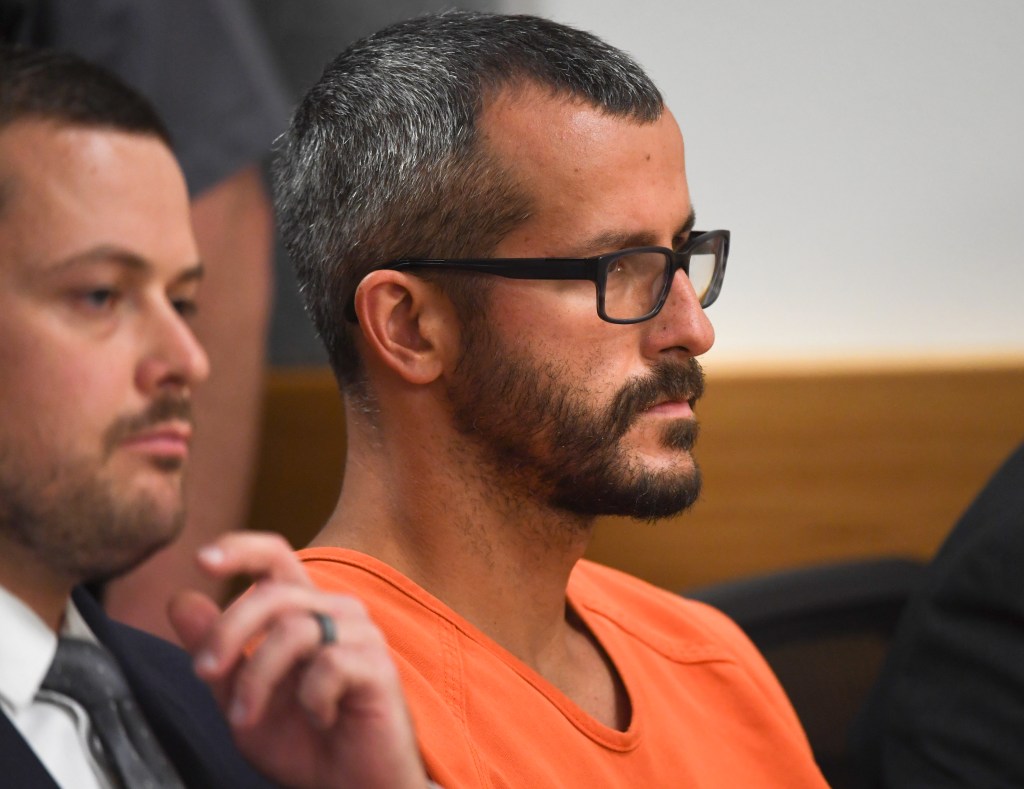
The camera was there, on the house in Frederick, Colorado.
On August 13, 2018, Shanann Watts, 34, failed to show up for a doctor's appointment.
A friend reported her missing after her phone went unanswered.
That morning, the home's security camera footage showed Shanann's vehicle returning to the house.
It showed the vehicle arriving.
It did not show it leaving.
The footage was not checked immediately.
Investigators accepted Christopher Watts's story first.
He told them Shanann had left early that morning after an emotional conversation.
He told television cameras the same thing, pleading for her return.
The camera had recorded the truth, but no one looked in time.
What the footage showed in full detail is not in the record.
Only that it showed the vehicle returning and not leaving.
That was enough to shift everything, once someone finally watched.
But the search for Shanann and the children was already delayed.
The camera was there the whole time.
No one checked it in time.
THE MISSING-PERSON MORNING
The friend called it in after Shanann missed her prenatal appointment and her phone went unanswered.
That call made it a missing-person case, not a crime scene.
Police entered the Watts home and found Shanann's purse and her phone.
They found no signs of a struggle.
Christopher said Shanann had left the house early that morning after an emotional conversation.
He said he had not seen her since.
The house looked ordinary. The story did not.
Later that day, police found Shanann's body at an oilfield site owned by Christopher's employer.
They found the bodies of the couple's two daughters there too — Bella, 4, and Celeste, 3.
Shanann was pregnant with a son.
The record says the son later died with her. What the record does not specify is the exact timeline of when the bodies were found relative to the search.
That gap matters.
Because the camera was on the house. Because the footage existed. Because no one checked it in time.
The investigation began as a search for a missing woman. It became something else the same day.
Christopher's account was already fraying. The purse was there. The phone was there. She was not.
A missing woman leaves a trace. A missing woman does not leave her purse behind.
The house told one story. The oilfield told another.
What the footage showed would come later. What the morning showed was a husband whose wife had vanished and a home with nothing out of place.
Nothing out of place, except that she was gone.
THE FOOTAGE AND THE SHIFT
The footage was on the camera the whole time.
Investigators reviewed the home's security camera footage, and it showed Shanann's vehicle returning to the house that morning.
The vehicle never left.
Christopher's story shifted after that review.

He admitted to an affair with a coworker, Nichol Kessinger, who was interviewed and cleared of any involvement.
The record does not detail the exact content of Christopher's online searches about the case.
The record does not detail what he asked a neighbor about security cameras.
Those details are not established.
What is established is that investigators found he had been searching online for information about the case.
What is established is that he had asked a neighbor about security cameras.
The critical interrogation was conducted by the lead investigator of the Colorado Bureau of Investigation.
During a polygraph examination, the investigator confronted Christopher with inconsistencies.
She confronted him with evidence.
She told him his daughters' bodies had been found.
Not because the footage alone broke him.
Because the footage made his story impossible, and the interrogation made the weight of that impossibility plain.
The house told one story. The oilfield told another.
The footage showed the truck return.
The footage showed the truck never leave.
The morning was no longer a mystery.
It was a timeline with one man standing in the middle of it.
THE CONFESSION AND THE PLEA
He confessed on the night of August 15, 2018, during the interrogation.
He told Agent Lee he had strangled Shanann in the bedroom.
He said he had then smothered both daughters.
His first account was different.
He claimed Shanann had killed the children and he had acted in a rage.
That claim is part of the confession.
It is not independently verified.
The medical examiner who testified gave the cause of death.
He stated Shanann died by strangulation.
He stated the unborn son died with her.
The charges came quickly.
Christopher Watts was charged with three counts of first-degree murder.
He was charged with two counts of murder of a child under 12.
He was charged with one count of unlawful termination of a pregnancy.
He pleaded not guilty at first.
Then he changed the plea.
On November 6, 2018, he pleaded guilty to all counts.
The plea deal took the death penalty off the table.
The judge accepted the plea.
He sentenced Watts to three consecutive life sentences without parole.
He added 84 years for the unlawful termination of a pregnancy.
The sentence is final.
The why is not.
The record does not establish an exact motive for the murders.

The confession includes a claim about rage, but that claim is not independently verified.
Why that morning?
Why those children?
Why the oilfield?
That would require evidence the record does not provide.
He is now at the Dodge Correctional Institution in Wisconsin.
He is serving the life sentences.
The plea ended the trial.
It did not end the question.
AND THE STORY STILL ISN'T OVER
He is serving the life sentences at the Dodge Correctional Institution in Wisconsin.
He has given interviews from prison, including one to a documentary filmmaker.
He has not been granted any appeals.
The home in Frederick was sold.
The community has held memorials for Shanann, Bella, Celeste, and the unborn son, who was named Nico by his parents.
Shanann's parents have spoken publicly about the case.
They have advocated for awareness of domestic violence.
That work continues.
The grief does not move on a court schedule.
What remains is the record: the delay in checking the footage, the shift in the story, the confession.
The footage was always there.
It was not reviewed immediately.
That is the mistake the record documents.
The turning point came only when an investigator confronted the inconsistencies.
That is the documented sequence.
Not because the camera was silent.
But because no one looked at it in time.
What would have changed if the footage had been checked that morning?
What would have been spared?
What would have been different?
That would require evidence.
The next concrete step is not in the record.
No pending motions.
No hearing dates.
The case is closed.
It is also not closed.
The questions remain open for the family.
For the community.
For anyone who reads what happened.
She was on the ground below.
The plea ended the trial.
It did not end the question.
Advertisement
You may also like
A 2:41 a.m. 911 call, a staircase, and a blow poke: the Durham case that hinges on one tool
The call came at 2:41 a.m. Michael Peterson phoned 911 from his home at 1810 Cedar Street in Durham, North Carolina, and told the…
The discarded DNA sample that made police look twice at an architect
The discarded DNA sample was analyzed in 2022. That analysis pointed investigators toward Rex Heuermann, an architect from Massapequa Park. According to the investigation…
The 31-day gap that police couldn't explain — and the trunk that changed everything
The call came on July 15, 2008. Orlando, Florida, and a grandmother on the phone with 911, reporting a 3-year-old missing. The child was…
The New York Times story that blamed 38 silent witnesses — and the truth that came 52 years later
The number was 38. Thirty-eight respectable, law-abiding citizens in Queens who watched a killer stalk and stab a woman in three separate attacks over…
The 14-foot boat Scott Peterson bought but never told police about
A 14-foot aluminum fishing boat. Scott Peterson bought it shortly before Laci disappeared. He never told police about it. Investigators found the purchase anyway,…

A broken attitude indicator and a 21-year-old pilot: the night Buddy Holly's plane went down
It was a 1947 Beechcraft Bonanza 35, registration N3794N, owned by Dwyer Flying Service. On February 3, 1959, it crashed in a cornfield near…