The shantytown razed twice by Eliot Ness, and the killer who vanished
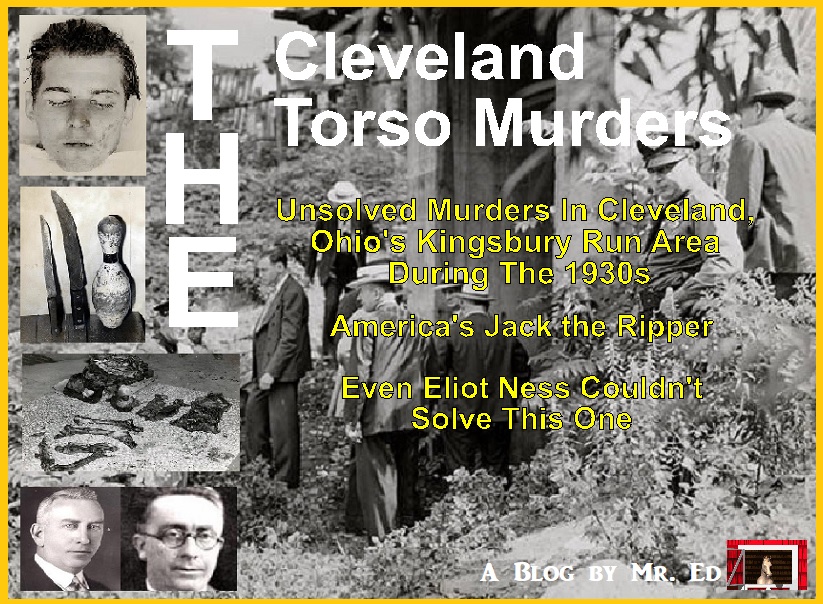
The second fire went up in 1938, and the flames were meant to solve something.
Eliot Ness, Cleveland's Safety Director, had already ordered the shantytown at Kingsbury Run burned once, in 1936.
He ordered it burned again.
The shantytown sat in an industrial ravine on the city's east side, a makeshift settlement of transients and the poor, and it was where the killer had dumped his victims' remains most often.
The tactic was simple: burn the hunting ground, flush out the killer, or drive him away.
The record states plainly what it did not do.
It did not produce a suspect.
The flames rose over an empty ground, and the killer stayed loose.
A theory circulates online that the killer was a doctor or a butcher, a man with the skill to cut human flesh cleanly.
That is a theory.
The record does not establish it.
What the record establishes is the fire itself, the order, the date, the repetition.
It establishes that Ness tried the same desperate act twice.
What the record does not establish is that the burning changed anything.
The victims were dismembered — heads, hands, often genitals removed — and dumped in the ravine.
The killer took care to remove identifying features.
The fire took the shelter, not the secret.
She was out there, somewhere, in the city that kept burning its own ground.
The flames were a confession of failure, and they solved nothing at all.
THE BODIES AND THE DETECTIVE
The first victim was found on September 5, 1934, on a beach near the West Side.
More remains followed in 1935, in 1936, in 1937, in 1938.
The bodies were typically dismembered — heads, hands, often genitals removed — and dumped, most often in Kingsbury Run.
The count was grim arithmetic: authorities attributed at least 12 killings to the same offender.
The exact number remains disputed.
Many of the dead were never identified.
They were believed to be transients, prostitutes, residents of the shantytowns that police periodically razed.
Detective Peter Merylo was assigned to the case in 1935.
He pursued it for years, interviewing hundreds of people, building lists of suspects.
He believed the killer had medical or anatomical knowledge because of the precision of the dismemberment.
That theory was debated.
The investigation was hampered from the start by the condition of the bodies.
The killer appeared to have taken care to remove identifying features.
What was left could not always be named, let alone traced.
Merylo worked with what remained: cuts, angles, the quiet skill in the flesh.
He thought the precision said something about the hand that held the blade.
Others were not so sure.
The horror was plain; the frustration was the pattern.
A body found, a ravine searched, a name that never came.

The detective kept asking who had the knowledge, the access, the nerve.
That would require evidence.
THE WITNESS AND THE CONFESSION
In 1938, a witness reported seeing a man with a woman near the site where a victim's remains were later found.
The lead went nowhere.
No arrest followed.
Then, in 1939, a woman came forward with a different story.
She claimed a suspect had confessed to her.
The suspect was arrested.
He was held and interrogated for weeks.
He reportedly gave a confession.
Then he recanted it.
The alleged witness admitted she had lied.
The charges were dropped.
The suspect died of a heart attack shortly after his release, in 1939.
What remains is a confession that the record does not establish as genuine.
It was recanted.
It was uncorroborated.
No physical evidence ever linked anyone to the crimes — the source states this plainly.
The weapon was never identified.
Investigators believed a knife or similar cutting instrument was used.
That belief was not proof.
A man was questioned for weeks, accused on a liar's word, and died before his name was cleared.
The detective kept asking who had the knowledge, the access, the nerve.
That would require evidence.
There was none.
WHAT THE RECORD DOES AND DOESN'T SAY
Theories have circled the case for decades: a doctor, a butcher, a transient.
The source lists these possibilities.
It states plainly that none has been proven.
The coroner examined many of the victims and concluded the killer had some skill in cutting human flesh.
The lead detective believed medical knowledge was involved.
Those are documented opinions, not established facts.
No physical evidence ever linked anyone to the crimes.
The record confirms what happened: the bodies found between 1934 and 1938, the burnings of the shantytown, the witness lead in 1938, the confession in 1939 that collapsed when the witness recanted.
It confirms Ness ordered the razing twice.
It does not confirm any theory that the killer was among the displaced.
Anyone could have been in that ravine. A doctor, a butcher, a transient.
That would require evidence.

There was none.
The case remains officially unsolved.
No one was ever charged. There was no trial.
The killer's identity is not established. Neither is the motive. Neither is any physical evidence linking a suspect.
What the record does say: the coroner's opinion on skill, the detective's belief in medical knowledge, the timeline, the burnings, the failed lead.
What it does not say: who did it.
The viral claim that the killer was a specific profession is a theory.
It is a theory only.
The detective kept asking who had the knowledge, the access, the nerve.
The record answers with silence.
AND THE STORY STILL ISN'T OVER
The murders stopped in 1938, and the case was never closed.
Detective Merylo kept working the investigation until his retirement, and he remained convinced he knew the killer's identity.
He never produced enough evidence to make an arrest.
Eliot Ness's later reputation was damaged in part by his failure to solve the case.
The case remains one of America's most famous unsolved serial murder investigations.
No hearing date is pending.
No motion is on file.
No decision is coming.
The next concrete step is not in the record — the case simply sits open.
There is no pending legal action, and the source records no new lead.
The shantytown is gone, razed twice by order of the Safety Director.
The detective is retired.
The suspect is dead.
The file has no name on it.
That is the quiet weight of it: an open file with no next step, no motion, no hearing, no name.
The record does not establish that anyone is still looking.
It does not establish that anyone ever will.
Merylo believed he knew.
The coroner concluded the killer had some skill in cutting human flesh.
The witness in 1938 reported seeing a man with a woman near the site.
None of it was enough.
Not because the evidence was thin.
But because the evidence never pointed to one person with proof.
Theories have pointed to a doctor, a butcher, a transient.
The source confirms Ness ordered the shantytown razed twice.
It does not confirm any theory.
It does not confirm a name.
The record answers with silence.
That is where the story still sits — open, unresolved, and heavy.
Advertisement
You may also like
The confession F. Lee Bailey never let a jury hear
He was a handyman and a former soldier, and in 1964 he was in custody. From that cell, Albert DeSalvo confessed to being the…
The phone calls from a dead man's phone that led to the McStay family graves
The McStay family's cell phones stopped transmitting on February 4, 2010. That was the same day Joseph, Summer, and their two young sons were…
In 1994, eleven Branch Davidians stood trial — what did the jury hear that they couldn't ignore?
Eleven Branch Davidians sat in a federal courtroom in San Antonio in 1994. Not for the fire that killed 76 people. For what happened…
The confession that put Winston Moseley on trial for Kitty Genovese's murder—what the jury heard
The television was in the car when they pulled him over. On March 19, 1964, police arrested Winston Moseley after a tip about a…
The letter to Captain Borrelli that cracked the Son of Sam case — but what made it so damning?
The letter was found near the scene after the April 1977 attack on two victims. It was addressed to Captain Joseph Borrelli, the lead…
The 31-day gap and a car that smelled of death: what detectives couldn't ignore
Cindy Anthony called 911 on July 15, 2008, to report her two-year-old granddaughter missing. She told the dispatcher that Casey Anthony's car smelled of…