The single blue fiber under a fingernail that unraveled a Green Beret's story
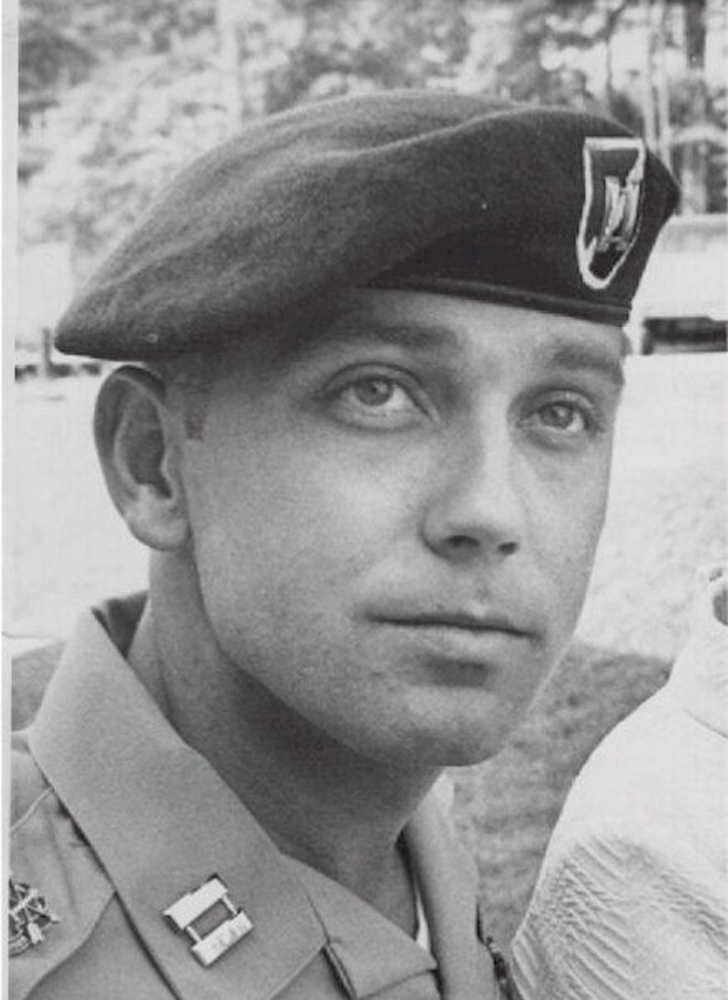
The call came in on February 17, 1970.
Military police were sent to the off-post residence of Captain Jeffrey MacDonald, a Green Beret physician at Fort Bragg, North Carolina.
Inside, they found the bodies of MacDonald's pregnant wife, Colette, and their two daughters, 5-year-old Kimberly and 2-year-old Kristen.
MacDonald was alive but injured.
He claimed a group of drug-crazed hippies had attacked the family, chanting "acid is groovy" and "kill the pigs."
He said he had been beaten and stabbed but had fought them off.
The scene was violent.
Blood spatter covered the bedroom walls.
The word "PIG" was written in blood on the headboard.
MacDonald was the sole survivor.
He was, at first, the victim.
But under Colette's fingernail, investigators found a single blue fiber.
It matched MacDonald's pajama top.
One fiber.
That is the documented forensic fact.
The exact source of the fiber—whether it came from the pajama top or another garment—is not specified in the record.
What the record does establish is this: the fiber was there, under her nail, and it matched what he was wearing.
The intruder story had no such evidence.
No fingerprints.
No footprints.
No sign of forced entry.
The hippies left nothing behind but a claim.
The fiber remained.
Was it enough?
Not alone.
But it was a beginning.
A single blue thread that would later unravel an entire story.
She was on the ground below.
THE SCENE AND THE STORY
The word "PIG" was written in blood across the headboard.
The scene showed signs of a violent struggle.
Blood spatter covered the bedroom walls.
The Army's initial investigation accepted MacDonald's story.
He was the survivor. He was the victim. He was the one who described the intruders.

But inconsistencies emerged quickly.
No signs of forced entry. The lock was intact. The windows were shut.
The intruders left no fingerprints. No footprints. No trace of themselves at all.
Blood evidence told a different story than the one MacDonald told.
The blood spatter patterns suggested the attacks occurred in different locations than he claimed.
The blood on his pajama top was consistent with his own wounds.
Not with the victims'.
Not with a struggle against four attackers.
The exact number of intruders is not established. Their identities are not established.
The "hippie" claim is not corroborated by any physical evidence.
That would require evidence.
The scene was the beginning of the contradiction.
The story was accepted first. The forensic work came later.
It is a story that held for a while. It is a story that would not hold.
THE REOPENING AND THE FORENSIC TURN
The Army's report was criticized as sloppy work.
Colette's parents would not let the case rest.
Their persistence pushed the case to a federal grand jury.
FBI agent James Blackburn conducted the detailed forensic analysis.
He tested the blood. He compared the fibers.
A single blue fiber under Colette's fingernail matched her husband's pajama top.
That fiber did not come from any intruder.
The blood spatter on MacDonald's pajamas told its own story.
Blackburn testified that the pattern indicated he was the assailant, not a victim.
Not a man defending himself from attackers.
A man standing over the blows.
The word "PIG" written in blood on the headboard was examined too.
The handwriting was deemed consistent with MacDonald's.
It was disputed.
The exact methods of that analysis, and the degree of certainty, are not detailed in the record.
The conclusion was challenged.
The physical evidence contradicted the tale of the hippies.
No fingerprints. No footprints. No forced entry.
What remained was a fiber, a spatter, and a word in blood.

The story that held for a while would not hold.
THE TRIAL AND THE VERDICT
The indictment came in 1974, three counts of first-degree murder.
The trial opened in July 1979 in Raleigh, North Carolina, before a federal judge.
Prosecutors Brian Murtagh and the FBI analyst presented the forensic case.
They argued that MacDonald killed his family in a rage after his wife confronted him about his infidelity.
That confrontation is a prosecution argument, not a documented fact.
No witness heard it. No note recorded it. No testimony fixed its exact words.
The record establishes the rage was alleged. The record does not establish the argument.
The defense answered with the Army's first investigation.
That inquiry had cleared MacDonald, and the defense argued the evidence had been mishandled since.
The blue fiber sat at the center of it all.
It was found under Colette MacDonald's fingernail. It matched her husband's pajama top.
Prosecutors said that fiber placed him at the point of contact, not on a floor where intruders beat him.
The defense said the fiber proved nothing, that contamination was possible.
The jury heard the blood spatter testimony. They heard the word "PIG" analyzed and disputed.
They deliberated for six days.
They found MacDonald guilty on all three counts.
The judge sentenced him to three consecutive life terms.
It is a verdict. It is also a beginning.
The story that held for a while would not hold. It would be argued again, appealed, and tested.
But in that Raleigh courtroom, the fiber held.
AND THE STORY STILL ISN'T OVER
MacDonald appealed, and in 1980 the Fourth Circuit Court of Appeals upheld the conviction.
He filed again. He kept filing.
Subsequent appeals, including a 2006 request for DNA testing, were denied. The exact reason for that denial is not specified in the record.
Jeffrey MacDonald remains in federal prison, serving three consecutive life sentences.
He has maintained his innocence throughout. His case has been the subject of books and documentaries, including Joe McGinniss's "Fatal Vision," which portrayed him as guilty.
The in-laws who fought for his conviction have since passed away. They never saw the debate end. The debate has not ended.
The case remains one of the most controversial in American criminal history. Ongoing debate about the evidence continues. The fiber held in court. Did it hold everywhere else?
Not because the conviction was overturned. Because it was never overturned. Not because the story was settled. Because a story that runs this long is never settled.
It is a conviction. It is also an argument that has outlived its witnesses.
The fiber was the documented fact. The hippie attack was the claim. The record holds the fiber. The record does not hold the claim.
Three life sentences. One blue fiber. A story that will not close.
Advertisement
You may also like
The .22-caliber revolver that tied Manson Family to Tate murders
A .22-caliber revolver. Small, cheap, easy to hide. According to the source’s evidence list, that revolver was used in the Tate killings. It is…

The floppy disk that exposed the BTK killer's church computer trail
It arrived in the mail in 2004, after more than a decade of silence. The person calling himself BTK had stopped writing, and then…

The 911 call from a South Carolina estate that started a 22-month murder case
The 911 call came on the evening of June 7, 2021. Alex Murdaugh told the dispatcher he had found the bodies of his wife,…
The pajama fibers that tied a captain to his family's murders
At 544 Castle Drive, the military police found the bodies. Colette MacDonald was in the master bedroom. Kimberly, five, and Kristen, two, were in…
The shell casings that broke a Florida double murder case wide open
The 911 call came from inside the Leonard home. Deputies arrived on September 14, 2004, in Windermere, Florida, to find two adults dead and…
The cellmate's tip that turned a Kansas robbery into four shotgun murders
A jailhouse conversation, repeated to authorities, set a deadly plan in motion. Floyd Wells, a former cellmate of Richard Hickock, told prison authorities about…