The cellmate's tip that turned a Kansas robbery into four shotgun murders
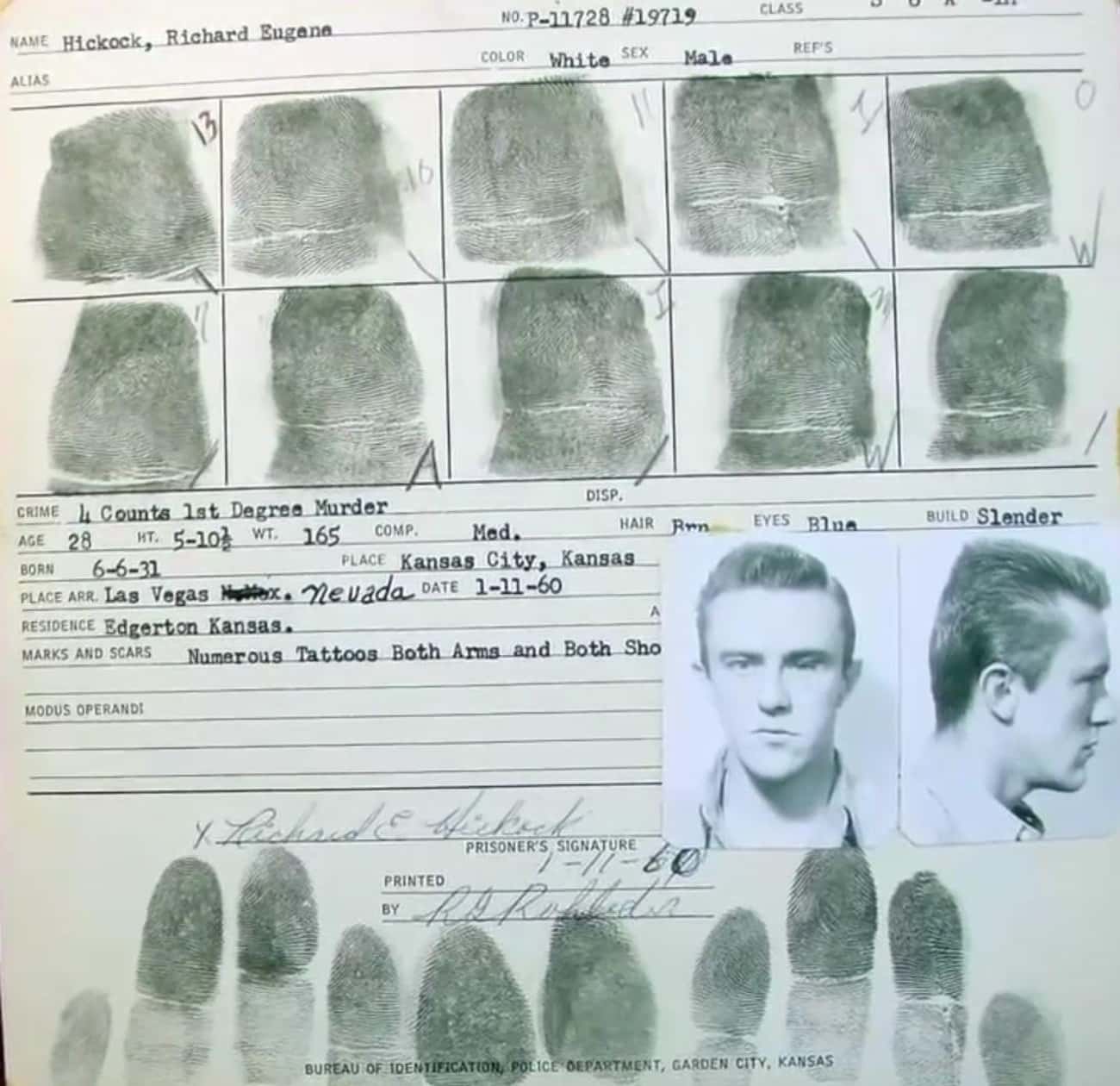
A jailhouse conversation, repeated to authorities, set a deadly plan in motion.
Floyd Wells, a former cellmate of Richard Hickock, told prison authorities about Hickock's plan to rob the Clutter farm.
The tip came from inside the Kansas State Penitentiary, where Wells and Hickock were cellmates.
Wells described the house.
He claimed Herbert Clutter kept a safe there.
Wells had once worked for Herbert Clutter, giving his claim about the safe a ring of credibility.
He knew the layout.
He knew the routines.
He knew the name.
The farmhouse in Holcomb, Kansas, held no safe.
Only a small amount of cash.
Was Wells's claim about the safe true?
Was it a fabrication?
Was it a way to sound useful from inside a cell?
That would require evidence.
The record does not establish it.
What the record does establish: the tip led investigators to Hickock.
And to Perry Edward Smith.
Two ex-convicts.
The weight of that one tip is what the trial would carry.
Not the missing strongbox.
The conversation.
NOVEMBER 15, 1959
The night of November 15, 1959, four members of the Clutter family were murdered at their farmhouse in Holcomb, Kansas.
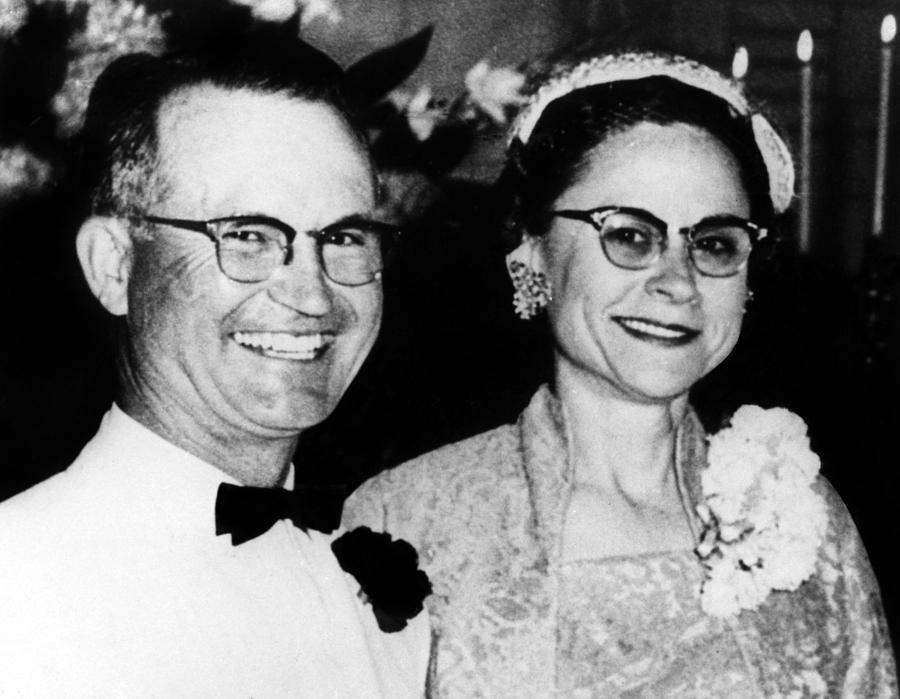
The victims were Herbert Clutter, a prominent farmer; his wife Bonnie; and their teenage children Nancy and Kenyon.
The bodies were discovered the following morning by neighbors and friends who came to the farm after the family failed to appear at church and other commitments.
They had been bound with rope and tape.
They had been shot at close range with a 12-gauge shotgun.
The killers fled in a stolen car.
The house was quiet when the neighbors arrived.
Then they found the first body.
Then the second.
Then the third.
Then the fourth.
Four people, bound and shot in their own home, in a small agricultural community in Finney County.
The crime shocked the nation.
It would become the subject of Truman Capote's landmark nonfiction novel *In Cold Blood*.
But the exact sequence of events inside the house on the night of the murders is not established in the record.
The record holds the aftermath, not the order.
It holds the rope, the tape, the shotgun, the stolen car.
It does not hold the moments between.
What happened in that farmhouse, minute by minute, is a question the surviving evidence cannot answer.
The investigation began with a crime scene showing signs of a planned robbery gone wrong.
The killers had left little physical evidence.
The rope and tape were there.
The shotgun was there.
The missing safe was not.
No safe was ever found.
That would require evidence.
The trial would turn on what the killers said, not on what the strongbox held.
The weight of that one tip is what the trial would carry.
Not the missing strongbox.
The conversation.
THE LAS VEGAS ARREST
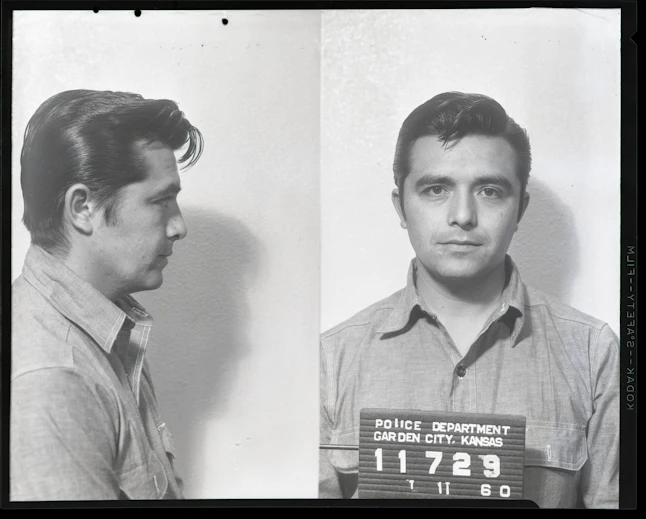
They were arrested in Las Vegas on December 30, 1959.
The arrest followed a tip from a former acquaintance of Smith's.
Investigators had also traced a car the two men had used.
Under questioning, both men confessed.
Each blamed the other for the actual killings.
What each man said about the other's role is not detailed in the record.
The specific details of those confessions are not established.
The shotgun was found in their possession.
The victims' belongings were found in their possession.
That physical evidence tied them to the crime.
The investigation leaned on informant testimony.
It leaned on the rapid confessions of both suspects.
It leaned on a stolen car and a conversation in a prison cell.
The weight of that one tip is what the trial would carry.
Not the missing strongbox.
The conversation.
Now the conversation had led here, to a Las Vegas arrest, to two men pointing at each other.
The case would turn on what they said.
It would turn on who said it first.
It would turn on whether the jury believed either version.
That would require evidence.
The physical evidence was there — the shotgun, the belongings.
The confessions were there.
But the record leaves the details of the blame-shifting unspoken.
The men were taken into custody.
The trip back to Kansas would come.
The trial would come.
The testimony would come.
Two men, four murders, one cellmate's tip.
THE TRIAL IN GARDEN CITY
The trial began in March 1960 in Garden City, Kansas, before the trial judge of the 21st Judicial District.
The courtroom was full.
The prosecution presented the confessions.
It presented physical evidence.
It presented testimony from the Clutters' daughters, Eveanna and Beverly.
It presented Floyd Wells, the former cellmate whose tip had started it all.
The daughters spoke about their family.
Wells spoke about the safe that was not there.
The defense argued that the confessions were coerced.

The defense argued that the defendants were mentally ill.
The defense did not present a strong insanity defense.
That much the record shows.
What the daughters said in detail is not in the record.
What Wells said in detail is not in the record.
The defense's exact strategy beyond coercion and mental illness is not established.
Not because it did not happen.
Because the record does not say.
The jury deliberated.
Both men were convicted on all four counts of first-degree murder.
Both men were sentenced to death.
The Kansas Supreme Court upheld the convictions on appeal.
The trial judge presided.
The prosecutor pressed the confessions.
The public defender pushed back.
Two men, four counts, one verdict.
The appeal came.
The appeal failed.
The story moved toward the gallows.
AND THE STORY STILL ISN'T OVER
The gallows at Lansing took them both on April 14, 1965.
Hickock went first. Smith followed.
The state of Kansas hanged them inside the penitentiary walls, and the case closed with their deaths.
The Clutter farmhouse was later demolished. The ground where it stood went back to field and dirt.
What remains is the book.
Truman Capote published *In Cold Blood* in 1966, and it became a bestseller. It shaped how the public understood the crime, the killers, the town. It also made Capote a subject of his own controversy — his interviews with the two men, his methods, his claims. Later books and films have picked at that involvement ever since.
The Clutters' surviving daughters, Eveanna and Beverly, chose private lives after the murders. Eveanna died in 2019. Beverly outlived her sister.
Decades of documentaries and retrospectives have revisited the case. No new evidence has emerged to alter the established account.
And the safe?
The safe that a former cellmate said Herbert Clutter kept in his house — the safe that was supposed to hold the money, the reason for the robbery, the thing the killers said they never found — its fate remains unestablished. Whether it ever existed at all remains unestablished.
The trial turned on confessions, not on a strongbox.
The confessions carried the verdicts. The verdicts carried the appeals. The appeals failed.
The story moved toward the gallows, and the gallows finished it.
The book made it immortal.
Advertisement
You may also like
A pair of eyeglasses found by a body that would force two teens to confess
The glasses were horn-rimmed, found near the body of 14-year-old Robert "Bobby" Franks in a culvert close to the Indiana border. They were traced…
The 31-day gap between Caylee Anthony's last sighting and the 911 call that started it all
June 16, 2008, was the last day anyone saw Caylee Anthony alive. She was two years old. Her grandmother, Cindy Anthony, called 911 on…
The 90-second cell phone video that shattered Alex Murdaugh's alibi
Paul Murdaugh’s phone recorded for ninety seconds at the dog kennels on June 7, 2021. The video was played at trial in Colleton County.…
The tie left on the plane that never yielded a fingerprint
The tie sat on the seat of a Northwest Orient Airlines Boeing 727 on November 24, 1971. A man calling himself Dan Cooper had…
The confession that shifted — and the voices a jury refused to hear
He walked into a local bar on November 13, 1974, and told the patrons his family had been shot. Police found six bodies in…
Inside the 1980 courtroom where 33 murder counts met a confession
On December 11, 1978, a 15-year-old boy told his mother he was going to meet a contractor about a job. He never came home.…