The taped confession that sealed a Florida child-killer's fate — and the appeal that couldn't undo it
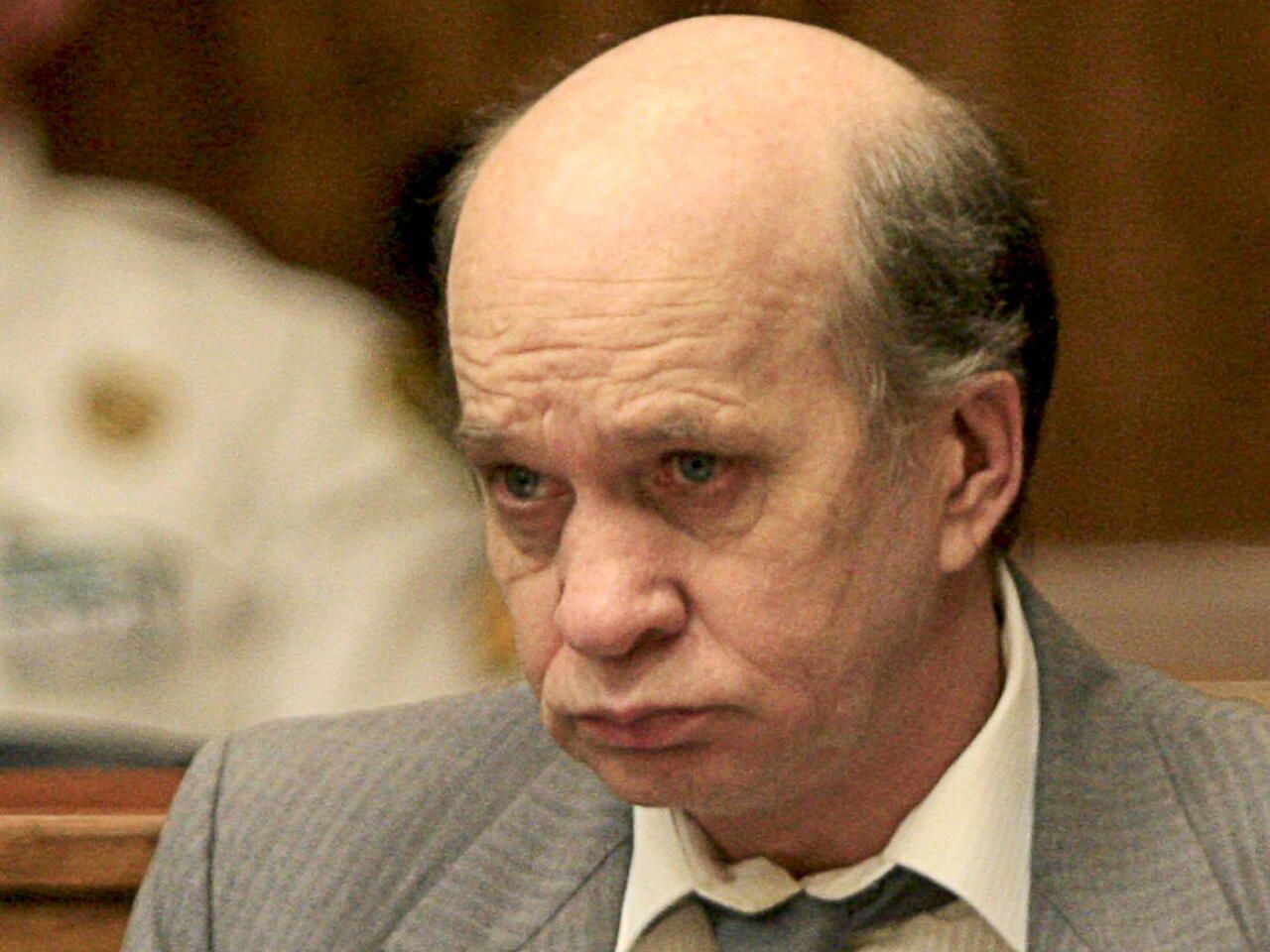
🚨 THE TAPE THAT WOULDN'T STOP PLAYING
The tape had a voice, and the voice would not stop talking.
John Evander Couey was 46 years old on March 17, 2005, the day he was arrested in Georgia.
He had fled Florida. He was a convicted sex offender, and he was a neighbor of nine-year-old Jessica Lunsford.
In the interrogation room, Couey gave a taped confession.
He described taking Jessica from her bed, assaulting her, and burying her alive.
The tape became the center of the case. It played in courtrooms, in news reports, in the minds of jurors.
The defense argued the confession was coerced.
They argued Couey had asked for a lawyer and been refused.
The court ruled the tape admissible anyway.
That ruling set the stage for a legal fight that would outlive the man himself.
But the exact circumstances of the interrogation remain disputed.
The source provides no transcript. No full recording. No clear answer to whether Couey requested counsel and was turned away.
What the record does establish is the tape. What it does not establish is how cleanly it was obtained.
That would require evidence.
The tape was raw. It was damning. It was also, the defense insisted, the product of pressure.
A jury would hear it. A judge would admit it. An appeal would try to undo it.
None of that was settled on March 17, 2005.
All that existed that day was the voice on the tape, describing what happened to a nine-year-old girl.
FEBRUARY 24, 2005 — THE EMPTY BED
The bed was empty in the early morning.
Jessica Lunsford, nine years old, was reported missing from her home in Homosassa, Florida, a rural community on the state's Gulf Coast, on February 24, 2005.
She lived with her father, her grandparents, and her aunt.
The initial report came from her family.
The precise time of the 911 call is not in the record.
The identity of the family member who made that call is not in the record.
What is in the record is the sudden absence of a child from her own bed overnight.
The report triggered a massive search.
Local law enforcement joined it.
The FBI joined it.
Hundreds of volunteers joined it.
They searched the yards and the woods and the mobile home park that ringed the girl's home.
They searched because a nine-year-old does not simply vanish from her own room.
They searched because the bed was empty.
It was still empty on February 25.
It was still empty on March 1.
The search grew with each passing day, and the community held its breath.
A child gone from her bed overnight is a specific kind of terror.
It is not a runaway.
It is not a custody dispute.
It is a hole where a sleeping child should be.
The record does not say who first noticed the empty bed.
The record does not say what time the call went out.
The record says only that the family reported it, and that the machinery of a massive manhunt began to turn.
That machinery would not stop until it found her.
THE NEIGHBOR IN THE TRAILER
The investigation initially focused on the neighborhood.
Couey was interviewed early on but denied involvement.
He lived in a trailer with his sister and her boyfriend, in the same mobile home park where Jessica lived.
He was a registered sex offender with prior convictions for sex offenses against children.
The answer, the record suggests, was right next door all along.
A critical turning point came when police searched the trailer where Couey lived.
They found evidence, including duct tape and other items, linking him to the crime.
What else was in that trailer, the source does not say.
When the search happened relative to the interview, the record does not say.
The exact timeline of the initial interview and the subsequent search is not detailed in the source.
It is a hole in the record.
It is also the question that lingers.
How long was he living there before anyone looked?
How many interviews did he sit through, denying, while the tape sat in the trailer?
How many days passed between the empty bed and the search?
That would require evidence.
The record keeps only the outline: he was questioned, he denied, the trailer was searched, and the duct tape appeared.
The neighborhood had been the focus from the start.
The focus was on the wrong man, or the right man too slowly.
She was on the ground behind the mobile home park.
He was in the trailer all along.
MARCH 17 — THE ARREST IN GEORGIA
He was in the trailer all along.
Then he was gone.
John Evander Couey had fled to Georgia, and it was there, on March 17, 2005, that he was arrested.
The arrest came two days before Jessica's body was found on March 19, 2005.
Two days.
How authorities tracked him to Georgia is not in the record.
The circumstances of the arrest are also not in the record.
The source does not specify the method, the tip, the surveillance, or the moment of handcuffs.
What the record does establish is the date, the state, and the fact of the arrest itself.
It was a pivotal moment.
It was also, in the sequence of the case, a moment that preceded the worst finding.
The arrest meant a suspect was in custody.
The search, the hundreds of volunteers, the FBI, the local deputies — they had not yet found the girl.
Couey was in Georgia, and Jessica was still somewhere in Homosassa.
Not because the investigation had stopped.
But because the discovery had not yet been made.
The taped confession would come after the arrest.
The DNA would come later still.
The shallow grave would be found on March 19, two days after Couey was taken into custody.
She was on the ground behind the mobile home park.
That fact was not yet known to the searchers on March 17.
That would require evidence, and the evidence was still in the ground.
MARCH 19 — THE SHALLOW GRAVE
March 19 was a Saturday.
The search had gone on for twenty-three days.
Hundreds of volunteers had walked the woods, the ditches, the roadsides of Homosassa.
They found her in a wooded area behind a mobile home park near her own home.
She was buried in a shallow grave.
She had been bound with duct tape.
She had been sexually assaulted.
The source does not specify who found the body.
The source does not specify how the grave was located.
Those details are not established in the record.
What is established is what the grave held.
The worst fear, confirmed.
The searchers had been looking for a missing child.
They found a burial.
John Evander Couey was already a suspect by then.
He had been arrested in Georgia two days earlier, on March 17.
The discovery on March 19 came after he was in custody.
The source does not say whether the arrest led to the grave, or the grave led to the confession.
It says only that the discovery came after he became a suspect.
DNA evidence linked Couey to the crime scene, according to the source.
The duct tape bound her.
The ground held her.
The record does not say who turned the first shovel of dirt, or who stopped the search.
That would require evidence, and the evidence was in the ground.
It was a shallow grave.
It was behind a mobile home park.
It was near her own home.
She was on the ground below.
THE TAPED CONFESSION

The tape ran inside the interrogation room.
Couey, according to his own recorded statement, described taking Jessica from her bed, assaulting her, and burying her.
The confession was a central piece of evidence at trial.
The prosecution built its case around the sound of his voice on that tape.
The defense argued it was coerced.
They argued Couey had been denied access to an attorney.
The court ruled the confession admissible.
The defense also pointed to something else: Couey was a registered sex offender living in the area, and authorities had not been properly monitoring him.
That fact did not undo the tape.
It did not erase what he had said.
The exact wording of the confession is not in the record.
The interrogation techniques used are not in the record.
What remains is the tape itself, played for the jury.
What remains is the question of how it was obtained.
Was it a true statement given freely?
Was it the product of pressure?
That would require evidence beyond what the record shows.
The jury heard the confession.
They heard the DNA evidence.
They heard the forensic testimony.
The tape sat at the center of it all, a voice describing the crime in his own words.
The defense could challenge its origins.
They could not change what it contained.
THE TRIAL IN MIAMI
The jury heard the tape in a Miami-Dade courtroom, far from the Citrus County communities that had filled the local news for months.
The change of venue came because pretrial publicity had saturated the area where Jessica lived and died.
The prosecution sought the death penalty.
The trial featured the taped confession, DNA evidence, and testimony from forensic experts.
The specifics of that forensic testimony are not detailed in the record.
The defense argued that Couey was intellectually disabled and that his confession was unreliable.
The specifics of that argument are not detailed either.
What the record does show is the weight of the evidence placed before the jury.
The tape sat at the center of it all, a voice describing the crime in his own words.
The defense could challenge its origins.
They could not change what it contained.
On August 14, 2007, the jury found Couey guilty of first-degree murder, kidnapping, and sexual battery.
The verdict came after weeks of testimony, but the tape was the thing that would not stop playing.
Not because it was the only proof.
But because it was his voice, his account, his words.
The jury heard it, and they decided.
The penalty phase followed, and the jury recommended death by a vote of 10-2.
The judge followed the recommendation and sentenced Couey to death.
The defense had argued the confession was coerced, that he had been denied an attorney.
The court had ruled the confession admissible.
The conviction stood.
The sentence stood.
What the record does not establish is the precise content of the forensic testimony or the full shape of the intellectual disability argument.
Those details remain unstated.
What remains is the verdict, the sentence, and the tape that carried the case from a trailer in Homosassa to a courtroom in Miami.
THE VERDICT AND THE PENALTY
The jury deliberated, and the tape played in the courtroom again.
On August 14, 2007, the jury found John Evander Couey guilty of first-degree murder, kidnapping, and sexual battery.
Not because the defense had failed. But because the record held.
In the penalty phase, the jury recommended the death penalty by a vote of 10-2.
The judge followed the recommendation and sentenced Couey to death.
It was a verdict built on the taped confession, on the DNA, on the testimony of forensic experts.
It was a sentence that carried the weight of the shallow grave behind the trailer park.
The conviction and sentence were upheld on direct appeal in 2011.
A subsequent appeal was also denied.
The legal road stretched long after the courtroom in Miami went quiet.
What the record does not establish is the specific grounds for those appeals, or the reasons for their denial.
Those details remain unstated.
What remains is the verdict, the sentence, and the tape that carried the case from a trailer in Homosassa to a courtroom in Miami.
The jury had heard the confession. The judge had heard the recommendation.
The law had spoken, and the law did not bend.
Couey was sent to death row in Florida.
The finality of the verdict settled over the case like the dirt over a shallow grave.
It was a conviction. It was a sentence. It was the end of the trial.
But the story, as it always does, kept moving.
THE APPEAL THAT COULDN'T UNDO IT
The defense argued that Couey's confession was coerced.
They argued that he had been denied access to an attorney.
They argued that Couey was intellectually disabled, and that his confession was therefore unreliable.
The specific evidence the defense presented to support that claim is not detailed in the record.
The prosecution answered with the tape.
They answered with DNA linking Couey to the crime scene.
They answered with testimony from forensic experts.
The court ruled the confession admissible.
On direct appeal in 2011, the conviction was upheld.
A subsequent appeal was also denied.
Two narratives clashed in the courtroom.
One was of a man manipulated into speaking, a disabled man whose words could not be trusted.
The other was of a calculated killer, caught on tape describing what he had done.
The courts sided with the prosecution.
Not because the defense was weak.
But because the record was strong.
The tape played.
The DNA matched.
The jury had heard it all and returned a verdict.
That verdict stood.
The appeal could test the law.
It could not undo the facts.
AND THE STORY STILL ISN'T OVER
John Evander Couey remained on death row in Florida.
He died on September 30, 2009, of natural causes—complications from cancer—before the execution could be carried out.
He was 52 years old.
The specific details of his final appeals are not in the record.
The exact date of his death beyond the year is not in the record, either.
What the record does show is what came after.
Jessica's father, Mark Lunsford, became a national advocate for stronger sex-offender laws.
His efforts contributed to the Jessica Lunsford Act.
The law was signed in Florida in 2005.
It mandated stricter monitoring of sex offenders.
It required GPS tracking for certain offenders.
It increased penalties for crimes against children.
Similar laws were adopted in other states.
The site where Jessica was buried has been marked.
A foundation in her name has been established.
The family has continued to speak publicly about the case.
They have spoken about the need for reform.
That is the legacy the record leaves.
A killer who died before his sentence was carried out.
A father who turned grief into law.
It is not a clean ending.
It is not a simple one.
The confession was played.
The DNA was presented.
The jury returned its verdict.
The appeal could test the law.
It could not undo the facts.
And the law that bears her name still stands.
Advertisement
You may also like
The $50,000 ransom note left on a nursery windowsill — and the 11-hour jury deliberation that followed
On the evening of March 1, 1932, a ransom note demanding $50,000 was found on a nursery windowsill in the Lindbergh home near Hopewell,…

A mother's shopping trip, a Sears toy aisle, and the six-year-old who never came home
The Sears store at the Hollywood Mall had an air-conditioned hum and a toy aisle that ran long and bright. On July 27, 1981,…
The traffic stop that caught a bombing suspect before the FBI did
The trooper saw the plate first, or rather, he didn't see it. The 1977 Mercury Marquis had no license plate, and that was enough.…

The 14-year-old boy Milwaukee police returned to Dahmer hours before his death
A boy was wandering the street in Milwaukee, drugged and naked. Neighbors reported him in May 1991. Police officers responded to the call. They…

The 1934 torso washing ashore that set off a four-year hunt
The water gave her back on September 5, 1934. A woman's torso, washed up on the shore of Lake Erie near Euclid Beach. She…
Two gas-station murders, one .22 pistol: the timeline the jury followed
The evening of July 19, 1976, in Orem, Utah, was warm and ordinary. A young man walked up to two college students at a…