The Theranos verdict that hinged on one question about Elizabeth Holmes

🚨 THE QUESTION THE JURY COULDN'T IGNORE…
A drop of blood, a finger prick, and a promise of a medical revolution.
That was the pitch from Theranos, a blood-testing startup founded in 2003 by Elizabeth Holmes.
The company claimed its proprietary technology could run comprehensive medical tests on those tiny samples.
Holmes was once hailed as a visionary, and her board included former high-ranking government officials.
The promise was enormous; the machine, according to the claims, could change healthcare.
Then, in 2015, investigative reporting by *The Wall Street Journal* revealed the technology was unreliable.
It revealed that Theranos was using conventional commercial analyzers for most tests.
The story of the unraveling begins with those questions from a journalist.
The specific question the jury focused on is not detailed in the source.
That would require evidence the record does not provide.
How does a celebrated startup fall so far, so fast?
What pivotal question determined the verdict?
What did the jury actually decide to believe?
The answer lies in the timeline of the case, from the first report to the final judgment.
THE VISIONARY'S PROMISE
Theranos was founded in 2003 by Elizabeth Holmes.
She was the founder and CEO.
Ramesh "Sunny" Balwani was the president and chief operating officer.
He was also her romantic partner.
The company claimed its proprietary technology could run comprehensive medical tests on tiny blood samples from a finger prick.
That was the promise.
It was a promise that drew in prominent figures and major funds as investors.
According to the record, those investors put money into Theranos based on claims about its technology and financial performance.
The scale of the trust was enormous.
Holmes was once hailed as a visionary, and her board included former high-ranking government officials.
The company said it could replace the needle with a drop of blood.
It said one small sample could yield dozens of results.
That was the vision.
That was the story told to investors, to partners, to the press.
It was a story of a machine that could do what conventional labs could not.
It was a story of a young founder who had cracked the code.
The trust it inspired was real.
The money that followed was real.
What the technology could actually do, at that moment, was a separate question.
For now, the timeline begins with the promise.
The promise was the product.
The promise was the pitch.
The promise was what the investors bought.
THE JOURNALIST'S QUESTIONS
The story broke in 2015, in *The Wall Street Journal*.
The articles questioned Theranos's technology directly.
The reporting revealed the technology was unreliable.
The reporting revealed that Theranos used conventional commercial analyzers for most tests.
Not the proprietary finger-prick device.
Not the promised revolution.
The promise was the product.
The questions were the unraveling.
Federal prosecutors opened inquiries.
The Securities and Exchange Commission opened inquiries.
The investigation began after these articles.
Not before.
Not because of a whistleblower inside the lab.
Because a journalist asked what the machines actually did.
The specific journalist's name is not in the source.
That is not established.
What is established is the sequence: the articles came first, the regulators followed.
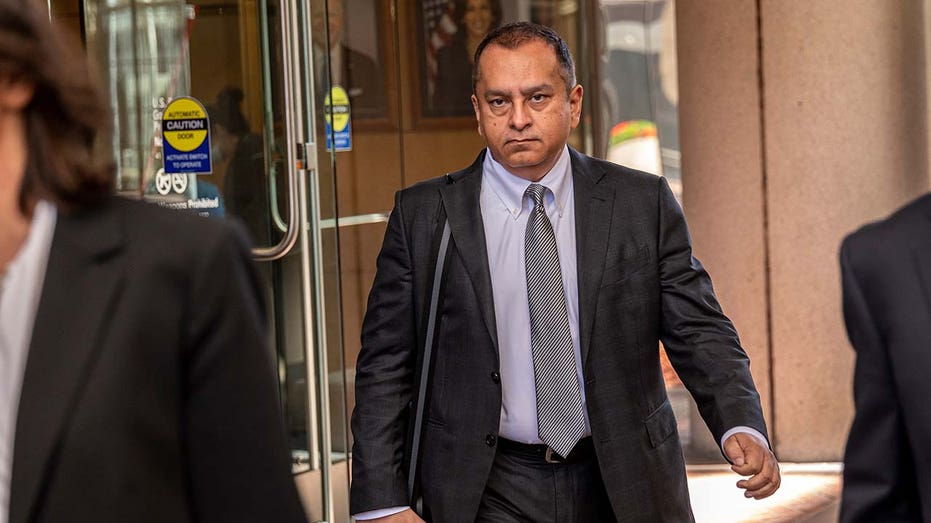
The company's investors had bought the promise.
The reporters tested the promise.
The promise failed the test.
What did Theranos say in response?
What did Holmes say in response?
What did the board say in response?
The record does not say here.
The record says the questions were asked.
The record says the questions were published.
The record says the government began looking.
A company valued on a story met a story told by someone else.
It is a timeline.
It is also a turning point.
The turning point was a set of questions in print.
THE REGULATORS' REPORT
The report came from the Centers for Medicare & Medicaid Services.
It landed in 2016, a year after the Wall Street Journal's questions.
The CMS report found deficiencies at Theranos's lab.
It threatened sanctions.
The agency was not a magazine. It was the regulator that oversaw the lab where the tests were actually run.
The findings carried the weight of an official inspection, not a journalist's inquiry.
Internal emails were examined.
Lab records were examined.
Former employees testified that the technology did not work as claimed.
Their testimony matched the pattern the reporter had described in print.
The CMS report did not end the company. It did not charge anyone with a crime.
It did something simpler and more durable. It put the government's name on the problem.
The deficiencies were documented. The sanctions were threatened.
That document became a hinge in the case.
Prosecutors would later point to it as proof that the company knew its claims were false.
The defense would have to explain why the regulator found what it found.
It is a report. It is also a line in the timeline where the story stops being about promises.
The promises had been made for years. The report said the lab failed to meet basic standards.
The whistleblowers had said the same thing. Now the record agreed with them.
The turning point was not a confession. It was a checklist of failures, signed by the agency.
THE SEC CHARGES
In 2018, the Securities and Exchange Commission charged Holmes and Theranos with “massive fraud.”
It was a civil action, not a criminal one. The SEC sought penalties and restrictions, not prison time.
Holmes settled. She paid a fine and gave up voting control of the company.
Balwani was also charged in the same civil action. He did not settle at that point.
The civil case was one thing. The criminal case was another.
Federal prosecutors later indicted both Holmes and Balwani on charges of wire fraud and conspiracy to commit wire fraud.
The shift was from money to liberty. The stakes changed.
The SEC’s complaint described the same misrepresentations the journalists had reported and the regulators had documented. It was now a formal charge from a federal agency.
The settlement did not end the matter. It cleared the civil path and left the criminal one open.
The indictment followed. That was the document that carried the possibility of a prison sentence.
For Holmes, the fine and the lost voting control were the beginning. The trial was still ahead.
For Balwani, the charges mounted. He faced the same criminal counts alongside her.
The agency had spoken. The prosecutors were next.
THE TRIAL BEGINS
The courtroom in San Jose had waited years for this.
Holmes walked in for jury selection in September 2021, no longer the CEO, no longer the visionary.
She was charged with nine counts of wire fraud and two counts of conspiracy to commit wire fraud.
The prosecutors laid out their case: false claims about the technology, false claims about the financials, investors who lost hundreds of millions.
The defense opened with its narrative.
Holmes, the defense argued, was not responsible because she was under Balwani’s control.
It was a claim the jury would hear, weigh, and ultimately not fully accept.

The trial ran through the fall and into winter.
Witnesses came and went: former employees who said the technology did not work as claimed, lab directors who testified about the machines, investors who described what they were told.
The judge oversaw it all.
The prosecution’s evidence was internal emails, lab records, and testimony from those who had been inside the company.
Holmes testified in her own defense.
She spoke of Balwani, of their relationship, of what she said she believed.
The jury deliberated.
In January 2022, they returned.
Guilty on four counts of wire fraud and one count of conspiracy.
Acquitted on three counts.
Deadlocked on three others.
Holmes stood in the courtroom as the verdict was read.
Balwani’s trial began in March 2022.
He was charged with 12 counts of wire fraud and conspiracy.
The same evidence, the same witnesses, a different defendant.
The jury found him guilty on all 12 counts.
The line between the viral story and the documented record had been drawn in that courtroom.
Holmes claimed control.
The jury did not accept it as a full defense.
The anticipation of justice had been answered, count by count.
THE VERDICT
The jury deliberated for seven days.
In January 2022, a jury found Holmes guilty on four counts of wire fraud and one count of conspiracy to commit wire fraud.
She was acquitted on three counts.
The jury deadlocked on three others.
The specific counts on which she was acquitted or deadlocked are not detailed in the record.
The mixed verdict was a split answer to a single question.
Not a full rejection of the prosecution.
Not a full acceptance of the defense.
Holmes claimed control.
The jury did not accept it as a full defense.
The anticipation of justice had been answered, count by count.
In November 2022, Holmes was sentenced to 11 years and three months in federal prison, followed by three years of supervised release.
Balwani’s trial began in March 2022.
He was found guilty on all 12 counts of wire fraud and conspiracy.
In December 2022, he was sentenced to 12 years and 11 months in prison, followed by three years of supervised release.
The verdicts landed months apart.
The sentences landed weeks apart.
One defendant faced the jury first.
The other faced it after.
The record shows twelve counts for Balwani.
The record shows four guilty counts for Holmes.
It is a contrast the jury drew.
It is a contrast the record preserves.
THE DEFENSE'S CLAIM
The defense’s claim was that Holmes was not responsible because she was under Balwani’s control.
It was a claim of coercion, of influence, of a partner who dominated her decisions.
The prosecution’s case relied on evidence of false claims about technology and financial performance.
Internal emails, lab records, testimony from former employees who said the technology did not work as claimed.
The jury did not fully accept the control claim.
Holmes was found guilty on four counts of wire fraud and one count of conspiracy.
She was acquitted on three counts.
The jury deadlocked on three others.
The verdict drew a line between the narrative and the record.
The record does not specify the extent to which the jury considered the control claim.
That remains unstated in the trial record.
Did the jury weigh her fear of Balwani against the emails she signed?

Did they see a founder or a follower?
Did they believe she was controlled, or did they believe she controlled the message?
That would require evidence the record does not provide.
The verdict suggests the defense’s story did not move the counts that mattered.
It is a contrast the jury drew.
It is a contrast the record preserves.
THE VIRAL NARRATIVE VS. THE RECORD
The story that went viral was simpler than the trial.
Holmes claimed she was under Balwani’s control.
That claim became a widely discussed narrative.
It was a defense narrative, not a fact the jury accepted.
The record shows the jury did not fully accept this defense.
The verdict suggests the defense’s story did not move the counts that mattered.
It is a contrast the jury drew.
It is a contrast the record preserves.
What the viral version offered was a clean explanation.
What the trial offered was evidence.
What the record establishes is the conviction.
The specific viral claims about Holmes's control are not detailed in the source.
That would require evidence.
The case became a cautionary tale about startup culture and misleading investors.
Investors lost hundreds of millions of dollars when the company collapsed.
That loss is documented.
The narrative is not.
Holmes was once hailed as a visionary.
Her board included former high-ranking government officials.
Her technology, the *Wall Street Journal* reported in 2015, was unreliable.
Theranos was using conventional commercial analyzers for most tests.
The company dissolved in 2018.
The investors have not recovered their losses.
That is where the story lands.
Not in the viral version.
In the record.
…AND THE STORY STILL ISN'T OVER
Holmes reported to a federal prison in Texas in May 2023.
Her appeal is pending.
Balwani reported to a federal prison in California in early 2023.
His appeal is also pending.
The status of those appeals is not detailed in the record.
Theranos was dissolved in 2018.
The investors have not recovered their losses.
Not a dollar of the hundreds of millions.
Balwani has not spoken publicly since his sentencing.
Holmes has not either.
The company is gone.
The money is gone.
The convictions stand, for now.
Both appeals move through the courts.
Neither side has said when a decision will come.
That is where the story lands.
Not in the viral version.
In the record.
It is a case about what was claimed.
It is also a case about what was documented.
The jury heard the evidence and drew a line.
The line held.
The appeals may move it.
They may not.
That would require a court's decision, not a theory.
Advertisement
You may also like
The $50,000 ransom note left on a nursery windowsill — and the 11-hour jury deliberation that followed
On the evening of March 1, 1932, a ransom note demanding $50,000 was found on a nursery windowsill in the Lindbergh home near Hopewell,…

A mother's shopping trip, a Sears toy aisle, and the six-year-old who never came home
The Sears store at the Hollywood Mall had an air-conditioned hum and a toy aisle that ran long and bright. On July 27, 1981,…
The traffic stop that caught a bombing suspect before the FBI did
The trooper saw the plate first, or rather, he didn't see it. The 1977 Mercury Marquis had no license plate, and that was enough.…
The 14-year-old boy Milwaukee police returned to Dahmer hours before his death
A boy was wandering the street in Milwaukee, drugged and naked. Neighbors reported him in May 1991. Police officers responded to the call. They…

The 1934 torso washing ashore that set off a four-year hunt
The water gave her back on September 5, 1934. A woman's torso, washed up on the shore of Lake Erie near Euclid Beach. She…
Two gas-station murders, one .22 pistol: the timeline the jury followed
The evening of July 19, 1976, in Orem, Utah, was warm and ordinary. A young man walked up to two college students at a…