The tip-off that doomed the ATF raid before a single shot was fired at Waco
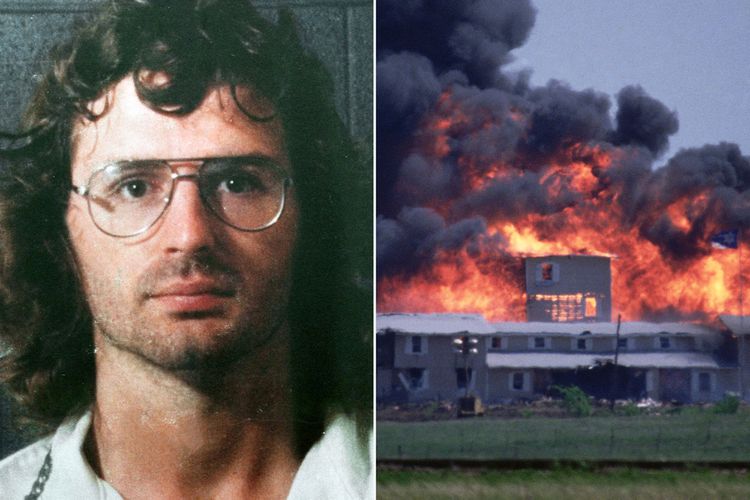
A local news reporter had been tipped off about the raid.
He asked a postal worker about it.
That question is the documented moment the plan began to unravel.
The information reached the Branch Davidians before the ATF moved in.
The ATF proceeded anyway.
The raid on February 28, 1993, was meant to execute search and arrest warrants at the Mount Carmel Center ranch near Waco, Texas.
The warrants rested on allegations of illegal weapons possession and child abuse at the compound.
Whether the tip to the reporter was deliberate or accidental is not established in the record.
What is established is the sequence: the reporter's question, the postal worker, the word passing on.
The Davidians knew something was coming.
Still, the agents went in.
Why did they go ahead?
Was the plan too far along to stop?
Did someone believe the element of surprise was still intact?
The record does not answer that.
It notes only that the compromise was known, and the assault was not called off.
The warrants were real.
The allegations had drawn federal attention to a religious sect outside Waco.
The plan was to execute them at dawn, with force ready.
Instead, the plan arrived already broken.
The gunfire that followed would leave four ATF agents and six Branch Davidians dead.
But that came later.
At that moment, before a single shot was fired, the raid was already compromised.
The question had been asked.
The answer had travelled.
And the ATF moved anyway.
THE GUNFIGHT
The warrants were for illegal weapons possession and child abuse at the compound.
The compound was home to the Branch Davidians, the religious sect led by David Koresh.
ATF agents moved in on February 28, 1993.
A gun battle erupted.
Four ATF agents were killed.
Six Branch Davidians were dead.
The firearms inside included AR-15 rifles and other semi-automatic weapons.
The raid proceeded despite the compromise.
The question had been asked at the post office.
The answer had travelled.
And the ATF moved anyway.
Who fired the first shot?
Who fired the second?
Who decided the moment to start?
That is not established in the record.
The chaos is established.
The cost is established.
Four agents went to serve warrants and did not come home.
Six Davidians went to face them and did not come home.
The decision to proceed was made with the knowledge that the element of surprise was gone.
It was a decision made in the face of a known compromise.
It was a decision that led to the gunfight.
The allegations that justified the warrants were serious.
The weapons were serious.
The child abuse allegations were serious.
But the record does not say who fired first.
It says only that the battle began.
The ATF came with warrants.
The Davidians came with guns.
The compound came apart.
51 DAYS OF STANDOFF
The FBI arrived with its own plan.
Negotiators wanted to talk Koresh out.
Tactical teams wanted to squeeze him out.
The two sides fought over strategy while the standoff ground on.
The siege lasted 51 days.
The FBI cut the compound's electricity.
They played loud music at the Davidians.
They played recorded sounds, including the sound of rabbits being slaughtered.
The goal was pressure.
The full internal reasoning behind each psychological tactic is not detailed in the record.
Attorney Dick DeGuerin represented Koresh during the standoff.
He spoke for his client.
He negotiated.
He watched the FBI's tactics shift from conversation to siege.
The negotiators and the tactical teams kept pulling in opposite directions.
Days passed.
Nights passed.
The music played on.
The rabbits screamed on tape.
The compound stayed dark.
The pressure was meant to break the faith inside.
It did not break Koresh.
It did not end the standoff.
It only made the waiting harder.
DeGuerin argued for a peaceful end.
The FBI's command structure did not agree on how to get one.
That would require evidence of a single strategy.
The record shows conflict, not coordination.
The siege ground forward.
Every day the same stand.
Every night the same sounds.
The tactical teams wanted force.
The negotiators wanted time.
Koresh wanted his own ending.
The FBI wanted control.
None of them got what they wanted cleanly.
The standoff became a stalemate of noise and silence.
And the noise was deliberate.
And the silence was broken only by negotiation.
The record does not say who chose the rabbit sounds.
It says only that they were played.
It says only that the electricity was cut.
It says only that the tactics were contested.
The 51 days wore on.
The compound waited.
The FBI waited.
The pressure built toward what came next.
THE FIRE AND THE AFTERMATH
April 19, 1993.
The FBI launched a tear gas assault, using tanks to punch holes in the compound and insert the gas.
The compound burned to the ground.
Seventy-six people died, including Koresh and more than twenty children.
She was on the ground below.
The fire's exact origin was disputed.
The FBI initially claimed the Davidians started it.
Later investigations, including the review by the special counsel, concluded the tear gas canisters ignited fuel or other materials.
The FBI maintained the Davidians also contributed.
The precise cause of the fire is not definitively established in the record.
The Texas Rangers' investigation criticized the FBI's handling of the siege.
The special counsel's review did the same.
Not because the assault was illegal. Because it was mishandled.
The tanks came in. The gas went in. The fire followed.
What was examined?
The canisters. The fuel. The timing of the flames.
What was found?
Conflicting conclusions, each with its own agency behind it.
What remains?
A burned ranch, a disputed origin, and a question the record does not answer.
The FBI's actions were not deemed criminal by the Justice Department's internal review or the special counsel's investigation.
Significant errors were acknowledged.
The weight of the loss is not in dispute.
The ambiguity of blame is.
AND THE STORY STILL ISN'T OVER
The trial came in 1994, in federal court in San Antonio.
Eleven surviving Branch Davidians were in the dock.
The jury acquitted all eleven of murder and conspiracy to murder charges.
Five were convicted of voluntary manslaughter and weapons charges.
Those convictions were later overturned on appeal.
The appeals court found errors in the jury instructions.
The defendants were resentenced to time served.
No federal agent was ever criminally charged.
The Department of Justice’s internal review concluded the FBI’s actions were not criminal.
The special counsel’s investigation reached the same conclusion.
Both acknowledged significant errors in the operation.
The government paid out over $1 million in settlements to survivors and families of the dead.
The Branch Davidian property still draws pilgrims.
Some followers still visit the site.
The case remains a subject of intense public debate.
It is also a subject of conspiracy theories.
The full truth of the fire’s origin is not established in the public record.
The full truth of the raid’s compromise is not established either.
That would require evidence the record does not provide.
What is established is the legal verdict.
The case is closed in court.
It is not closed in memory.
It is not closed in dispute.
The ATF revised its procedures for hostage and barricade situations.
The FBI did the same.
The mistakes are acknowledged.
The weight of the loss is not in dispute.
The ambiguity of blame is.
Advertisement
You may also like
The traffic stop that caught Timothy McVeigh — before the FBI knew his name
The trooper saw the Mercury Marquis first. A 1977 model, no license plate, rolling down an Oklahoma highway. Within 90 minutes of the blast…
The Christmas Eve disappearance that turned a quiet street into a 24/7 news circus
The Christmas Eve lights were up on Covena Avenue, and the lawn was wet with winter rain. Laci Peterson, 27 and eight months pregnant,…
The severed head found in a Florida canal that changed how America searched for missing children
The video games were the new model, the kind that beeped and flashed and drew a crowd of children. Six-year-old Adam Walsh stood among…
The duct tape and the disguised cops: inside the Gardner heist's fatal first hour
The knock came in the early hours of March 18, 1990. Two men in Boston police uniforms stood at the side door of the…

How the Green River Killer's victims were overlooked for decades — and the DNA that finally caught him
The first body was found in the Green River in July 1982. She was one of several women discovered strangled along the waterway that…
The cellphone video that placed Alex Murdaugh at the kennels — and broke his alibi
SLED forensic analysts pulled a cellphone video from Paul Murdaugh's phone. The footage placed Alex Murdaugh at the dog kennels near the time of…