Two Utah robberies, one witness, and the .22-caliber pistol that sealed Gary Gilmore's fate
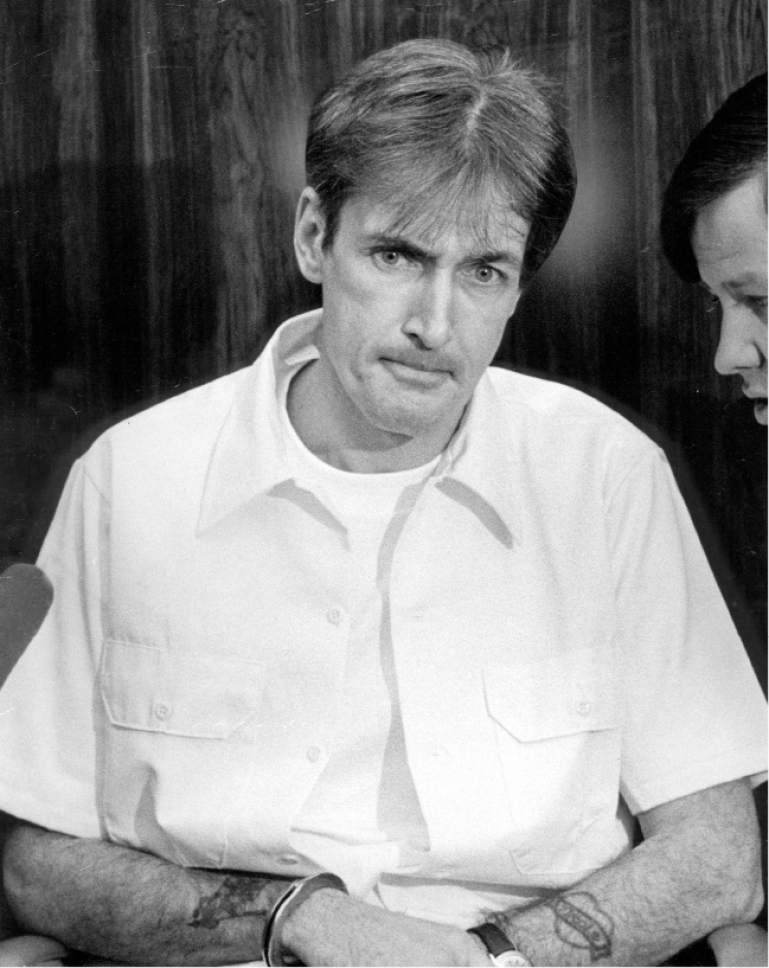
The first shot came at a Sinclair station in Provo, Utah, on the night of July 19, 1976.
A 24-year-old gas station attendant was shot at close range during a robbery.
Hours later, a 26-year-old motel clerk was killed in a similar robbery at the City Center Motel.
Both victims were shot at close range during robberies.
That was the pattern police in Provo and Orem quickly connected.
The exact sequence of events between the two robberies is not detailed in the record.
Not the minutes. Not the miles. Not the order of what was taken.
That would require evidence the file does not contain.
What police had was a method: a gun, a demand, a shot at close range.
What they had next was a witness.
A witness identified a recently released 35-year-old ex-convict from a lineup.
Police also linked him to the crimes through a stolen car and a .22-caliber pistol.
The suspect's name was Gary Gilmore.
He had been out of prison only months.
He was arrested within days.
The hunt was urgent because the violence was sudden.
Two young men, two robberies, one night.
The pistol was found.
The stolen car was found.
The witness pointed.
The case was building, and it was building fast.
THE WITNESS AND THE PISTOL
Police in Provo and Orem connected the two murders within days.
The method matched. Both victims were shot at close range during robberies.
Two cities. Two dead men. One pattern.
A witness stepped forward and identified Gilmore from a lineup.
The witness pointed. That was the first click.
Investigators also found a .22-caliber pistol linked to Gilmore.
The pistol was the second click.
Gilmore had used a stolen car in the crimes.
The car was the third.
Each piece fit. The stolen car. The pistol. The witness’s identification.
No other suspects were seriously considered.
The record does not specify the witness’s identity, and it does not state exactly where the pistol was found.
Those details are not in the record. That does not weaken what is documented.
What is documented is the identification. What is documented is the pistol.
What is documented is a case tightening around one man.
The witness pointed. The gun matched. The car was stolen.
The case was building, and it was building fast.
It was also building toward a confession.
THE CONFESSION AND THE PLEA
He confessed after his arrest.
He confessed to both killings.
What he said in that confession is not detailed in the record. The record shows the fact of the confession, not its content.
He was charged with two counts of first-degree murder.
He pleaded not guilty at first. Then he changed the plea.
He pleaded guilty against the advice of his attorneys. His attorneys argued against it. He did it anyway.
The trial judge accepted the plea. The judge sentenced him to death for each murder.
Two counts. Two deaths. Two sentences.
Then Gilmore did something stranger. He waived his appeals. He asked the state to kill him.
He did not fight the sentence. He fought *for* the sentence.
His attorneys wanted to appeal. The law offered him a path. He refused the path.
Why would a man do that? Why would he confess so completely? Why would he push toward his own execution?
The record does not answer that. It only records what he did.
He was charged. He confessed. He pleaded. He was sentenced.
And he wanted it that way.
It is a strange thing to read. It is a stranger thing to have done. The case was solid against him—the witness, the pistol, the stolen car—but the law still offered him a fight. He declined the fight.
He declined it in open court. He declined it against the advice of the people paid to save him. He declined it, and the judge accepted.
The plea was guilty. The sentence was death. The appeals were waived.
That is what the record shows.
THE LEGAL BATTLE
The plea was guilty. The sentence was death. The appeals were waived.
That is what the record shows. What it does not show is the specific arguments Gilmore's attorneys made against his plea; those are not detailed in the record.
His stance drew national attention. It forced a legal question into the open: could a condemned prisoner refuse to appeal?
Could he choose his own death? Could he reject the machinery built to save him? Could the state execute a man who demanded it?
The Utah Supreme Court upheld the sentence. The U.S. Supreme Court declined to intervene.
He was executed by firing squad on January 17, 1977, at Utah State Prison. He became the first person executed in the United States after the Supreme Court reinstated the death penalty in 1976.
It is a documented fact. It is also a documented choice.
The record holds the plea, the sentence, the waivers, the date. It does not hold the attorneys' arguments against the plea.
That would require evidence. The record does not provide it.
AND THE STORY STILL ISN'T OVER
He was executed on January 17, 1977, at Utah State Prison.
The firing squad did what the courts had declined to do.
His case sparked debates over capital punishment and the rights of condemned prisoners. It still does.
His girlfriend later spoke publicly about their relationship. She described it in her own words, in her own time.
The record holds her account. It does not hold the victims' families.
Norman Mailer's book, *The Executioner's Song*, was published in 1979. It remains a definitive account of the case, a Pulitzer Prize winner built on documents and interviews.
Mailer was not part of the case. He wrote about it, from the outside.
The victims' families have largely remained out of the public eye. Their current whereabouts or status is not in the record.
That would require evidence. The record does not provide it.
The legal case is closed. The sentence was carried out.
What remains open is not a question of fact. It is a question of what a condemned man may choose, and what a state may do with that choice.
Gilmore chose. The state responded.
The witnesses testified. The pistol was found. The confession was given. The plea was entered.
All of that is documented.
What the families feel, what they remember, what they have become — that is not in the record.
It is a closed case. It is also an open wound.
Advertisement
You may also like
The $50,000 ransom note left on a nursery windowsill — and the 11-hour jury deliberation that followed
On the evening of March 1, 1932, a ransom note demanding $50,000 was found on a nursery windowsill in the Lindbergh home near Hopewell,…

A mother's shopping trip, a Sears toy aisle, and the six-year-old who never came home
The Sears store at the Hollywood Mall had an air-conditioned hum and a toy aisle that ran long and bright. On July 27, 1981,…
The traffic stop that caught a bombing suspect before the FBI did
The trooper saw the plate first, or rather, he didn't see it. The 1977 Mercury Marquis had no license plate, and that was enough.…
The 14-year-old boy Milwaukee police returned to Dahmer hours before his death
A boy was wandering the street in Milwaukee, drugged and naked. Neighbors reported him in May 1991. Police officers responded to the call. They…

The 1934 torso washing ashore that set off a four-year hunt
The water gave her back on September 5, 1934. A woman's torso, washed up on the shore of Lake Erie near Euclid Beach. She…
Two gas-station murders, one .22 pistol: the timeline the jury followed
The evening of July 19, 1976, in Orem, Utah, was warm and ordinary. A young man walked up to two college students at a…