The Unabomber trial turned on a brother's recognition of his writing style
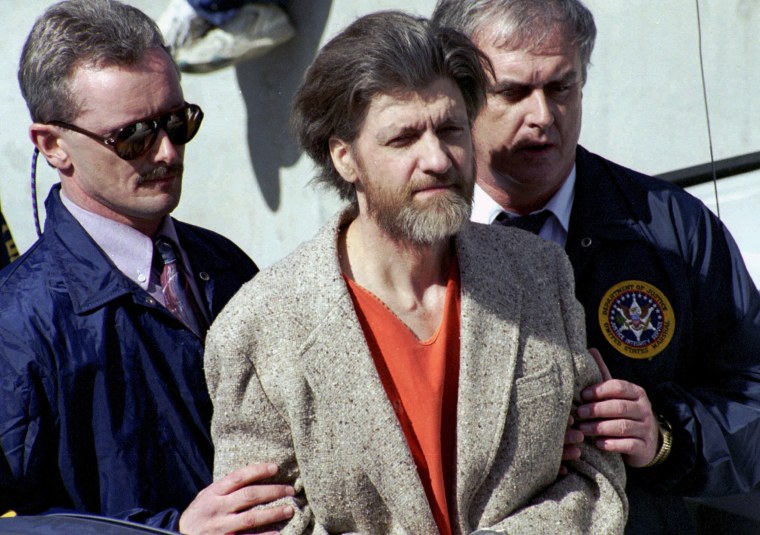
In 1995, a 35,000-word manifesto titled "Industrial Society and Its Future" was mailed to The New York Times and The Washington Post.
The sender demanded publication.
It ran in September 1995.
After it appeared in print, a brother read the prose.
He recognized the writing style.
He contacted authorities.
That recognition led to the arrest of Theodore Kaczynski at his remote cabin in Lincoln, Montana, in April 1996.
The manifesto's prose—not forensic evidence—was the first thread that unraveled the case.
Not fingerprints. Not a bomb fragment. Not a witness.
A brother's eye for a familiar turn of phrase.
The exact words or phrases in the manifesto that triggered the brother's recognition are not specified in the record.
What the record does show is the sequence: publication, recognition, a phone call, an arrest.
The bombs had killed three people and injured 23 others across the United States.
The FBI's UNABOM Task Force had spent nearly two decades investigating.
A tip in 1979 mentioned Kaczynski, but the investigation missed him earlier.
It was the manifesto, published at the bomber's demand, that opened the door.
Could a style alone crack a two-decade manhunt?
Could a brother's memory outweigh a federal investigation?
Could prose be the evidence that mattered most?
The record says yes.
THE BROTHER'S CALL
The first bomb arrived in May 1978.
Between 1978 and 1995, mail bombs killed three people and injured 23 others across the United States.
The targets were universities, airlines, and technology-related entities.
The FBI's UNABOM Task Force, named for "university and airline" targets, spent nearly two decades investigating.
A tip in 1979 mentioned Kaczynski.
The investigation missed him earlier.
The specific content of that 1979 tip is not detailed in the record.
Why it was not pursued is also not detailed in the record.
The case went cold, then hot, then cold again.
In 1995, a 35,000-word manifesto titled "Industrial Society and Its Future" was mailed to The New York Times and The Washington Post.
The manifesto demanded publication.
In September 1995, it was published.
David Kaczynski read it.
He recognized the writing style.
He recognized his brother's voice on the page.
David Kaczynski contacted the FBI.
Forensic linguists compared the manifesto's language to letters Theodore had written to his family.
An FBI profiler was among those who made the comparison.
The conclusion: the manifesto and the letters were likely written by the same person.
Not because of a fingerprint.
Not because of a witness.
Because of prose.

Because of syntax, word choice, and cadence.
The record says the brother's recognition led to the arrest.
The record says the linguistic analysis supported it.
What the record does not establish is why the 1979 tip went nowhere.
That remains a question without an answer in the case file.
The near-miss of 1979.
The decade-long chase.
The brother's call.
THE CABIN SEARCH
The FBI obtained a search warrant for Kaczynski's cabin in Lincoln, Montana.
The warrant followed the brother's call, the comparison of the manifesto's language to family letters.
Agents entered the small wooden structure where the former mathematics professor had lived alone for years.
Inside, they found bomb-making materials.
They found journals detailing the attacks.
They found the original manifesto, the 35,000-word document that had been mailed to newspapers.
They found a live bomb in the cabin.
Handwritten notes inside matched the bombs' construction.
The evidence was overwhelming, linking Kaczynski to the mail bombs sent through the U.S. Postal Service.
The exact contents of the journals are not specified in the record.
The number of handwritten notes is not specified in the record.
What is documented is the physical proof that ended the manhunt.
What is documented is the confirmation of the horror.
The man who had evaded the UNABOM Task Force for nearly two decades was now in custody.
The cabin was searched, and the case was made.
The trial would come later, in Sacramento.
The defense would argue mental illness.
The defendant would reject that argument.
But first, there was the cabin, and what it held.
THE TRIAL STRATEGY
The trial began in November 1997 in Sacramento, before a federal judge.
The defense, led by a federal public defender, planned to argue that Kaczynski suffered from paranoid schizophrenia and was not competent to stand trial.
Not because the evidence was weak. Because the strategy was about his mind.
Kaczynski rejected that defense.
He believed it would portray him as insane.
That would require accepting the very label he had spent his life rejecting.
During the contentious pre-trial period, he attempted to fire his attorneys.
He tried to hang himself in his cell.
The legal strategy and the defendant's self-image collided.
The defense wanted to save him from the death penalty.
The defendant wanted to save his own narrative.
Which version of him was true?
The record does not establish the defense's exact mental health diagnosis.
The judge's name is not confirmed in the record.

The attorneys' names are not confirmed in the record.
What remains is the clash.
In January 1998, he reached a plea agreement.
He pleaded guilty to all charges, including three murders.
In exchange: life in prison without parole.
The judge accepted the plea.
He sentenced Kaczynski to four consecutive life terms plus 30 years.
It was a conviction without a verdict.
It was a trial that never reached its intended argument.
The insanity plea was rejected.
The defendant chose the cell over the story.
He was sent to the federal supermax prison in Florence, Colorado.
That is where the record leaves him.
AND THE STORY STILL ISN'T OVER
The cell at Florence holds him still.
Four consecutive life terms plus 30 years, no parole eligibility, the case summary states.
He has been in custody since 1996.
The record notes he has occasionally filed legal motions, but it does not detail what those motions were or how each one failed.
The specific motions and their outcomes are not established in the record.
That is all the record says: none have succeeded.
His brother has spoken publicly about the case.
David Kaczynski has advocated for mental health awareness since the trial, according to the case summary.
The brother who made the call did not disappear into the story.
He turned it into a public argument about illness and recognition.
The cabin where Theodore Kaczynski lived was preserved.
It has been displayed in museums, the case summary reports.
A room of wood and journals, exhibited like an artifact.
The artifact outlives the manhunt that found it.
The case remains one of the FBI's most famous manhunts, the summary adds.
Not because of the bombs alone.
Because the break came from a brother reading his sibling's prose in a newspaper.
The manifesto was published.
The writing was recognized.
The man was arrested.
The trial ended in a plea.
The plea ended in Florence.
The story is still not over.
It is over for the courts.
It is not over for the family, or the museums, or the FBI's files.
A brother still speaks.
A cabin still stands in display cases.
A prisoner still files motions that fail.
The record does not say what he hopes for.
That would require evidence.
Advertisement
You may also like
The confession F. Lee Bailey never let a jury hear
He was a handyman and a former soldier, and in 1964 he was in custody. From that cell, Albert DeSalvo confessed to being the…
The phone calls from a dead man's phone that led to the McStay family graves
The McStay family's cell phones stopped transmitting on February 4, 2010. That was the same day Joseph, Summer, and their two young sons were…
In 1994, eleven Branch Davidians stood trial — what did the jury hear that they couldn't ignore?
Eleven Branch Davidians sat in a federal courtroom in San Antonio in 1994. Not for the fire that killed 76 people. For what happened…
The confession that put Winston Moseley on trial for Kitty Genovese's murder—what the jury heard
The television was in the car when they pulled him over. On March 19, 1964, police arrested Winston Moseley after a tip about a…
The letter to Captain Borrelli that cracked the Son of Sam case — but what made it so damning?
The letter was found near the scene after the April 1977 attack on two victims. It was addressed to Captain Joseph Borrelli, the lead…
The 31-day gap and a car that smelled of death: what detectives couldn't ignore
Cindy Anthony called 911 on July 15, 2008, to report her two-year-old granddaughter missing. She told the dispatcher that Casey Anthony's car smelled of…