Why police missed the link between two murder nights for weeks
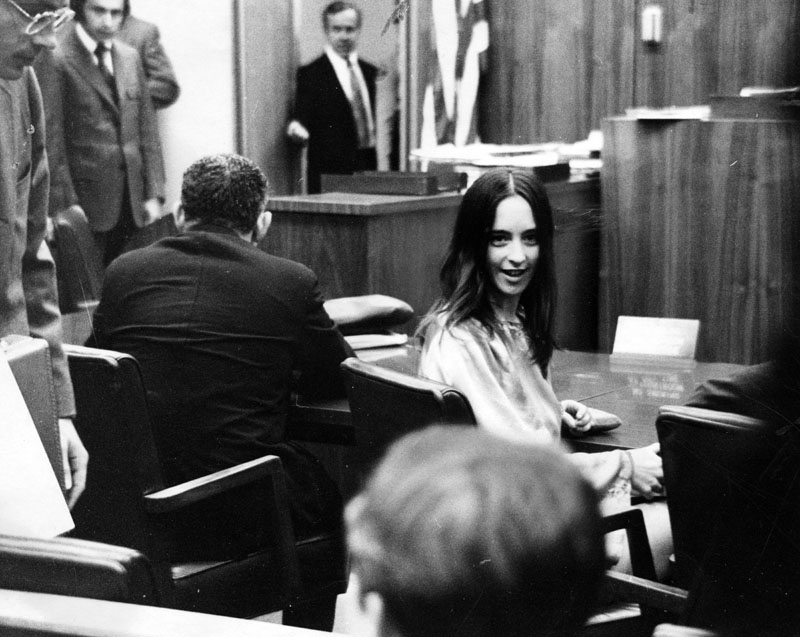
Two nights, one city, two sets of bodies.
On the night of August 9, 1969, five people were murdered at 10050 Cielo Drive in Benedict Canyon, Los Angeles.
Among them was actress Sharon Tate, eight and a half months pregnant.
The following night, August 10, 1969, Leno LaBianca and his wife Rosemary were murdered in their Los Feliz home.
Two nights.
Two sets of crime scenes.
One city.
The initial investigation was hampered by a lack of obvious motive and by the chaotic crime scenes.
Police initially suspected drug-related violence, given the victims’ connections to the entertainment industry.
The LaBianca killings were investigated separately.
The link between the two murder nights was not made quickly.
How could police not connect them?
How did two brutal nights stay separate in the record for weeks?
How did the chaos at one scene obscure the pattern at the other?
That would require evidence.
The specific weapons were not all recovered.
The motive was not initially clear to investigators.
Not because the scenes were quiet.
But because they were loud with confusion.
The first night left five dead in a house rented by a film director.
The second night left two dead in a home across town.
Each scene demanded its own response.
Each response followed its own trail.
The trails did not cross.
Not then.
THE FIRST RESPONSE
The first body was found on the morning of August 10.
Frank Struthers, Leno LaBianca’s son from a previous marriage, found the bodies in his father’s Los Feliz home.
He was named in reports.
That same morning, a housekeeper arrived at 10050 Cielo Drive and found the scene there.
Sharon Tate’s husband, director Roman Polanski, was in London.
He was publicly named in coverage as the news broke.
Lieutenant Earl Deemer of the Los Angeles Police Department led the investigation.
Dr. Thomas Noguchi, the medical examiner, would later testify about the bodies.
Each discovery was handled on its own terms.
What exactly was said at the scenes is not in the record.
The initial theories were speculative.
Police suspected drug violence, given the victims’ connections to the entertainment industry.
It was a reasonable guess.
It was also wrong.
The LaBianca case was investigated separately from the Cielo Drive killings.
Two nights.
Two trails.
One detective leading both, but no link drawn between them.
The chaos of the scenes did not help.
The lack of an obvious motive did not help.
The weeks passed, and the trails stayed separate.
Not because anyone hid anything.
But because no one connected the nights.
THE TURNING POINT
A jailhouse confession broke the silence.
Susan Atkins, jailed on unrelated charges, confided to her cellmate Virginia Graham.
Graham reported the details to authorities.
Atkins's statements linked the murders to Charles Manson and his followers.
The trail finally bent.
Another break came at Spahn Ranch, the group's hideout on a movie set.
A raid led to arrests on auto theft charges.
But the murder connection was not yet made.
Not yet.
The exact timing of when the connection was made is not specified in the record.
That timing remains unestablished.
The case needed more than a confession.
It needed a witness who had been there.
Linda Kasabian had been present during the Tate murders.
She described the events in detail.
Her testimony became the backbone of the prosecution's case.
Physical evidence backed her words.
Fingerprints linked defendants to the scenes.
Handwriting analysis linked them too.
The slow grinding shift had begun.
From dead end to breakthrough.
From separate nights to one story.
From suspicion to accusation.
The charges would come later.
The trial would come later.
But the link was now visible.
What had been two investigations became one.
What had been drug violence became something else.
What had been a mystery became a conspiracy theory with a name.
The name was Manson.
And the record holds what the record holds.
THE CASE BUILT
Vincent Bugliosi, the prosecutor, built the case as a conspiracy.
He argued that Manson orchestrated the murders to incite a race war he called "Helter Skelter."
The trial began in June 1970.
Manson stood trial with three female followers; their co-defendant was tried separately after being extradited from Texas.
The defense, including Irving Kanarek for Manson, attempted to undermine witness credibility.
What the defense argued beyond that is not in the record.
The record holds the trial, the testimony, the verdicts.
In January 1971, the jury found Manson and the three women guilty of first-degree murder and conspiracy.
All four were sentenced to death, as was the separately tried defendant.
It was a total win for the prosecution's theory.
It was also a sentence that would not stand.
In 1972, the California Supreme Court abolished the death penalty, and the sentences were automatically commuted to life in prison.
The conspiracy case had been built, argued, and won.
The punishment was changed by law, not by doubt.
The verdicts held.
The theory held.
What the jury accepted was Bugliosi's architecture: Manson directed, his followers killed, the motive was "Helter Skelter."
The defense's attacks on witness credibility did not move the jury.
The record does not establish what else the defense argued.
It establishes the result.
Four people were convicted of murder and conspiracy.
A fifth was convicted separately.
All were sentenced to death.
All were commuted to life.
That is the weight of the case as built.
That is what the record holds.
AND THE STORY STILL ISN'T OVER
Charles Manson died in prison on November 19, 2017, at age 83.
Not because the case was closed. Because he was dead.
Susan Atkins died in prison on September 24, 2009, at age 61.
She was the one who talked. The one whose jailhouse confessions broke the case open.
Patricia Krenwinkel remains incarcerated, serving life with the possibility of parole.
Her parole requests have been denied.
Leslie Van Houten was granted parole in 2023 and released from prison.
Charles “Tex” Watson remains incarcerated, serving life.
His parole requests have been denied.
The woman who testified for the prosecution, granted immunity for her presence that night, died in 2020.
The house at 10050 Cielo Drive was demolished in 1994.
Gone. All of it, gone.
The record holds the convictions. The record holds the commutations. The record holds the deaths.
What the record does not establish is the current status of any pending legal matters for those still incarcerated.
That is not in the record.
So the story continues in parole hearings. In denials. In a house that no longer stands.
The long tail of two nights in August 1969.
It is a case that became a conspiracy. It is a case that began as a missed link.
And it is still not over.
Advertisement
You may also like
The .35 caliber Marlin rifle that silenced six beds in Amityville
The call came on November 13, 1974. Police were sent to 112 Ocean Avenue in Amityville, New York, after the DeFeo family failed to…
The notebook found with Brian Laundrie's remains that changed the Petito case
Gabby Petito, 22, and her fiancé Brian Laundrie set off on a cross-country van trip through national parks in the western United States. The…
The deleted file on a floppy disk that led police to the BTK killer
A floppy disk arrived at a local television station in 2004. It came from the killer known as BTK, who had taunted police and…
The notebook found beside a gun in a Florida swamp that ended a manhunt
On October 20, 2021, Brian Laundrie’s remains were found in the Carlton Reserve in Florida. Beside him: a backpack, a notebook, and a gun.…
The 2013 DNA match that tied DeSalvo to Mary Sullivan — but never reached a courtroom
In 2013, DNA from the scene of Mary Sullivan's murder was tested. It was compared to Albert DeSalvo's remains, which had been exhumed. The…
The 14-year-old's stepmother whose 2005 report started the Epstein case
In 2005, a Florida mother walked into Palm Beach police headquarters. She was not the girl's biological mother. She was the stepmother, and the…