Why the St. Valentine's Day Massacre trial never happened — the evidence that vanished
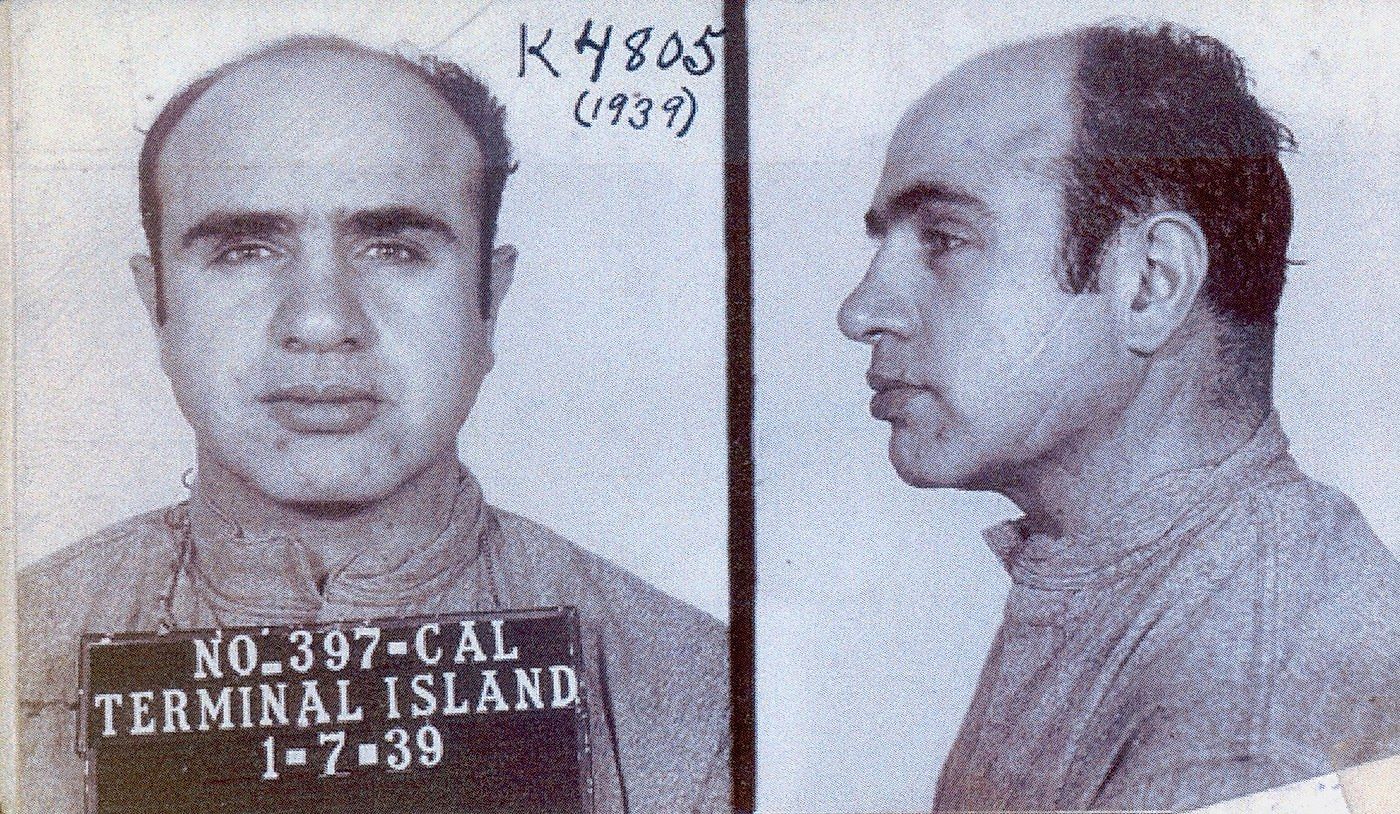
At approximately 10:30 a.m. on February 14, 1929, seven men were lined up against a wall inside a garage at 2122 North Clark Street in Chicago.
Two gunmen, some dressed as police officers, entered the garage, ordered the men against the wall, and opened fire.
Thompson submachine guns and a shotgun did the work.
The victims were members or associates of the North Side gang led by George "Bugs" Moran.
Moran himself was not among them; he arrived late and escaped.
The massacre is widely attributed to Al Capone's South Side gang.
Capone was in Florida at the time.
The identity of the gunmen is not established by the record.
The attribution to Capone is a widely held belief, not a documented fact.
No one was ever convicted for the killings.
The bodies were found shortly after by a dog owner who had come to walk his pet.
The garage stood in a busy neighborhood, in daylight, on a Thursday morning.
How could this happen in broad daylight?
How could seven men be executed and no one ever face trial?
How could the gunmen simply walk away?
That would require evidence.
The record does not provide it.
THE DOG WALKER AND THE STOLEN POLICE CAR
The dog owner came to walk his pet and found the bodies instead.
The Chicago Police Department responded to the scene and found the seven men.
Two Thompson submachine guns and a shotgun lay at the scene.
No fingerprints were recovered.
The gunmen had escaped in a stolen police car.
The car was later found abandoned and burned.
The evidence was right there: weapons, a vehicle, a scene.
The trail went cold anyway.
The investigation was hampered by a lack of cooperation from witnesses, who feared retaliation.
They saw something, perhaps.
They said nothing.
The record does not identify the dog owner.
The record does not specify the exact time of discovery.
It is known only that the discovery came shortly after the shooting.
The stolen police car was a disguise, a vehicle, a getaway.
It was also a dead end.
The weapons were real, the scene was real, the bodies were real.
The fingerprints were not there.
The witnesses were not talking.
The police had a garage full of evidence and no one to charge.
It is a case where the physical proof sits in the report.
It is also a case where the proof leads nowhere.
How could the gunmen simply walk away?
That would require evidence.
The record does not provide it.
THE SUSPECT WHO WAS NEVER CHARGED
The investigation settled on Capone's gang.
The Cook County State's Attorney's Office looked at the men who wore the badge and carried the guns.
No direct evidence linked Capone to the killings.
He was in Florida.
That alibi was not the problem.
The problem was the record itself.
Ballistic evidence did the work the witnesses would not.
Two Thompson submachine guns found at the scene were matched to other crimes, and that match pointed to a suspect.
That suspect was a known gunman.
He was never charged in the massacre.
The State's Attorney's Office investigated and lacked sufficient evidence to bring charges.
What evidence was insufficient?
The record does not detail the reason.
The suspect's name is not in the record either.
He remains a suspect by role, not by file.
No one was ever tried for the murders themselves.
No arrests were made.
The case was never solved.
The gunmen walked away.
The stolen police car was found abandoned and burned.
The witnesses who might have named the shooters feared retaliation, and so they said nothing.
That silence was evidence too, though it pointed nowhere.
The investigation had a target.
It had a weapon.
It had a name whispered in the reports.
It did not have a charge.
That would require evidence.
The record does not provide it.

THE TRIAL THAT NEVER CAME
There was no trial.
No one was ever charged with the murders of the seven men in the garage on North Clark Street.
The Cook County State’s Attorney’s Office investigated, but prosecutors say they lacked sufficient evidence to bring charges.
The specific reasons that office lacked evidence are not in the record.
The exact legal strategy of any potential prosecution is unknown.
That would require evidence.
The record does not provide it.
Al Capone was never indicted for the killings.
He was later convicted on federal income tax evasion charges in 1931.
Not for the massacre. For taxes.
That is the irony the case leaves behind: the most infamous gangland killing of the era produced no trial, while its alleged mastermind went down for what he owed the government.
The massacre remains officially unsolved.
The Chicago Police Department led the investigation, with the Cook County State’s Attorney’s Office involved in any related prosecution.
No prosecution came.
No witnesses cooperated, fearing retaliation, according to the record.
No fingerprints were recovered from the two Thompson submachine guns and the shotgun found at the scene.
The gunmen escaped in a stolen police car, later found abandoned and burned.
The case became a symbol of Prohibition-era gang violence.
It became a symbol of the failure of law enforcement to bring the perpetrators to justice.
It is a symbol. It is also a closed file that was never closed.
The case remains open but inactive.
AND THE STORY STILL ISN'T OVER
The case remains open but inactive.
Al Capone was convicted of tax evasion in 1931 and served time at Alcatraz before being released in 1939 due to poor health.
He died in 1947.
The suspect identified through ballistics was convicted of a separate murder in Michigan in 1931 and died in prison in 1940.
George Moran was killed in 1957.
The garage at 2122 North Clark Street was demolished in 1967.
The massacre has been the subject of numerous books, films, and documentaries.
No new evidence has emerged to identify the gunmen with certainty.
That is what the record does not establish: no new evidence, no gunmen, no certainty.
The trial that never happened cannot be reopened.
The charges that were never filed cannot be filed now.
The witnesses who feared retaliation are gone, and so are the accused.
It is a symbol. It is also a closed file that was never closed.
The case remains open but inactive.
Advertisement
You may also like
The ransom note demanding $118,000 that matched John Ramsey's bonus
The 911 call came at 5:52 a.m. on December 26, 1996. Patsy Ramsey told the dispatcher her 6-year-old daughter was missing. A ransom note…
The trunk stain that sent Casey Anthony to trial for Caylee's death
The car was a Pontiac, and the trunk smelled before anyone opened it. In July 2008, after Caylee Marie Anthony was reported missing, a…
The two-phase attack that began at a streetlight and ended in a hallway
The light at 82-70 Austin Street in Kew Gardens, Queens, marks the spot. Not a hallway. Not a doorway. The open street, under the…
The 911 call at 12:10 a.m. — and the glove that would not fit the timeline
The dog came back first. It was past midnight on June 13, 1994, in the Brentwood neighborhood of Los Angeles. A neighbor named Sukru…
Cell phone data put Chase Merritt near the grave site — then QuickBooks opened after the family vanished
The motorcyclist stopped because something in the sand caught his eye. It was February 2013, and he was riding near Victorville, California, in the…
The parking ticket that led police to David Berkowitz's door
It was a piece of paper, folded under a windshield wiper. A parking ticket issued near one of the Son of Sam shootings. The…