The wrong-floor parking detail that unraveled an off-duty officer's story
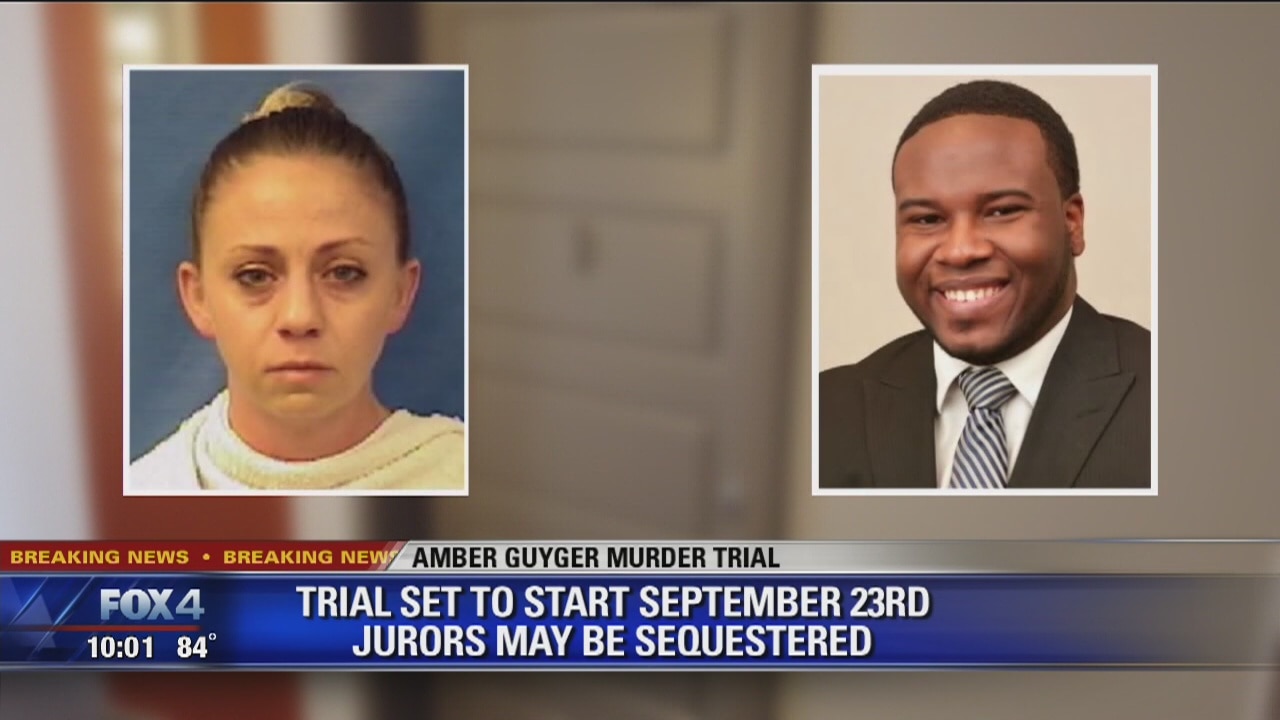
🚨 THE PARKING SPOT THAT DIDN'T MATCH…
She parked on the wrong floor.
On September 6, 2018, off-duty Dallas police officer Amber Guyger pulled into the garage at the South Side Flats complex and left her car on a level that was not her own.
She later claimed she walked into what she thought was her own apartment, one floor directly below.
Instead, she found Botham Jean inside.
The parking detail was documented by investigators.
It became a key inconsistency in her self-defense story.
Not a viral theory.
Not a rumor picked up online.
Part of the physical evidence presented at trial.
The exact reason she parked on the wrong floor is not established in the source.
She never offered a clear explanation, and the record does not settle it.
But the fact itself stands, plain and mundane.
A wrong floor.
A wrong door.
A story that depended on both being right.
THE NIGHT OF SEPTEMBER 6, 2018
The exact time of the shooting is not in the record.
On the evening of September 6, 2018, off-duty Dallas police officer Amber Guyger entered an apartment in the South Side Flats complex.
She was a four-year veteran of the Dallas Police Department.
Inside, she encountered Botham Jean, a 26-year-old accountant from Saint Lucia.
He was eating ice cream in his living room.
Guyger fired her department-issued Glock 9mm twice.
One shot struck Jean in the chest.
She called 911.
She performed CPR.
Jean was pronounced dead at a local hospital.
Responding officers arrived and found Guyger in the hallway outside the apartment.
The initial response treated the scene as a potential burglary.
Guyger was not arrested that night.
The apartment she entered was one floor directly above her own.
A wrong floor.
A wrong door.
The violence was over in seconds.
The aftermath was just beginning.
THE INITIAL RESPONSE: A BURGLARY, NOT A SHOOTING
The first officers on the scene treated it as a potential burglary.
Not a shooting. Not an officer-involved shooting. A burglary.
Guyger was not arrested that night.
She was the one who called 911. She was the one who performed CPR. She was the one found in the hallway outside the apartment.
The responding officers found her there, and the scene was handled as a break-in gone wrong.
She was not handcuffed. She was not taken into custody. She was not detained.
The night ended with Jean pronounced dead at a local hospital and Guyger walking out of the building a free woman.
The case drew national attention only later, after body-camera footage and 911 audio were released.
In that footage, according to the record, Guyger said she thought the apartment was hers.
That statement became the foundation of her account.
What the 911 call contained beyond that statement is not detailed in the source material.
What the body camera showed beyond that statement is not detailed either.
What is documented is the response: a burglary, not a shooting.
An officer fired her weapon. A man died. And no arrest was made that night.
The question hangs in the air.
Why was she not detained?
Why was the scene treated as a break-in?
Why did no one ask the obvious question about the floor she parked on?
The answer would come later, in the investigation, in the indictment, in the trial.
But that night, the answer was simply this: she was not arrested.
The aftermath had begun, but the accountability had not.
THE DOORS AND THE PARKING FLOOR
Investigators mapped the building floor by floor.
Guyger's apartment was directly below Jean's.
The two doors were not identical in color or markings.
What exactly differed is not enumerated in the record.
The source does not say if one was red, one was blue, one had a number, one had none.
That would require evidence.
A key piece of evidence was the door itself.
When Guyger returned to her own apartment after the shooting, the door was ajar.
She had left it open.
She had also parked on the wrong floor.
The parking spot was documented by investigators.
It was a fact, not a theory.
The lead detective testified about the inconsistencies.
He testified that Guyger's story did not match the physical evidence.
He pointed to the position of Jean's body.
He pointed to the location of the bullet.
The bullet did not land where her account suggested it should.
The door was open when it should have been closed.
The car was on a floor it should not have been on.
Each detail stood alone.
Taken together, they formed a pattern.
Not a pattern of coincidence.
A pattern of contradiction.
She was on the ground below.
The apartment was above.
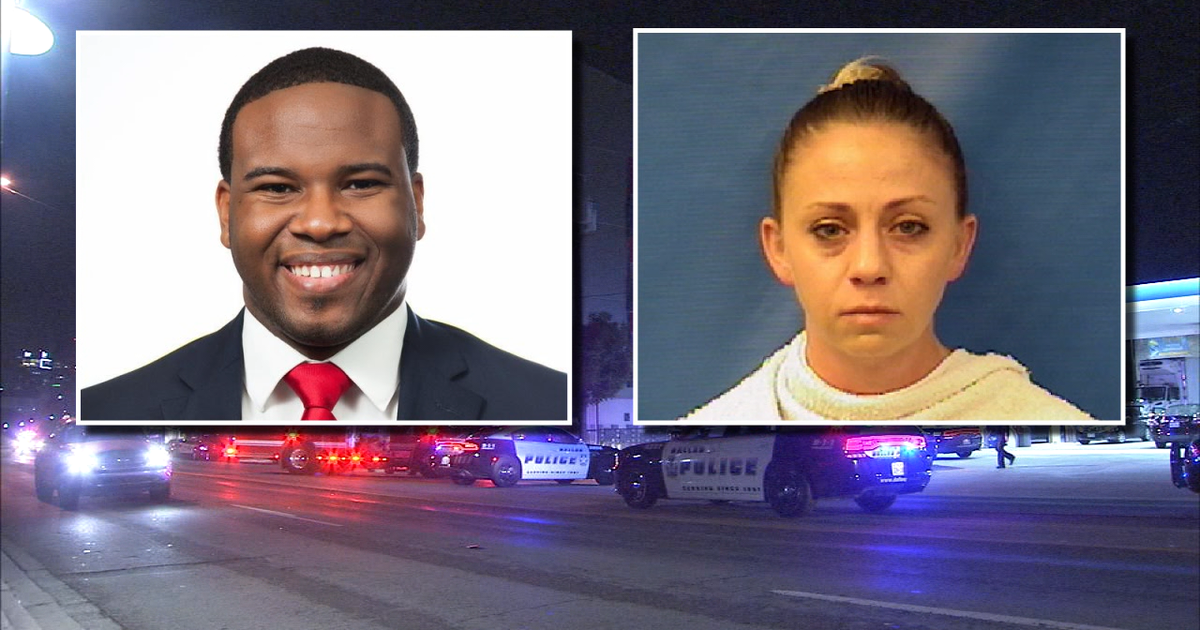
The parking was wrong.
The door was open.
The body was positioned one way.
The bullet was located another.
The detective said the story was inconsistent.
That was his testimony.
That was the record.
THE INDICTMENT AND THE PROSECUTION'S TURNING POINT
The lead detective called the story inconsistent.
That was his word for what the physical evidence showed.
In September 2019, a grand jury indicted Guyger on a charge of murder.
Not manslaughter.
Murder.
The prosecution’s argument turned on her training as a four-year veteran of the Dallas Police Department.
Her training, prosecutors argued, should have made her recognize she was in the wrong apartment before she fired.
The wrong floor for parking.
The door that was ajar when she returned.
The doors that were not identical in color or markings.
The trial began in September 2019 in Dallas.
She testified in her own defense.
She said she acted in self-defense because she believed an intruder was in her apartment.
That was her account.
The prosecution called it negligence that amounted to murder.
The specific testimony of the lead detective is not quoted in the source.
The record establishes the indictment.
The record establishes the argument.
The record does not establish the detective’s exact words from the witness stand.
The weight of the case sat on a single question: did she know where she was?
Or should she have known?
Or did she fire without checking at all?
That would require the jury to decide.
They were asked to weigh intent against error.
The stakes were a murder conviction.
The stakes were also a police officer’s word against the position of a body and the location of a bullet.
THE PROSECUTION'S CASE: NEGLIGENCE AS MURDER
The prosecution’s case did not rest on what Guyger said she believed.
It rested on what the physical evidence showed.
The lead detective testified that Guyger’s story was inconsistent with that evidence.
The wrong-floor parking spot was one fact.
The door ajar when she returned was another.
The position of Jean’s body and the location of the bullet were the third.
Each fact pointed the same way, the prosecution argued.
Guyger parked on the wrong floor.
She walked past a door that was not hers in color or markings.
She entered an apartment that was directly above her own, not identical to it.
Her training, the prosecution argued, should have alerted her to the discrepancy.
A four-year veteran of the Dallas Police Department, she was taught to verify before firing.
She did not verify.
She fired twice, striking Jean once in the chest.
The prosecution called that negligence.
They called that failure to check her surroundings murder.
Not because she intended to kill Botham Jean.
But because her actions, step by step, ignored every sign that she was in the wrong place.
The lead detective’s testimony supported this interpretation.
The evidence was documented, not theorized.
The parking spot was on record.
The door was ajar on record.
The body was positioned on record.
The prosecution asked the jury to weigh those facts against her account.
They asked whether a reasonable officer, trained and armed, would have fired.
The exact wording of the prosecution’s closing arguments is not in the source.
The logic of their case is.
It was a case built on what she did, not what she said she thought.
THE DEFENSE'S CASE: A TRAGIC MISTAKE
She testified in her own defense.
Guyger told the jury she acted in self-defense.
She said she believed an intruder was inside her apartment.
Not because she saw a weapon.
Because she thought the apartment was hers, and the man inside did not belong there.
Her defense framed the shooting as a tragic mistake.
A fatal error, not a crime.
The source does not detail the specific arguments her defense attorney made.
That part of the record is not established.
What is established is that she was not arrested that night.
The initial response treated the scene as a potential burglary.
That suggests an early belief in her account.
The defense's case rested on her state of mind.
It did not rest on the physical evidence.
The physical evidence said otherwise.
The doors were not identical in color or markings.
Her door was ajar when she returned.
She had parked on the wrong floor.
The lead detective testified her story was inconsistent with the position of Jean's body and the location of the bullet.

So the trial became a contest between what she believed and what she did.
She believed she was in her own apartment.
She was one floor below her own.
She believed an intruder was a threat.
The intruder was eating ice cream.
It is a tragic mistake.
It is also a fact pattern that did not match her story.
The jury would have to decide which one mattered more.
That would require evidence.
THE VERDICT AND SENTENCING
The jury deliberated and returned on October 1, 2019.
They found Amber Guyger guilty of murder.
Botham Jean's younger brother, Brandt Jean, then stood in the courtroom.
He told Guyger he forgave her.
He said he did not want her to go to prison for life.
The statement was widely publicized.
The judge sentenced Guyger to 10 years in prison.
That sentence was within the range for murder in Texas.
She was also fined.
The exact fine amount is not specified in the source.
Guyger's defense filed an appeal.
The conviction was upheld.
She did not receive parole during the period covered by this file.
The courtroom had heard her say she thought the apartment was hers.
It had heard the detective testify that her story did not match the physical evidence.
It had heard her testify she acted in self-defense.
The jury chose the evidence.
The verdict carried the weight of a life ended over ice cream.
The forgiveness offered by the brother carried its own weight.
One was a legal fact.
The other was a human one.
Both now belong to the record.
THE VIRAL CLAIM VS. THE DOCUMENTED RECORD
The viral version is tidy: two similar doors, one tired officer, a tragic mix-up.
The documented record is less tidy.
Investigators found that Guyger's apartment was directly below Jean's, but the two doors were not identical in color or markings.
That is a documented fact, not a theory.
She had parked on the wrong floor.
That, too, is a documented fact, not a theory.
The lead detective testified that Guyger's story was inconsistent with the physical evidence.
He pointed to the position of Jean's body and the location of the bullet.
He pointed to the door that was ajar when she returned to it after the shooting.
The physical evidence did not match the story she told.
Was the parking mistake an honest error?
Was the door confusion a genuine mistake?
Was the shooting a tragic accident?
That would require evidence the record does not provide.
What the record does establish is narrower and harder.
It establishes where she parked.
It establishes what the doors looked like.
It establishes what the detective testified.
The conviction itself is a documented outcome.
A jury found Guyger guilty of murder on October 1, 2019.
A conviction in a police shooting case is rare.
That is also part of the record.
The online theories are not.
The source does not establish any theory beyond the documented facts.
It is not mentioned at all.
What remains is the gap between the tidy story and the documented one.
The gap is where the evidence sits.
AND THE STORY STILL ISN'T OVER
She is serving her ten-year sentence in a Texas prison.
She became eligible for parole after serving a portion of that sentence.
As of the most recent widely reported updates, she remained incarcerated.
The legal case is closed. The record is fixed. The conviction was upheld on appeal.
Botham Jean's family has continued to advocate for police reform.
They have spoken publicly about the case, about the night, about what they say was lost.
The city of Dallas settled a wrongful-death lawsuit with Jean's family.
The exact settlement amount is not established; reports vary.
That figure is not in the record. That figure is not the point.
The case became a touchstone in national debates about police shootings of unarmed Black men.
It is a conviction, which was relatively rare in such cases.
It is also a story that outlived the verdict.
The door was ajar. The parking spot was on the wrong floor. The doors were not identical.
Those details remain in the trial record.
They remain in the gap between the story told and the story documented.
The family continues. The debates continue. The sentence continues.
What does not continue is the question of what happened in that apartment.
That question was answered by a jury.
What remains is what the answer means.
Not because the case is simple. But because the aftermath is not.
She was on the ground floor of a long sentence.
They are on a longer road.
Advertisement
You may also like
The psychologist's mistress who heard a confession — and the brothers who went to a movie
On the evening of August 20, 1989, Lyle and Erik Menendez left their Beverly Hills mansion and drove to a movie theater. They had…
The desert graves that ended a three-year wait for a missing California family
A motorcyclist stopped in the Mojave Desert near Victorville in November 2013 and found what he first took to be scattered bones. The bones…

The bridge splash that led police to Wayne Williams — and the mothers who kept pushing
The sound came first. On May 22, 1981, police staked out a bridge over the Chattahoochee River after a surveillance team heard a splash…
The gas station victim's wife asked for privacy — then the sniper struck again
October 14, 2002, a 47-year-old FBI analyst was killed outside a Home Depot in Falls Church, Virginia. Her husband spoke publicly after her death.…

The neighbor who found Kitty Genovese and what she saw in the hallway
The hallway at 82-70 Austin Street was quiet. Sophia Farrar lived in the Kew Gardens building, a neighbor among neighbors. She found Kitty Genovese…

The 31-day gap in Caylee Anthony's disappearance that Cindy Anthony reported to 911
July 15, 2008. Cindy Anthony picked up the phone in her Orlando home and called 911 to report her three-year-old granddaughter, Caylee Anthony, missing.…