A 12-year-old girl was among the victims — and her parents kept coming to court
The youngest name on the list was twelve years old.
Between October 1977 and February 1978, ten young women and girls were abducted, sexually assaulted, and murdered in and around Los Angeles, California.
The victims ranged in age from 12 to 28.
One was a child.
She was the youngest of the ten, a girl whose name appears on the record only as a victim.
Her parents came to court.
According to the case summary, they attended the proceedings and pleaded for justice.
The specific words they said are not in the record.
That they were there is established.
That they stood before the court and asked for something — for answers, for accountability, for their daughter — is established.
What they said exactly, how they said it, what the room looked like when they spoke: that would require evidence.
She was twelve.
She was on a list with women more than twice her age.
She was among the ten taken between October 1977 and February 1978, in and around Los Angeles.
The record gives her an age.
The record gives her a place on the list.
The record does not give her parents' words.
They came anyway.
They pleaded for justice, the case summary says, and that is all it says.
A twelve-year-old girl.
A courtroom.
Parents who kept coming.
The rest of the story belongs to the bodies on the hillsides, the arrest in Bellingham, the two trials.
But this section begins with the youngest.
Her name is not used here, by instruction.
Her age is the fact that stays.
THE BODIES ON THE HILLSIDES
The oldest was 28. The youngest was 12.
The bodies were found dumped on hillsides, in gullies, and along freeways across Los Angeles County.
The killings terrorized the region. The unknown perpetrator or perpetrators became known as the Hillside Strangler.
The investigation began in late 1977 as bodies were discovered. The Los Angeles Police Department formed a multi-agency task force.
The lead detective headed that task force. His name is not used here, by instruction.
The case was marked by false leads and public fear.
False leads because the killer left no pattern that held. False leads because witnesses placed the same man in different cars, on different streets, at different hours.
Public fear because the bodies kept appearing. Public fear because no name was attached to them yet.
The exact dates and locations of each individual body discovery are not itemized in the source. The record does not establish them.
What the record establishes is the spread: hillsides, gullies, freeways. A county, not a neighborhood.
What the record establishes is the count: ten young women and girls, taken between October 1977 and February 1978.
What the record establishes is the range: ages 12 to 28.
The youngest is where this section began. Her age is the fact that stays.
THE ARREST IN BELLINGHAM
The breakthrough came in January 1979, in a city nine hundred miles north of Los Angeles.
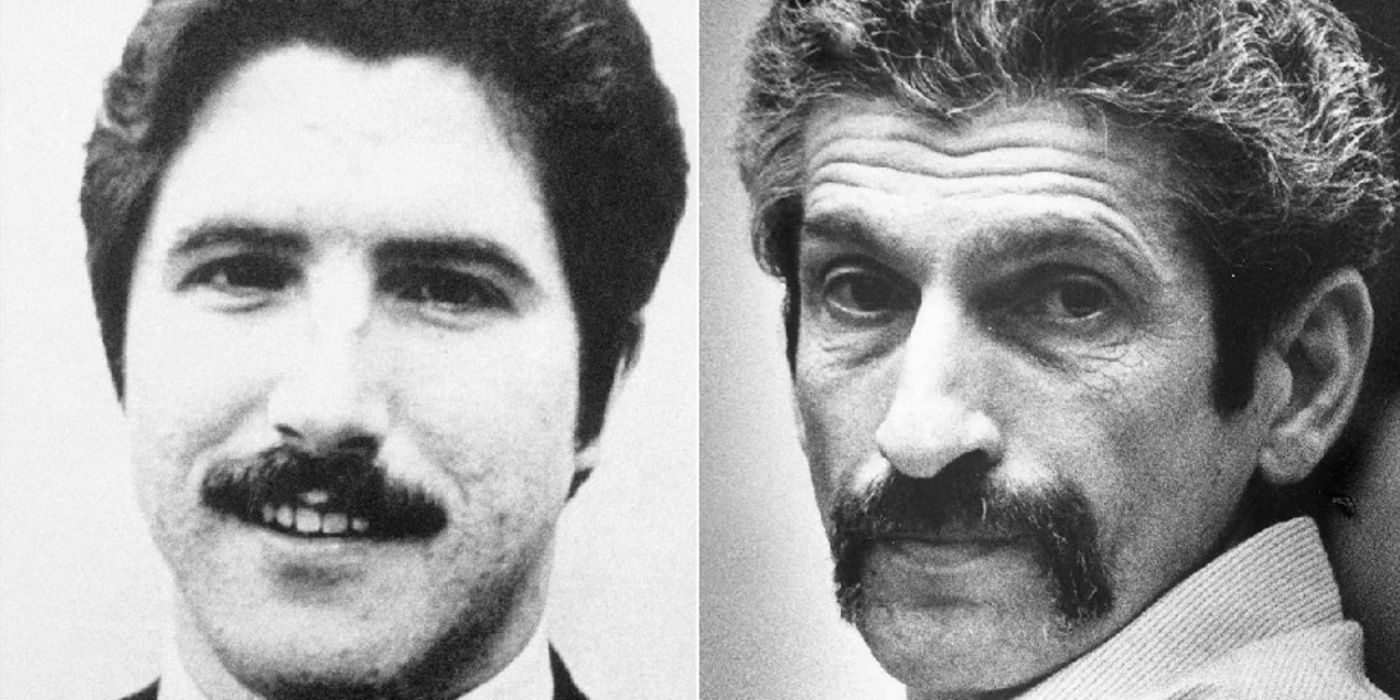
Kenneth Bianchi was arrested in Bellingham, Washington, for the murders of two women there, according to the case summary.
Under interrogation, Bianchi attempted to fake insanity.
He eventually confessed to the Los Angeles killings, the case summary states.
He implicated his cousin, Angelo Buono Jr.
Bianchi's confession included details only the killer would know, according to the case summary.
The specific details of that confession are not enumerated in the source.
He led investigators to locations and evidence, the case summary states.
A key piece of evidence was a car owned by Buono.
Witnesses had seen that car near abduction sites, according to the case summary.
Forensic evidence, including hair and fiber analysis, linked the victims to the car and to the two men, the case summary states.
The confession was bought.
It was bought from one killer to catch another.
That is what the record establishes.
What the record does not establish is what Bianchi said that only the killer would know.
What the record does not establish is whether the confession was true in every particular, or convenient.
The car was Buono's.
The fibers were on the victims.
The witnesses placed the car near the abduction sites.

The confession placed Bianchi inside the crimes.
The case turned on a deal with a man charged with murder.
THE TWO TRIALS
The trial of Angelo Buono Jr. ran for nearly two years.
It was one of the longest trials in California history.
The prosecutor put Kenneth Bianchi on the stand as the key witness.
Bianchi was the confessed killer, the cooperating cousin, the man whose deal bought his own life sentence.
The defense argued that Bianchi was a liar.
The defense argued that Buono was not involved.
The defense attorney's name is not reliably in the record; the source itself notes confusion on this point.
The judge was Ronald M. George, who later became Chief Justice of California.
The prosecution built its case on Bianchi's words, on the car, on the hair and fiber that tied the victims to it.
The jury deliberated.
In 1983, Buono was convicted of nine counts of first-degree murder.
Nine counts, not ten.
The tenth victim, Cindy Hudspeth, was not included in his conviction due to evidentiary issues.
That is the strange arithmetic of the verdict: nine victims covered, one left out.
Kenneth Bianchi pleaded guilty to the murders in Los Angeles.
He was sentenced to life in prison.
He had already been convicted in Washington for the two Bellingham murders.
The families sat through the months of testimony.
They watched the accused, and they watched the witness who had confessed.
The verdict covered nine.
It did not cover the tenth.
That would require a different accounting, one the record does not provide.
AND THE STORY STILL ISN'T OVER
Angelo Buono Jr. died in prison in 2002 of a heart attack.
Kenneth Bianchi remains in prison in Washington State, where he has repeatedly sought parole and been denied.
The families have lived with the aftermath for decades.
Some have spoken publicly about their loss and the long legal process.
The parents of some victims attended court proceedings and pleaded for justice.
They came to watch the men charged with killing their daughters.
They came to hear the evidence.
They came to ask the court for something the verdict could not restore.
The youngest victim's parents were among those who attended.
Whether they are still alive or still attending proceedings is not in the record.
That is not established.
The case has been the subject of numerous books, documentaries, and films.
Many dramatizations have altered names and details.
The retellings continue.
The parole hearings continue.
The men are accounted for.
The families are not finished.
Their attendance was the real vigil.
A vigil that outlasted the trials.
A vigil that outlasted one of the killers.
It is a story of what was done.
It is also a story of who kept watching.
The verdict covered nine.
It did not cover the tenth.
That would require a different accounting, one the record does not provide.
The record provides the crimes, the arrests, the convictions.
It does not provide motive.
It does not provide remorse.
It does not provide the full inner life of the accused.
That would require evidence.
The families provided what they could.
They provided presence.
They provided a plea.
The plea remains unanswered.
Advertisement
You may also like
The ransom note left on a windowsill that changed a nation's laws
The crib was empty. Anne Morrow Lindbergh discovered the 20-month-old missing around 10 p.m. on the evening of March 1, 1932. On the nursery…
The trapdoor beneath a contractor's home that hid 29 bodies — and the teenager who led police to it
December 11, 1978. A 15-year-old boy named Robert Piest told his mother he was going to meet a contractor about a job. He never…
The cellphone video that broke Alex Murdaugh's alibi — and the double murder trial that followed
The video is eight seconds of darkness, dogs barking, and a voice. Paul Murdaugh recorded it at the dog kennels on the family's Moselle…
The rifle that six sleeping DeFeos were shot with — and the son who confessed
The call came on November 13, 1974. A neighbor placed it to the Suffolk County Police Department. Officers arrived at 112 Ocean Avenue in…
The floppy disk trace that unmasked a church leader as BTK after 30 years
A floppy disk arrived at a Wichita newspaper in 2004, sent by someone claiming to be the BTK killer. It was a taunt, a…
The notebook found beside Brian Laundrie's remains that changed the Gabby Petito case
On October 20, 2021, Brian Laundrie's remains were found in the Carlton Reserve in Florida. A notebook lay nearby. Inside that notebook was a…