The ransom note left on a windowsill that changed a nation's laws
The crib was empty.
Anne Morrow Lindbergh discovered the 20-month-old missing around 10 p.m. on the evening of March 1, 1932.
On the nursery windowsill of the family's new home near Hopewell, New Jersey, a ransom note demanding $50,000 was found.
The child was Charles Lindbergh Jr., son of aviator Charles Lindbergh.
The note was found after the child was already gone.
It is a piece of paper on a sill, demanding money, left where a crib should have been.
Who physically placed the note on the windowsill is not established by the record.
A theory circulating online speculates about who wrote that note and who placed it there.
That theory goes beyond what the record establishes.
The record establishes the note was found.
It establishes the demand.
It establishes the empty crib.
It does not establish the hand that left the paper.
The stillness of that room is what people return to.
A deliberate object in a place of absence.
Was it placed before the child was taken, or after?
Was it left by one person, or more?
Was it written in the nursery itself?
That would require evidence.
The record offers none on those questions.

The note remains what it is: a demand, on a sill, in a room where a child should have been sleeping.
THE CARPENTER'S ROAD
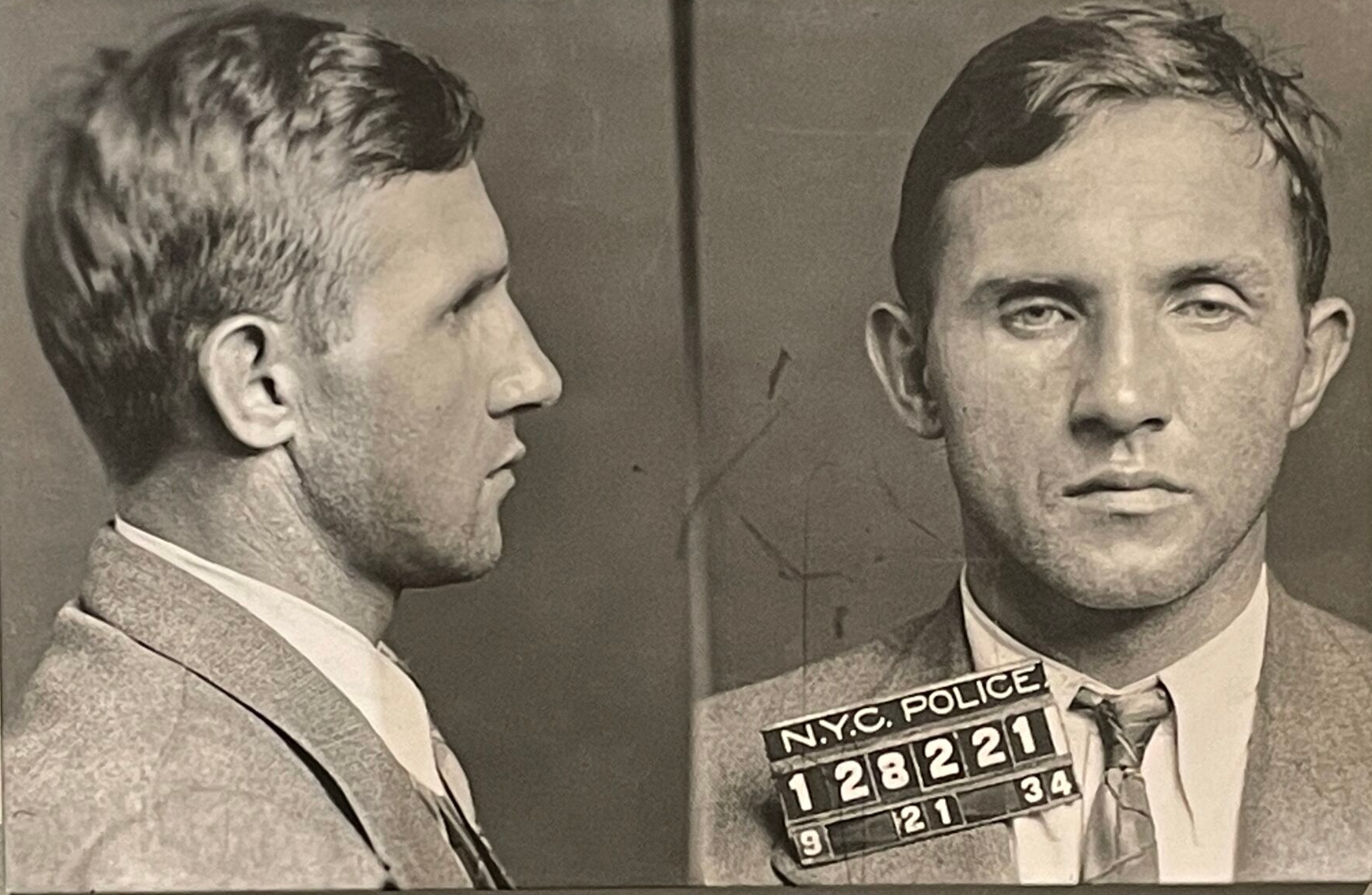
Bruno Richard Hauptmann was a German immigrant carpenter living in the Bronx when the kidnapping occurred.
The investigation was led by the New Jersey State Police under Colonel H. Norman Schwarzkopf.
It was initially hampered by confusion, the Lindbergh family's own efforts, and the appearance of numerous ransom notes.
The ransom was paid in gold certificates through an intermediary, Dr. John F. Condon, a retired Bronx schoolteacher.
Condon had placed a newspaper ad offering to help.
Despite the payment, the child was found dead on May 12, 1932, in a shallow grave about four and a half miles from the home.
The grave was in woods off the Hopewell-Mount Rose Road.
The cause of death was a fractured skull, likely from a blow.
The weapon was not recovered.
The vehicle was not identified.
The ladder used in the kidnapping was a key piece of evidence.
The record does not establish what weapon struck the child.
The record does not establish what vehicle carried the child away.
The record does not establish who built the ladder, only that the wood was examined.
What the record does show is a carpenter's door, and money, and a plate number.
That came later.
In September 1934, a gas station attendant noticed a gold certificate and recorded the license plate of the man who used it.
The plate traced to Hauptmann.

A search of his home found over $14,000 of the ransom money.
The gold certificates were the thread.
They were the thread from the ransom note to the windowsill to the carpenter's road.
What happened between the sill and the grave, the record leaves open.
THE GOLD CERTIFICATE
In September 1934, more than two years after the kidnapping, a gas station attendant in the Bronx noticed a gold certificate.
The attendant recorded the license plate of the man who used it.
The plate traced to Bruno Richard Hauptmann, the carpenter.
A search of his home found over $14,000 of the ransom money.
It was a mundane moment — a man paying for gas — that became the hinge of the case.
The serial numbers of the gold certificates had been widely circulated after the ransom was paid.
They were the thread that connected the nursery windowsill to the Bronx.
At trial, the prosecution presented handwriting analysis linking Hauptmann to the ransom notes.
They presented wood analysis connecting a board in his attic to the ladder used in the kidnapping.
Hauptmann was charged with the crime.
The record does not establish how he came to possess the gold certificates.
Not because the question was ignored.
But because the evidence at trial moved from the certificates to the handwriting, to the wood, to the money in his home.
What happened between the payment and the carpenter's door, the record leaves open.
The certificates were found.

The man was charged.
The rest — how they got there — remains a question the trial did not answer.
THE TWO STORIES
The prosecution, led by Attorney General David T. Wilentz of New Jersey, presented a circumstantial case.
The gold certificates.
The handwriting.
The wood from the attic ladder.
Each piece pointed to the carpenter.
The defense, led by Edward J. Reilly, argued the evidence was circumstantial.
He argued that Hauptmann was a victim of a frame-up.
Two readings of the same facts.
One says the carpenter left the ladder and spent the money.
The other says the evidence was built to fit him.
Which one holds?
That would require evidence.
Hauptmann was tried in Flemington, New Jersey, beginning in January 1935.
He was charged with first-degree murder.
He was found guilty on February 13, 1935.
He was sentenced to death.
He was executed in the electric chair at the New Jersey State Prison in Trenton on April 3, 1936.

He maintained his innocence to the end.
His wife, Anna Hauptmann, publicly maintained his innocence for decades.
She filed numerous appeals and petitions.
All were unsuccessful.
The record does not establish whether the defense's frame-up claim was true or false.
The conviction stands in the record.
It is a strong circumstantial case.
It is also a claim of fabrication.
The record holds both.
The record resolves neither.
AND THE STORY STILL ISN'T OVER
The case remains one of the most famous and controversial in American criminal history.
The debate about Hauptmann's guilt never ended.
The record does not establish his guilt beyond the conviction.
The record does not establish his innocence either.
Anna Hauptmann continued to fight to clear his name for decades.
She filed numerous appeals and petitions.
All were unsuccessful.
The Lindbergh family later moved to Europe.
They wanted to escape the intense public scrutiny.

The Hopewell home was donated to the state.
It is now a museum.
The nursery where the child was taken is part of that museum.
A law outlived the trial.
The Federal Kidnapping Act, often called the "Lindbergh Law," made kidnapping a federal offense.
It passed because of this case.
A con artist was separately convicted of fraud.
He took money from a wealthy woman by claiming he could recover the baby.
He was not involved in the kidnapping itself.
The legal fight is exhausted.
There is no hearing scheduled.
There is no motion pending.
The record shows the appeals are done.
What continues is the public debate.
That debate is not a legal proceeding.
That debate is not evidence.
It is a conversation that has outlasted every appeal, every petition, every motion.
The next concrete step is not in a courtroom.
The next concrete step is in the museum, where visitors stand where the nursery once stood.
They look at the windowsill.
They ask the same questions the record cannot answer.
Advertisement
You may also like

The 51 days between the ATF raid and the fire that ended the Waco siege
The warrant was for the Mount Carmel Center ranch near Waco, Texas. February 28, 1993. Agents of the Bureau of Alcohol, Tobacco, and Firearms…
The severed head found 120 miles away — and the confession police never fully believed
The television set was on. On July 27, 1981, six-year-old Adam Walsh sat with other children in front of it, inside the Sears store…

Two backpacks, 12 seconds apart — the Boston Marathon bombs that changed a city
The first bomb detonated at 2:49 p.m. on April 15, 2013, near the finish line of the Boston Marathon on Boylston Street. Seconds later,…

Love letters scattered under a crabapple tree that still divide a 1922 jury
A local resident found them first. On September 16, 1922, the bodies of Reverend Edward Wheeler Hall and Mrs. Eleanor Reinhardt Mills lay beneath…

The Army captain's intruder story that blood spatter contradicted — and the media believed it
On the night of February 17, 1970, at Fort Bragg, North Carolina, Army Captain Jeffrey MacDonald, a Green Beret physician, reported that four intruders—three…

31 days passed before Casey Anthony reported her daughter Caylee missing in July 2008
The 911 call came on July 15, 2008. Cindy Anthony, the grandmother, reported her 2-year-old granddaughter missing that day. Caylee Anthony had last been…