The 15-year-old who vanished after one phone call about a job — his mother's final words
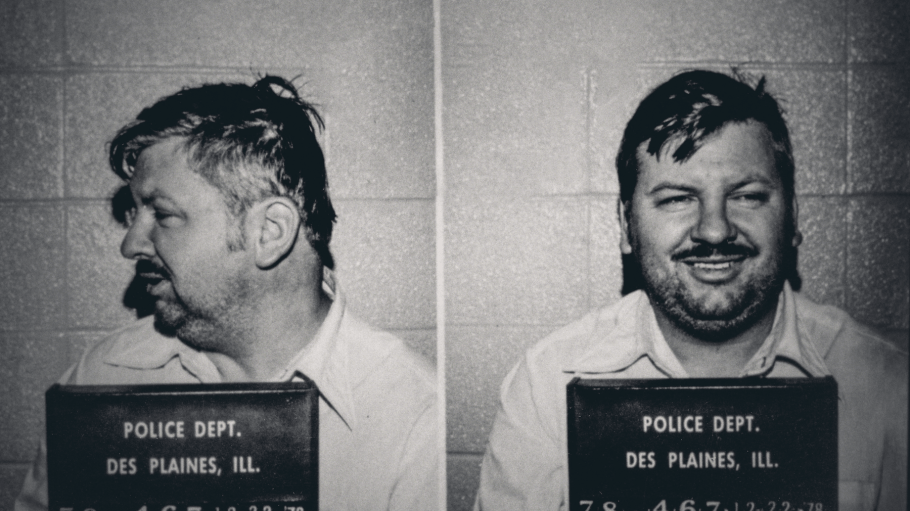
December 11, 1978.
A 15-year-old boy told his mother he was going to meet a contractor about a job.
Her final words to him are the focus of this article.
He never returned home.
That is the documented starting point.
The exact content of the phone call is not in the record.
Only that he told her he was meeting a contractor.
His mother, Elizabeth Piest, spoke those last words at the doorway, or perhaps over the receiver of a phone.
The record does not say which.
It says she reported him missing.
It says police learned he had mentioned the name of a contractor, John Wayne Gacy.
It says the investigation began with a mother's report and a son's last sentence.
What she said to him is preserved in testimony, in the accounts of those who heard her retell it.
What he said back is not.
The boy's name was Robert Piest.
He was a high school student.
He was the final victim.
His mother's words are a documented fact.
The rest of the case's details are established by the record, not by online speculation.
She was on the ground below, waiting.
THE SEARCH
She reported him missing that same night.
Police learned Robert had mentioned the name of a contractor: John Wayne Gacy.
Not because he knew Gacy well. Because Gacy had offered him a job.
The lead detective obtained a search warrant for Gacy's home.
The exact timeline between the report and the warrant is not specified in the source.
What the record does show is what the search found.
Inside the house, police noticed a strong odor.
They noticed a freshly dug area in the crawl space.
The smell was not explained by the garbage. The dug earth was not explained by plumbing.
On December 22, 1978, investigators uncovered human remains.
It was a body. It was not Robert.
It was a young man, buried beneath the house of a contractor who had offered Robert a job.
The search did not stop there.
The crawl space held more. The river held more. The record holds the rest.
His mother's words were a documented fact.
What the house contained was now a documented fact too.
She was on the ground below, waiting.
THE CONFESSION

The arrest came on December 21, 1978.
John Wayne Gacy was taken into custody.
He later confessed to 33 murders.
The confession was recorded and detailed.
He led police to the crawl space beneath his house.
He led them to the Des Plaines River.
Police recovered bodies from both locations.
The exact number of victims recovered from each location is not specified in the source.
Forensic evidence identified victims through dental records and personal effects.
A rope found in Gacy's home matched ligature marks on the victims.
Dr. Robert Stein, the Cook County Medical Examiner, testified at trial about the remains.
He testified about causes of death.
The confirmation was grim.
What the house contained was now a documented fact too.
The worst fears of a mother were confirmed in the crawl space.
She was on the ground below, waiting.
The enormity of the confession settled over the investigation.
It was a number: 33.
It was a place: beneath a house.
It was a rope.
It was dental records.
It was the end of a search that began with one phone call about a job.
The record holds the confession.
The record holds the recovery.
What the record does not hold is the exact count from each site — that would require evidence the source does not give.
THE TRIAL
The trial began in February 1980 in Cook County Circuit Court.
Gacy was indicted on 33 counts of first-degree murder.
He pleaded not guilty by reason of insanity.
The jury rejected the defense.
On March 12, 1980, Gacy was convicted of all 33 murders.
He was sentenced to death.
The relief was real.
It was also incomplete.
The record establishes the conviction.
It establishes the sentence.
It establishes that the jury heard the rope found in his home and the dental records.
What the record does not detail is the full weight of the evidence presented — that would require testimony the source does not give.
Elizabeth Piest had her answer.
Her son was gone.
The man who took him was convicted.
The verdict did not bring Robert back.
It did not name every victim in the crawl space.
It did not end the questions that would follow for decades.
Some victims would remain unidentified.
Some families would wait years for DNA and genealogy to give them names.
The conviction was the law's closure.
The human closure came slower.
She was the mother who spoke last.
Her final words to her son were documented.
The rest of the case belongs to the record, not to the speculation that grew around it.
The jury's verdict was the end of the trial.
It was not the end of the story.
AND THE STORY STILL ISN'T OVER
Gacy was executed by lethal injection on May 10, 1994, at Stateville Correctional Center.
The crawl space of his former home was demolished in 1979.
The house is gone.
The story is not.
Several victims remain unidentified.
As of recent reports, some have been identified through DNA and genealogy, but others are still unknown.
That is what the record establishes.
It does not establish who they all were.
Elizabeth Piest spoke publicly about the case.
Robert's mother did not stop at the trial.
She advocated for victim identification.
She gave a name to the loss that the record could not.
The case remains a landmark in serial murder investigation.
It is also a landmark in victim advocacy.
Not because the story closed.
But because it refused to.
What was found under the crawl space was counted.
What was not found still has no name.
The verdict was the end of the trial.
The execution was the end of the sentence.
The identification of the last unknown victim is not complete.
That would require evidence.
Elizabeth Piest's final words to her son are a documented fact.
The rest of what happened to him is established by the record.
The record is long.
It is not finished.
Advertisement
You may also like
The duct tape on Laci Peterson's body that split a jury's theory
The duct tape was on Laci Peterson's body when she was found. That single object carried the weight of two opposing stories. The prosecution…
The open letter from the Richards that urged the government to seek the death penalty
Bill Richard and Denise Richard lost their 8-year-old son, Martin, to the bombs near the finish line. Their daughter, Jane, lost a leg in…
The flight attendant who took the note — and what she said about the man who vanished
She took the note without opening it. He told her to look at it, and she looked. The man at seat 18C called himself…
The uncle who found six shot in their beds — and the confession that followed
The door at 112 Ocean Avenue was an ordinary Dutch Colonial, the kind of house a family might call home for a decade. On…
The 95 million who watched O.J. Simpson's Bronco chase and what they saw
The white Ford Bronco moved at 35 miles an hour, and the whole country watched. On June 17, 1994, an estimated 95 million viewers…

The pilot with 711 hours who flew Buddy Holly's plane into a snowstorm
The pilot’s name was Roger Peterson, and he was twenty-one years old. He had logged about 711 hours of total flight time, according to…