The uncle who found six shot in their beds — and the confession that followed
The door at 112 Ocean Avenue was an ordinary Dutch Colonial, the kind of house a family might call home for a decade.
On the afternoon of November 14, 1974, a group of men pushed that door open and walked in.
The uncle was among the first inside.
He found six people shot in their beds.
The victims were his brother, his sister-in-law, and four of their children — two brothers and two sisters.
They had been dead for more than a day.
The shots came in the early morning hours of November 13, but the bodies were not discovered until the following afternoon.
That is the gap the record leaves open: a full day and a half between the sound of a rifle and the moment someone opened the door.
Who walked in and what they saw is not in the record.
The uncle's name is not in the record either.
He is referred to by role only.
What is in the record is the weight of that ordinary door.
It opened onto horror.
It opened onto six beds, six bodies, six gunshot wounds from a .35 caliber Marlin rifle.
The house later became the subject of a book and film franchise claiming paranormal activity.
That is a claim, not a fact established by the evidence.
The record shows a straightforward act of familicide.
The paranormal story came after.
It came later, in print, in film, in the telling.
But on that afternoon in November 1974, there was only the door, the men, and the bodies.
The uncle stood in the hallway.
He stood in the room.
He stood where the rifle had been fired hours earlier, when the house was quiet and the family was asleep.
No one knows exactly what he said.
No one wrote it down.
The record holds the discovery, not the reaction.
The bodies were not moved until police arrived.
The rifle was recovered from a nearby river.
The uncle was among the first inside, and that is all the record says.
That is all it needs to say.
THE FAMILY IN THE HOUSE
They were a family of eight who had lived in the large Dutch Colonial house at 112 Ocean Avenue for about a decade.
The victims were the father, the mother, and four siblings — two brothers and two sisters.
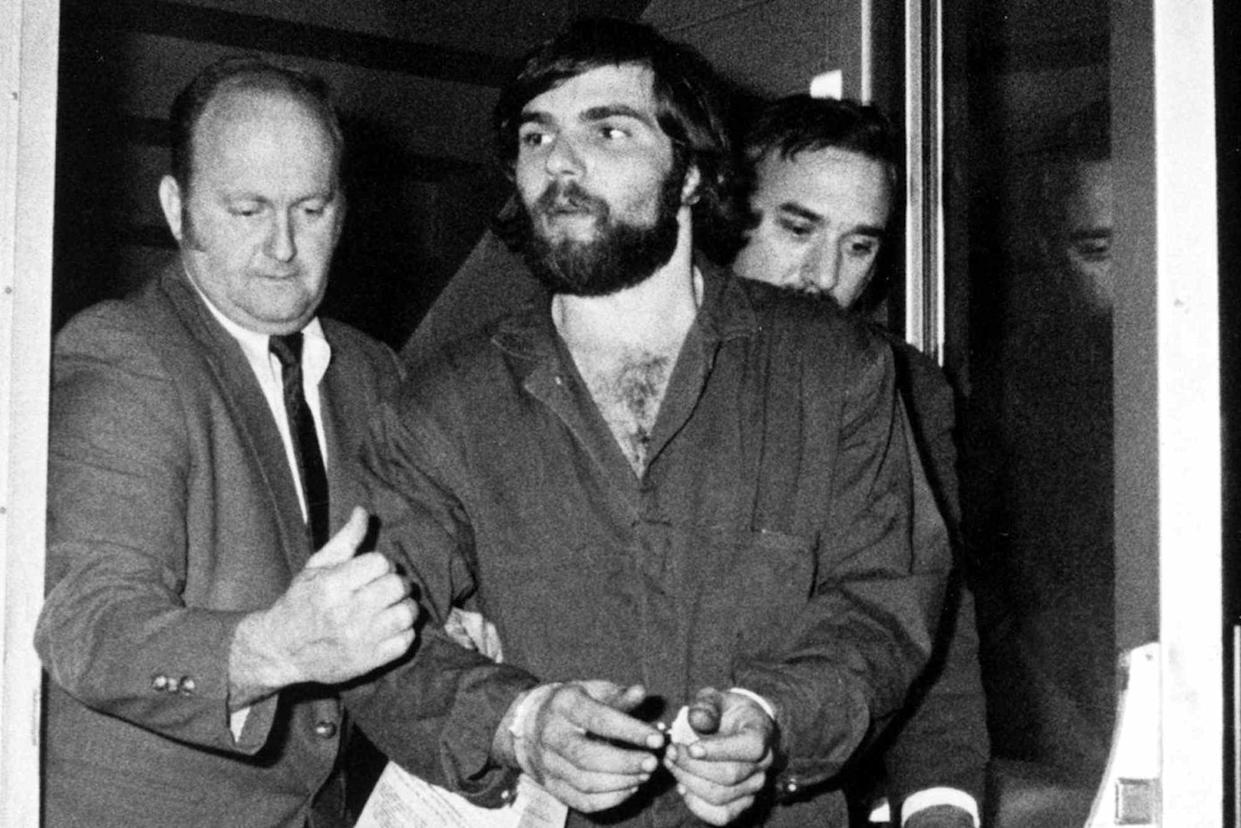
The eldest son, Ronald DeFeo Jr., was 23 years old at the time.
The family's day-to-day life before the murders is not in the record.
What is in the record is grief.
The victims' maternal grandfather publicly accused DeFeo Jr. of the murders before the trial.
He expressed deep grief over the loss of his daughter and grandchildren.
His name is not established.
The record refers to him only by his role.
He was certain of DeFeo Jr.'s guilt, and he said so publicly.
The house itself was ordinary before the violence.
It was a home where a family slept.
It was a home where six of them were shot in their beds.
The grandfather's testimony was a human anchor in a case that would later become a story about ghosts.
Not because the house was haunted.
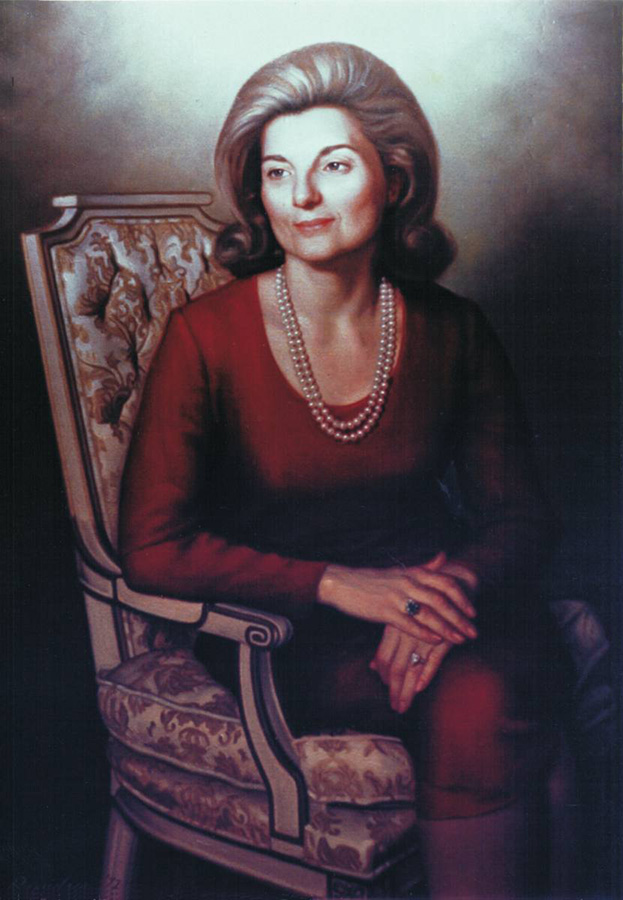
But because a man had lost his daughter and four grandchildren, and he named the man he blamed.
He named his own grandson.
That is what the record shows.
It does not show what the family ate for dinner.
It does not show what they argued about.
It does not show what the youngest siblings dreamed of.
That would require evidence, and the evidence is not there.
The grandfather's certainty, however, is there.
It is a plain statement in the record, made before the trial, before the verdict.
He said his grandson did it.
The jury would agree with him.
THE CONFESSION AND THE RIFLE
Police were called to 112 Ocean Avenue on the afternoon of November 14, after a group of men including the uncle went to the house and found the bodies.
Ronald DeFeo Jr. was at the scene when police arrived.
He initially claimed he had been away and returned to find the family shot in their beds.
He told police that a mob hitman named Louis Falini had committed the murders.
Under questioning by the lead detective, DeFeo confessed that he had killed his family himself.
He described walking through the house and shooting each family member.
The confession was detailed.
It was consistent with the physical evidence.
The rifle was a .35 caliber Marlin.
It was later recovered from a nearby river.
Nothing about the weapon suggests it was anything but what it was: a rifle that fired six times.
The exact timeline of the confession is not in the record.
The lead detective's name is not established in the source material.
Not because the detective was unimportant.
But because the record does not name him.
What the record does establish is the shift.
First denial.
Then a mob hitman.
Then the truth, as DeFeo told it.
He was at the scene when the bodies were found.
He was at the scene when police arrived.
He was the one who confessed.
The rifle came from the water.
The confession came from the man who stood in that house.
One sentence lands alone: DeFeo described walking through the house and shooting each family member.
The gun was found.
The words were spoken.
The record holds both.
THE TRIAL AND THE TWO STORIES
The trial began in 1975.
The defense attorney argued that DeFeo was insane at the time of the murders.
He claimed DeFeo heard voices.
He claimed DeFeo suffered from a personality disorder.
The prosecution, led by the district attorney, argued the opposite.

DeFeo was sane, prosecutors said.
He had killed his family for financial gain.
He had killed them to escape his father's control.
The jury heard both stories.
They rejected the insanity defense.
On December 4, 1975, DeFeo was convicted of six counts of second-degree murder.
Judge Thomas M. Stark sentenced him to six concurrent terms of 25 years to life.
The defense attorney's name is not established in the record.
What he said afterward is a later claim, not a fact established by the evidence.
He claimed that he and the subsequent owners of the house had fabricated the paranormal stories.
He said it happened over a bottle of wine.
The owners denied it.
The truth of that claim is not established.
The record holds the conviction.
It holds the sentence.
It does not hold proof of hauntings or of a wine-soaked conspiracy.
Those remain stories told after the fact.
The jury chose the prosecution's story.
The conviction stands.
AND THE STORY STILL ISN'T OVER
He remains in prison.
Parole has been denied multiple times, most recently in 2021.
From prison, he has given interviews, and the accounts shift.
At times he claimed his sister committed the murders.
At times he claimed he was insane.
The truth of those varying accounts is not established.
The record holds the confession and the conviction.
In 1977, the house at 112 Ocean Avenue was sold to George and Kathy Lutz.
They lived there for 28 days.
Then they claimed they were driven out by paranormal phenomena.
Their story became the basis for Jay Anson's 1977 book *The Amityville Horror*.
Films followed.
Those paranormal claims are not established.
The defense attorney later said he and the Lutzes fabricated the haunting stories over a bottle of wine.
The Lutzes denied it.
That claim, too, remains a story told after the fact.
The house still stands.
Its address was changed to 108 Ocean Avenue to deter tourists.
The address changed.
The house did not.
The family's surviving relatives have largely stayed out of the public eye.
One grandfather spoke publicly at the time, expressing his grief and his certainty of guilt.
He is gone now.
The house remains, and the man convicted of the murders remains in prison.
What was found in the beds that afternoon is on the record.
What was said afterward, in books and interviews, is not.
The conviction stands.
The story does not end.
Advertisement
You may also like
The duct tape on Laci Peterson's body that split a jury's theory
The duct tape was on Laci Peterson's body when she was found. That single object carried the weight of two opposing stories. The prosecution…
The open letter from the Richards that urged the government to seek the death penalty
Bill Richard and Denise Richard lost their 8-year-old son, Martin, to the bombs near the finish line. Their daughter, Jane, lost a leg in…
The flight attendant who took the note — and what she said about the man who vanished
She took the note without opening it. He told her to look at it, and she looked. The man at seat 18C called himself…
The 15-year-old who vanished after one phone call about a job — his mother's final words
December 11, 1978. A 15-year-old boy told his mother he was going to meet a contractor about a job. Her final words to him…
The 95 million who watched O.J. Simpson's Bronco chase and what they saw
The white Ford Bronco moved at 35 miles an hour, and the whole country watched. On June 17, 1994, an estimated 95 million viewers…
The pilot with 711 hours who flew Buddy Holly's plane into a snowstorm
The pilot’s name was Roger Peterson, and he was twenty-one years old. He had logged about 711 hours of total flight time, according to…