The 95 million who watched O.J. Simpson's Bronco chase and what they saw
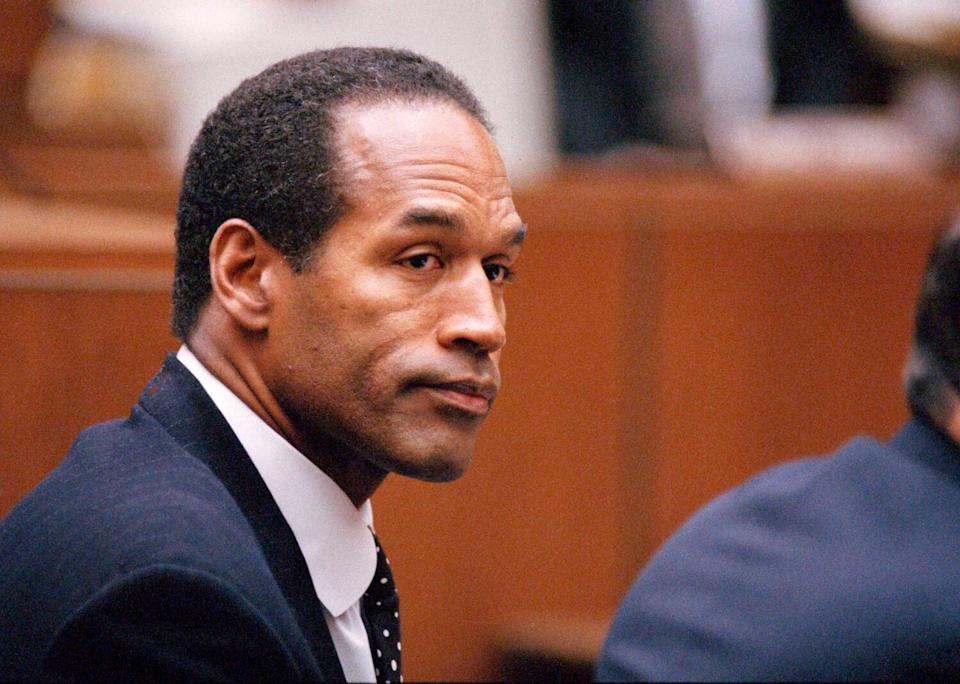
The white Ford Bronco moved at 35 miles an hour, and the whole country watched.
On June 17, 1994, an estimated 95 million viewers saw it crawl along a Los Angeles freeway, broadcast live on television.
Police helicopters hung overhead while news choppers jostled for the shot.
In the driver's seat sat Al Cowlings, Simpson's friend.
In the back seat was O.J. Simpson, a former NFL star charged with two counts of first-degree murder.
He had been due to surrender that morning.
Instead, he rode.
The chase lasted about two hours, and every second of it was a live event.
Commentators filled the airtime with speculation, because nobody knew what the Bronco contained.
What Simpson said or did inside the vehicle during the chase is not in the record.
That is not established anywhere.
The Bronco finally pulled into Simpson's Brentwood mansion, where he surrendered.
The knife that killed Nicole Brown Simpson and Ronald Goldman was never recovered.
That fact still circulates online, years later.
A theory circulating online — that the chase was a staged suicide attempt or a calculated escape — is not a fact established by the record.
It is a theory.
It is also a question the footage cannot answer.
What were we watching?
A man fleeing?
A man performing?
A man in crisis, or a man calculating?
The cameras showed a slow car and a freeway.
The rest was interpretation.
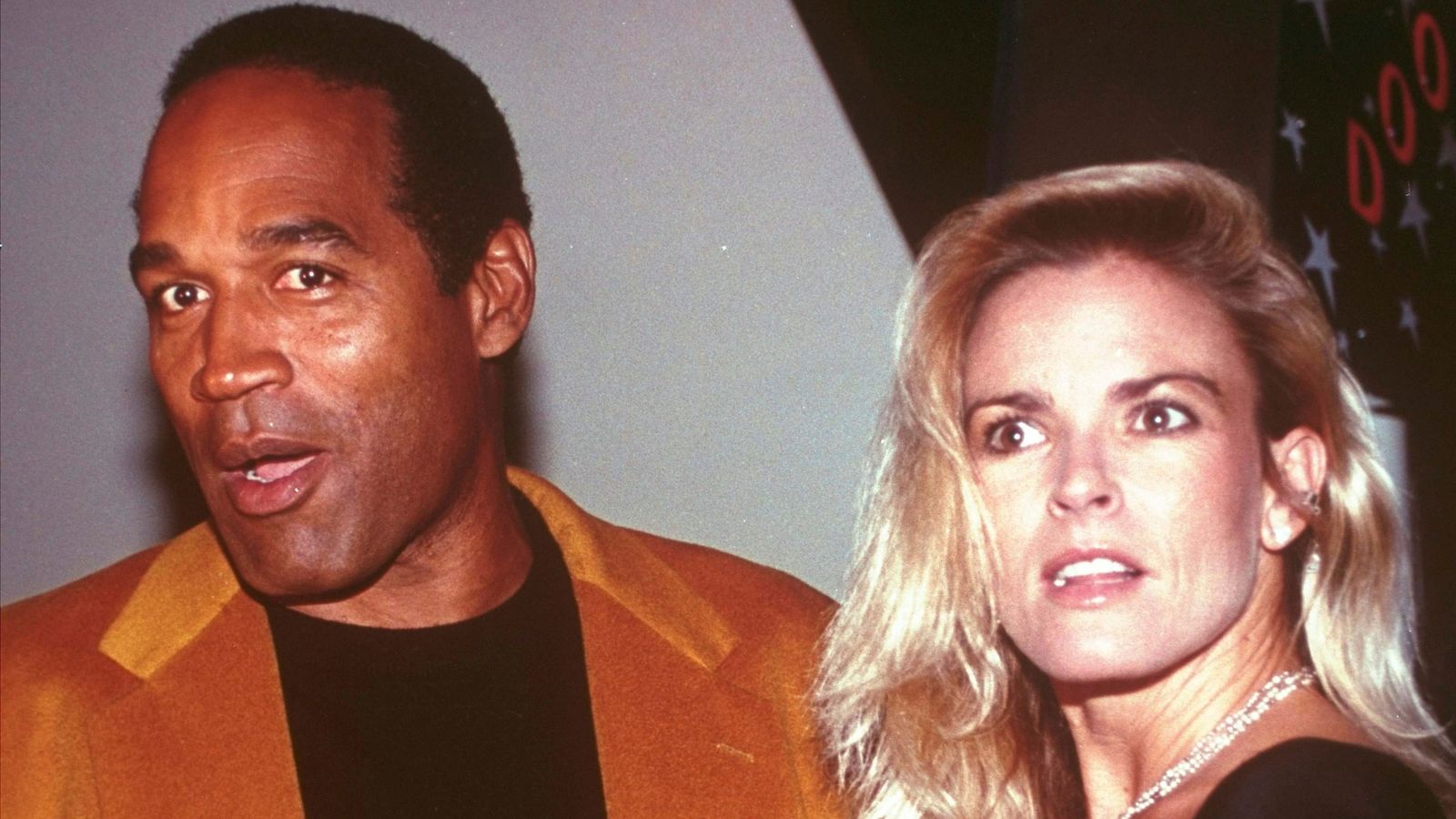
The chase was a documented media event.
What viewers thought they saw remains a matter of interpretation, not fact.
THE NIGHT ON BUNDY DRIVE
The dog was found first.
On the night of June 12, 1994, Nicole Brown Simpson and Ronald Goldman were found stabbed to death outside her condominium on Bundy Drive in the Brentwood neighborhood of Los Angeles.
Nicole's dog was found wandering the neighborhood with blood on its paws, which led a neighbor to investigate and discover the bodies around midnight.
The exact time of the murders is not in the record.
Both had been killed with a knife.
Goldman had defensive wounds.
He was a waiter at a nearby restaurant who had gone to Nicole's home to return a pair of eyeglasses her mother had left there.
An errand.
A pair of eyeglasses.
That was the errand that put him there.
The prosecution later argued Simpson killed Nicole in a jealous rage and murdered Goldman when he arrived at the scene.
That argument came later.
That argument was interpretation.
On Bundy Drive, the record holds only the bodies, the dog, the knife that was never recovered.
The neighbor found them around midnight.
The dog had blood on its paws.
The glasses were not mentioned in the discovery.
They were mentioned later, in the telling of why Goldman was there at all.
It is a fact that Goldman went to return the glasses.
It is a fact that he did not leave.
The rest was reconstruction.
The prosecution would build a motive.
The defense would build a frame.
Neither could change what the neighbor saw around midnight.
THE CHASE AND THE SURRENDER
Five days after the murders, on June 17, Simpson was charged with two counts of first-degree murder.
Instead of surrendering, Simpson fled in a white Ford Bronco driven by his friend Al Cowlings.
The chase was broadcast live on television to an estimated 95 million viewers.
It was a slow-speed chase.
Cameras followed the Bronco along the freeways of Los Angeles, and the nation watched in real time.
Viewers saw a white Bronco crawl along the highway, a parade of police cars behind it.
They saw crowds gather on overpasses, some holding signs.
They saw a man who had been a hero to millions, now running from the law.
Was he a guilty man fleeing?
Was he a broken man, unable to face what waited for him?
Was he a celebrity buying time, performing for the cameras?
That would require evidence.
The chase ended at Simpson's Brentwood mansion, where he surrendered.
What Simpson said to police upon surrender is not in the record.
The Bronco later became a cultural symbol of the case.
The defense team — dubbed the "Dream Team" — included attorneys F. Lee Bailey, Alan Dershowitz, and Robert Kardashian.
Kardashian, Simpson's longtime friend, was seen carrying Simpson's garment bag on the day of the chase.
He walked with the bag as the Bronco finally stopped.
:max_bytes(150000):strip_icc():focal(749x0:751x2)/PEOPLE_MAG_BROWN_SISTERS_nicole-tout-1067c705ba0c4ab7a7e648e3ffd95be0.jpg)
He stood with Simpson at the mansion gate.
The image was broadcast everywhere.
The nation watched a man run in real time.
The nation watched him stop.
The tension was live, shared by millions at once.
It was a media event.
It was also a man's last hour of freedom.
The Bronco rolled to a stop.
The cameras kept rolling.
The surrender was quiet, almost anticlimactic.
THE TRIAL AND THE VERDICT
The trial began on January 24, 1995.
It ran for nearly nine months, gavel-to-gavel on Court TV.
The prosecution built its case on DNA.
Blood on a glove found at Simpson's estate.
Blood on a sock in his bedroom.
The defense answered with contamination.
And with Mark Fuhrman, the lead detective.
Tapes surfaced of Fuhrman using racial slurs.
His credibility was gone.
He invoked the Fifth Amendment on the stand.
Then came the glove.
Simpson struggled to pull it onto his hand in court.
Johnnie Cochran told the jury, "If it doesn't fit, you must acquit."
The courtroom was silent.
The cameras held the shot.
On October 3, 1995, the jury deliberated.
Less than four hours.
They returned not guilty on both counts.
An estimated 100 million people watched the verdict live.
The country split along a line.
Polls showed a majority of Black Americans believed Simpson was innocent.
A majority of white Americans believed he was guilty.
The same evidence.
The same trial.
Two different verdicts in the public mind.
Why the jury acquitted is not in the record.
Only the verdict is documented.
The reasoning stayed in the deliberation room.
The cameras showed the reaction instead.
Cheers in some living rooms.
Silence in others.
The case was never about the evidence alone.
It was about what people saw in it.
A broken system.
A framed man.

A killer who walked.
The jury's answer was one thing.
The nation's answer was another.
AND THE STORY STILL ISN'T OVER
The civil jury in Santa Monica answered in 1997.
It found Simpson liable for the wrongful deaths of Nicole Brown Simpson and Ronald Goldman.
It ordered him to pay $33.5 million in damages.
Simpson was never criminally convicted of the murders.
The criminal verdict stood.
The civil judgment stood.
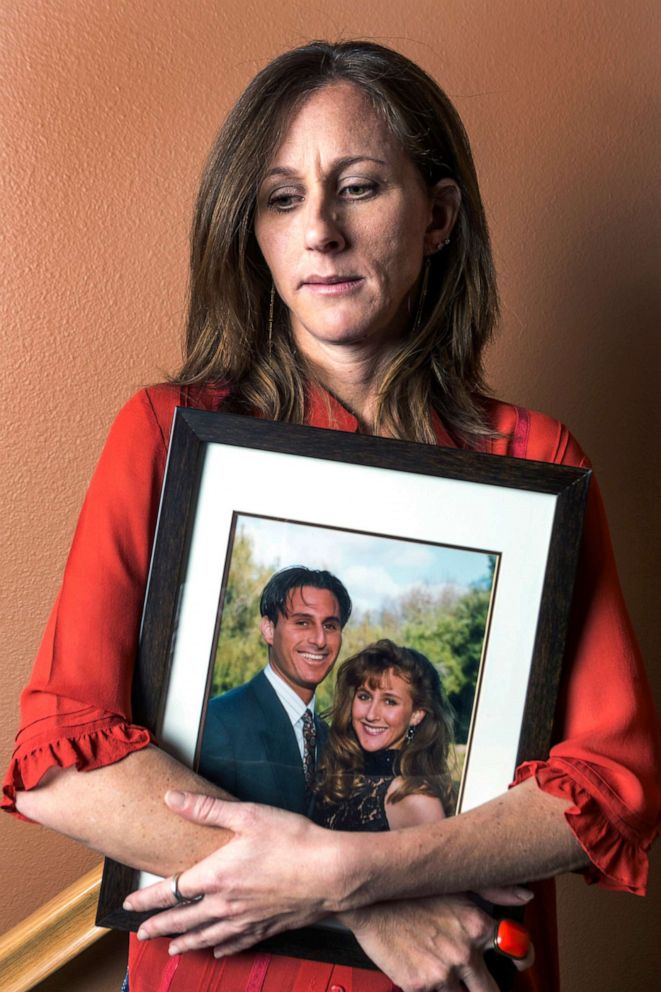
Fred Goldman said he has received only a small portion of the awarded damages.
The Goldman family kept pursuing the money.
Simpson moved to Florida.
In 2008, he was convicted of armed robbery and kidnapping in Las Vegas.
He was sentenced to 33 years.
He was paroled in 2017 and released on October 1, 2017.
Simpson died of cancer on April 10, 2024, at age 76.
The knife was never recovered.
The Bronco remains a cultural symbol.
Whether Simpson ever confessed or revealed the knife's location is not in the record.
It is not established.
It remains a question.
The judgment remains partly unpaid.
The case remains paused, not closed.
The verdict was one thing.
The liability was another.
The debt is another still.
Advertisement
You may also like
The duct tape on Laci Peterson's body that split a jury's theory
The duct tape was on Laci Peterson's body when she was found. That single object carried the weight of two opposing stories. The prosecution…
The open letter from the Richards that urged the government to seek the death penalty
Bill Richard and Denise Richard lost their 8-year-old son, Martin, to the bombs near the finish line. Their daughter, Jane, lost a leg in…
The flight attendant who took the note — and what she said about the man who vanished
She took the note without opening it. He told her to look at it, and she looked. The man at seat 18C called himself…
The uncle who found six shot in their beds — and the confession that followed
The door at 112 Ocean Avenue was an ordinary Dutch Colonial, the kind of house a family might call home for a decade. On…
The 15-year-old who vanished after one phone call about a job — his mother's final words
December 11, 1978. A 15-year-old boy told his mother he was going to meet a contractor about a job. Her final words to him…
The pilot with 711 hours who flew Buddy Holly's plane into a snowstorm
The pilot’s name was Roger Peterson, and he was twenty-one years old. He had logged about 711 hours of total flight time, according to…