The 1965 confession that never reached a trial — and the one name police could not clear
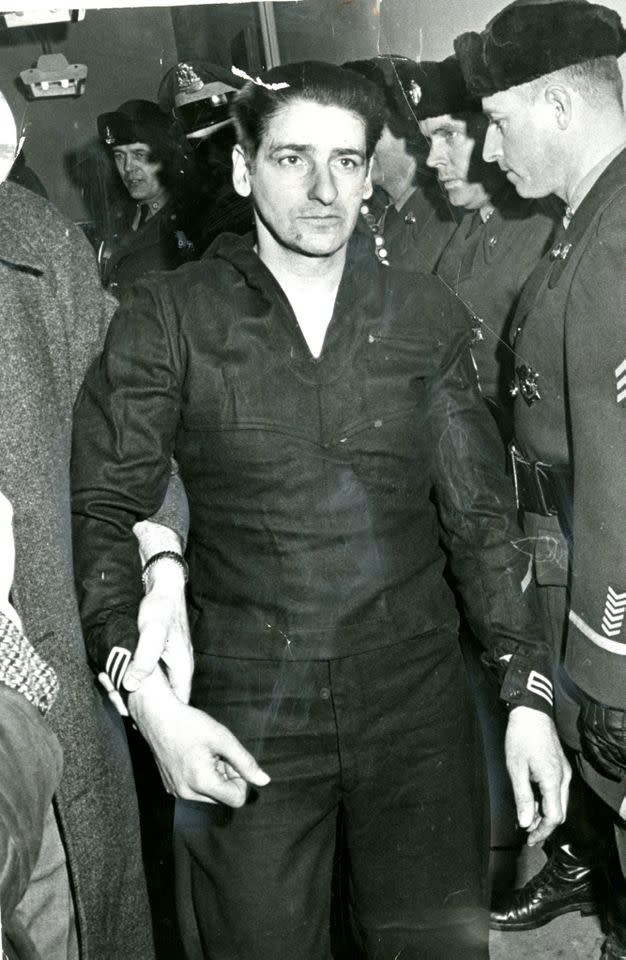
He confessed in 1965.
He was already in custody, held for other crimes, when he gave a detailed account of the Boston Strangler murders.
His own attorney, F. Lee Bailey, arranged it, bringing him to the authorities to speak.
The man was Albert DeSalvo.
He described the killings in detail, the apartments, the ligatures, the women.
And he was never tried for them.
No forensic evidence tied him to the crime scenes.
The confession was never tested in court.
Not because the state declined to listen. But because there was nothing else to hold him with.
The reliability of that confession is not established by the record.
It was arranged, it was detailed, it was heard.
It was not proven.
So the question hangs over the whole case: how does a man confess to thirteen murders and never face a trial for one?
The answer is in the evidence that was never there.
The answer is in the charges that were never filed.
He would be tried in 1967 for other crimes — armed robbery and sexual assault — and convicted.
The stranglings stayed off the docket.
Prosecutors said they lacked corroborating evidence.
The confession sat, detailed and untested, in the gap between what a man said and what the law could prove.
That is where the story begins.
THE FIRST REPORTS
The first victim was found in her Commonwealth Avenue apartment on June 14, 1962.
She was strangled with the cord of her own housecoat.
The press called it a single pattern: women alone, apartments, ligatures made from their own clothing.
Between June 14, 1962, and January 4, 1964, thirteen women in the Boston area were murdered in their apartments.
Many were sexually assaulted and strangled with their own clothing or stockings.
The victims ranged in age from 19 to 85.
The final victim was found in her Beacon Hill apartment on January 4, 1964.
The press coined the term "Boston Strangler" to attribute the crimes to a single offender.
The name stuck.
It suggested one man, one method, one escalating arc.
That was a theory.
Whether all thirteen murders were committed by one person is not established.
The record shows a sequence of deaths.
It does not show a single hand.
Each apartment was a closed room.
Each victim was found where she lived.
The ages varied.
The neighborhoods varied.
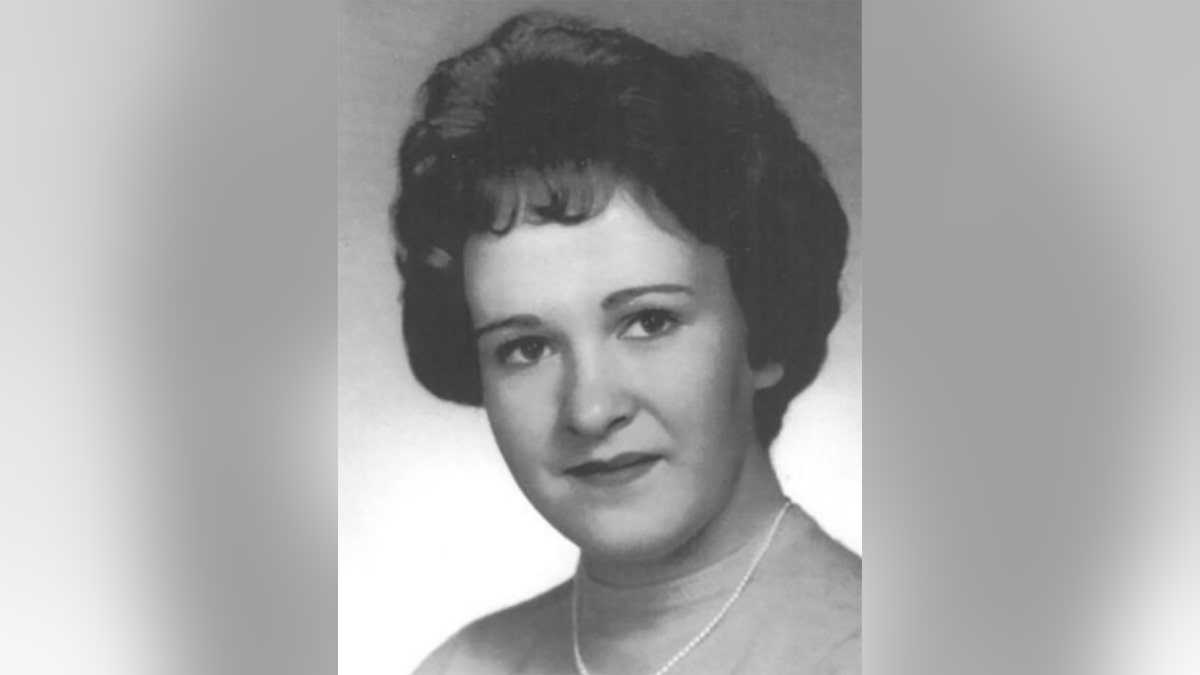
The weapon was always personal: a stocking, a belt, a scarf already in the room.
The pattern was the only link.
It was a pattern written by reporters before it was tested by investigators.
The first report arrived in June.
The last came in January.
Between them, the city counted eleven more.
The term "Boston Strangler" did the work of a verdict.
It named an offender no one had arrested.
It gave the public one face for a fear that had many doors.
THE TASK FORCE
Attorney General Edward W. Brooke created the special task force in 1964.
It was a formal answer to a fear that had no name on a file.
Police compiled what the scenes left behind: ligature marks, signs of forced entry, the ordinary objects of a home turned into weapons.
They had measurements, photographs, and the pattern of a stranger's hands.
No physical evidence linked a single suspect.
That is not a gap in the record; it is the record.
George Nassar was questioned as a suspect.
He was cleared, and he was never charged.
The task force held his name for a time, then let it go.
It held no other name for long.
The work stalled.
It stalled not because the detectives stopped looking, but because looking produced nothing that could stand before a jury.
Ligature marks prove a strangling; they do not prove a strangler.
Forced entry proves a door was opened; it does not open a case.
The task force had evidence of a crime and no evidence of a criminal.
That would require a match, a witness, a thread of something physical.
They had none of it.
So the investigation continued to turn over the same rooms, the same reports, the same unanswered question.
It was an investigation with everything except a suspect.
And the public kept the one name the press had given them, because no other name ever arrived.
THE TWO STORIES
The prosecution’s story began with a confession.
Albert DeSalvo, already in custody for other crimes, described the stranglings in detail.
His own attorney, F. Lee Bailey, arranged the confession and brought him to authorities.
That version pointed to one name: DeSalvo’s.
The defense’s story began with a question.
Was the confession reliable?
Was it corroborated by any physical evidence?
Was it ever tested in court?
The answer to each was no.
Prosecutors never brought strangling charges against DeSalvo.
They said they lacked corroborating evidence.
The confession alone was not enough.
So DeSalvo was never tried for the stranglings.
Instead, in 1967, he stood trial for unrelated armed robbery and sexual assault.
He was convicted and sentenced to life.
No verdict was ever rendered on the strangler charges.
Two narratives competed, and neither was fully proven.
The confession pointed to him.
The absence of evidence left the door open.
In 2013, DNA from the final victim’s crime scene was tested.
It matched DeSalvo.
Some experts and family members disputed the finding.
The match is not established as conclusive.
The other victims’ cases remain officially unsolved.
The record holds a confession without a trial.
It holds a conviction for other crimes.
It does not hold a conviction for the stranglings.
That would require evidence a jury could weigh.
That evidence never arrived.
AND THE STORY STILL ISN'T OVER
He was found in his cell at Walpole State Prison in 1973, stabbed by an unknown assailant.
The man who confessed to the stranglings was dead.
He was never convicted of them.
No jury ever weighed the confession, and no verdict was ever rendered on the strangler charges.
The other victims' cases remain officially unsolved.
Edward W. Brooke, the attorney general who oversaw the task force, later became a U.S. Senator.
F. Lee Bailey, the attorney who arranged the confession, continued a high-profile legal career.
The case remains one of the most debated in American criminal history.
Ongoing questions persist about whether DeSalvo acted alone or whether some murders were committed by others.
Whether he acted alone or with others is not established.
That would require evidence a jury could weigh.
That evidence never arrived.
In 2013, DNA evidence from the final victim's crime scene was tested and matched DeSalvo, providing posthumous confirmation for that murder, though some experts and family members disputed the finding.
The other cases still carry no official answer.
The confession was detailed.
The confession was never tested.
The record holds a name, a death, and a list of crimes without a single proven offender.
It is a case that refuses to close.
It is also a case that never opened in court.
Advertisement
You may also like
The 2008 911 call that set off a search for a toddler who was never found alive
The 911 call came on July 15, 2008, from a house in Orlando, Florida. Cindy Anthony was on the line, reporting her granddaughter missing.…
The Atlanta mothers who demanded answers as 28 children vanished
Camille Bell's son was nine years old when he disappeared. Yusuf Bell left the house to run an errand and never came back. Faye…
The 8:44 p.m. video that shattered Alex Murdaugh's alibi
The video on Paul Murdaugh's phone is dated 8:44 p.m., June 7, 2021. SLED agents analyzed the clip during the trial and identified the…
The ex-wife's custody fight that prosecutors linked to the D.C. sniper attacks
October 2, 2002. A man was shot outside a grocery store in Wheaton, Maryland. That was the first. Between that evening and October 22,…
The fingerprint on a door, the eyeglasses left behind, and the witness who tied Manson to the murders
The word was on the front door, written in blood. PIG. Five people were dead inside the house at 10050 Cielo Drive in Benedict…
The 911 call that sent searchers to Wyoming — and the notebook that changed everything
The notebook sat in the dirt beside his remains. October 20, 2021, in the Myakkahatchee Creek Environmental Park in Florida. The remains belonged to…