The 8:44 p.m. video that shattered Alex Murdaugh's alibi
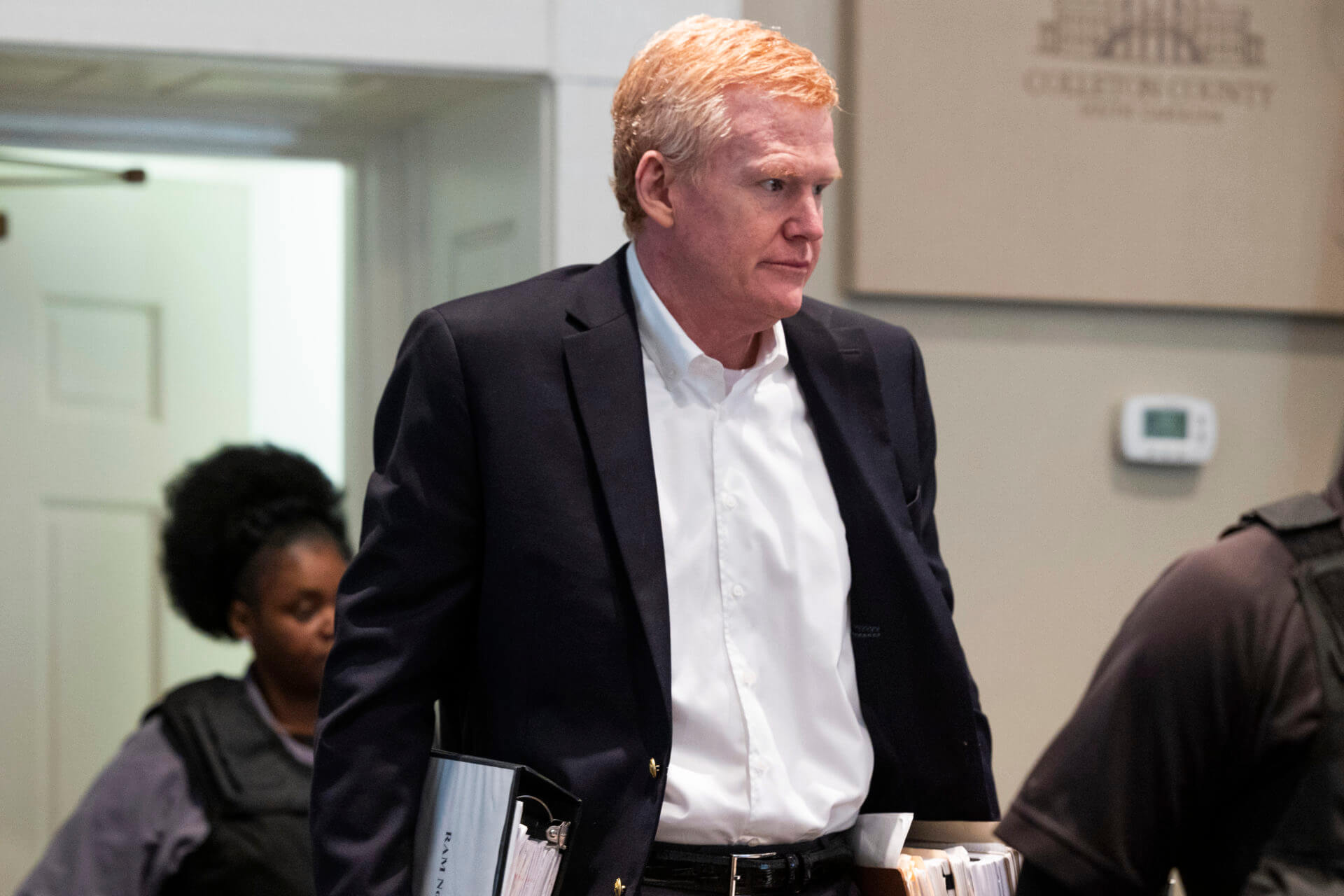
The video on Paul Murdaugh's phone is dated 8:44 p.m., June 7, 2021.
SLED agents analyzed the clip during the trial and identified the voices as Alex Murdaugh's and Paul Murdaugh's.
The timestamp placed Alex at the kennels on the family's Moselle property.
Minutes later, the killings occurred.
Alex had told investigators he was napping at the main house at that time, not at the kennels.
The video contradicted that account.
It became a pivotal piece of digital evidence in the prosecution's case.
What exactly the video shows beyond the voices is not detailed in the record.
The source notes only that the audio captured the two men speaking.
That is the documented fact.
Everything else about that evening—what was said, what was seen, what happened next—remains a matter of testimony and interpretation.
A single timestamp, and a man's story begins to shift.
Not because the video is dramatic.
But because it is precise.
8:44 p.m.
The kennels, not the house.
The weight of one recorded moment, carrying the entire case forward.
THE 911 CALL
10:07 p.m.
That is when the 911 call went out from Moselle, the family's hunting property in Colleton County, South Carolina.
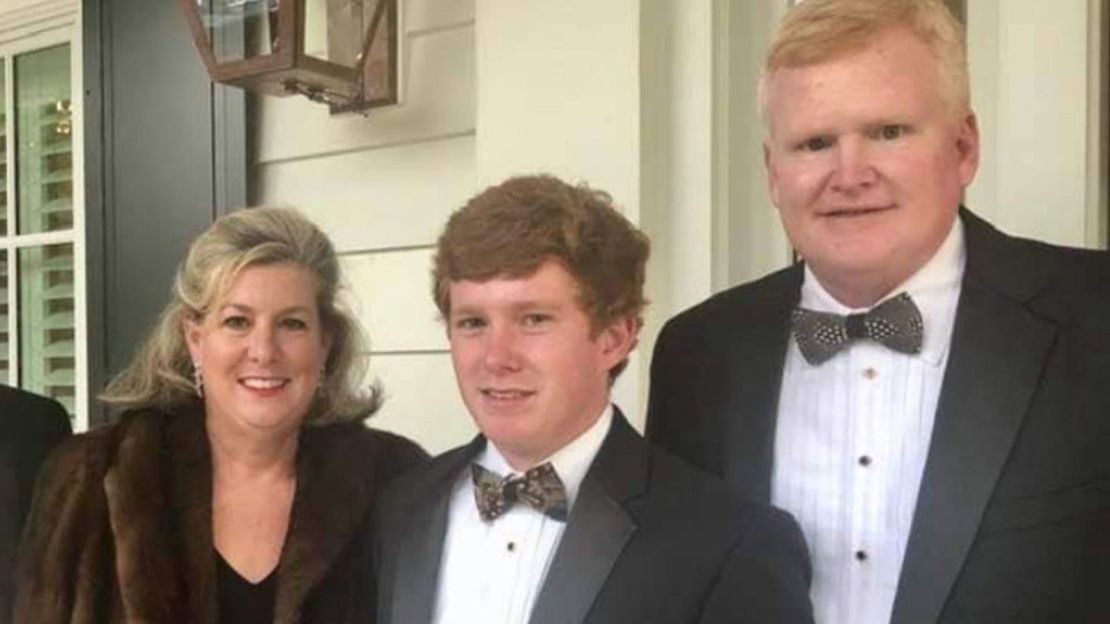
Maggie Murdaugh, 52, was dead. Her 22-year-old son Paul was dead beside her.
She had been shot multiple times with a rifle. He had been shot twice with a shotgun.
The caller was Alex Murdaugh, Paul's father and Maggie's husband.
He told the dispatcher he had found the bodies after returning from visiting his mother.
The exact content of that call is not quoted in the record.
What the record shows is a man reporting what he said he had just walked into.
The scene itself told a different story than his words would later tell.
Two people, killed with weapons owned by the family, on the family's own property.
No forced entry. No sign of a struggle. No obvious intruder.
For the first weeks, the double homicide looked like a cold case.
It looked motiveless.
A prominent legal dynasty, a wife and son gunned down at home, and no one to point at.
Investigators initially treated it as a possible targeted killing.
No suspects were named.
That would change.
But on the night of June 7, 2021, all anyone had was the 911 call and two bodies.
And the voice of a man claiming to be a grieving father.
THE FINANCIAL FRAUD
The cracks appeared within months.
Investigators with the South Carolina Law Enforcement Division uncovered a pattern of financial fraud by Alex Murdaugh, who had been stealing from his law firm and clients, according to SLED investigations and subsequent court records.
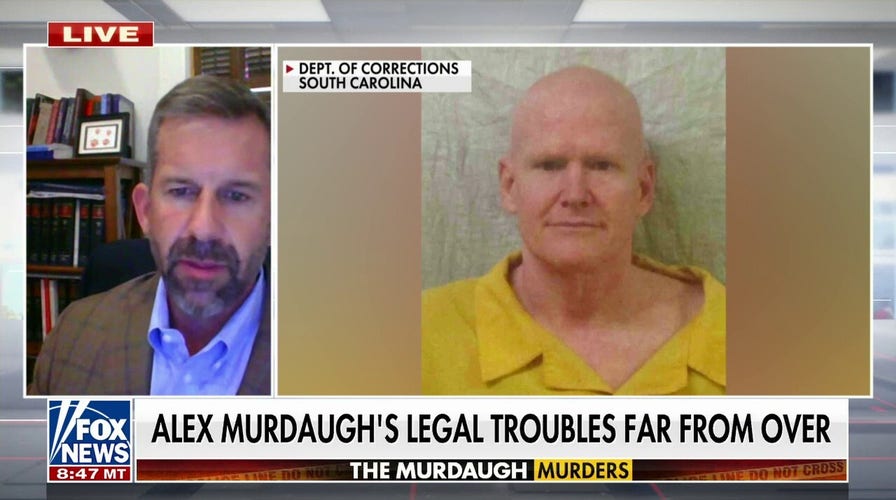
The exact amounts were never specified in the source.
In September 2021, Alex was arrested on charges of insurance fraud and conspiracy after allegedly arranging for a man to shoot him in a scheme to secure a death benefit for his surviving son.
That incident, which Alex admitted to, destroyed his credibility.
The grieving father had orchestrated his own shooting.
He had lied to police about it.
He had lied to his family about it.
He had lied to the public about it.
The murder investigation turned on digital evidence, not confessions.
SLED agents analyzed cell phone data from Alex's phone, which placed him at the kennels near the time of the murders.
That contradicted his claim that he was napping at the house.
A video on Paul's phone, recorded at 8:44 p.m., captured voices identified as Alex's and Paul's.
Ballistics matched the shotgun used on Paul to a weapon owned by Alex.
The rifle used on Maggie was linked to the family's collection.
How does a man who steals from his own firm explain two dead family members?
How does a man who stages his own shooting explain a timeline that puts him at the scene?
How does a grieving father explain the digital record?
The record does not establish his motive.
The record establishes where he was.
That would be enough for prosecutors.
It would be enough for a jury.

Not yet, though.
In the summer of 2021, Alex Murdaugh was still a free man, still a lawyer, still a father telling anyone who would listen that he had found his wife and son dead.
THE TRIAL AND THE VERDICT
The indictment came in July 2022.
Alex Murdaugh was charged with two counts of murder and two counts of possession of a weapon during a violent crime.
The trial opened in January 2023 in Walterboro, South Carolina.
Judge Clifton Newman presided.
Prosecutors, led by Creighton Waters, built their case over 75 witnesses.
Forensic experts testified.
The cell phone evidence was placed before the jury.
The 8:44 p.m. video was played in court.
The defense answered.
Dick Harpootlian and Jim Griffin argued that Alex had no motive.
They called the state's case speculation.
They pointed to a grieving father, not a killer.
Then Alex took the stand.
He denied involvement.
He said he had lied about his whereabouts out of paranoia, a symptom of his opioid addiction.
He said he was not at the kennels.
The video said otherwise.

The jury heard both versions.
On March 2, 2023, they returned.
Guilty on all four counts.
Two counts of murder.
Two counts of weapon possession.
Judge Newman sentenced him to two consecutive life sentences.
No possibility of parole.
The courtroom was silent.
The verdict was final.
What the jury discussed behind closed doors is not in the record.
The deliberation process remains undocumented.
It is enough to say they took their time.
It is enough to say they decided.
Alex Murdaugh left the courtroom a convicted man.
AND THE STORY STILL ISN'T OVER
He is at the South Carolina Department of Corrections, serving two consecutive life sentences without parole.
His appeals have been unsuccessful to date.
What happens next, beyond that, is not specified in the record.
In a separate proceeding, he pleaded guilty to 22 federal charges related to financial fraud and money laundering.
That plea brought an additional 40-year sentence.
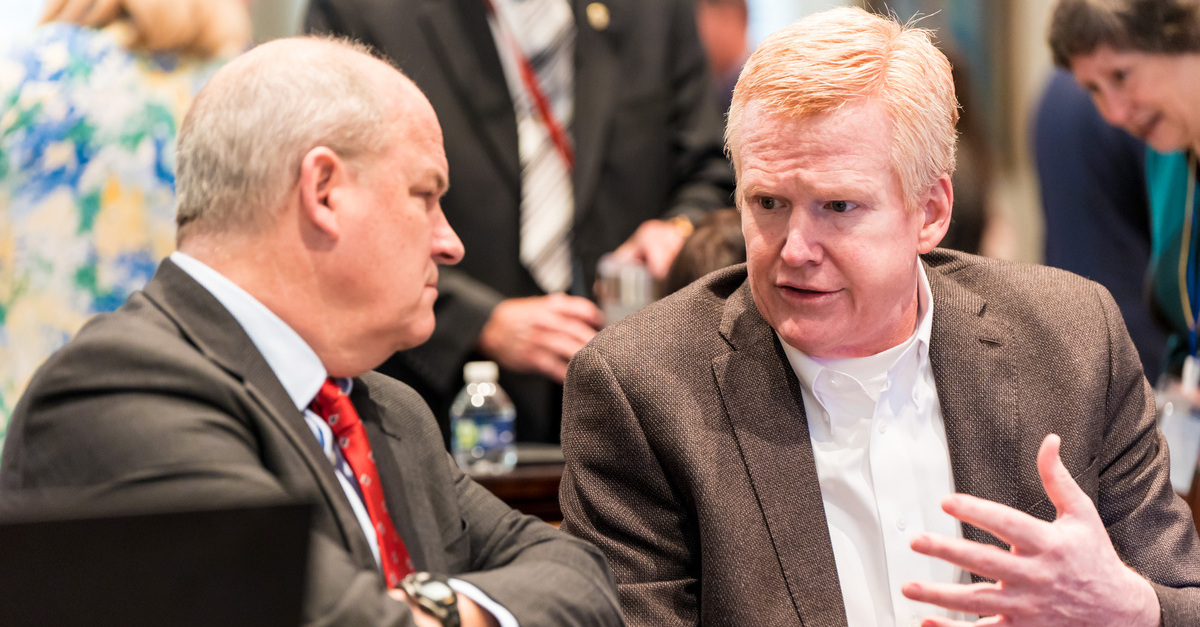
His surviving son, Buster, has maintained his father's innocence in the murders.
Buster has spoken publicly about the loss of his mother and his brother.
The family's legal dynasty has collapsed.
The law firm PMPED has settled claims with victims of the fraud.
The boating death of Mallory Beach remains a separate civil matter, with settlements reached against the family.
It is a case that keeps generating chapters.
It is a case that keeps generating documentaries and books.
No journalist has been credibly accused of altering the record.
The verdict was one chapter, not the last.
The fraud pleas were another.
The settlements are another still.
The appeals are the chapter still being written.
What remains is the question of what a jury decided and what a family lost.
What remains is the question of what a name means after the verdict.
What remains is the question of what the record shows.
That last one has an answer.
The record shows a conviction on all four counts.
The record shows two life sentences.
The record shows a separate 40-year sentence for the financial crimes.
That is what is documented.
The motives, the theories, the speculation about why — those remain interpretations.
The aftermath, however, is a matter of court records and public statements.
It is ongoing.
Advertisement
You may also like
The $200,000 in $20 bills that vanished with a hijacker's leap into the night
The flight attendant took the note. She unfolded it. It said he had a bomb in his briefcase. The man called himself Dan Cooper,…
The 10:30 p.m. intruder, a pillowcase, and the two friends who freed themselves — how Polly Klaas's case broke open
The door was unlocked. It was October 1, 1993, around 10:30 p.m., and an intruder walked into a home in Petaluma, California, a small…
Six shots in the dark: the Amityville confession that came within hours
The neighbor saw a young man burst from the house first. The house was 112 Ocean Avenue in Amityville, New York. The young man…
The December 1978 search warrant that revealed a foul odor and stains under Gacy's home
He was 15. Robert Piest told his mother he was going to meet a contractor about a job. That was on December 11, 1978.…

Pilot Roger Peterson was not certified for instrument flight. So why did he take off into freezing drizzle?
Freezing drizzle was falling over Mason City Municipal Airport on the night of February 3, 1959. Visibility was low, and the sky was dark.…
The bloody glove that didn't fit: inside the LAPD mishandling that shaped the O.J. Simpson trial
He pulled. He tugged. He grimaced. On October 3, 1995, O.J. Simpson stood before the jury and struggled to pull a leather glove over…