Six shots in the dark: the Amityville confession that came within hours
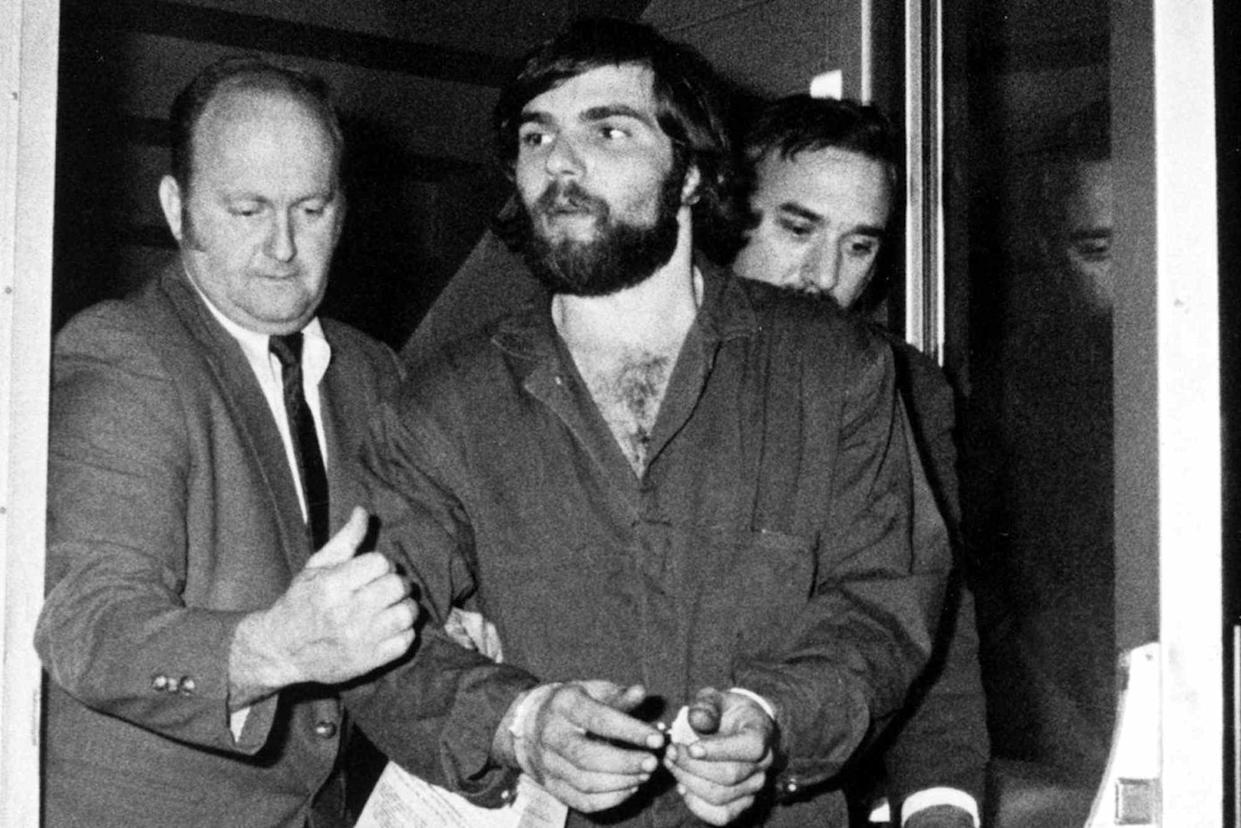
The neighbor saw a young man burst from the house first.
The house was 112 Ocean Avenue in Amityville, New York.
The young man was Ronald DeFeo Jr., then 23.
He said his family had been shot.
The neighbor called police on November 13, 1974.
Inside, officers found six members of the DeFeo family dead in their beds.
The father, the mother, and four children.
All had been shot with a .35-caliber Marlin rifle.
The rifle was still in the house.
DeFeo Jr. said he had been away and returned to find the bodies.
He was a witness, police thought at first.
The record does not specify which neighbor placed the call.
Only that a neighbor called.
The beds held the bodies in the positions they had slept.
Six shots, one family.
Who fired them?
That was the first question.
It was not the last.
THE STORY UNRAVELS
They treated him as a witness.
That was the first mistake, or the first convenience.
He said he had been out all night.
He said he came home and found the bodies.
The officers heard the story and heard the holes in it.
He had not called for help.
He had run to a neighbor's house, not to a phone.
The account shifted under the weight of a few questions.
Within hours, he confessed.
He described walking through the house with the Marlin .35-caliber rifle.
He described shooting each family member in turn.
The rifle was still in the house.
Ballistics matched it to the bullets recovered from the victims.
The physical evidence did not move.
No other suspect was seriously considered.
No one else was ever charged.
He was arrested the same day.
The exact time of the confession is not in the record.
Only that it came within hours.
That was the speed of the collapse.
A story built to hold for a night, and it did not hold for a day.
THE VOICES AND THE VERDICT
The first story he told police did not survive the night.
He said he had been out, that he came home to find them dead.
Then he said he did it.
Then he said the voices made him do it.
He told investigators he heard voices urging him to kill, a claim he would carry into the courtroom.
He was indicted on six counts of second-degree murder.
The trial became a contest over one question: was he sick, or was he lying?
His defense argued insanity — paranoid schizophrenia, voices commanding him.
The prosecution argued he was faking mental illness to dodge responsibility.
The defense attorney and the prosecutor are not named in the record of this case; they appear only by role.
The jury heard both versions of the same man.
They rejected the insanity defense.
In November 1975, he was convicted on all six counts.
The sentence was six consecutive terms of 25 years to life.
An appeal was rejected.
The courtroom clash ended in a verdict, but it did not end the story.
One interpretation won.
The other waited for a book, a film, and a house that would not stay quiet.
THE HOUSE THAT HAUNTS
The book came three years later.
Jay Anson's *The Amityville Horror* claimed the house at 112 Ocean Avenue was haunted.
It said the DeFeo family's murders were only the beginning.
The book sold millions.
A film followed, and then more films, and the house became a landmark of the supernatural.
The record does not support that.
The documented record is a confession made within hours.
It is a ballistics match on a Marlin .35-caliber rifle.
It is a jury rejecting an insanity defense and a conviction on six counts of second-degree murder.
The haunting is a later claim.
The source notes those supernatural claims were disputed and widely discredited.
What the record establishes: a man confessed, a rifle matched, a verdict came.
What it does not establish: any supernatural activity at the house.
Not because the house was ordinary.
But because the evidence stops where the crime ends.
The house itself was sold and renovated.
Its address was changed to 108 Ocean Avenue to deter curiosity seekers.
The numbers on the door did not change what happened inside.

They only changed who came looking.
Ronald DeFeo Jr. remains in prison.
He has been denied parole multiple times.
Most recently in 2021.
The house still stands.
The legend still sells.
The confession still holds.
AND THE STORY STILL ISN'T OVER
Ronald DeFeo Jr. remains in prison.
He is serving six consecutive terms of 25 years to life at a New York state correctional facility.
He has been denied parole multiple times.
Most recently, in 2021, he was denied again.
A future parole hearing date is not in the record; only that the denial came in 2021.
The house still stands at 108 Ocean Avenue.
The address was changed from 112 Ocean Avenue to deter curiosity seekers.
It did not deter them.
The house still draws the curious, the believers, the ghost hunters.
The supernatural claims have been widely debunked.
The record does not support them.
The case remains one of the most infamous mass murders in New York history.
The confession holds.
The conviction holds.
The sentence holds.
He was convicted in November 1975, and the appeal was rejected.
The jury rejected the insanity defense.
The voices he claimed to hear did not persuade them.
The prosecutor argued he was faking.
The defense argued paranoid schizophrenia.
The record shows the verdict, not the truth of either argument.
Ronald DeFeo Jr. stays where the state put him.
The house stays where it was built.
The legend stays where the book put it.
It is a story that refuses to close.
It is also a story whose ending is already written.
Six lives ended in the dark.
One man remains in the dark.
The house is marked.
The man is marked.
The record is what it is.
That is all the record establishes.
Advertisement
You may also like
A boat bought days before a missing wife — the timeline detectives couldn't shake
He reported her missing on December 24, 2002. Laci Peterson was eight months pregnant, and Scott Peterson told police she had vanished from their…
The rear axle that cracked the Oklahoma City bombing case open
The rear axle sat in a crater of broken glass and concrete, blocks from where the Murrah Building's north face used to be. At…

The fishing alibi, the affair, and the phone calls that unraveled Scott Peterson's story
December 24, 2002. Laci Peterson, 27 and eight months pregnant, was reported missing from her Modesto, California home. Her husband, Scott Peterson, told police…
The $50,000 ransom note that led to a gas station and a carpenter's arrest
In September 1934, a gold certificate from the $50,000 ransom surfaced at a gas station. The attendant wrote down the license plate of the…
The night Sharon Tate's housekeeper found the phone line cut — before the bodies were discovered
She found it before anyone knew to look. On the night of August 9, 1969, the housekeeper at 10050 Cielo Drive discovered the phone…
The Christmas Eve disappearance that left a family waiting 111 days for answers
The Christmas Eve call came at 5:45 p.m. Scott Peterson told police his wife was missing. Laci Peterson, 27 and eight months pregnant, had…