The $50,000 ransom note that led to a gas station and a carpenter's arrest
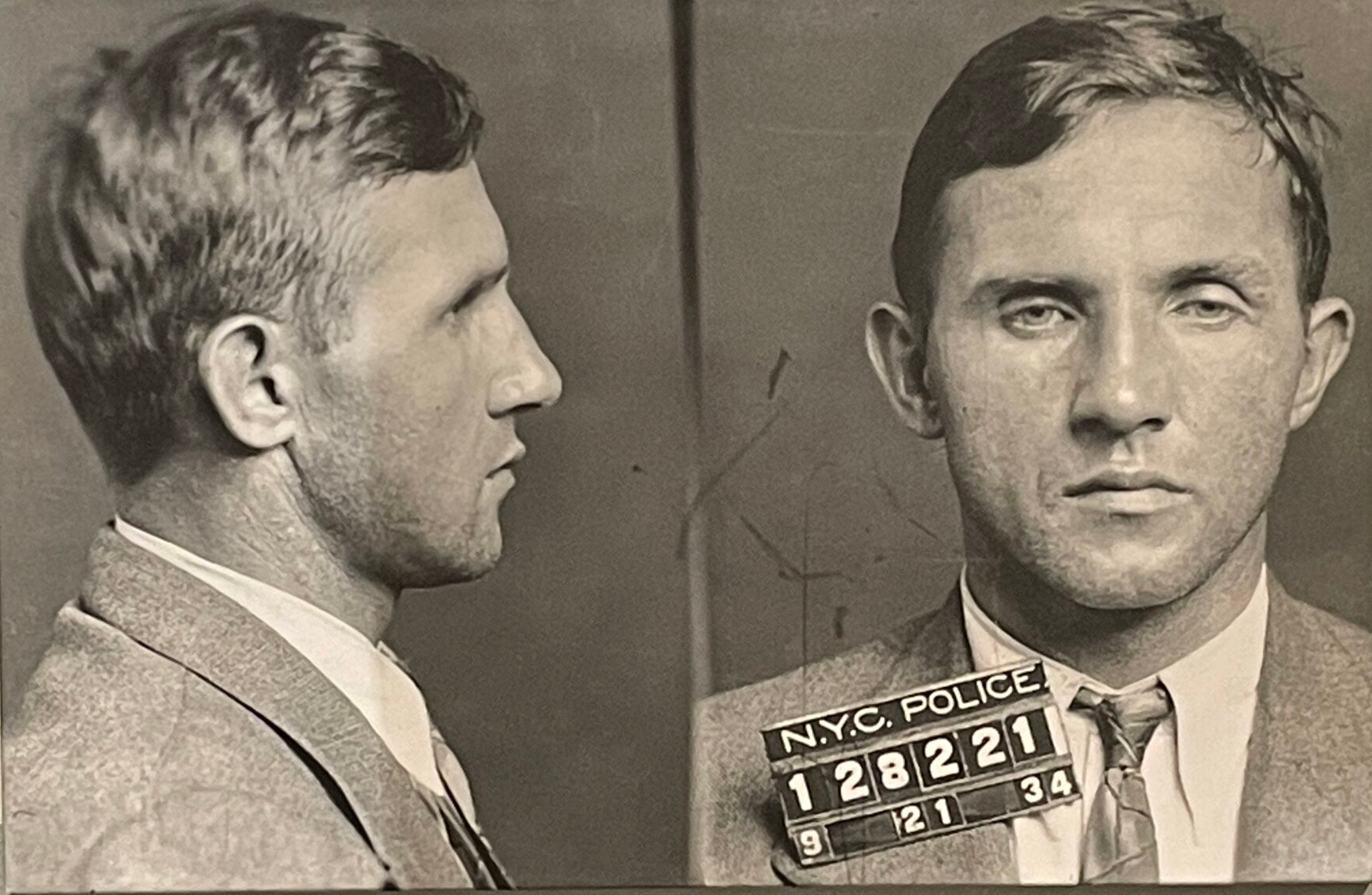
In September 1934, a gold certificate from the $50,000 ransom surfaced at a gas station.
The attendant wrote down the license plate of the car that paid with it.
That single plate led police to Bruno Richard Hauptmann, a German-born carpenter.
In his garage, investigators found over $14,000 of the ransom money.
Two years after the child was taken, a scribbled plate number cracked the case.
Whether the attendant recognized Hauptmann or the car is not in the record.
The investigation record does not say.
It says the money was traced.
It says the plate was written.
It says the plate led to a man.
How did a gas station attendant's note bring down a carpenter?
That would require evidence.
The record shows the note was the thread.
The record shows the garage held the cash.
The record shows the man was arrested.
It does not show what the attendant saw that day.
He wrote a plate number, and the case moved.
That is the documented fact.
The rest, for now, is what the trial would decide.
THE RANSOM NOTE AND THE CEMETERY EXCHANGE
The Lindberghs' butler testified that he found the ransom note on the nursery windowsill.
It demanded $50,000.
Dr. John F. Condon published a newspaper offer to act as go-between, and the investigation record shows he took the offer seriously.
On April 2, 1932, Condon delivered $50,000 in gold certificates to a man in a Bronx cemetery.
Who that man was is not established in the record.
The money was paid.
The child was not returned.
On May 12, 1932, the case record states, Charles Lindbergh Jr.'s body was found in a shallow grave about four and a half miles from the house.
The cause of death was a blow to the head.
Likely from the homemade wooden ladder.
Not because the ladder was found at the grave. But because the case record says so.
The ransom was paid on April 2.
The body was found on May 12.
The money was gone, and the child was dead.

A gold certificate would surface later, at a gas station, with a license plate written down.
That is the documented fact.
The rest, for now, is what the trial would decide.
THE TRIAL: MONEY, WOOD, AND HANDWRITING
The trial began on January 2, 1935, in Flemington, New Jersey.
It lasted five weeks.
Hauptmann was charged with first-degree murder under a statute that made killing during a burglary or kidnapping a capital offense.
The prosecution was led by Attorney General David T. Wilentz.
He presented over 160 witnesses.
A wood expert testified that the ladder's rail wood matched floorboards in Hauptmann's attic.
Handwriting experts linked the ransom notes to Hauptmann's handwriting.
The defense attorney, Edward J. Reilly, attacked the credibility of the state's witnesses.
He suggested the child had died accidentally.
He suggested others were involved.
The prosecution's case was built on three things: the money, the wood, the handwriting.
The money had been found in Hauptmann's garage, over $14,000 of it.
The wood was a homemade ladder, used in the abduction.
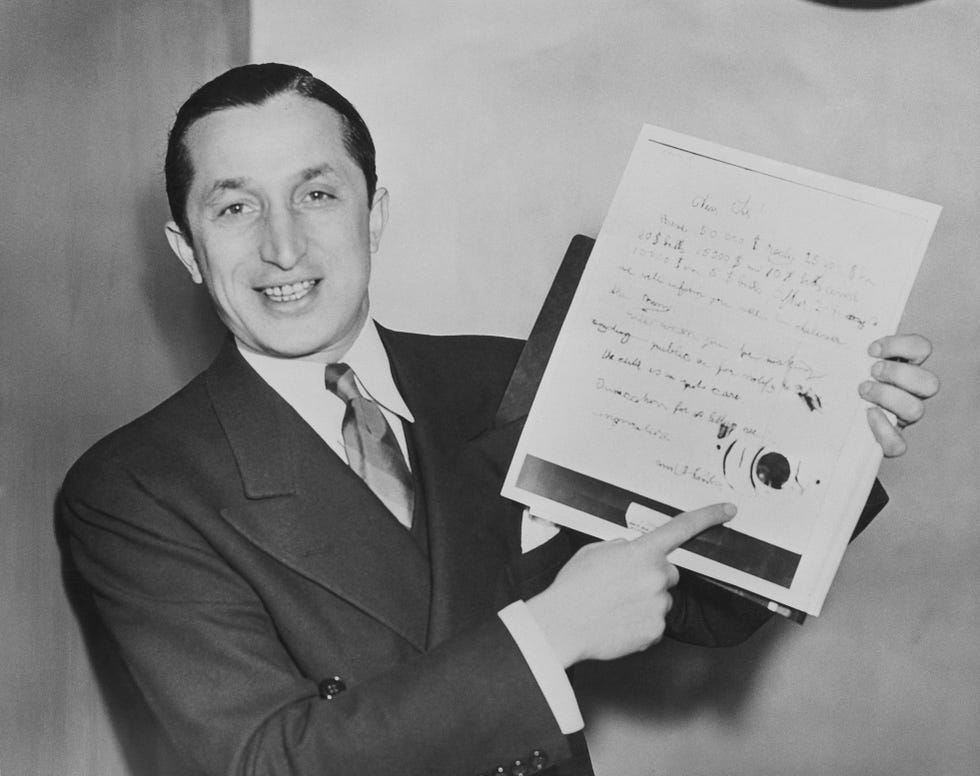
The handwriting was on the ransom notes.
Was the wood match conclusive?
Was the handwriting match certain?
Was the money proof of guilt, or proof of something else?
The record does not establish certainty on any of these points.
The defense argued the evidence was circumstantial.
The defense argued the money had been left by others.
The jury deliberated for about 11 hours.
They returned a guilty verdict on February 13, 1935.
Hauptmann was sentenced to death.
He maintained his innocence to the end.
TWO STORIES, ONE LADDER
The prosecution’s case was built on three things: the money, the wood, and the handwriting.
Wilentz’s case pointed to Hauptmann alone.
Over $14,000 of the ransom money was found in his garage, and a wood expert tied the ladder’s rail to Hauptmann’s attic floorboards.
Handwriting experts linked the ransom notes to his hand.
Reilly, the defense attorney, called it circumstantial.

He argued the money had been left by others, planted or passed along by someone else.
He also suggested the child died accidentally, not by a deliberate blow.
Was the ladder the only weapon?
Was the money the only link?
Was the handwriting the only voice?
That would require evidence the record does not provide.
Whether anyone else was involved is not established.
The defense’s claim remains a claim.
The jury deliberated for about 11 hours.
They returned a guilty verdict on February 13, 1935.
Hauptmann was sentenced to death.
Two stories, one ladder.
The prosecution saw a carpenter who built it, climbed it, and killed.
The defense saw a man whose money was found, whose wood was matched, whose hand was compared—but whose guilt was never proven beyond a story.
The ladder stood in the courtroom as a prop.
It was the only weapon.
It was also the only object that could not speak.

AND THE STORY STILL ISN'T OVER
He was executed in the electric chair at New Jersey State Prison on April 3, 1936.
He maintained his innocence to the end, according to the case record.
Anna Hauptmann continued to petition for posthumous pardons.
She filed civil suits.
No court overturned the conviction.
The case record states that no official reexamination has changed the verdict.
Whether Hauptmann was guilty remains debated.
The record does not resolve it.
It is a documented fact that the ransom money led to him.
It is also a documented fact that the defense argued others had left that money.
The wood expert testified about the ladder.
The handwriting experts testified about the notes.
The jury deliberated for about eleven hours.
The guilty verdict came on February 13, 1935.
The case led to the federal Lindbergh Law.
That law made kidnapping a federal offense when the victim is taken across state lines.
The Lindbergh family later moved to Europe to escape public attention.
The crime remains one of the most famous in American history.
The debate about Hauptmann's guilt continues.
That debate is a theory.
The record does not establish it.
Advertisement
You may also like
The mother who waited 37 years for the truth about Elizabeth Short
The morning of January 15, 1947, a woman’s body lay in a vacant lot on Norton Avenue in the Leimert Park area of Los…
The jailhouse confession that broke the Manson Family case open
It began with a report from a cell. In November 1969, a jailhouse informant — Susan Atkins's cellmate — told authorities that Atkins had…
Five bullet casings, one ciphered signature, and the last face the Zodiac saw
The cab pulled to the curb in Presidio Heights, and the driver waited for the fare. He was shot and killed there on October…
The night a doctor's wife died — and the family next door heard something first
The house next door was quiet that night. Marilyn Sheppard, 31, was found bludgeoned to death in her upstairs bedroom on July 4, 1954,…
The 9-year-old boy whose mother demanded justice for Atlanta's vanished children
Camille Bell’s son was nine years old. His name was Yusuf Bell, and between 1979 and 1981, at least 28 Black children, adolescents, and…
The 31-day gap in a missing-child report that changed a family forever
On July 15, 2008, Cindy Anthony called 911 to report her two-year-old granddaughter missing. She told the dispatcher that her daughter, Casey Anthony, had…