The night a doctor's wife died — and the family next door heard something first
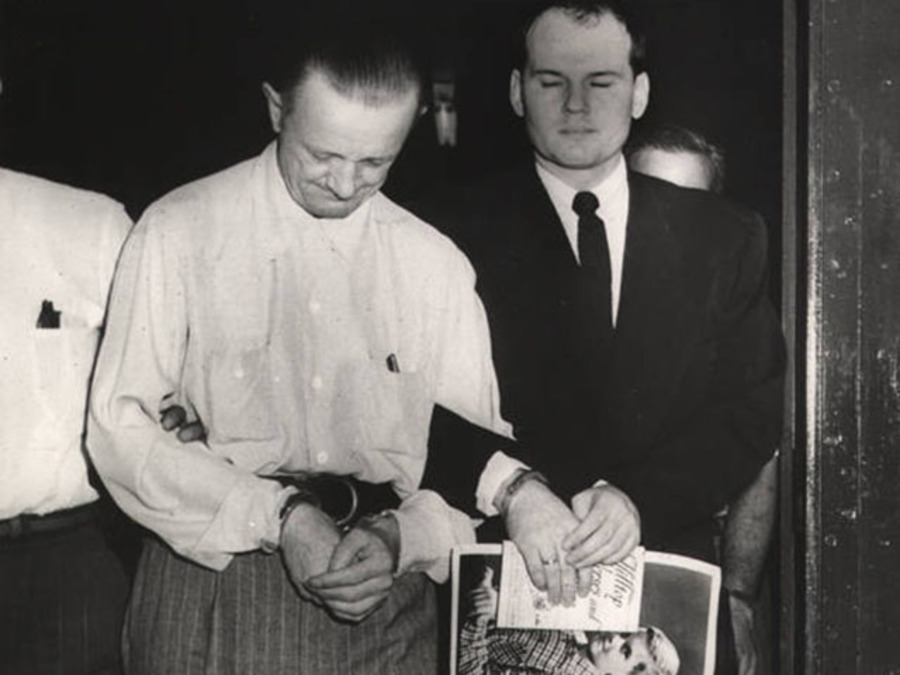
The house next door was quiet that night.
Marilyn Sheppard, 31, was found bludgeoned to death in her upstairs bedroom on July 4, 1954, in Bay Village, Ohio.
Her sister and brother-in-law lived next door.
They were among the first to respond after the attack.
What exactly they heard that night is not in the record.
That remains an open question.
The couple's 7-year-old son, Chip, was asleep in another room.
He was not harmed.
Marilyn's husband, Dr. Sam Sheppard, told police he had been asleep on a downstairs couch.
He said he heard his wife's cries, fought with a "bushy-haired" intruder, and was knocked unconscious.
That is a claim made by the accused.
It is not a fact established by the record.
No fingerprints, no weapon.
The murder weapon was never found.
No signs of a break-in were documented at the scene.
The family next door moved through the house before evidence was collected.
The scene was not secured.
Was there a sound first?
A cry, a thud, a voice?
The record does not say.
It only says they were among the first to respond.
They responded after the attack.
The attack itself remains unseen.
The intruder remains a statement, not a sighting.
The neighbors' testimony exists, but the source does not detail what they said.
So the question stands.
What did the family next door hear that night?
That would require evidence.
THE FAMILY NEXT DOOR
The sister and her husband lived next door.
They were among the first to respond after the attack.
They testified at trial.
What they said on the stand is not in the record.
The specific testimony of the sister and brother-in-law is not established.
It is a gap in the documented account.
Sam's brothers were there too.
Both physicians, they were involved in the immediate aftermath.
They also testified.
The house filled with people before the evidence was collected.
The scene was not secured.
Family members and neighbors moved through the bedroom where she lay.
Police focused on Sam Sheppard almost immediately.
Not because of a confession.
Because of the scene, and because of the story he told.
The investigation was criticized as sloppy.
Blood spatter patterns were noted.
The absence of a break-in was noted.
No weapon was found.
No fingerprints definitively linked him.
The case would rest on circumstantial evidence and on the coroner's testimony.
But all of that came later.
That night, the house was open.
The sister was next door.
What did she see when she walked in?
What did she hear before that?
That would require evidence.
THE TWO STORIES
The prosecution argued that Sam Sheppard killed his wife in a fit of rage over an affair.
The defense maintained that an intruder committed the murder and that Sheppard was knocked out.
The coroner testified that blood spatter patterns and the absence of signs of a break-in pointed to someone inside the home.
No weapon was recovered.
No fingerprints or other physical evidence definitively linked Sheppard to the killing.
The case against him relied heavily on circumstantial evidence and on the coroner's testimony.
Two readings of the same facts.
One reading: a husband, enraged, bludgeons his wife and stages a struggle.
The other: a stranger enters, kills, and vanishes, leaving a man unconscious on the floor.
Both readings fit the scene.
Neither reading fits the silence of the evidence.
The weapon was never found.
The fingerprints were never found.
The intruder with the bushy hair was never found.
The coroner's testimony placed the attack inside the home.
The defense's story placed the attacker outside it.
The record does not establish which story is true.
It establishes only what each side argued.
The prosecution's case was built on inference.
The defense's case was built on denial.
What remains is the body of Marilyn Sheppard, and the question of who held the instrument that killed her.
That question was answered by a jury in December 1954.
It was answered again, differently, in 1966.
The evidence did not change between those answers.
The doubt did.
THE CARNIVAL AND THE VERDICT
The indictment came in August 1954.
The charge was first-degree murder.
Marilyn's family had buried her that spring; now they watched her husband accused of killing her.
The trial began in October.
The media was already there, louder than the court.
Headlines and editorials called for Sam Sheppard's arrest before he was even charged.
The prosecution argued a fit of rage over an affair.
The defense answered with the bushy-haired intruder, the man who knocked Sam out.
The jury heard it all, and in December they convicted him.
The sentence was life in prison.
The conviction stood for twelve years.
Then, in 1966, the U.S. Supreme Court overturned it.
The ruling said the trial had been conducted in a "carnival atmosphere" of prejudicial publicity.
The Court held that the judge had failed to protect the right to a fair trial.
What that atmosphere exactly was, the ruling does not detail.
That is not established in the record.
It is enough to say the verdict did not survive it.
Sam Sheppard was retried that same year.
F. Lee Bailey led his defense this time.
The second jury acquitted him.
The evidence had not changed between the two answers.
The doubt had.
Marilyn's family heard the first verdict in a courtroom packed with reporters.
They heard the second one too.
The case was over, but the questions were not.
AND THE STORY STILL ISN'T OVER
The retrial jury took two days.
Sam walked out of the courtroom a free man in 1966.
The Supreme Court had overturned his conviction that same year, ruling that the trial judge had failed to protect his right to a fair trial.
The ruling established protections for defendants against prejudicial pretrial publicity.
That is the legal legacy.
The personal one is harder to read.
After the acquittal, Sam struggled with alcoholism and drug addiction.
His medical license was not restored.
He died in 1970 at age 46 of liver failure.
The case was over.
The questions were not.
In the 1990s, his son, Samuel Reese Sheppard, took up the fight.
The son campaigned to have his father officially declared innocent.
He pointed to new evidence, to a window washer named Richard Eberling.
Eberling had been in the Sheppard home before the murder.
Eberling later confessed to other crimes.
That makes Eberling a suspect.
It does not make him the killer.
The record does not establish that.
In 2000, a civil jury found that Sam had not committed the murder.
It was a finding.
It was not a criminal exoneration.
The criminal case had ended with the acquittal.
The civil finding carried no weight beyond itself.
The son wanted a declaration.
He got a verdict that did not declare.
Marilyn's family heard the first verdict in a packed courtroom.
They heard the second one too.
They did not hear the one the son wanted.
The murder weapon was never found.
The bushy-haired intruder remained a claim made by the accused, not a fact established by the record.
The case is debated still.
It is debated because it was never closed cleanly.
It is debated because the law changed because of it.
And it is debated because a son spent years asking for a word — innocent — that no court would give his father.
Advertisement
You may also like
The trucker's tip that ended the 2002 D.C. sniper attacks — and the bus driver whose death broke the case
The truck driver heard the radio mention a blue Chevrolet Caprice. He was at a rest stop near Myersville, Maryland, when he saw it.…
The tip that ended a three-week sniper terror — a rest stop on I-70
October 24, 2002: a tipster picked up the phone. The call alerted police to a white Chevrolet Caprice parked at a rest stop on…
Who was Hae Min Lee? A track star's last day and the family still seeking answers
The bell rang at Woodlawn High School on January 13, 1999, and Hae Min Lee walked out of class. She was 18, a senior,…
The witness who changed his story four times before Adnan Syed's murder trial
He told police he helped bury Hae Min Lee. He told them Adnan Syed showed him the body. Jay Wilds was the state's key…
The 31-day gap between Caylee Anthony's last sighting and the 911 call that started it all
June 16, 2008, is the last day Casey Anthony said she saw her daughter. She told investigators that date. She said the child was…
The pillowcase over Polly Klaas's head — and the 10:30 p.m. knock her friends never forgot
The knock at the door came at 10:30 p.m. It was October 1, 1993, and twelve-year-old Polly Klaas was having a slumber party with…