Five bullet casings, one ciphered signature, and the last face the Zodiac saw
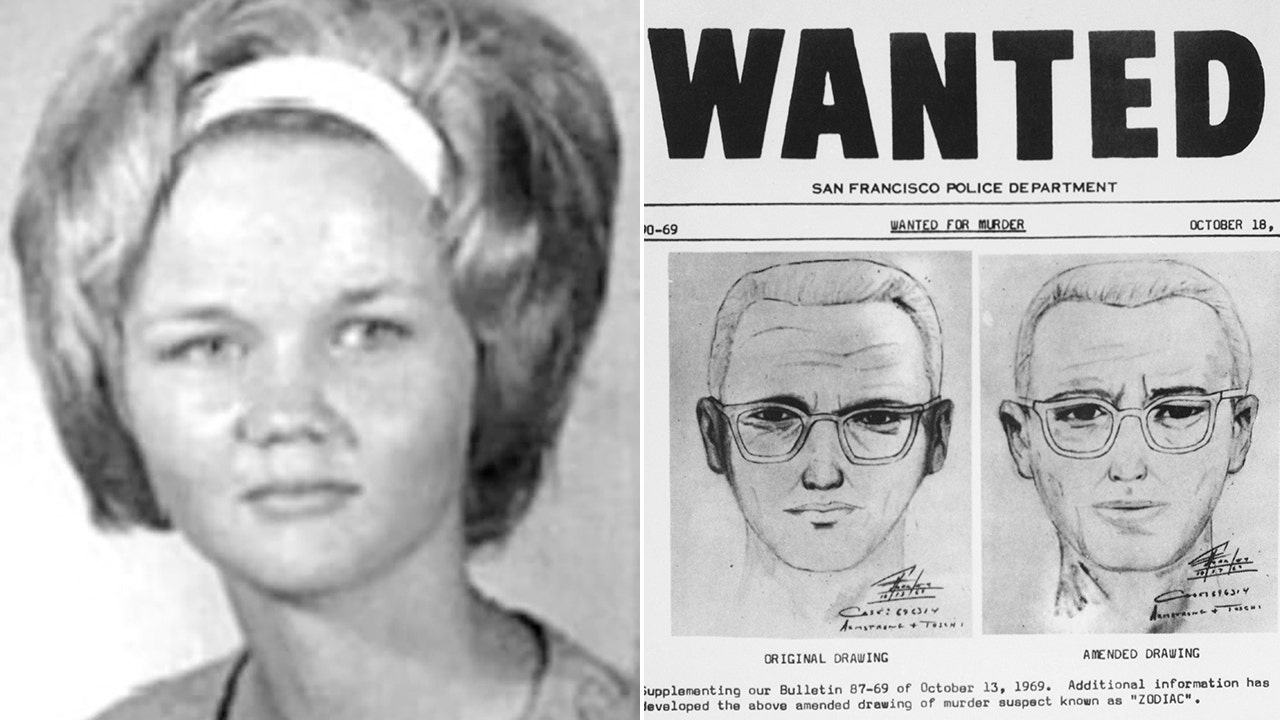
The cab pulled to the curb in Presidio Heights, and the driver waited for the fare.
He was shot and killed there on October 11, 1969.
He was the last known victim.
His parents were interviewed in the aftermath, their faces part of the public record of what was taken.
The killer had already written to the newspapers by then, signing with a crossed-circle symbol.
The letters claimed responsibility.
They included details only the perpetrator would know.
In 2021, a group of cold case investigators announced they had identified a suspect through DNA and genetic genealogy.
That claim was not confirmed by law enforcement.
It was widely disputed.
No suspect has been identified by official sources.
The official record does not establish who fired the shot or signed the cipher.
The family was left with an interview, a case number, and a question that has never been answered.
Who was the last face the Zodiac saw?
Did the driver see it coming?
Did he know the name?
That would require evidence.
The case files remain open.
The family's grief is not a theory, but the identity of the killer is.
It is a story repeated in documentaries and forums.
It is also a story with no conviction, no arrest, no charge.
The crossed circle remains a signature without a hand.
THE FIRST SHOTS
December 20, 1968.
A boy and a girl, teenagers, parked on a secluded road near Vallejo, California.
They were shot and killed.
The Vallejo Police Department handled the case.
The lead detective was Bill Baker, though the record does not establish what he found in those first hours.
No vehicle was definitively identified.
No suspect was named.
It was the first attack in a series that would span ten months.
The road was quiet. The night was cold. The shots came from a handgun.
Two families lost a child that night, and the public record holds little else about them.
What did they say? What did they do before the car stopped?
That would require evidence.
The case file has no answer, only the location and the date.
The lead detective would carry the case forward into the next attack, and the one after that.
But on that night, there was only the road, the car, and the two bodies.
The killer's identity is not established.
The vehicle used is not established.
What is established is the sudden, senseless end of two teenage lives.
It is the beginning of a pattern.
It is also a beginning without a clear shape.
THE PARKED CAR AND THE LAKE
July 4, 1969.
A woman and a man were shot in a parked car in Vallejo.
The woman died.
The man survived.
His name was Michael Mageau, and he would become a witness.
The attack came six months after two teenagers were killed on a secluded road nearby.
What is established is the gunfire.
What is not established is who fired it.
The Vallejo Police Department investigated, and the lead detective on the case was Bill Baker.
The survivor, Mageau, described what he saw.
He survived the night.
The woman did not.
Then, on September 27, 1969, a man and a woman were stabbed at Lake Berryessa.
The woman died.
The man survived.
His name was Bryan Hartnell, and he too would become a witness.
The Napa County Sheriff's Office investigated the Lake Berryessa attack.
The detective assigned to the case was Ken Narlow.
The survivor, Hartnell, described what he saw.
He survived the attack.
The woman did not.
Two attacks.
Two survivors.
Two deaths.
The pattern was taking shape, but the shape was still unclear.
The killer's identity remains unknown.
No suspect was ever charged in either attack.
Not because the cases went cold.
But because the evidence never led to a name.
The fear in the Bay Area was growing.
It was a fear with a specific shape: a parked car, a lakeside path, a stranger with a weapon.
It was also a fear without a face.
THE CIPHERED SIGNATURE
The letters went to three newspapers at once.
The *San Francisco Chronicle*. The *Vallejo Times-Herald*. The *San Francisco Examiner*.
Each one arrived with the crossed-circle symbol at the bottom, like a signature no one else could use.
Crime reporter Paul Avery of the *San Francisco Chronicle* was the one who opened them.
The letters were taunting.
They were cryptic.
They were written as if the killer were playing a game, and the whole Bay Area was the board.
Inside some of the letters were cryptograms.
One of those cryptograms was solved by a schoolteacher and his wife.
The message it revealed claimed the killer was collecting slaves for the afterlife.
It did not reveal his identity.
That is not established.
The cipher gave a motive, a strange and boastful one, but it gave no name.
What the letters did contain were details of the crimes that only the perpetrator would know.
The exact words spoken.
The specific injuries.
The small facts that had not been printed anywhere.
Those details confirmed his involvement.
Not because he said so.
But because he knew what he could not have known otherwise.
The fear in the Bay Area had a shape before.
Now it had a voice.
A voice that wrote to the papers, that signed its work, that promised more.
It was a voice that said it was collecting slaves for the afterlife.
It was a voice that said nothing about who it was.
The solved cipher was read in living rooms and newsrooms.
It was read and reread.
It was read for clues.
It was read for a name.
That would require evidence.
The letters' claims of additional victims are not verified.
What is verified is the writing itself.
The taunts.
The symbol.
The details that only one person could know.
The killer was talking.
He just was not saying who he was.
AND THE STORY STILL ISN'T OVER
There was no trial.
No suspect was ever arrested, charged, or convicted.
The San Francisco Police Department officially reopened the case in 2007.
DNA evidence has been examined over the years.
No match has been made.
The case files remain open in Vallejo, Napa County, and San Francisco.
The sister of one victim has spoken publicly about her sister's death.
She has lived with the weight of it for decades.
The statute of limitations does not apply to homicide.
Charges could still be filed if a suspect were identified.
That would require evidence.
In 2021, a group of cold case investigators announced they had identified a suspect through DNA.
That claim was not confirmed by law enforcement.
It was widely disputed.
No suspect has been confirmed.
The killer named himself in letters.
He signed with a crossed circle.
He just never gave a name the record could hold.
Families have lived without closure.
Files sit open in three jurisdictions.
The story still is not over.
It is a cold case.
It is also an open wound.
Advertisement
You may also like
The trucker's tip that ended the 2002 D.C. sniper attacks — and the bus driver whose death broke the case
The truck driver heard the radio mention a blue Chevrolet Caprice. He was at a rest stop near Myersville, Maryland, when he saw it.…
The tip that ended a three-week sniper terror — a rest stop on I-70
October 24, 2002: a tipster picked up the phone. The call alerted police to a white Chevrolet Caprice parked at a rest stop on…
Who was Hae Min Lee? A track star's last day and the family still seeking answers
The bell rang at Woodlawn High School on January 13, 1999, and Hae Min Lee walked out of class. She was 18, a senior,…
The witness who changed his story four times before Adnan Syed's murder trial
He told police he helped bury Hae Min Lee. He told them Adnan Syed showed him the body. Jay Wilds was the state's key…
The 31-day gap between Caylee Anthony's last sighting and the 911 call that started it all
June 16, 2008, is the last day Casey Anthony said she saw her daughter. She told investigators that date. She said the child was…
The pillowcase over Polly Klaas's head — and the 10:30 p.m. knock her friends never forgot
The knock at the door came at 10:30 p.m. It was October 1, 1993, and twelve-year-old Polly Klaas was having a slumber party with…