The 31-day gap in a missing-child report that changed a family forever
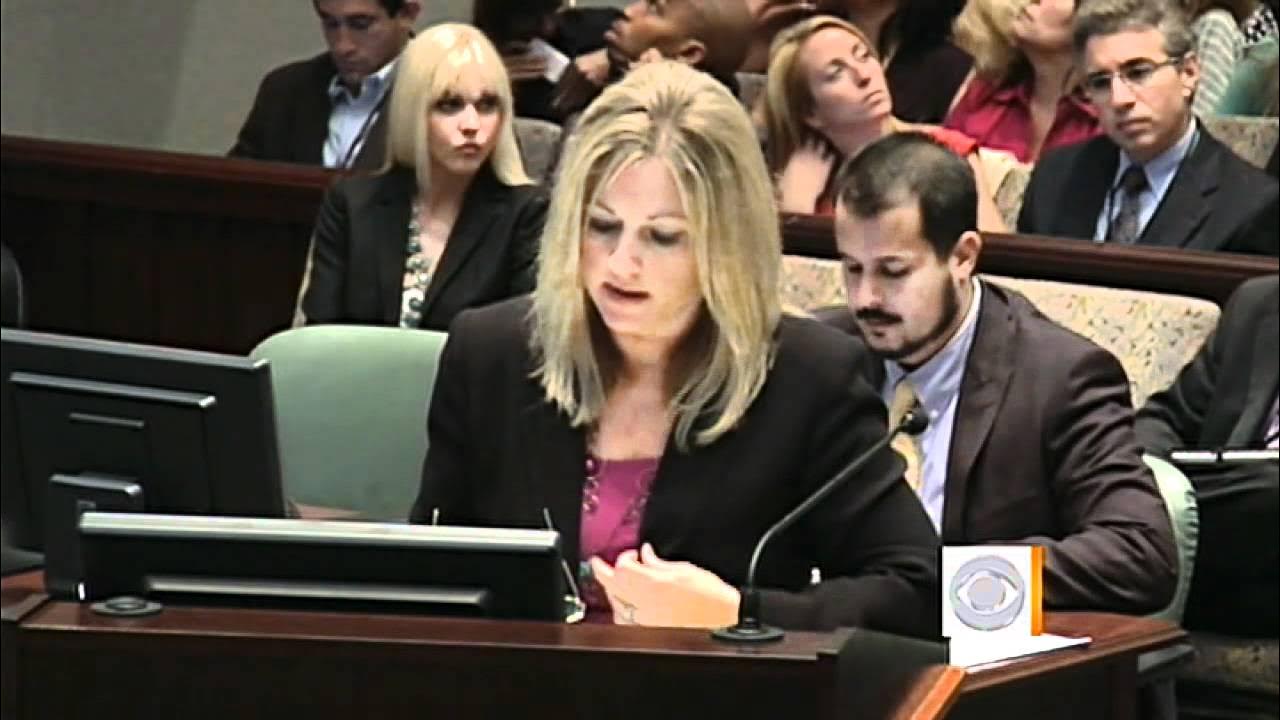
On July 15, 2008, Cindy Anthony called 911 to report her two-year-old granddaughter missing.
She told the dispatcher that her daughter, Casey Anthony, had last seen the child about a month earlier.
Thirty-one days had passed since anyone reported the child gone.
The gap between the last sighting and the report is the detail that launched a thousand online theories.
The record only establishes the dates.
It does not establish what happened in between.
No one else reported the child missing during those 31 days.
The record does not say where Casey Anthony or the child were during that time.
No timeline of the child's last known movements exists in the source.
What was happening in that gap?
Was the child alive?
Was anyone looking?
That would require evidence.
Casey Anthony initially told police the child had been kidnapped by a babysitter named Zenaida Fernandez-Gonzalez.
Investigators later determined that person did not exist.
The 911 call came only after Cindy and George Anthony confronted Casey about discrepancies in her story, according to the investigation summary.
A grandmother made the call.
A month had already passed.
The child's last known movements are not in the record.
The month itself is the only certainty.
THE 911 CALL AND THE PHANTOM BABYSITTER
The 911 call came on July 15, 2008.
Cindy Anthony made it, after she and George confronted Casey about discrepancies in her story.
The exact nature of those discrepancies is not detailed in the source.
The call reported a two-year-old missing, last seen about a month earlier.
Casey told police the child had been kidnapped by a babysitter.
The babysitter had a name: Zenaida Fernandez-Gonzalez.
Detectives looked for her.
They found no evidence that such a person existed.
The name became a central point of the investigation.
It was a story that collapsed on contact.
Casey was arrested on charges of child neglect and providing false statements, according to the investigation summary.
The lead detective was with the Orange County Sheriff's Office.
His name is not confirmed in news coverage.
The phantom babysitter was not a phantom.
She was nothing at all.
The record shows a name, a claim, and a dead end.
Not because the detectives were careless.
But because the story did not survive scrutiny.
What did Casey say when the name fell apart?
The record does not say.
What did she offer instead?
The record does not say.
That would require evidence.
Casey was charged, then held.
The child remained missing.
A month had already passed when the call was made.
The month itself is the only certainty.
THE REMAINS AND THE ARREST
A meter reader named Roy Kronk found skeletal remains in a wooded area on December 11, 2008.
The spot was about a quarter-mile from the Anthony family home in Orlando.
The remains were identified as Caylee Anthony.
The child who had been missing was no longer missing.
She was a body now, and the case shifted.
Casey Anthony was arrested and charged with first-degree murder.
The charge came after the remains were found, not before.
The medical examiner testified that the cause of death could not be determined from the skeletal remains.
The manner, she testified, was ruled homicide.
Cause unknown. Manner homicide.
That is a gap the record does not close.
No weapon was identified.
The cause of death was never established.
What the prosecution had was physical.
Chloroform was detected in the trunk of Casey's car, according to testimony.
A tow yard employee reported the smell of decomposition from that same car.
Internet searches for "chloroform" and "fool-proof suffocation" were found on a family computer.
Those searches were presented as evidence.
The defense would offer another story later.
But the physical record carried its own weight.
The investigation also drew criticism.
The area where the remains were found had not been searched for weeks.
Roy Kronk had reported seeing something there before, the record shows.
Nothing was done at the time.
The delay became part of the case, a question without a clean answer.
It is a fact that the remains were found late.
It is a fact that the cause of death was never determined.
It is a fact that the charge of first-degree murder followed the discovery.
The evidence was circumstantial.
The evidence was heavy.
The shift was complete: a missing-child report had become a homicide investigation.
TWO STORIES, ONE CHILD
The prosecution argued that Casey Anthony killed Caylee to live a carefree life, according to the trial summary.
The defense argued that Caylee accidentally drowned in the family pool and that George Anthony helped cover it up.
The prosecution rejected that theory.
The defense also claimed Casey had been sexually abused by her father.
George Anthony denied the claim.
The trial began in May 2011 in Orlando, Florida.
The judge's name is not confirmed in news coverage.
Two stories, one child.
The prosecution's story was deliberate.
The defense's story was accident.
Was either true?
/jose-baez-1-c5cc5e9bf1ef40618009a54f4c07593e.jpg)
That would require evidence.
The evidence was circumstantial.
The evidence was heavy.
On July 5, 2011, the jury acquitted Casey of first-degree murder, aggravated child abuse, and aggravated manslaughter.
The jury convicted her on four counts of providing false information to law enforcement.
The acquittal was the shock.
The conviction was the footnote.
She was sentenced to four years in jail with credit for time served.
She was released on July 17, 2011.
The truth of what happened to Caylee is not established by the record.
The defense's drowning claim was rejected by the prosecution but not disproven by the evidence.
The chasm between the two narratives remains open.
The verdict did not close it.
The case remains one of the most heavily covered and debated in American true-crime history.
No one else was ever charged in Caylee's death.
AND THE STORY STILL ISN'T OVER
She was released from jail in July 2011.
She has since lived largely out of the public eye.
She has appeared in occasional interviews and legal proceedings.
She was later involved in a bankruptcy case.
She faced legal issues related to defamation lawsuits.
George and Cindy Anthony divorced in 2015.
No one else was ever charged in Caylee's death.

The case remains one of the most heavily covered and debated in American true-crime history.
The public controversy over the verdict has not faded.
The verdict did not close it.
The 31-day gap remains the detail that still haunts the public imagination.
It is the detail that launched a thousand theories.
It is the detail that the record does not explain.
What happened in the 31-day gap remains unknown.
What actually caused Caylee's death remains unknown.
The record does not establish either.
The cause of death was never determined.
No weapon was identified.
The medical examiner testified that the cause could not be determined from the remains.
The manner was ruled homicide.
That ruling is not an explanation.
It is a classification.
The gap is the question that outlasted the trial.
Why did the report come so late?
What happened in those 31 days?
What did anyone know, and when?
Those questions remain open.
That would require evidence.
The record does not provide it.
The story is not closed.
It sits where the verdict left it.
A mother acquitted.
A child gone.
A gap unexplained.
Advertisement
You may also like
The Clutter family's last morning: a church pew left empty and a shotgun found at close range
The empty pew was noticed first. On the morning of November 15, 1959, the Clutter family did not show up for church in Holcomb,…
The ATF raid that sparked a 51-day siege — and the fire that still divides investigators
On April 19, 1993, a fire broke out during the FBI's final assault on the Mount Carmel Center. Seventy-six people inside the compound died…
A hammer near two desert graves — and the phone records that redrew a family's last days
The motorcyclist stopped in the Mojave Desert near Victorville, California, on November 11, 2013. He found two shallow graves in the dirt. Inside were…
The ring that identified Emmett Till after his body was found in the Tallahatchie River
The ring was small. It was inscribed with his father's initials. It was the only thing that gave Emmett Till back his name. He…
The mother who waited 37 years for the truth about Elizabeth Short
The morning of January 15, 1947, a woman’s body lay in a vacant lot on Norton Avenue in the Leimert Park area of Los…
The jailhouse confession that broke the Manson Family case open
It began with a report from a cell. In November 1969, a jailhouse informant — Susan Atkins's cellmate — told authorities that Atkins had…