The jailhouse confession that broke the Manson Family case open
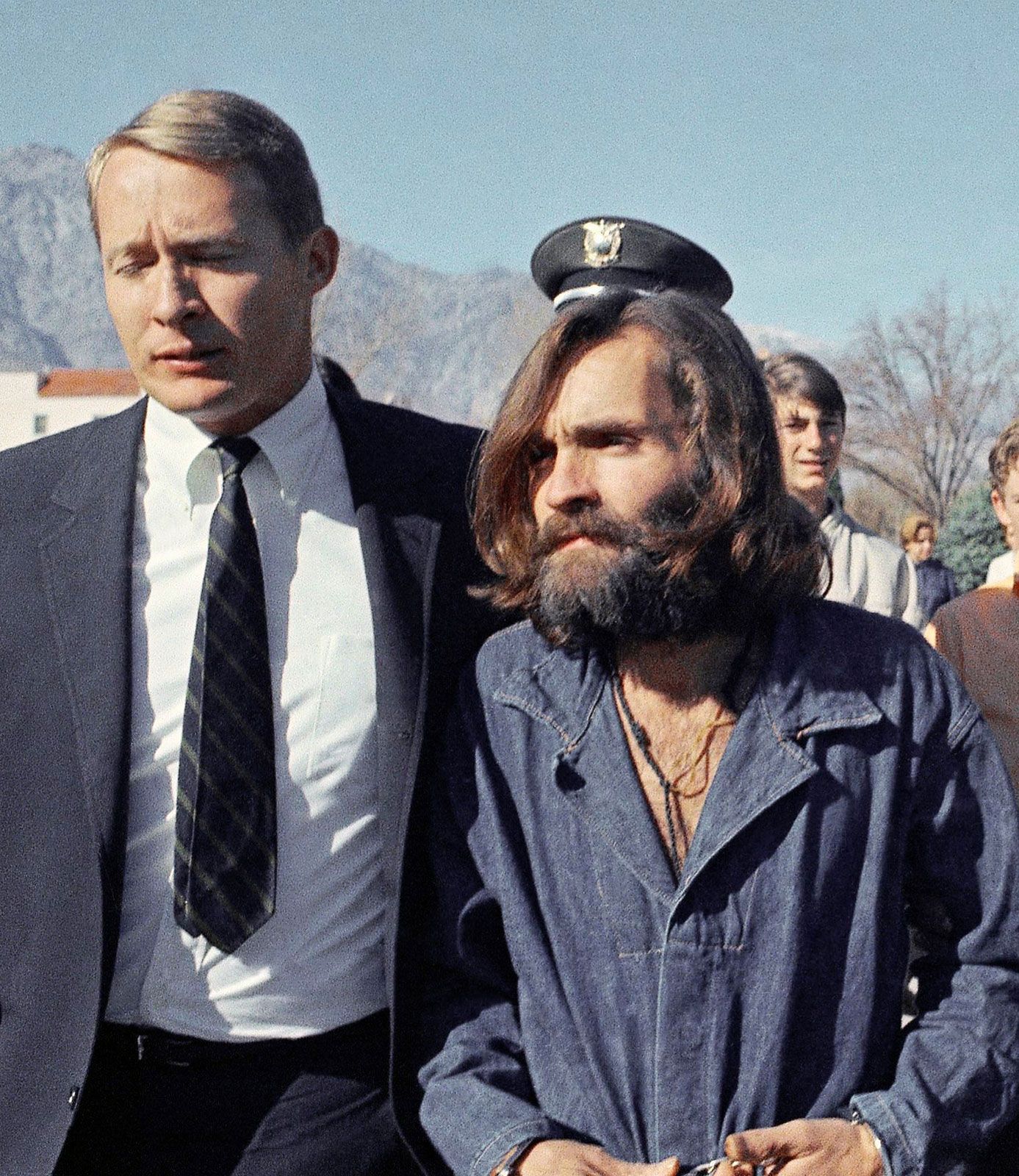
It began with a report from a cell.
In November 1969, a jailhouse informant — Susan Atkins's cellmate — told authorities that Atkins had confessed to the murders.
Atkins was in custody at the time, arrested on an unrelated charge.
The case had sat unsolved for months.
The initial LAPD investigation had found few leads.
Then a cellmate's words changed the direction of everything.
It was the first documented link between the murders and members of a commune led by Charles Manson.
What exactly was said in that cell?
What did Atkins tell her cellmate, and how much of it was true?
What did the informant actually hear, and what did she merely repeat?
That would require evidence.
The record does not detail the exact content of the cellmate's tip.
It notes only that she reported Atkins's confessions.
A stalled investigation. A sudden break. A name that would not let go.
The report did not solve the case by itself.
It opened a door — and the prosecution walked through it.
AUGUST 9–10, 1969: TWO NIGHTS OF MURDER
The first night came on August 9, 1969.
Five people were murdered at 10050 Cielo Drive in Benedict Canyon.
Actress Sharon Tate, eight and a half months pregnant, was among the dead.
Coffee heiress Abigail Folger was killed, along with her boyfriend, celebrity hairstylist Jay Sebring, and a young man visiting the property's caretaker.
The killers wrote "PIG" in blood on the front door.
The following night, August 10, supermarket executive Leno LaBianca and his wife Rosemary were murdered in their Los Feliz home.
"Death to Pigs" and "Helter Skelter" were written in blood at that scene.
Housekeepers and relatives discovered the crimes the following mornings.
The killers on the Tate night were Tex Watson, Susan Atkins, Patricia Krenwinkel, and Linda Kasabian, who drove the car.
On the LaBianca night, the killers were Watson, Krenwinkel, and Leslie Van Houten.
The motive at the time of the murders was not established.
Not because no one guessed. But because nothing in the record tied the killings to a cause yet.
The "Helter Skelter" race-war theory emerged later, in the prosecution's case.
That would require evidence.
For months, the investigation found few leads.
Two nights. Nine dead. A word in blood.
The case had no name and no direction.
That is what the jailhouse informant's tip changed in November 1969.
It gave the stalled investigation a door.
THE STALLED INVESTIGATION AND THE NOVEMBER BREAK
The case had no name and no direction.

That is what the jailhouse informant's tip changed in November 1969.
It gave the stalled investigation a door.
The initial investigation by the Los Angeles Police Department found few leads.
The case remained unsolved for months.
The break came in November 1969 when a jailhouse informant, Susan Atkins’s cellmate, told authorities that Atkins had confessed to the murders.
The exact date and circumstances of the cellmate's report are not specified.
Only that it occurred in November 1969.
Atkins was in custody on an unrelated charge.
She gave a detailed statement to prosecutors.
The prosecution built its case around that confession.
It built its case around the testimony of Linda Kasabian, who was granted immunity.
It built its case around physical evidence, including a knife found near the Tate residence, later tied to the killers.
Manson himself did not enter either house.
The prosecution argued he orchestrated the murders anyway.
He was later convicted of ordering them.
What did the cellmate actually hear?
What did Atkins actually say?
What did the record preserve?
The record preserves the confession, the knife, and the witness who drove the car.
It does not preserve the cellmate's exact words.
The relief of a stalled case suddenly gaining traction is real.
So is the weight of relying on an informant's word.
The investigation had a door.
It opened onto a trial.
THE TRIAL: TWO STORIES, ONE JURY
The prosecution called it Helter Skelter.
Vincent Bugliosi, the prosecutor, argued that Charles Manson orchestrated the murders to trigger a race war he called "Helter Skelter."
The defense contended that Manson had no direct involvement.
The killings, the defense said, were drug-related.
That drug-related motive is a contention, not established fact in the record.
The trial began in June 1970.
Manson, Tex Watson, Patricia Krenwinkel, Susan Atkins, and Leslie Van Houten were charged with first-degree murder and conspiracy to commit murder.
The courtroom was not quiet.
Manson and his followers carved X's into their foreheads.
They sang.
They laughed.
They turned the proceedings into theater, and the jury watched it all.
The prosecution built its case on Atkins's confession, the testimony of Linda Kasabian, and physical evidence linking the killers to the scenes.
:max_bytes(150000):strip_icc():focal(708x140:710x142)/charles-manson-victims-portrait-030725-f63580ad3887477d9e983e2e8515e595.jpg)
Kasabian had driven the car.
She was granted immunity.
She testified for the prosecution.
The defense had a simpler story: no direct order, no master plan, just drugs and chaos.
Two stories, one jury.
In January 1971, all five were found guilty.
The jury sentenced Manson, Watson, Krenwinkel, Atkins, and Van Houten to death.
The verdict did not end the argument.
It only ended the trial.
AND THE STORY STILL ISN'T OVER
The jury sentenced Manson, Watson, Krenwinkel, Atkins, and Van Houten to death.
Those sentences did not stand.
In 1972, the California Supreme Court struck down the death penalty, and the sentences were automatically commuted to life in prison.
Kasabian was never charged.
She testified for the prosecution.
Manson’s conviction was upheld on appeal.
Watson, Krenwinkel, Atkins, and Van Houten have repeatedly been denied parole.
Charles Manson died in prison on November 19, 2017, at age 83.
Susan Atkins died in prison in 2009.
Van Houten’s parole was repeatedly denied.
A California appeals court later ordered her release in 2023, a decision that was challenged.
The outcome of that challenge is not stated in the source.
It is unresolved.
The case remains one of the most studied in American criminal history.
Bugliosi’s book “Helter Skelter” became a bestseller.
The verdict did not end the argument.
It only ended the trial.
The stories remain.
The cellmate’s tip, the confessions, the testimony — they all fed the same record.
What did she really hear?
What did Atkins really say?
What did the jury really believe?
That would require evidence.
The record gives what it gives.
The sentences were commuted.
The appeals were denied.
The release was ordered.
The release was challenged.
And the case still isn’t over.
Advertisement
You may also like
The trucker's tip that ended the 2002 D.C. sniper attacks — and the bus driver whose death broke the case
The truck driver heard the radio mention a blue Chevrolet Caprice. He was at a rest stop near Myersville, Maryland, when he saw it.…
The tip that ended a three-week sniper terror — a rest stop on I-70
October 24, 2002: a tipster picked up the phone. The call alerted police to a white Chevrolet Caprice parked at a rest stop on…
Who was Hae Min Lee? A track star's last day and the family still seeking answers
The bell rang at Woodlawn High School on January 13, 1999, and Hae Min Lee walked out of class. She was 18, a senior,…
The witness who changed his story four times before Adnan Syed's murder trial
He told police he helped bury Hae Min Lee. He told them Adnan Syed showed him the body. Jay Wilds was the state's key…
The 31-day gap between Caylee Anthony's last sighting and the 911 call that started it all
June 16, 2008, is the last day Casey Anthony said she saw her daughter. She told investigators that date. She said the child was…
The pillowcase over Polly Klaas's head — and the 10:30 p.m. knock her friends never forgot
The knock at the door came at 10:30 p.m. It was October 1, 1993, and twelve-year-old Polly Klaas was having a slumber party with…