The night Sharon Tate's housekeeper found the phone line cut — before the bodies were discovered
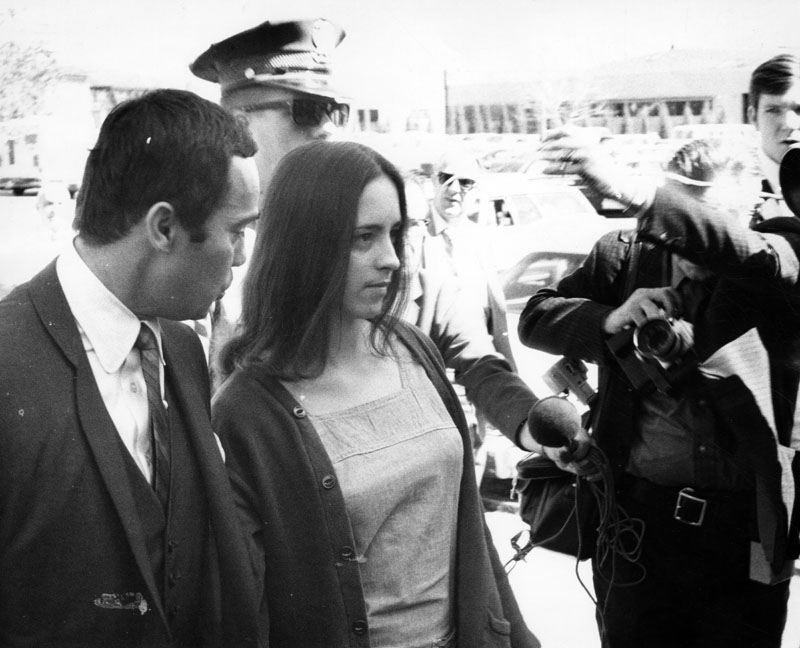
She found it before anyone knew to look.
On the night of August 9, 1969, the housekeeper at 10050 Cielo Drive discovered the phone line had been cut.
This was before the bodies were found.
It is the first documented sign that something was wrong at the property.
The record does not name the housekeeper.
The record does not give a time for the discovery.
The record does not say who cut the line.
The record does not say why.
The record does not state whether the housekeeper reported the cut line to police that night.
Online, the cut line is often cited as a sign of premeditation.
That is a theory.
The documented record establishes only that the line was cut, and that a housekeeper found it.
Not who did it.
Not when.
Not why.
What did she see when she walked the grounds that night?
Did she hear anything?
Did she think it was a storm, a repairman, a coincidence?
The record leaves those questions open.
It leaves them open because the source material does not answer them.
She was on the ground below, in the dark, with the phones dead.
The cut line is a detail that fits a story.
But a detail that fits is not a detail that is proven.
The housekeeper’s discovery is the first crack in the night.
It is also the last thing the record lets us know about her.
THE NIGHT OF AUGUST 9
Five people were murdered at 10050 Cielo Drive on the night of August 9, 1969.
The victims were actress Sharon Tate, eight and a half months pregnant; coffee heiress Abigail Folger; Folger’s boyfriend; celebrity hairstylist Jay Sebring; and a visitor to the property’s caretaker.
The killers used knives and a .22-caliber revolver.
The gun was used to shoot the visitor and Sebring.
The killers drove a car described as a 1959 Ford to the scene.
Tate’s husband, director Roman Polanski, was in Europe at the time.
The source does not provide a precise timeline of events inside the house.
What is known is the arrival, the weapons, and the car.
What is not known is the order, the moments, the last words.
The exact sequence of events inside the house is not detailed in the source.
That is not an omission of care.
It is a limit of the record.
The brutality is documented.
The randomness is documented.
The victims were not chosen for who they were.
They were chosen because they were there.

The house was rented.
The night was ordinary.
The car was a 1959 Ford.
It was not a fast car.
It was not a quiet car.
It was a car that could be seen.
And it was seen, later, at another house, the next night.
But that is another section of this story.
For now, the house on Cielo Drive holds its dead.
The phone line is cut.
The morning will come.
The bodies will be found.
THE SECOND NIGHT
The following night, August 10, 1969, supermarket executive Leno LaBianca and his wife Rosemary were murdered in their Los Feliz home.
Two nights. Two scenes.
The same car, a 1959 Ford, was used to drive to both crime scenes.
Linda Kasabian drove the car to both scenes but did not enter the houses.
The LaBianca killings were discovered the following morning by the victims' associates and family.
The Tate killings were discovered the same way that morning.
Who found them? The source does not say.
It does not state who discovered the Tate bodies.
It does not state who discovered the LaBianca bodies.
The identities of those who discovered the bodies are not specified in the source.
What the record shows is a pattern: one car, two nights, seven dead.
At the LaBianca home, the murders were carried out by three of the same people who had been at Cielo Drive.
Tex Watson, Patricia Krenwinkel, and Leslie Van Houten were there.
Watson and Krenwinkel had been at the first scene too.
Kasabian waited in the car.
The same car.
A 1959 Ford.
The crimes were later linked to a group led by Charles Manson.
But that link came later.
In August, the pattern was not yet visible.
Two scenes, one car, no connection made.
The morning after the second night, the bodies were found.
The phone line at Cielo Drive was cut.
That was the first night.
This is the second.
THE BREAK IN OCTOBER
The initial investigation was hampered by a lack of obvious motive.
Detectives first suspected drug-related killings, given the victims' connections to the entertainment industry.
Then, in October 1969, Susan Atkins, jailed on unrelated charges, told cellmates about the murders.
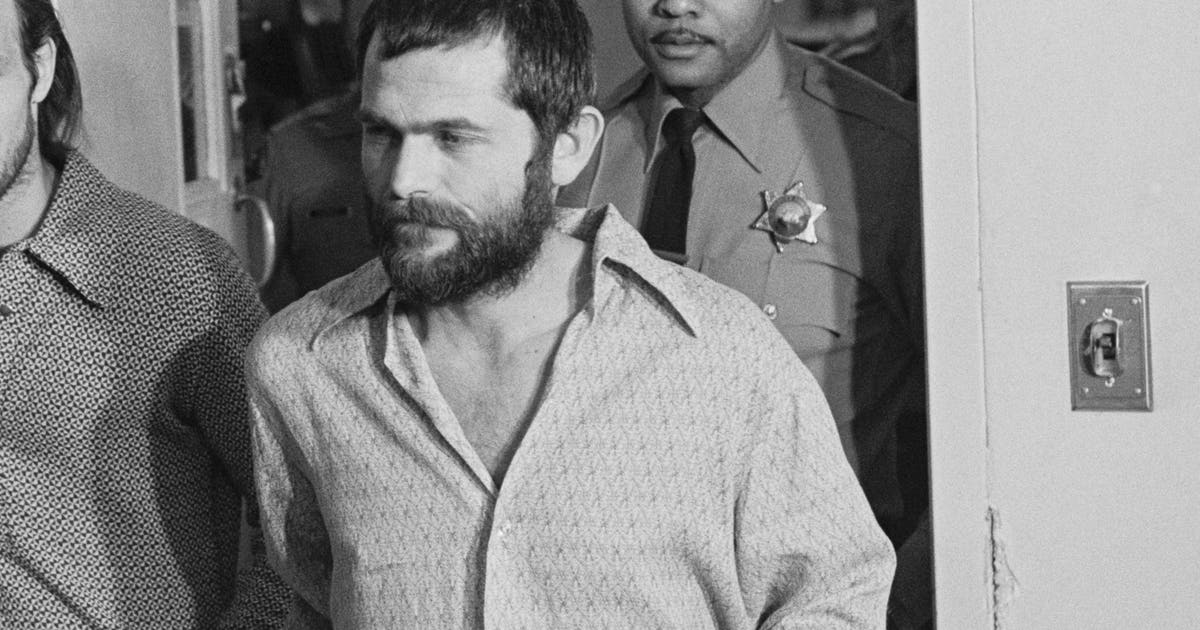
The exact content of those statements is not detailed in the record.
Her statements reached prosecutors.
The LAPD connected the crimes to Charles Manson's group.
Linda Kasabian, who had been present at both crime scenes, agreed to testify in exchange for immunity.
A key piece of evidence was a pair of eyeglasses found at the Tate scene, later traced to a Manson Family associate.
The prosecution argued Manson orchestrated the murders to incite a race war he called "Helter Skelter," based on the Beatles' song.
That was the theory.
Was it a plan? Was it a fantasy? Was it a cover story?
The record does not establish what Manson intended.
The defense argued Manson had no direct involvement in the killings.
The break had come.
But the motive remained strange, almost unbelievable.
Kasabian would testify.
The glasses would be traced.
The trial would begin in June 1970.
Not because the case was simple.
But because the story was only beginning.
AND THE STORY STILL ISN'T OVER
The trial began in June 1970.
All five defendants were charged with first-degree murder.
In January 1971, the jury found all five guilty.
The jury imposed the death penalty for all five.
Then the California Supreme Court abolished the death penalty in 1972.
The sentences were commuted to life in prison with the possibility of parole.
That is the legal limbo.
It is a verdict.
It is also a beginning.
Charles Manson died in prison in 2017.
Susan Atkins died in prison in 2009.
Tex Watson, Patricia Krenwinkel, and Leslie Van Houten remain incarcerated.
Van Houten has been recommended for parole multiple times.
Those recommendations have been blocked by California governors.
Watson and Krenwinkel have also been denied parole repeatedly.
Their current parole status is not specified beyond repeated denials.
That would require evidence.
The case is never fully finished.
It is a closed verdict with an open door.
The Cielo Drive house was demolished in 1994.
The ground was cleared.
The address remains.
Not because the house stood.
But because the story did.
Advertisement
You may also like
The mother who waited 37 years for the truth about Elizabeth Short
The morning of January 15, 1947, a woman’s body lay in a vacant lot on Norton Avenue in the Leimert Park area of Los…
The jailhouse confession that broke the Manson Family case open
It began with a report from a cell. In November 1969, a jailhouse informant — Susan Atkins's cellmate — told authorities that Atkins had…
Five bullet casings, one ciphered signature, and the last face the Zodiac saw
The cab pulled to the curb in Presidio Heights, and the driver waited for the fare. He was shot and killed there on October…
The night a doctor's wife died — and the family next door heard something first
The house next door was quiet that night. Marilyn Sheppard, 31, was found bludgeoned to death in her upstairs bedroom on July 4, 1954,…
The 9-year-old boy whose mother demanded justice for Atlanta's vanished children
Camille Bell’s son was nine years old. His name was Yusuf Bell, and between 1979 and 1981, at least 28 Black children, adolescents, and…
The 31-day gap in a missing-child report that changed a family forever
On July 15, 2008, Cindy Anthony called 911 to report her two-year-old granddaughter missing. She told the dispatcher that her daughter, Casey Anthony, had…