The fishing alibi, the affair, and the phone calls that unraveled Scott Peterson's story
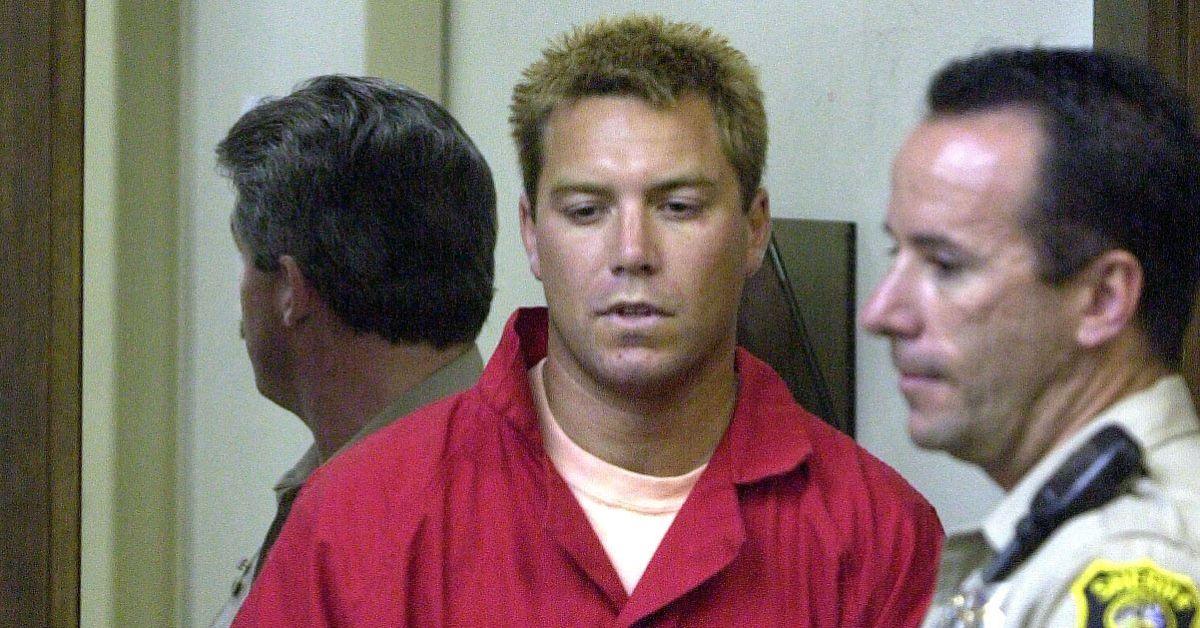
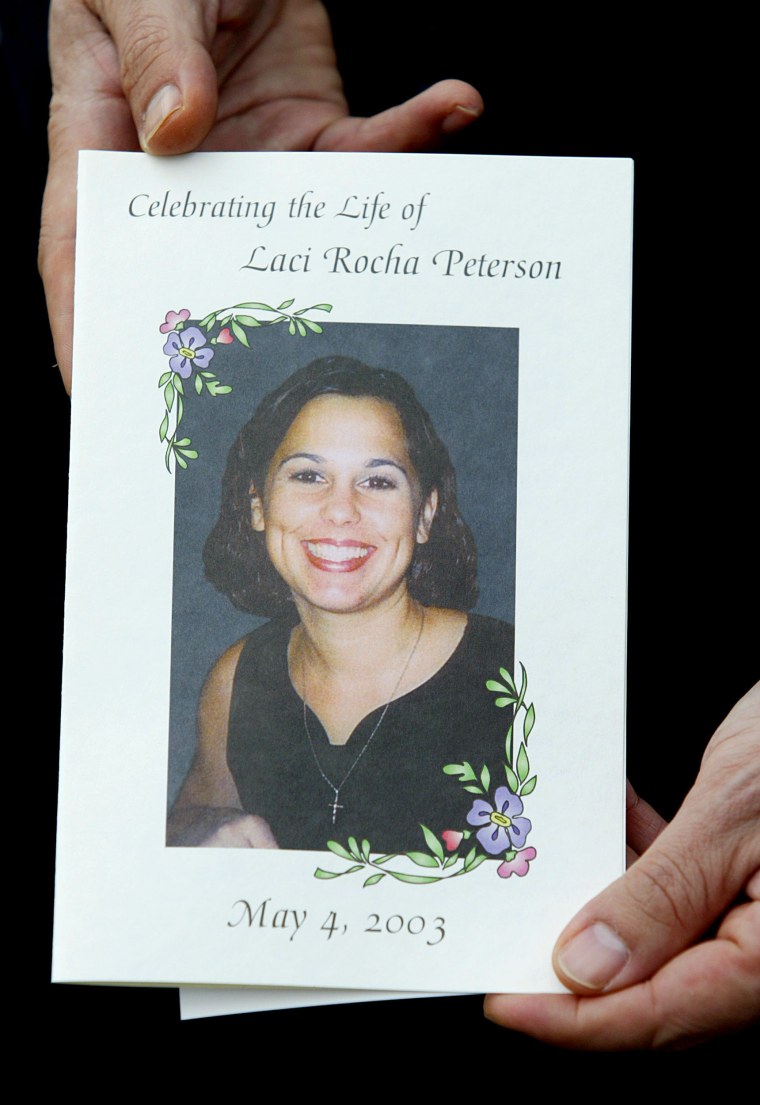
December 24, 2002. Laci Peterson, 27 and eight months pregnant, was reported missing from her Modesto, California home.
Her husband, Scott Peterson, told police he had spent that morning fishing at the Berkeley Marina, about 90 miles away.
A 14-foot aluminum fishing boat sat on a trailer outside the couple's home.
That boat later became central to the prosecution's theory of how Laci's body was disposed of.
The defense suggested Laci had been abducted and killed by strangers while walking the dog that morning.
The prosecution disputed that theory.
What exactly happened inside the Peterson home on December 24 is not in the record.
No murder weapon was ever found.
The morning hinges on one man's word: that he launched a small boat, fished alone, and returned home to find his pregnant wife gone.
Was she taken while he was on the water?
Was she ever taken at all?
That would require evidence.
The record shows only what was reported, what was testified, and what was later found.
On that December morning, the record begins with a missing-person call and a husband with an alibi.
A single alibi that would be picked apart for years.
THE PHONE CALLS
The first hole in the fishing story was not on the water.
It was in the phone records.
Detectives discovered that Scott Peterson had been seeing Amber Frey, a massage therapist, during Laci's pregnancy.
Peterson had told Frey he was a widower.
She believed him.
When the police came to her, Frey cooperated.
She recorded phone calls with Peterson, and those recordings were used as evidence.
The calls were not a wiretap.
They were made with her consent, at the direction of law enforcement.
What exactly Peterson said on those calls is not detailed in the source.
The record states only that they were used as evidence.
It is a gap.
It is also the point.
The affair gave the prosecution a motive, and the calls gave them a portrait.
A portrait of a man who told a woman he loved that his wife was already dead.
The calls showed behavior.
They showed deception.
They did not show a body being moved, a boat being launched, or a plan being made.
The prosecution argued that Peterson killed Laci to escape his impending fatherhood and continue the affair.
The defense would later argue the evidence was circumstantial.
Both sides knew the calls mattered.
One side played them.
The other side had to explain them.
Frey took the stand.
She testified about the relationship.
She testified about what he told her.
The record does not say whether she cried on the stand.
It says only that she cooperated, and that her recordings became part of the case.
The alibi was already cracking before the remains washed ashore.
The phone calls were the first sound of it.
Not a confession.
Not a witness to the act.
Just a man, recorded, saying the wrong things to the wrong person.
That would be enough to keep the story turning.
THE REMAINS
The bay gave them back what it had been given.
In April 2003, a passerby found remains near the marina in Richmond, California.
They were Laci Peterson’s remains, and those of her unborn son, Conner.
The discovery shifted the case from missing person to murder investigation.
Prosecutors said the location mattered.
It was near the Berkeley Marina, the place Scott Peterson claimed he had been fishing on the morning Laci disappeared.
The prosecution argued Peterson killed Laci in the family home and disposed of her body from his 14-foot aluminum boat.
Not because they had a witness to the act.
Because the location of the remains, they said, tied the disposal to his story.
What the record does not establish: the exact cause and manner of death are not specified in the source.
No murder weapon was ever found.
On April 18, 2003, Peterson was arrested in San Diego County.
He was found with dyed hair and a large amount of cash.
Detectives had been watching him.
The arrest came months after the phone calls with Amber Frey had been recorded.
It came months after the fishing alibi had begun to crack.
It came four months after Laci was reported missing.
The remains had washed ashore weeks earlier.
Now the investigation had a body.
Now it had a location.
Now it had a man in custody.
The case moved from a search to a charge.
THE TRIAL
The trial began in June 2004 in Redwood City, California.
The venue had been changed from Stanislaus County because of extensive pretrial publicity.
Scott Peterson stood charged with two counts of first-degree murder.
One count for Laci.

One count for Conner.
The prosecution argued Peterson killed his wife to escape his impending fatherhood and continue his affair.
The defense argued the evidence was circumstantial and that Laci had been killed by someone else.
Two interpretations of the same facts.
The same phone calls.
The same boat.
The same remains found near the marina.
The prosecution saw a man who lied to a mistress and told her he was a widower.
The defense saw a grieving husband whose wife was abducted by strangers while walking the dog.
No murder weapon was ever found.
The record does not establish what the jury deliberated or which specific evidence convinced them.
That detail is not in the source.
On November 12, 2004, the jury found Peterson guilty.
First-degree murder for Laci's death.
Second-degree murder for Conner's death.
The verdict landed with the weight of two deaths and a trial built on circumstance.
It was a conviction.
It was not yet a sentence.
AND THE STORY STILL ISN'T OVER
The jury recommended death in December 2004.
On March 16, 2005, the judge sentenced Scott Peterson to death.
The verdict stood for fifteen years.
Then, in 2020, the California Supreme Court overturned the death sentence.
The court cited errors in jury selection.
It upheld the murder convictions.
A resentencing hearing was ordered.
In 2021, a judge resentenced Peterson to life in prison without the possibility of parole.
The sentence changed. The conviction did not.
Peterson remains incarcerated.
Laci’s mother, Sharon Rocha, has continued to speak publicly.
She has advocated for victims’ rights.
The family’s pursuit of justice did not end with the verdict.
It did not end with the resentencing.
What comes next is not established.
Any future appeals or legal motions beyond the 2021 resentencing are not in the record.
The case is legally resolved, as far as the record shows.
It is also still being told.
The trial was built on circumstance.
The appeals were built on procedure.
The family built something else on grief.
That part is ongoing.
Advertisement
You may also like

The mother who waited 37 years for the truth about Elizabeth Short
The morning of January 15, 1947, a woman’s body lay in a vacant lot on Norton Avenue in the Leimert Park area of Los…

The jailhouse confession that broke the Manson Family case open
It began with a report from a cell. In November 1969, a jailhouse informant — Susan Atkins's cellmate — told authorities that Atkins had…
Five bullet casings, one ciphered signature, and the last face the Zodiac saw
The cab pulled to the curb in Presidio Heights, and the driver waited for the fare. He was shot and killed there on October…
The night a doctor's wife died — and the family next door heard something first
The house next door was quiet that night. Marilyn Sheppard, 31, was found bludgeoned to death in her upstairs bedroom on July 4, 1954,…
The 9-year-old boy whose mother demanded justice for Atlanta's vanished children
Camille Bell’s son was nine years old. His name was Yusuf Bell, and between 1979 and 1981, at least 28 Black children, adolescents, and…
The 31-day gap in a missing-child report that changed a family forever
On July 15, 2008, Cindy Anthony called 911 to report her two-year-old granddaughter missing. She told the dispatcher that her daughter, Casey Anthony, had…