The December 1978 search warrant that revealed a foul odor and stains under Gacy's home
He was 15.
Robert Piest told his mother he was going to meet a contractor about a job.
That was on December 11, 1978.
He did not come home.
His mother reported him missing.
Police traced his last known contact to a building contractor in the Chicago area.
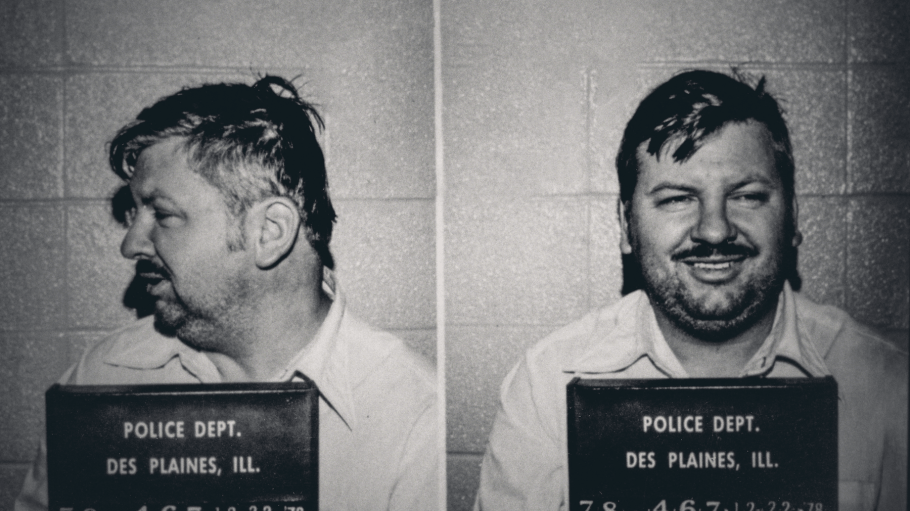
The contractor’s name was John Wayne Gacy.
He also performed at parties as a clown.
Two days passed.
On December 13, 1978, police executed a search warrant.
The address was 8213 West Summerdale Avenue in Norwood Park Township, Illinois.
Inside the house, investigators found a strong odor of decay.
They found suspicious stains.
They found items belonging to Robert Piest.
What exactly caused the odor and the stains was not established at that moment.
The search warrant did not reveal what lay beneath the crawl space.
Not yet.
The house was a single-story ranch on a quiet street.
It was a place where a contractor kept tools and a place where a clown kept his costumes.
It was also a place with a smell that could not be explained.
Police had a missing boy.
They had a contractor who said he knew nothing.
They had a house that smelled like something dead.
Was it an animal?
Was it a leak?
Was it something worse?
That would require evidence.
The evidence was under the floor.
But on December 13, 1978, the floor was still intact.
The house stood on its slab.
The crawl space waited.
THE SEARCH WARRANT
The investigation began with Robert Piest's mother reporting him missing on December 11, 1978.
Police learned Piest had gone to meet a contractor, John Gacy, about a job.
Gacy initially denied involvement.
He was placed under surveillance.
On December 13, 1978, police obtained a search warrant for Gacy's home.
Inside, they found a strong odor of decay.
They found suspicious stains.
They found items belonging to Piest.
The exact nature of the stains and odor was not identified at the time of the search.
That would require evidence.
That would require testing.
That would require excavation.
The warrant was executed on the thirteenth.
The floor was still intact.
The house stood on its slab.
The crawl space waited.
Gacy was arrested on December 21, 1978.
The charge was a firearms offense.
Not murder.
Not yet.
The murder investigation continued.
A lesser charge held him.
A greater truth waited beneath his home.
THE EXCAVATION
The excavation began on December 22, 1978.
That was the day after Gacy's arrest.
Crews moved into the crawl space beneath the house at 8213 West Summerdale Avenue.
The Cook County Medical Examiner oversaw the recovery.
Bodies came up one by one.
Then another.
Then another.
Crews eventually recovered 29 bodies from the property.
Four more victims were recovered from the Des Plaines River.
Thirty-three in total.
The number matched what Gacy had told police during his interviews.
He confessed during those interviews, providing detailed accounts of how he lured, attacked, and disposed of victims.
He described the crawl space.
He described the river.
He described the methods — strangulation with a rope or ligature.
The confession was detailed.
It was specific.
It was a key piece of evidence.
Later, he would attempt to recant it.
At the time of excavation, the identities of all victims were not established.
Some were identified later through dental records and other means.
Others took longer.
Some remain unknown.
The medical examiner testified about the remains at trial.
The bodies were the evidence.
The confession was the confession.
One contradicted the other.
The crawl space held twenty-nine.
The river held four.
The house held a truth that took weeks to fully unearth.
She was on the ground below.
THE TRIAL
The indictment came down on 33 counts of first-degree murder.
The trial began on February 6, 1980, before a judge in Cook County.
The prosecution presented the recovered bodies.
They presented forensic testimony from the medical examiner.
They presented Gacy’s own confession.
The defense argued that Gacy was insane at the time of the killings.
Not because the evidence was weak. Because the defense needed a reason.
The jury heard the excavation described, the crawl space, the river.
They heard the confession, and then they heard it recanted.
The insanity argument was not accepted by the jury.
That is what the record shows.
The jury found Gacy guilty on all 33 counts on March 12, 1980.
One day for guilt.
The next day, March 13, 1980, he was sentenced to death.
Thirty-three counts. One verdict. One sentence.
The months of digging and testimony had come down to two days.
It is a finality. It is also a beginning.
The appeals would take fourteen years.
AND THE STORY STILL ISN'T OVER
The appeals would take fourteen years.
Each one failed.
The conviction was upheld through multiple appeals, including review by the U.S. Supreme Court.
On May 10, 1994, Gacy was executed by lethal injection at Stateville Correctional Center in Illinois.
The legal case closed that morning.
The house did not wait that long.
The home at 8213 West Summerdale Avenue was demolished in April 1979, months after the excavation crews finished.
The crawl space was filled in. The lot was cleared.
But the story did not end with the building.
Several of Gacy's victims remain unidentified.
Some have been identified through DNA and genealogical research in recent years, the record notes.
Others are still unknown.
That is not established. The record states plainly that some names are still unknown.
Families have kept the missing in the light.
The victims' families have continued to advocate for awareness of missing persons cases, long after the trial and the execution.
They ask about the ones without names.
They ask about the ones whose families never knew where to look.
They ask about the ones who were never reported missing at all.
That would require evidence.
The case produced verdicts, confessions, and 33 counts.
It produced a demolished house and a closed legal file.
It did not produce every name.
Somewhere, a family is still waiting for a call that has not come.
The case is closed in the courts.
It is not closed in the ground.
She was on the ground below, and so were others.
The record cannot say who.
Advertisement
You may also like
A boat bought days before a missing wife — the timeline detectives couldn't shake
He reported her missing on December 24, 2002. Laci Peterson was eight months pregnant, and Scott Peterson told police she had vanished from their…

The rear axle that cracked the Oklahoma City bombing case open
The rear axle sat in a crater of broken glass and concrete, blocks from where the Murrah Building's north face used to be. At…

The fishing alibi, the affair, and the phone calls that unraveled Scott Peterson's story
December 24, 2002. Laci Peterson, 27 and eight months pregnant, was reported missing from her Modesto, California home. Her husband, Scott Peterson, told police…

The $50,000 ransom note that led to a gas station and a carpenter's arrest
In September 1934, a gold certificate from the $50,000 ransom surfaced at a gas station. The attendant wrote down the license plate of the…
The night Sharon Tate's housekeeper found the phone line cut — before the bodies were discovered
She found it before anyone knew to look. On the night of August 9, 1969, the housekeeper at 10050 Cielo Drive discovered the phone…
The Christmas Eve disappearance that left a family waiting 111 days for answers
The Christmas Eve call came at 5:45 p.m. Scott Peterson told police his wife was missing. Laci Peterson, 27 and eight months pregnant, had…