The bloody glove that didn't fit: inside the LAPD mishandling that shaped the O.J. Simpson trial
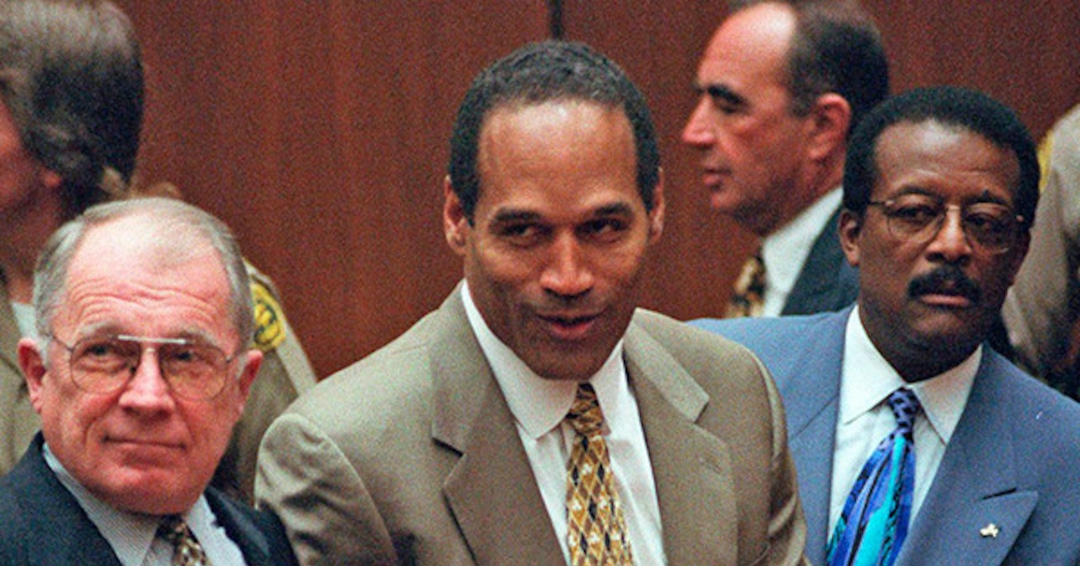
He pulled. He tugged. He grimaced.
On October 3, 1995, O.J. Simpson stood before the jury and struggled to pull a leather glove over his hand.
Millions watched the demonstration live on television.
The glove was one of a pair.
One had been found at the crime scene on Bundy Drive.
The other was found behind Simpson's guesthouse on Rockingham Avenue, by Detective Mark Fuhrman.
The prosecution, led by Marcia Clark and Christopher Darden, built its case on DNA evidence and a history of domestic violence.
The glove was meant to be the physical link.
It became the defense's centerpiece.
The defense argued that Fuhrman had planted the glove to frame Simpson.
Fuhrman had used racial slurs in the past, and recordings of his own words were played in court.
That is an argument.
The record does not establish that the glove was planted.
It is a claim the defense made, not a fact the trial proved.
The prosecution said the glove had shrunk from blood and weather.
The defense said it simply was not Simpson's.
One piece of leather.
It did not fit.
The jury deliberated for less than four hours.
They acquitted him of both murder charges.
How does a single glove unravel a case built on DNA?
That would require evidence.
THE NIGHT OF JUNE 12, 1994
The neighbor was walking her dog when she saw them.
Nicole Brown Simpson and Ronald Goldman were on the ground outside her condominium on Bundy Drive in Brentwood.
It was around midnight on June 12, 1994.
Both had been stabbed to death.
Nicole Brown Simpson was the ex-wife of O.J. Simpson, the former football star and actor.
Ronald Goldman was a waiter at a nearby restaurant.
He had gone to return eyeglasses Nicole had left there earlier that evening.
Both had been killed with a knife.
Goldman had fought his attacker.
Detectives Philip Vannatter and Tom Lange arrived at the crime scene.
They found a trail of blood drops leading away from the bodies.
The drops led out of the courtyard, past the gate, and into the night.
What kind of knife leaves that pattern?
What kind of killer stops to bleed?
The murder weapon was never found.
Detectives Vannatter and Lange began their work in the dark, with flashlights cutting through the shadows of the condominium complex.
They catalogued the scene piece by piece: the bodies, the blood, the trail.
Each drop of blood was a question.
Each question pointed somewhere.
The trail led away from Bundy Drive, and the investigation followed it to a white Ford Bronco parked outside a mansion on Rockingham Avenue.
THE DETECTIVE'S POCKET
The detectives from Bundy Drive arrived at the estate on Rockingham Avenue to notify Simpson of his ex-wife's death.
He was not home.
He had flown to Chicago that night.
Detective Mark Fuhrman walked the grounds and found a bloody glove behind the guesthouse, matching the one left at the crime scene.
Simpson's white Ford Bronco sat parked outside, blood on the door.
Each finding was a link in a chain.
The glove, the blood, the vehicle — they pointed toward one man.
Then the chain began to bend.
The defense highlighted that the LAPD had mishandled blood samples throughout the investigation.
The lead detective had carried Simpson's blood to the crime scene in his pocket.
:max_bytes(150000):strip_icc():focal(749x0:751x2)/PEOPLE_MAG_BROWN_SISTERS_nicole-tout-1067c705ba0c4ab7a7e648e3ffd95be0.jpg)
Not a vial in an evidence bag, not a sealed container.
A pocket.
The defense argued that this was part of a framing effort, a way to plant evidence where it would incriminate.
That intent is not established.
The record shows the blood was carried; it does not show why.
But the question had been planted, and it grew.
A single procedural error can poison everything that follows.
The glove was physical, undeniable — a thing you could hold.
The pocket was a shadow, a possibility.
The prosecution saw a detective doing routine work.
The defense saw a detective with motive and opportunity.
Fuhrman had used racial slurs in the past.
The recordings of his words would come later.
For now, the pocket was enough.
It turned evidence into accusation.
It turned a trial about two murders into a trial about the men investigating them.
The Bronco still sat outside, blood on the door.
The glove still matched.

But the chain no longer felt solid.
TWO STORIES, ONE PAIR OF GLOVES
The prosecution, led by Marcia Clark and Christopher Darden, built its case on DNA evidence linking Simpson to the blood at the crime scene and in his vehicle, plus a history of domestic violence.
The defense attacked the investigation as sloppy and racist, arguing Fuhrman had planted the glove to frame Simpson.
A key turning point came when Fuhrman, who had used racial slurs in the past, was confronted on the stand with recordings of his own words.
He testified he had never used the word.
The recordings said otherwise.
The glove demonstration — Simpson struggling to pull on the leather glove in court — became a defining moment for the defense.
Not because the glove was too small, exactly.
Because the struggle was the argument.
The defense said a man who could not fit his hand into the glove could not have worn it to kill.
The prosecution said the leather had shrunk from blood.
Both were possible.
Both were unprovable.
The jury deliberated for less than four hours before acquitting Simpson of both murder charges on October 3, 1995.
The verdict was read live on television and watched by millions.
The jury's reasoning is not in the record; only the verdict and deliberation time are documented.
Did they believe Fuhrman planted the glove?
Did they doubt the DNA?
Did they simply want the case over?
That would require evidence, and none exists.
The chain was broken.
The glove still matched.
The blood still linked.
But the story had two versions, and the jury chose one without saying why.
AND THE STORY STILL ISN'T OVER
The criminal trial ended in acquittal. The story did not.
In 1997, a civil jury in Santa Monica found Simpson liable for the wrongful deaths of Nicole Brown Simpson and Ronald Goldman. The jury ordered him to pay $33.5 million in damages.
The Goldman family has pursued collection of that judgment ever since. It is a debt that has never been fully paid.
In 2008, Simpson was convicted in Las Vegas of armed robbery and kidnapping. He had attempted to retrieve sports memorabilia he claimed was his. He was sentenced to 9 to 33 years in prison. He was released on parole in October 2017.
Simpson died of cancer on April 10, 2024. He was 76 years old.
The murder weapon was never found.
Not because it was recovered. Not because it was identified. Because it was never found at all.
The knife remains unlocated. The full truth of the 1994 killings remains unknown. That is what the record does not establish.
A verdict was reached. A judgment was entered. A man was acquitted, then held liable, then convicted, then buried.
What remains is a pair of gloves without a confirmed owner. A blood trail without a complete explanation. A weapon that exists only as an absence.
The civil judgment stands. The collection continues. The criminal case is closed.
The questions do not close with it. Where is the knife? What happened that night? What did the jury see that the public did not?
Those questions require evidence. The evidence was never produced.
She was on the ground below. The story above her is still being written.
Advertisement
You may also like
The Christmas Eve disappearance that left a family waiting 111 days for answers
The Christmas Eve call came at 5:45 p.m. Scott Peterson told police his wife was missing. Laci Peterson, 27 and eight months pregnant, had…
The Miami Herald series that made a lenient plea deal a national scandal
In 2008, Jeffrey Epstein pleaded guilty to two state charges: soliciting a minor for prostitution and procuring a person under 18 for prostitution. That…
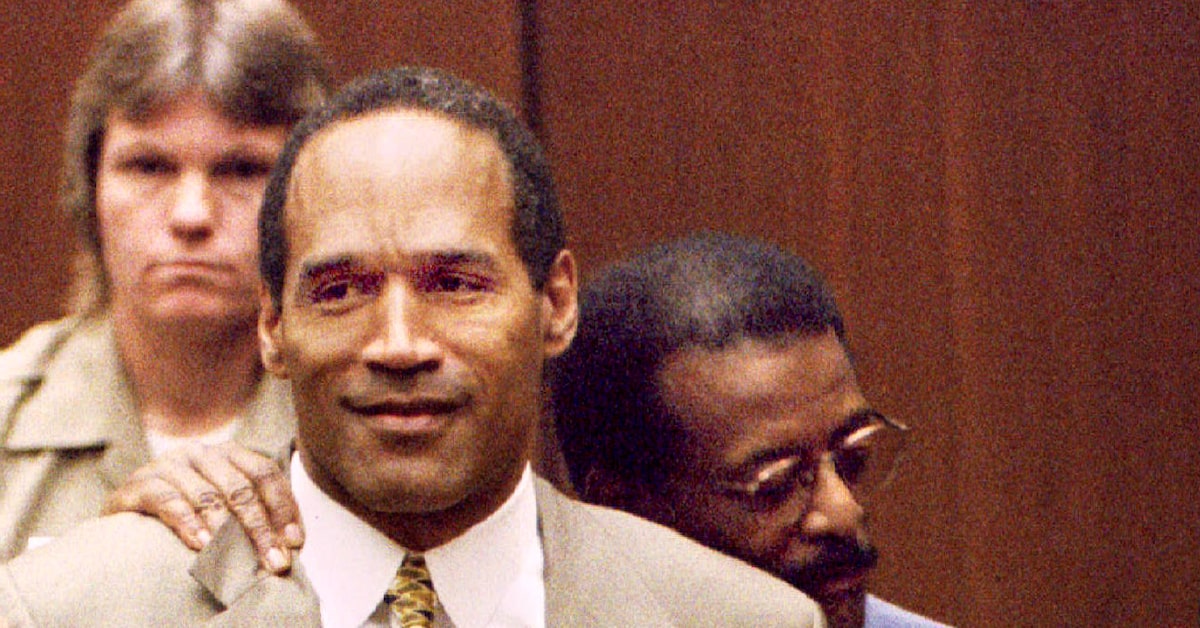
The 1994 glove that fit nowhere — a courtroom moment that turned the trial
He held the glove by the cuff, easing his hand inside while the courtroom held its breath. One glove came from the crime scene…
The hidden note inside a backyard boat that ended a citywide manhunt
The boat sat in a Watertown backyard, covered in a tarp, its hull smeared with something dark. For hours the city had been locked…
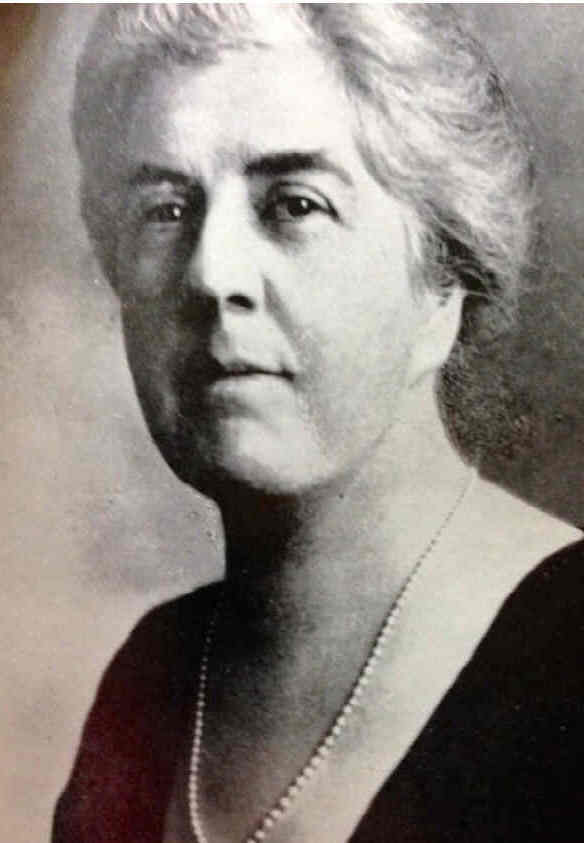
The love letters scattered under a crabapple tree that exposed a reverend's secret
The dog stopped first. The man walking him saw something under the crabapple tree and came closer. It was September 16, 1922, in a…
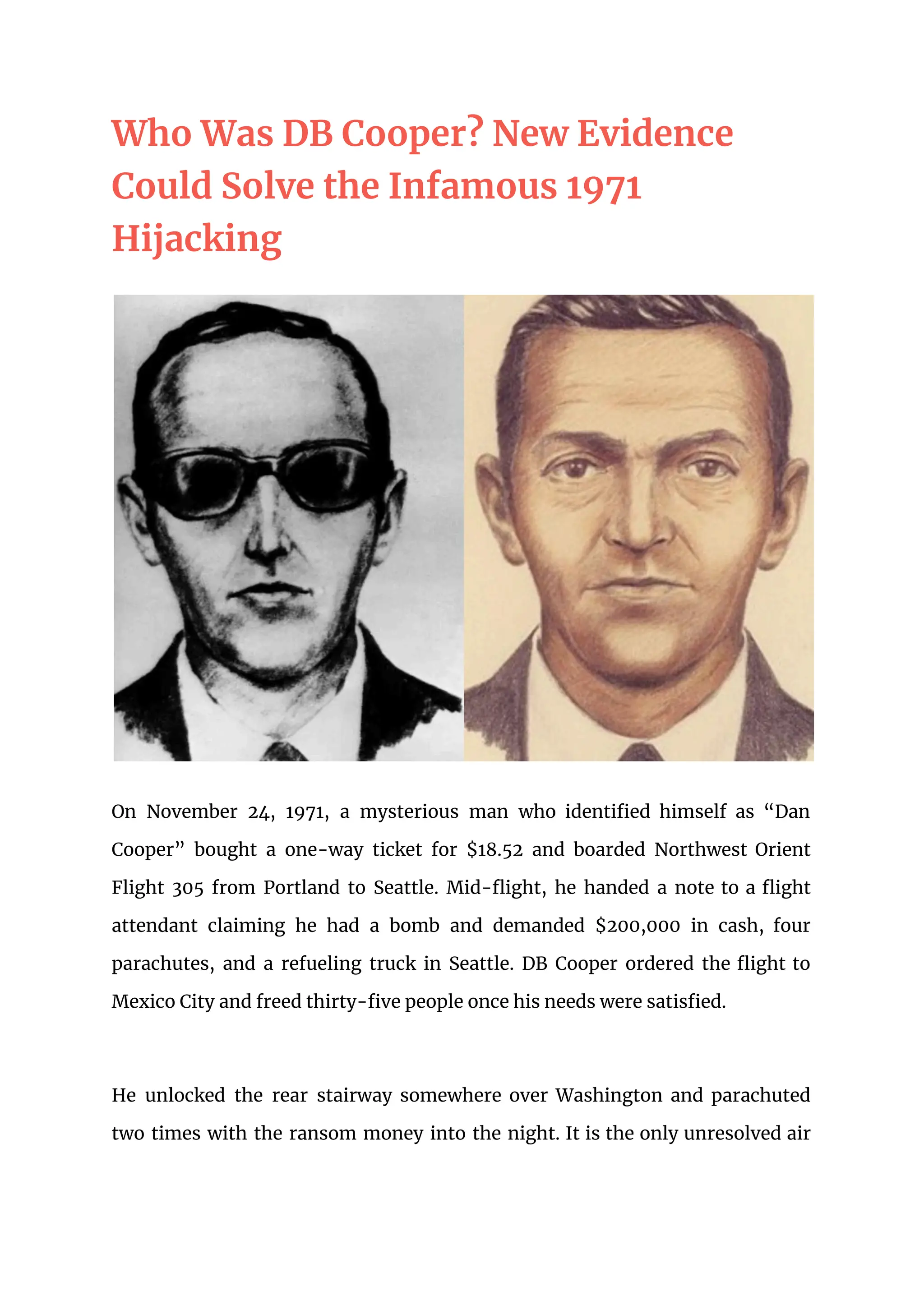
The $200,000 in $20 bills that vanished with a hijacker's leap into the night
The flight attendant took the note. She unfolded it. It said he had a bomb in his briefcase. The man called himself Dan Cooper,…